114,324
114K
Laps driven today

iRacing

Le Mans Ultimate

Assetto Corsa Competizione

Assetto Corsa

F1 25

Assetto Corsa EVO

Automobilista 2

Forza Motorsport

F1 24

F1 2021

F1 23

F1 2020


Lap 6
Segment 10
1:44.740
7th Feb 2024
Assetto Corsa Competizione
Kyalami - McLaren 720S GT3 Evo 2023

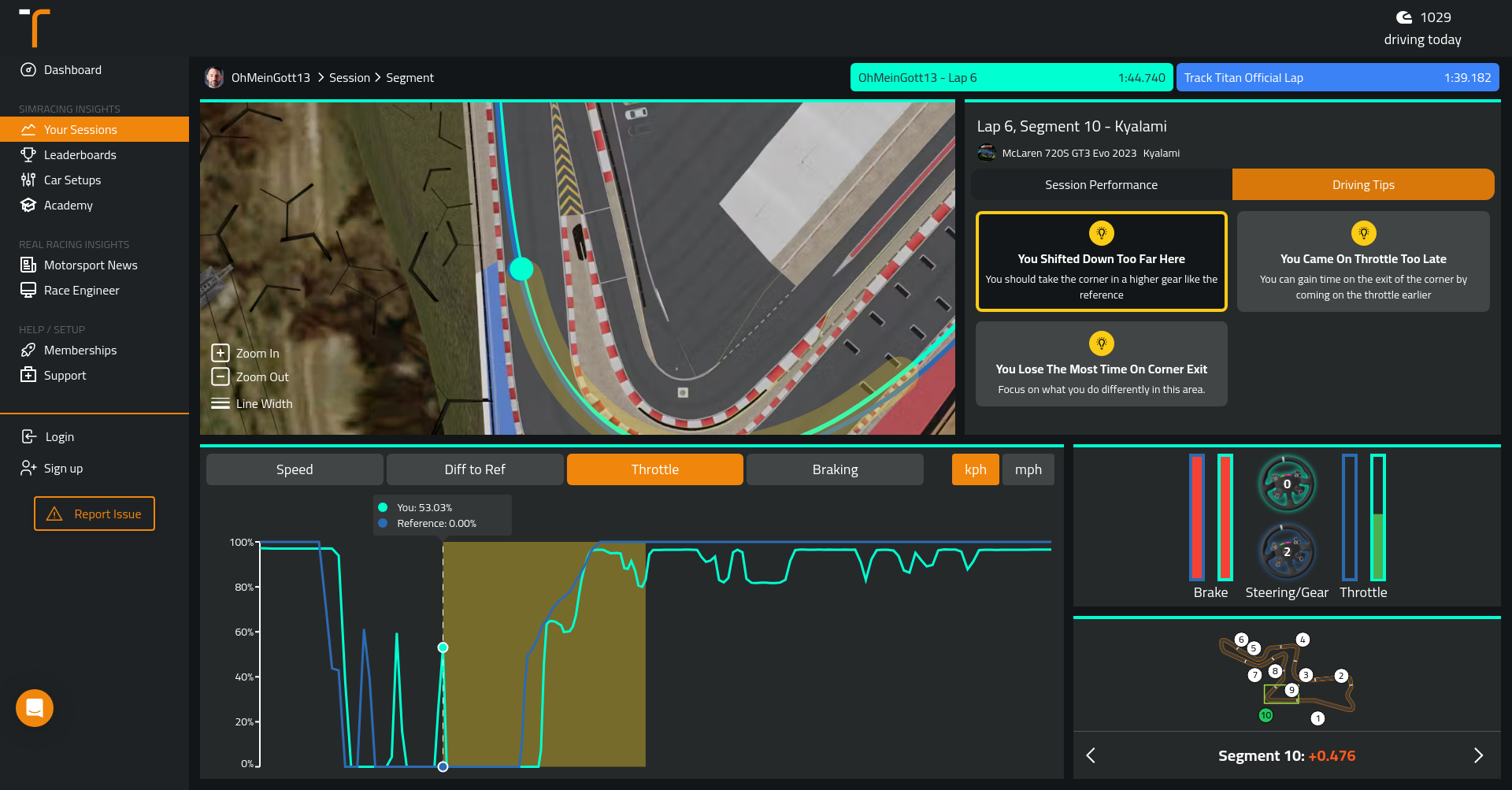
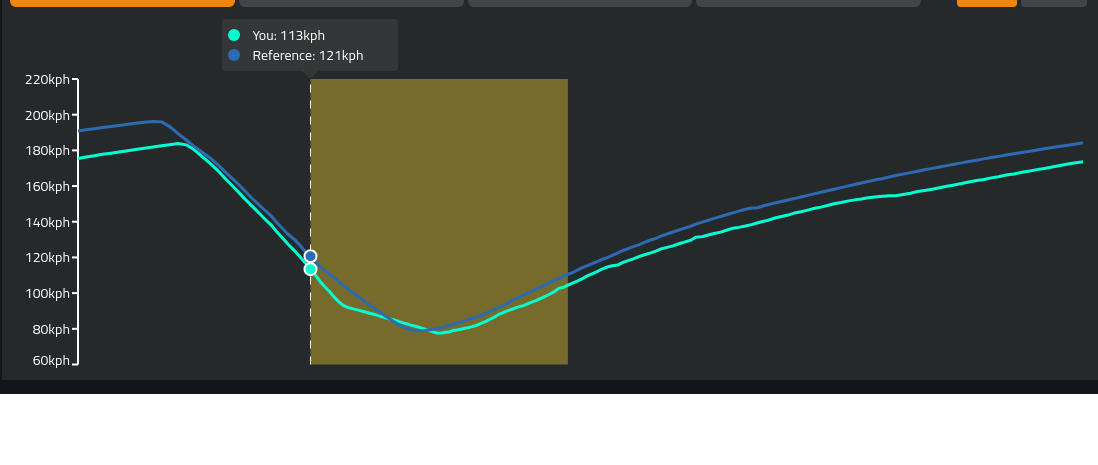
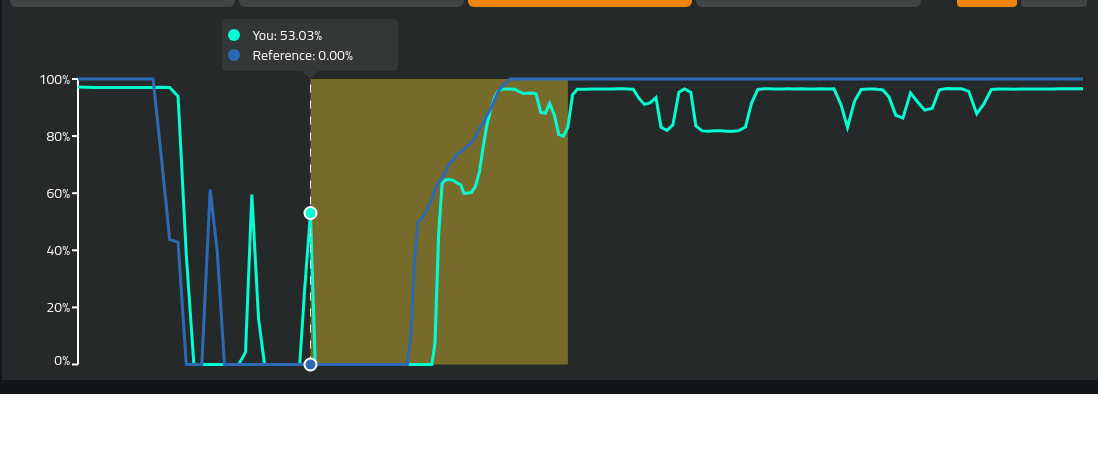
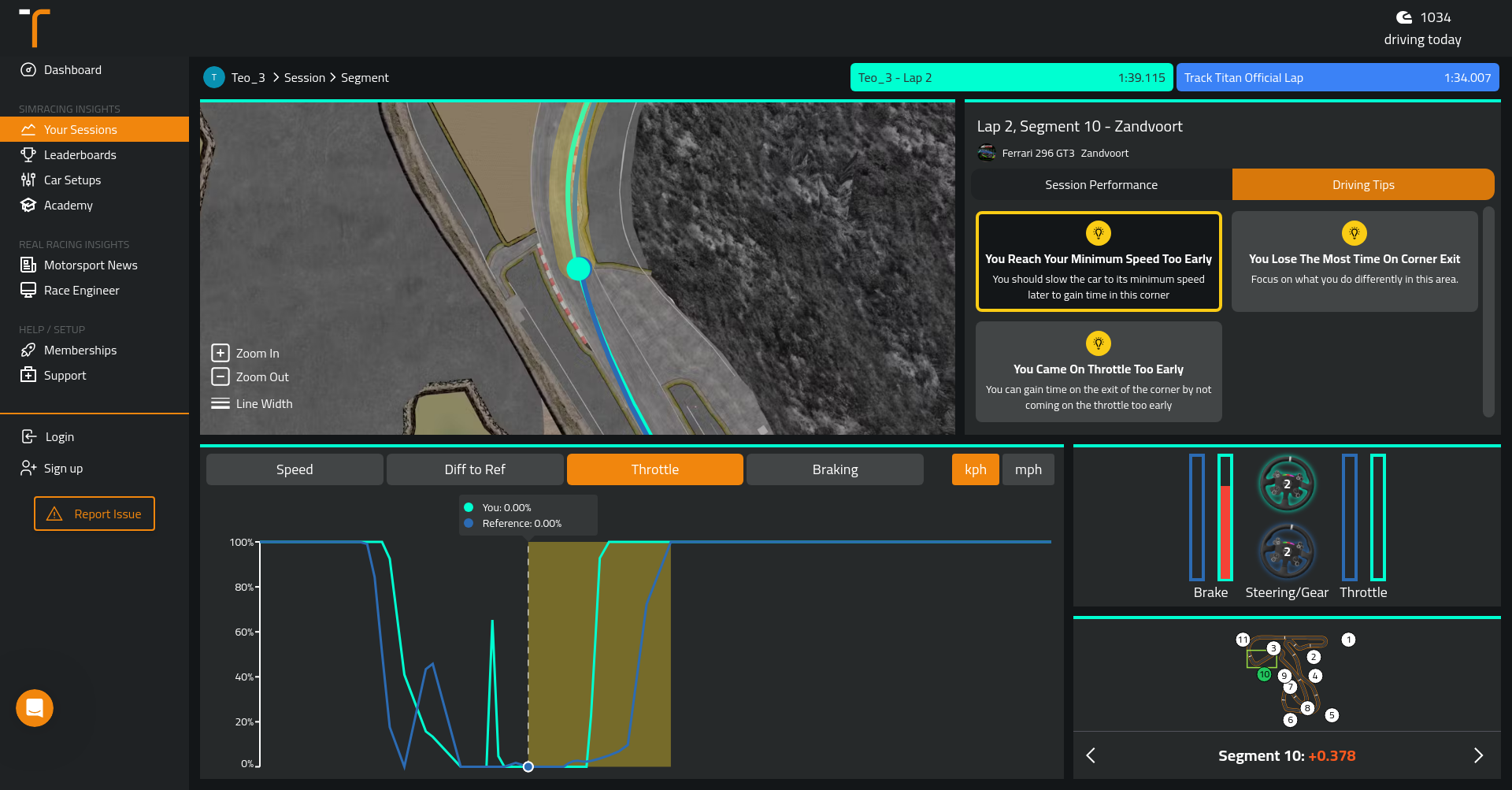
The speed chart analysis reveals that driverB is entering the corner at a lower speed than driverA, indicating a slower exit from the previous corner. This speed deficit continues throughout the corner, with driverB braking for longer and accelerating later than driverA, resulting in a consistently lower exit speed. To improve lap times, driverB should focus on carrying more speed from the preceding corner and transitioning onto the throttle earlier. On the other hand, while driverB demonstrates smooth and confident throttle control upon exiting the corner, driverA shows hesitancy in throttle application. DriverA's delayed and less aggressive approach to applying throttle leads to time loss during corner exit. To enhance performance, driverA should aim for earlier and more decisive throttle input to boost exit speed and reduce overall lap time. Emulating driverB's smoother throttle application could be beneficial for driverA in achieving better track results.
Analyzing the speed chart, it's evident that driverB is entering the corner with a speed deficit compared to driverA. This is noticeable at the very start of the chart on the left, where driverB's speed is already lower, indicating a slower exit from the previous corner. This initial speed difference carries through into the corner, impacting their overall time. Furthermore, as we progress through the corner, driverB's minimum speed occurs later than that of driverA and is also lower. This suggests that driverB is on the brakes for longer and begins to apply throttle later than driverA, delaying their acceleration out of the corner. The consequence of this later throttle application is reflected in the exit phase where driverB's speed remains consistently lower than that of driverA. To improve lap times, focusing on carrying more speed from the previous corner into this one and transitioning onto throttle earlier will be crucial for driverB.

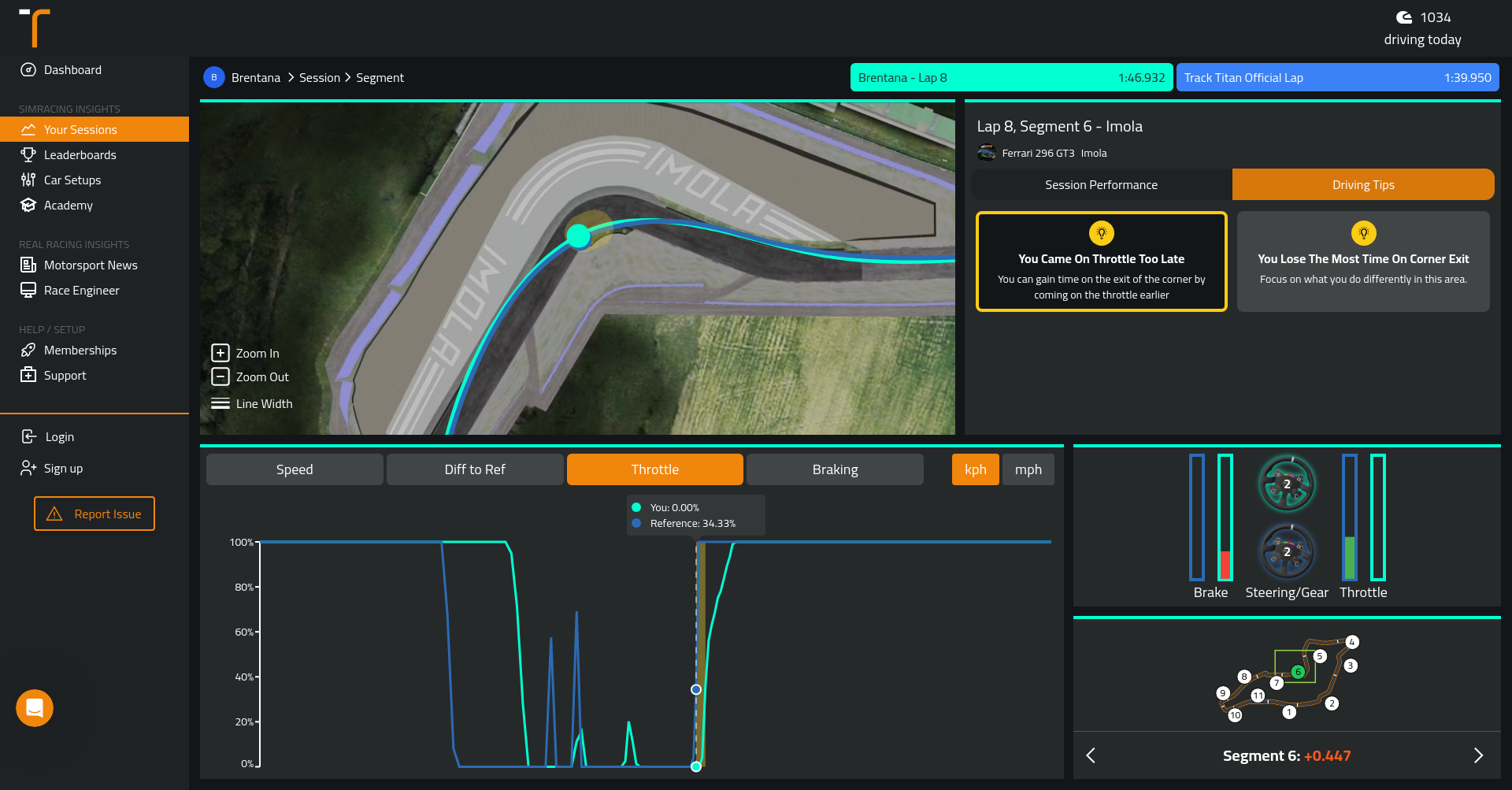
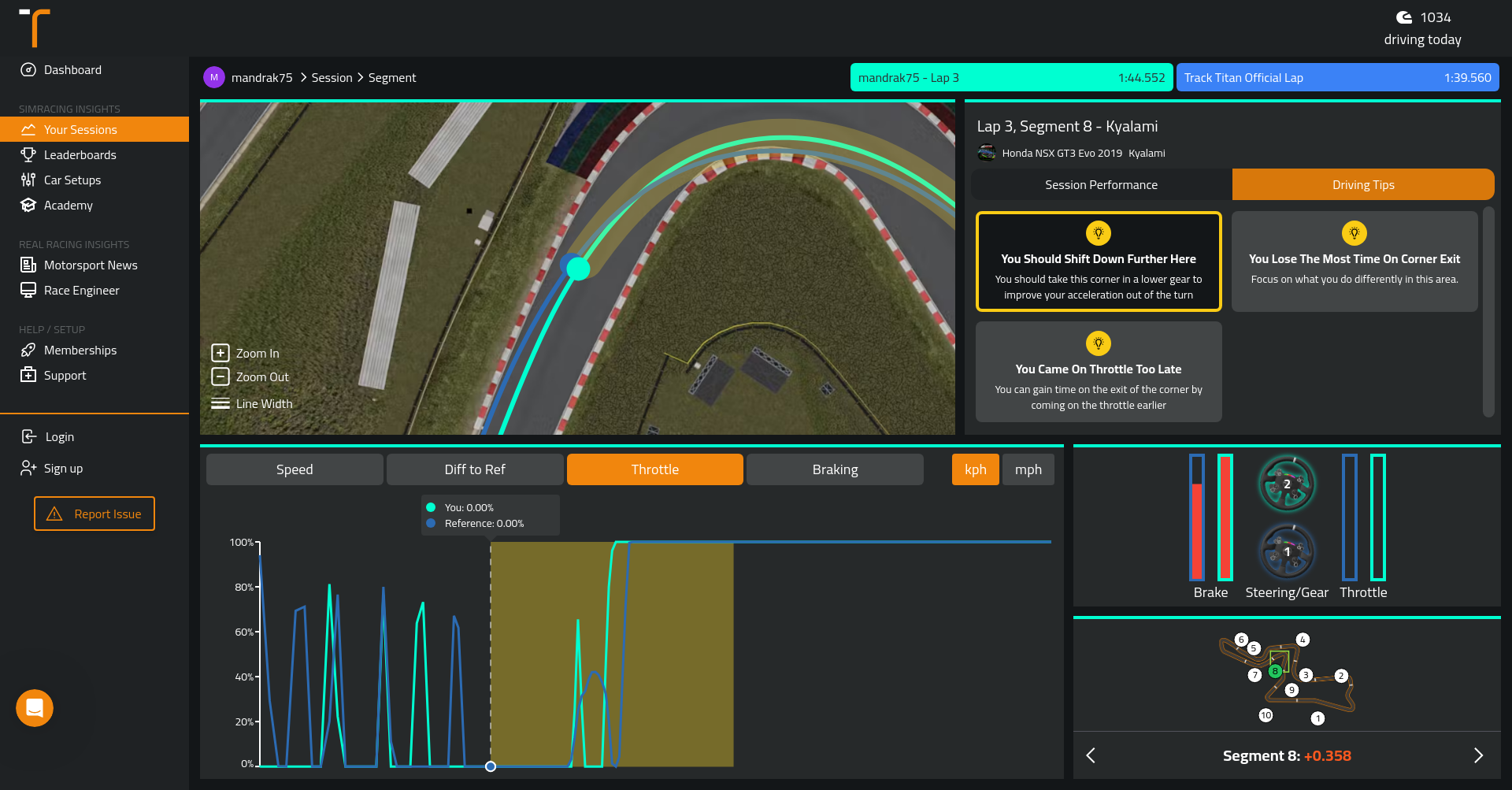
Analyzing the throttle control chart, it's evident that driverA is significantly more hesitant in throttle application compared to driverB. DriverB applies the throttle in a smooth and consistent manner, which is indicative of confidence and control exiting the corner. In contrast, driverA's throttle application is delayed and less aggressive, leading to a loss of time on corner exit. The data shows that driverA could benefit from earlier and more decisive throttle input. This would likely result in improved exit speed and overall lap time. It's crucial for driverA to focus on matching the reference's timing in applying throttle to maximize acceleration out of the corner. The smoother application seen in driverB's data should be the target for driverA to emulate for better performance on track.