122,247
122K
Laps driven today

iRacing

Le Mans Ultimate

Assetto Corsa Competizione

Assetto Corsa

F1 25

Assetto Corsa EVO

Automobilista 2

Forza Motorsport

F1 24

F1 2021

F1 23

F1 2020


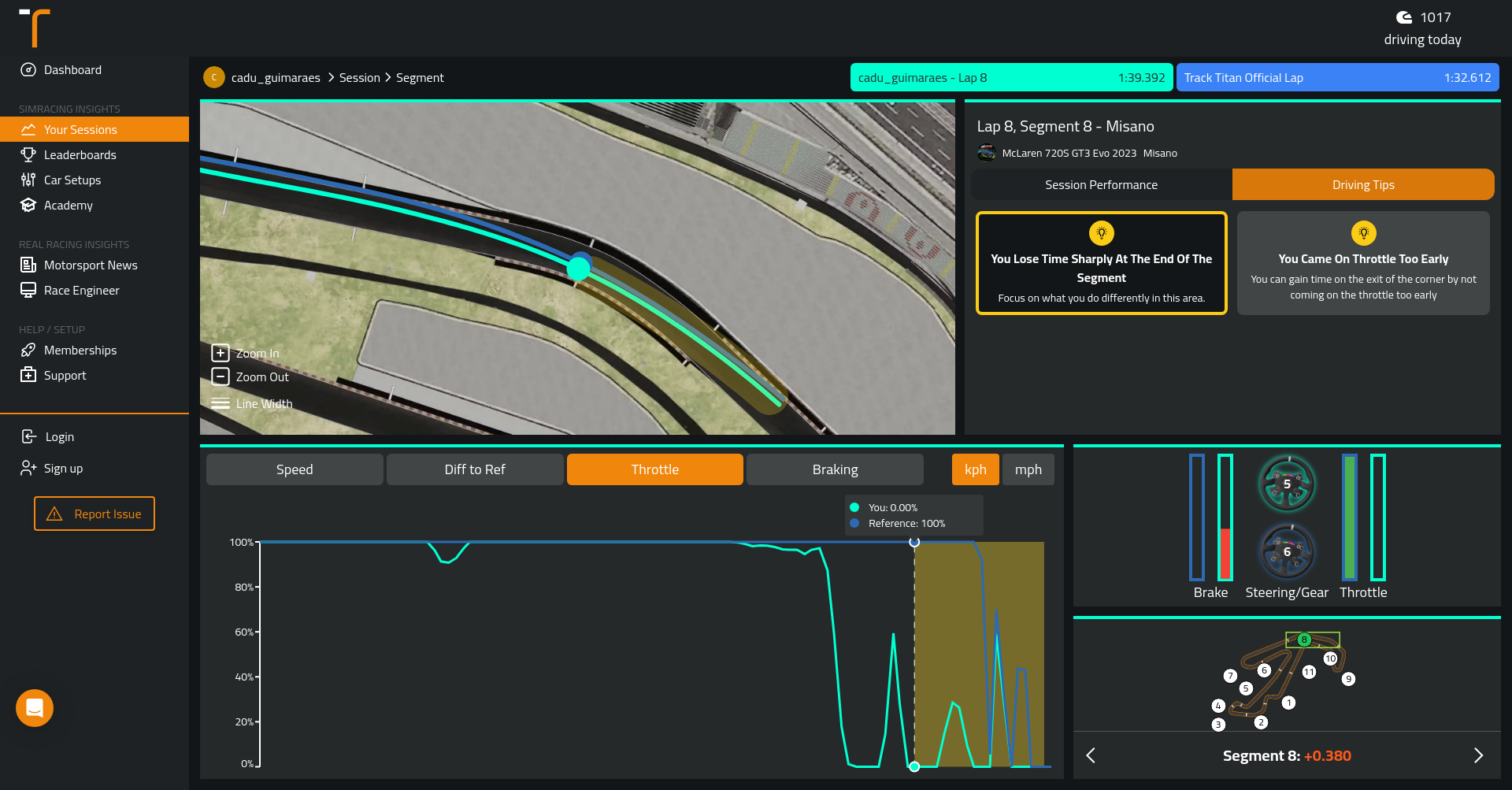
Lap 8
Segment 8
1:39.392
7th Feb 2024
Assetto Corsa Competizione
Misano - McLaren 720S GT3 Evo 2023

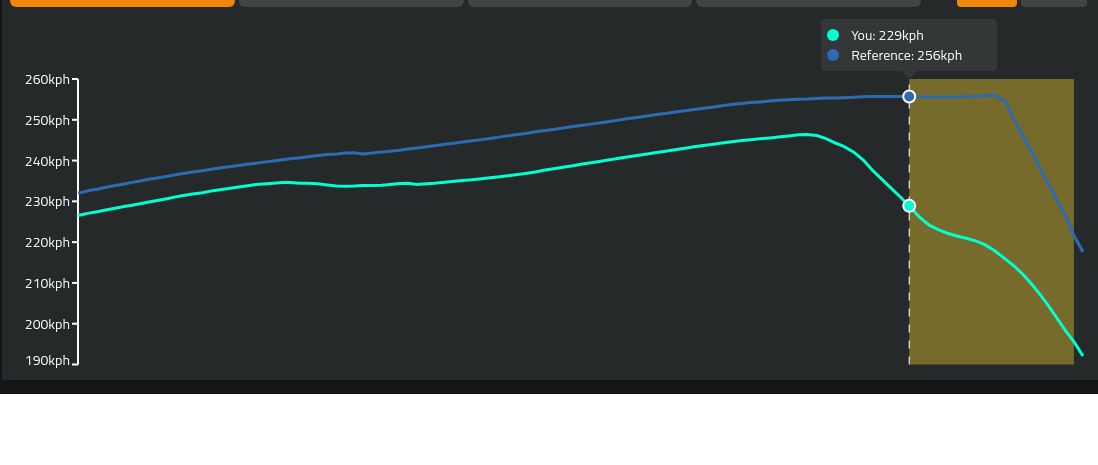
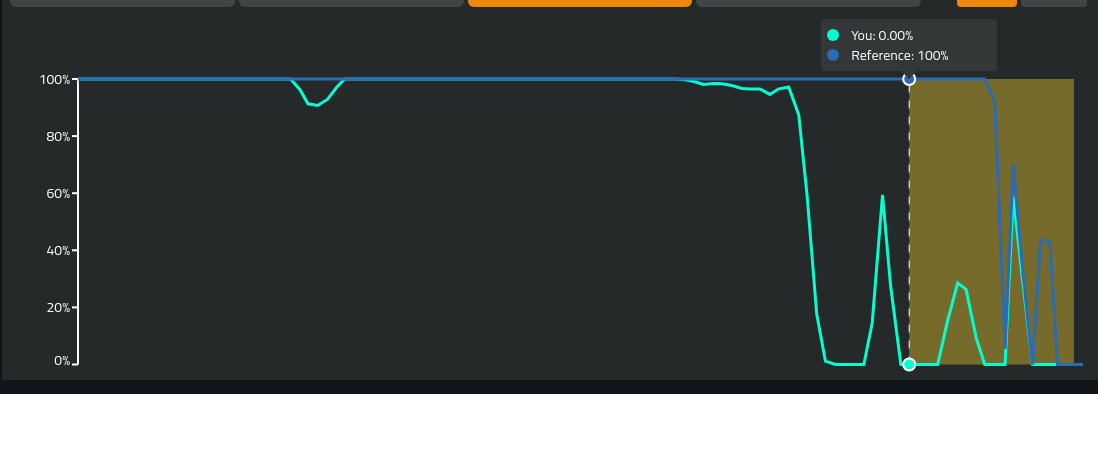
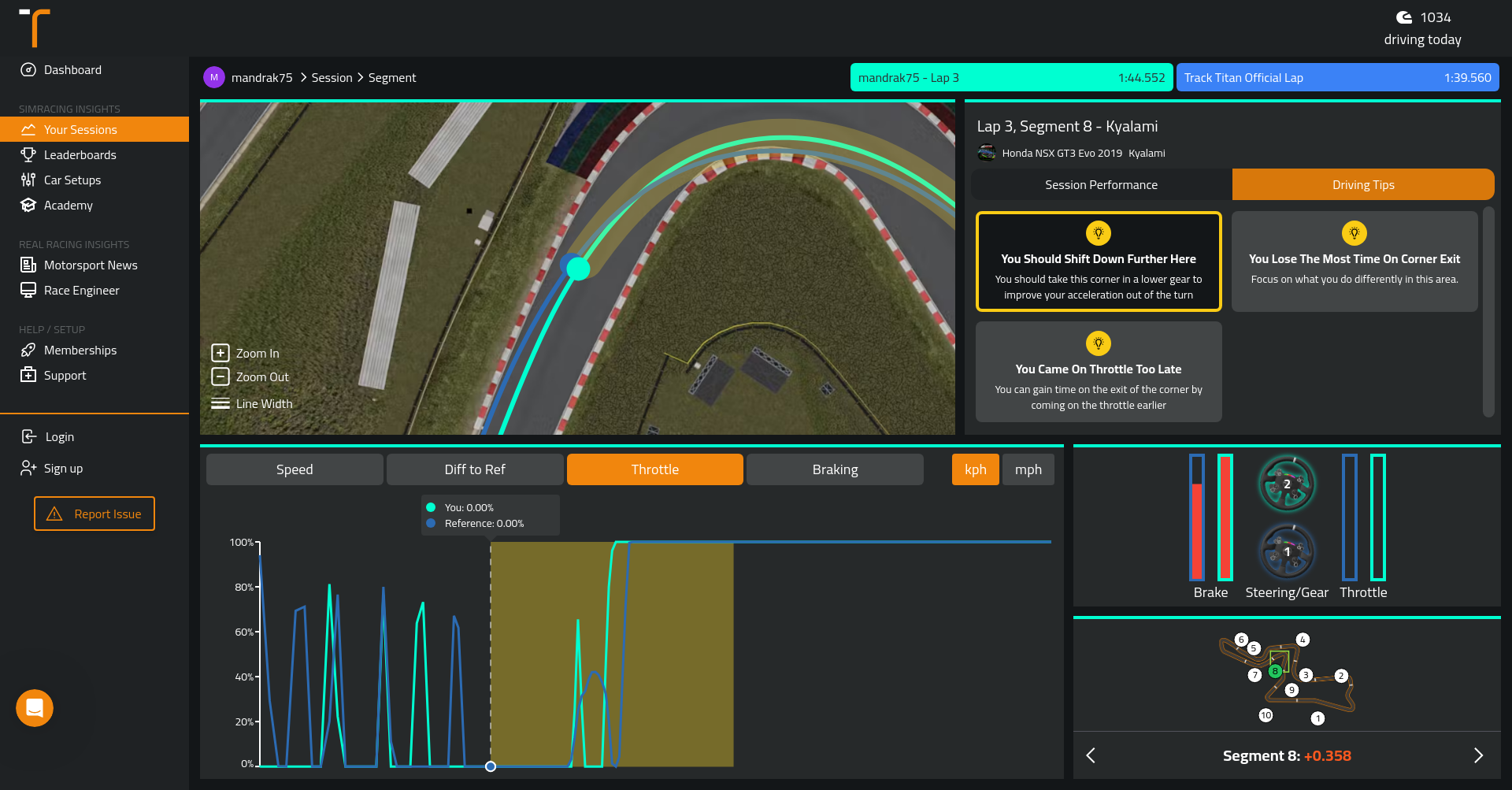
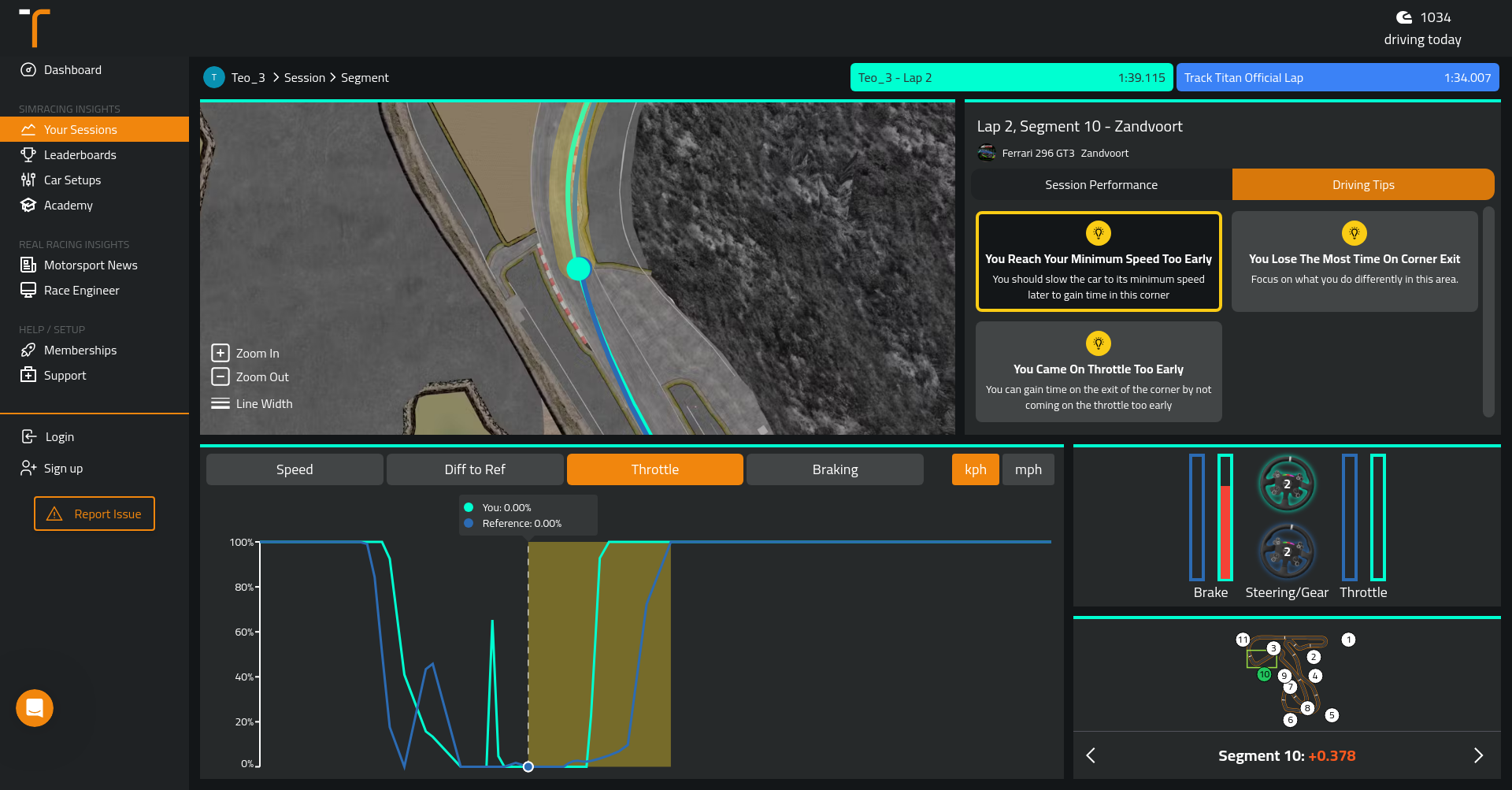
The speed chart analysis reveals that driverB enters the corner at a lower speed than driverA, likely due to less momentum from the previous corner's exit. This initial speed disadvantage for driverB continues into the current corner. Notably, towards the end of the segment, driverB experiences a sharp decrease in speed, possibly due to an early throttle application that compromised their grip and resulted in time loss. DriverA's throttle control chart shows an earlier throttle application compared to driverB, leading to a less efficient corner exit. This suggests that driverA is not fully utilizing the available tire grip by accelerating prematurely. The consequence of this early acceleration is evident towards the end of the segment where driverA loses time, potentially due to instability or a suboptimal line through the latter part of the corner. To improve lap times, it is recommended that driverA delays their throttle input to align more closely with driverB's timing. This adjustment should allow for better traction and a higher exit speed from the corner, ultimately leading to improved overall performance on track.
Analyzing the speed chart, it's evident that driverB enters the corner with a lower speed compared to driverA. This suggests that driverB may have exited the previous corner with less momentum, which has a cascading effect on their entry speed into the current corner. Specifically, at the very start of the chart on the left, driverB's speed is already lower than that of driverA, indicating this loss in exit speed from the previous turn. As we progress through the corner, there is a noticeable dip in speed for driverB towards the end of the segment where they lose time sharply compared to driverA. This could be attributed to an earlier throttle application by driverB, which might seem counterintuitive as it usually leads to a higher exit speed. However, in this case, it appears to have compromised their grip and resulted in a loss of time. The gradient of driverB's speed chart post-corner is also less steep compared to that of driverA, indicating slower acceleration out of the corner and confirming that coming on throttle too early can negatively impact overall corner exit performance.

In the provided throttle control chart, there is a clear discrepancy between driverA and driverB's throttle application. DriverA initiates throttle application significantly earlier than driverB, which can be observed by the quicker rise in their graph line. This premature acceleration leads to a less efficient corner exit, as it suggests that driverA is potentially sacrificing exit speed by getting on the power too soon and not utilizing the full grip available from the tires. Towards the end of the segment, driverA's graph shows a sharp decrease in time, indicating a loss of time compared to driverB. This loss could be attributed to driverA's earlier throttle application causing instability or a suboptimal line through the latter part of the corner. To improve lap times, driverA should delay their throttle input to match closer with driverB's timing, ensuring better traction and ultimately a higher exit speed from the corner.