114,324
114K
Laps driven today

iRacing

Le Mans Ultimate

Assetto Corsa Competizione

Assetto Corsa

F1 25

Assetto Corsa EVO

Automobilista 2

Forza Motorsport

F1 24

F1 2021

F1 23

F1 2020


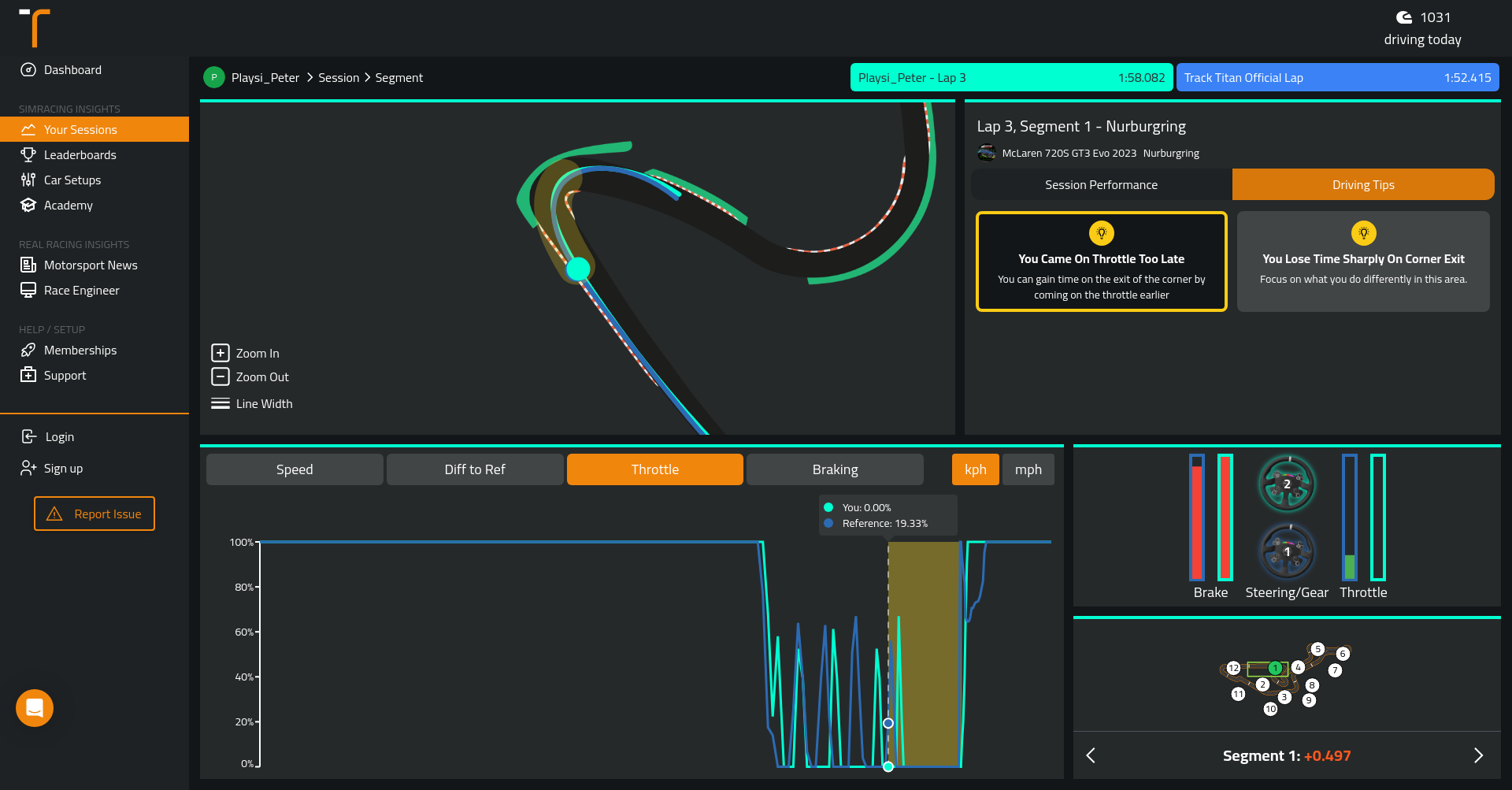
Lap 3
Segment 1
1:58.082
6th Feb 2024
Assetto Corsa Competizione
Nurburgring - McLaren 720S GT3 Evo 2023

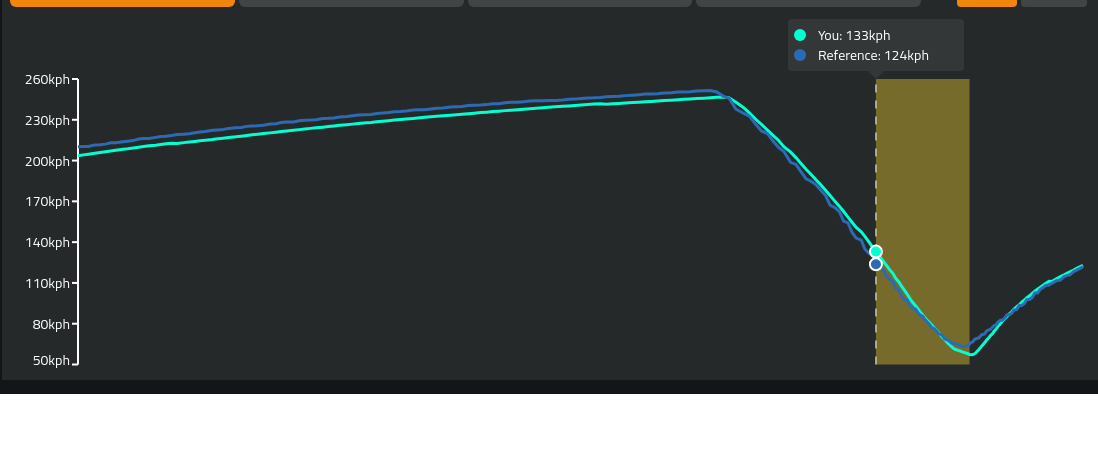
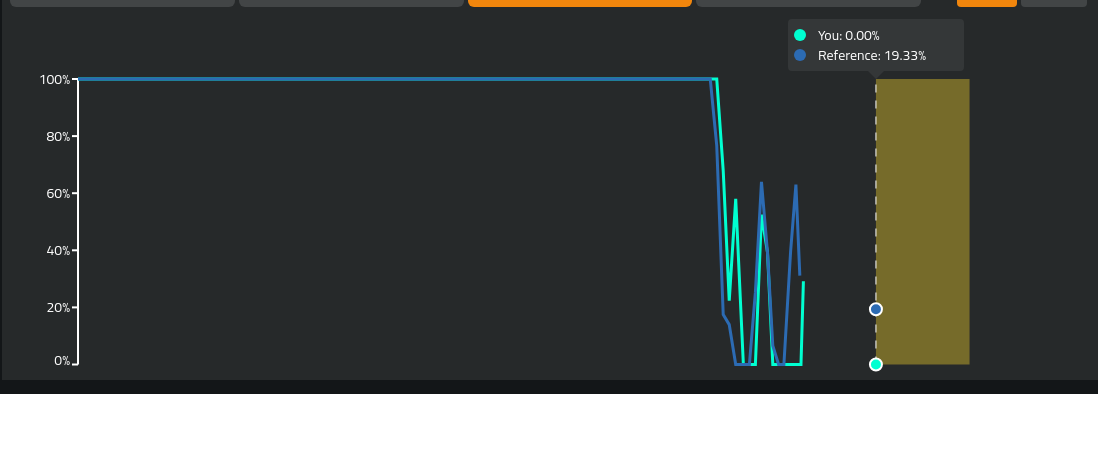
The speed chart analysis reveals that driverB (You) is slower than driverA (Reference) throughout the corner, starting with a lower speed at the corner's entry due to a slower exit from the previous turn. This initial deficit impacts the entire corner, with driverB also showing a delayed throttle application compared to driverA. As a result, driverB's acceleration phase starts later and is less aggressive, leading to a significant time loss on corner exit. To improve lap times, it is crucial for driverB to focus on earlier throttle application to maintain more momentum out of corners and onto straights. In contrast, while driverB applies throttle earlier than driverA, leading to better speed through the corner exit, driverA's gradual increase in throttle indicates a cautious acceleration strategy. DriverA should aim for an earlier and more decisive throttle input to minimize time lost during this critical phase of the corner. In summary, both drivers have areas for improvement: driverB needs to work on carrying higher speed from the previous corner and applying throttle earlier in the analyzed turn, while driverA should concentrate on initiating throttle input sooner and with greater confidence to optimize their performance through and out of corners.
Analyzing the speed chart, it's evident that driverB (You) is consistently trailing behind driverA (Reference) in terms of speed throughout the corner. Specifically, at the very start of the chart on the left, driverB's speed is already lower than that of driverA, indicating a slower exit from the previous corner. This initial speed deficit carries through into the corner being analyzed, setting a lower baseline for corner entry and mid-corner speed. As we progress through the corner, there is a noticeable delay in throttle application from driverB compared to driverA. This is evident from the point where driverA's speed begins to increase again after hitting their minimum speed in the corner. DriverB reaches their minimum speed later and also starts to accelerate later, resulting in a sharper time loss on corner exit. The gradient of driverB's speed increase is less steep compared to that of driverA, confirming a later and slower acceleration phase. To improve lap times, focusing on earlier throttle application will be crucial for driverB to carry more momentum out of corners and onto straights.

In the provided throttle control analysis, driverA exhibits a delayed and gradual increase in throttle application compared to driverB. Specifically, driverB begins to apply the throttle significantly earlier, as indicated by the steeper initial incline on their curve. This earlier application allows driverB to carry more speed through the corner exit, which is a critical factor in lap time improvement. Furthermore, driverA's throttle application is not only late but also shows a less aggressive approach to reaching full throttle. The curve for driverA is smoother and takes longer to reach peak, suggesting a tentative acceleration strategy. In contrast, driverB's graph displays a more decisive and rapid attainment of full throttle, which contributes to their ability to gain time on corner exit. DriverA should focus on initiating throttle input sooner and with more conviction to reduce time lost in this phase of the corner.