120,898
120K
Laps driven today

iRacing

Le Mans Ultimate

Assetto Corsa Competizione

Assetto Corsa

F1 25

Assetto Corsa EVO

Automobilista 2

Forza Motorsport

F1 24

F1 2021

F1 23

F1 2020


Lap 3
Segment 4
2:03.480
7th Feb 2024
Assetto Corsa Competizione
Suzuka - McLaren 720S GT3 Evo 2023

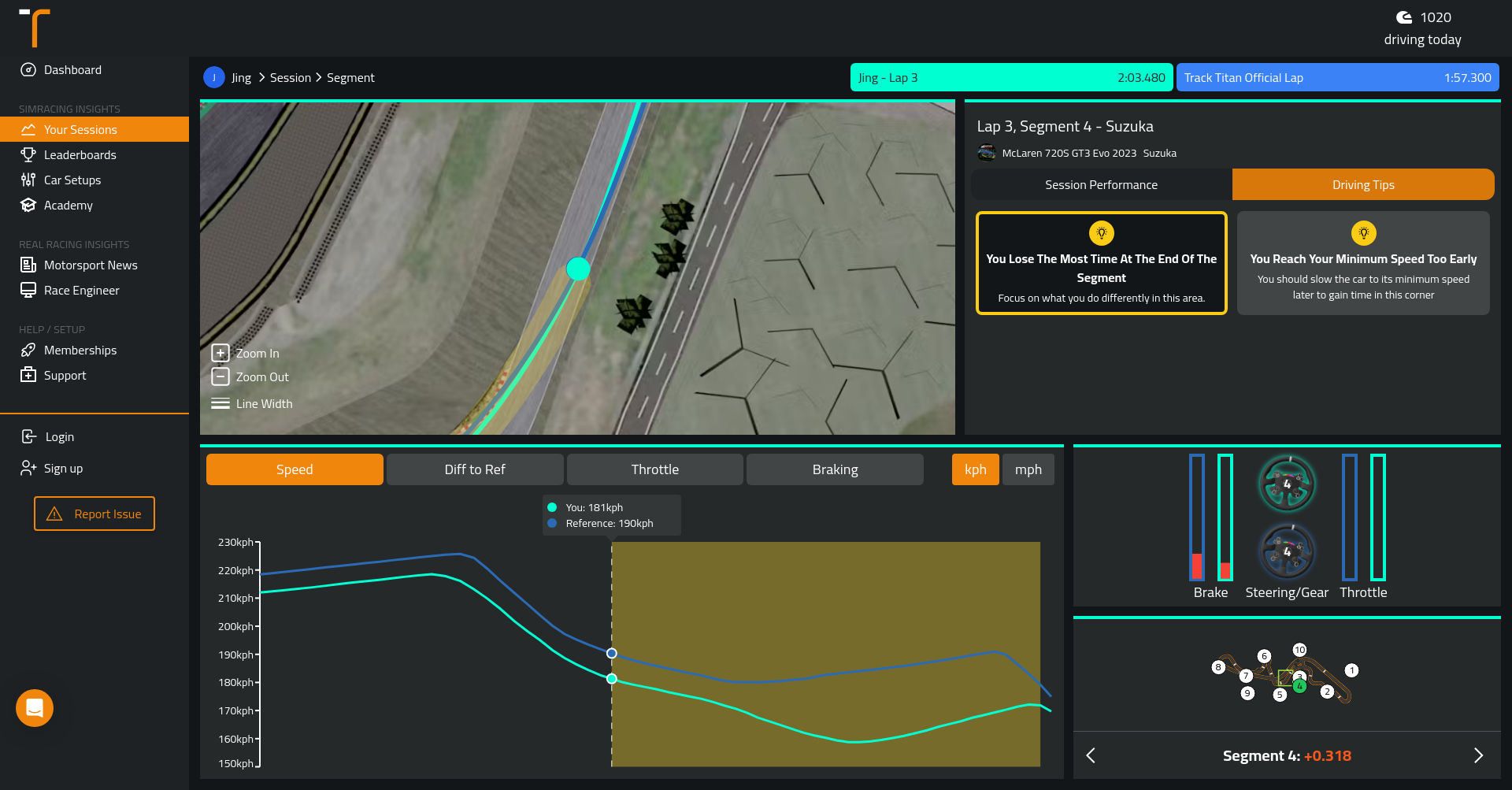
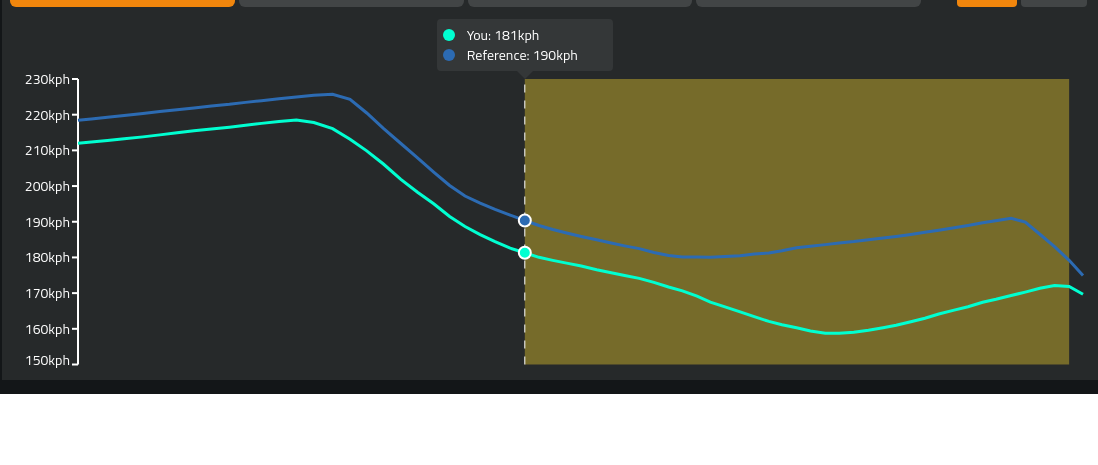
The speed chart analysis reveals that driverB is conservative in their approach to corner entry, decelerating earlier than driverA and thus achieving a lower exit speed from the preceding corner. This early deceleration suggests that driverB is not fully exploiting the braking zone, possibly braking too soon or too hard, which results in time loss before reaching the apex. Additionally, towards the end of the corner, driverB maintains a consistently lower speed than driverA and exhibits a less steep increase in speed post-apex, indicating a hesitation to accelerate. This delay in throttle application hinders driverB's ability to carry optimal momentum out of the corner, leading to significant time lost during this crucial phase where maximum acceleration is key for improving lap times. To enhance performance, driverB should work on better brake pressure modulation and timely throttle application to achieve exit speeds comparable to those of driverA and make the most of track position gained during corner entry and mid-corner phases.
Analyzing the speed chart, it's evident that driverB reaches their minimum speed considerably earlier in the corner compared to driverA. This early deceleration is indicative of a conservative approach to the corner entry, which results in a lower exit speed from the previous corner. This early minimum speed suggests that driverB is not utilizing the full potential of the braking zone and is likely on the brakes too soon or too aggressively, leading to unnecessary time loss before even reaching the apex. Towards the end of the segment, driverB's speed remains consistently lower than that of driverA. The gradient of driverB's speed increase post-apex is less steep compared to driverA's, indicating a delayed throttle application. This hesitation on acceleration prevents driverB from carrying optimal momentum out of the corner, culminating in significant time lost at this critical phase of corner exit where maximum acceleration is crucial for lap time improvement. DriverB should focus on modulating brake pressure and throttle application more effectively to match driverA's exit speeds and capitalize on track position gained during corner entry and mid-corner phases.