117,319
117K
Laps driven today

iRacing

Le Mans Ultimate

Assetto Corsa Competizione

Assetto Corsa

F1 25

Assetto Corsa EVO

Automobilista 2

Forza Motorsport

F1 24

F1 2021

F1 23

F1 2020


Lap 2
Segment 5
2:05.157
6th Feb 2024
Assetto Corsa Competizione
Monza - Mercedes AMG GT3 Evo 2020

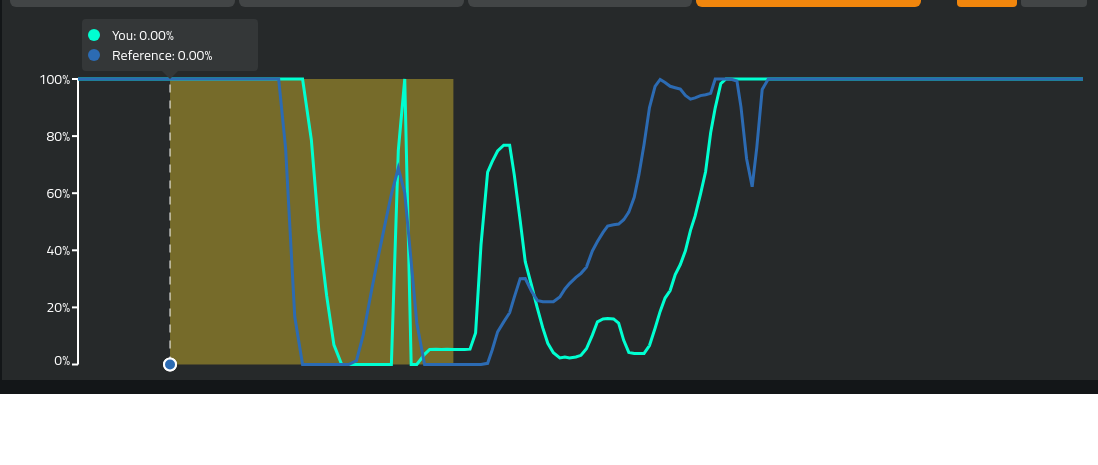
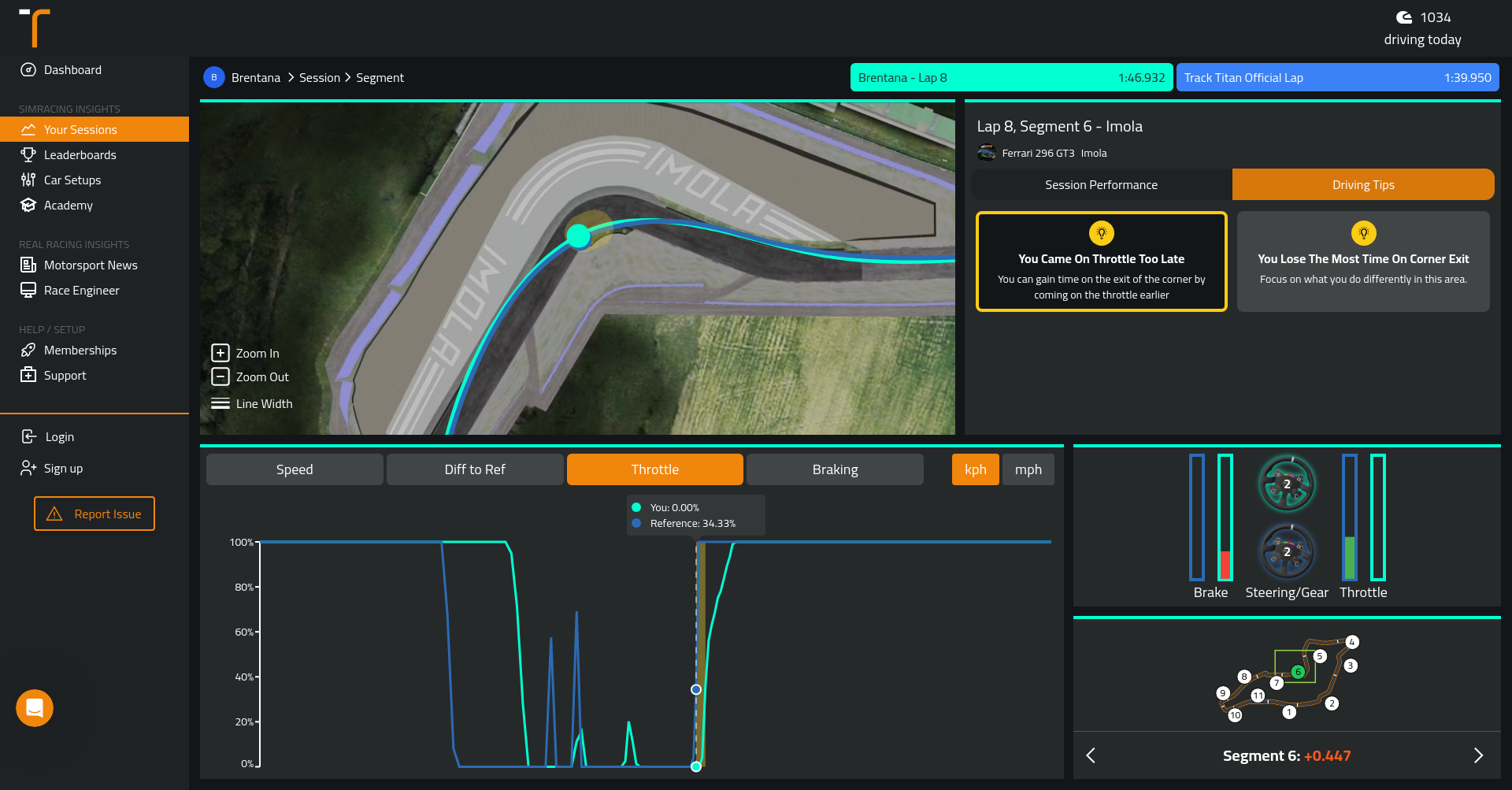
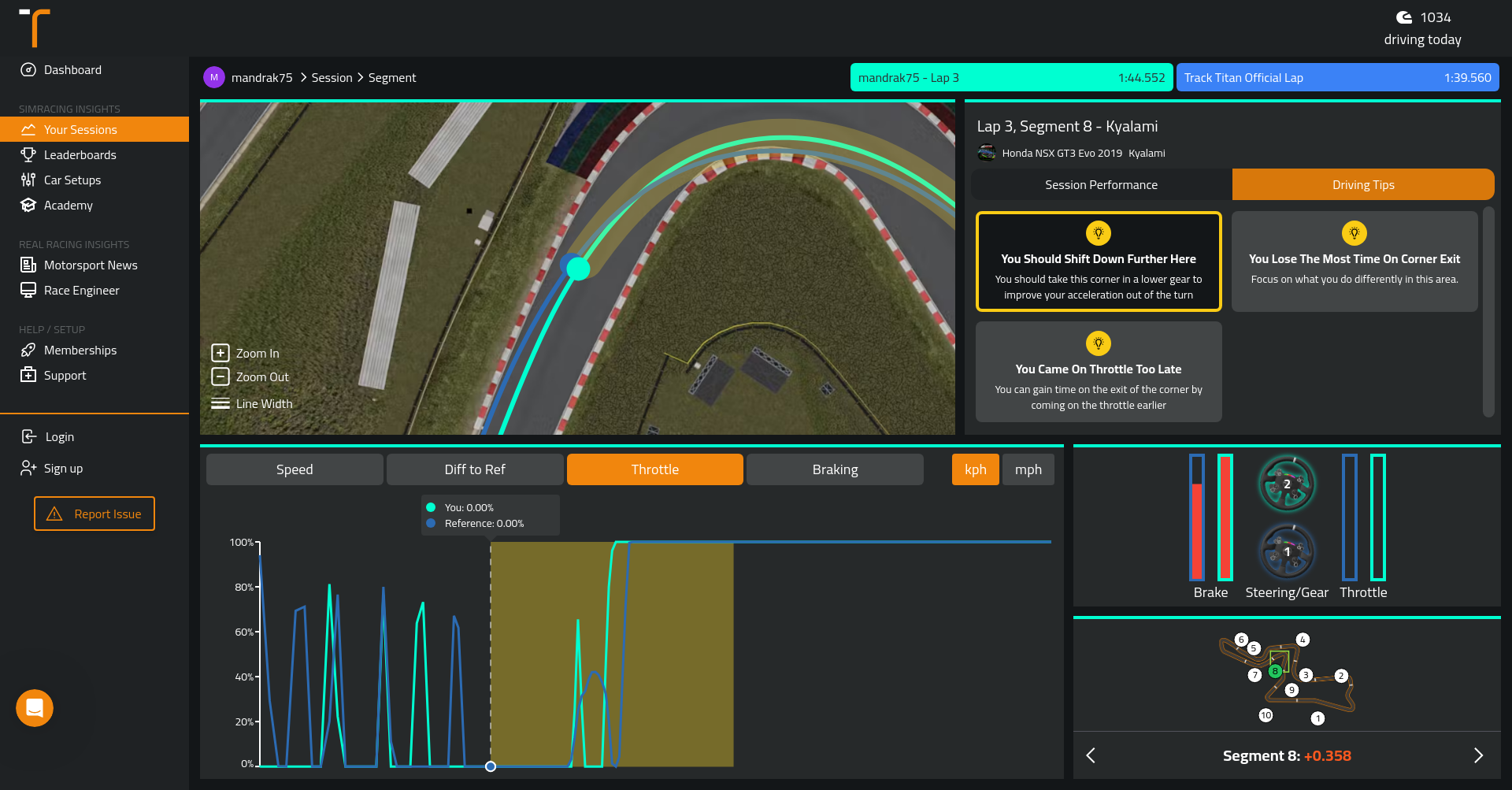
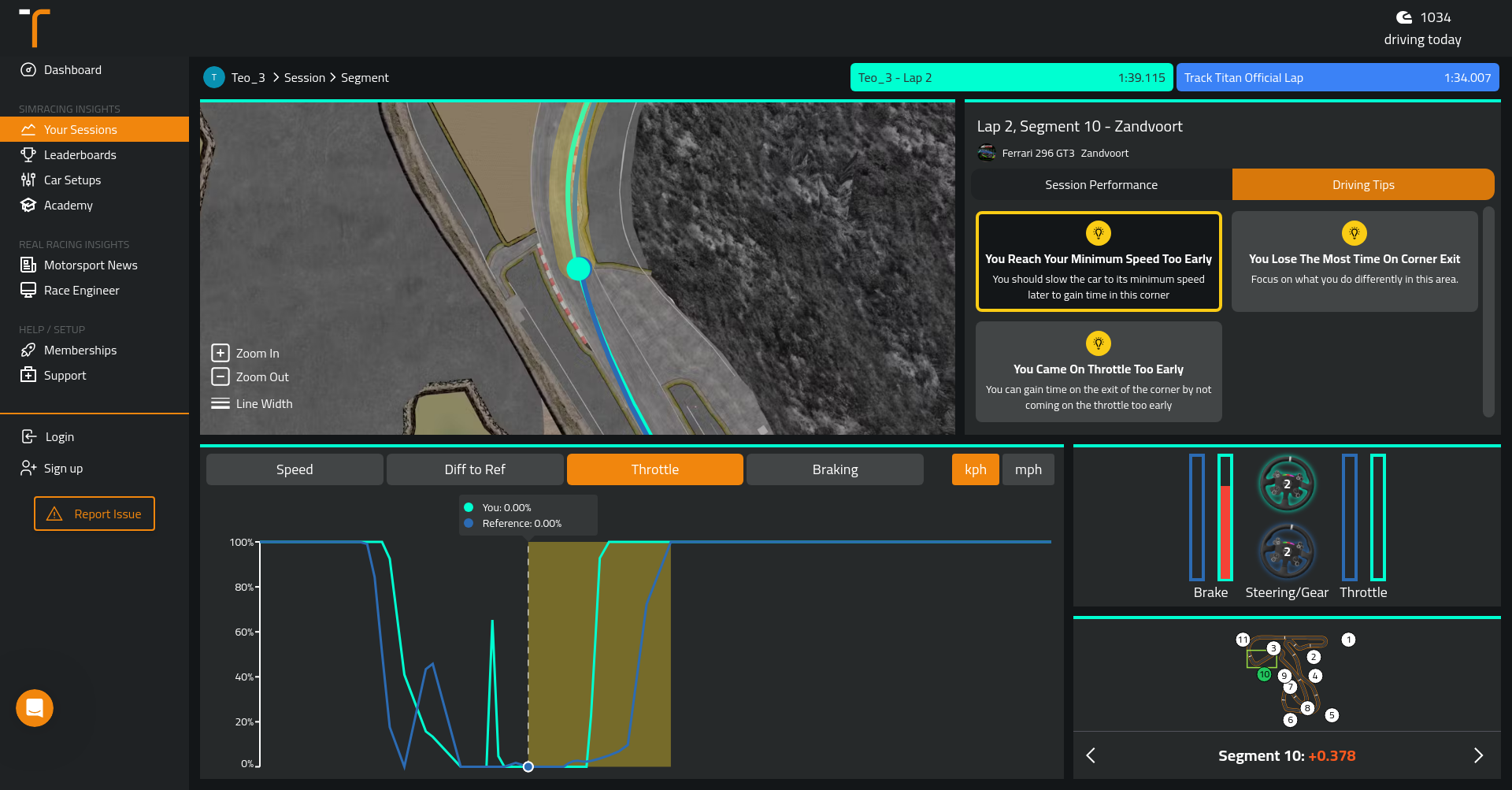
DriverA's throttle control chart reveals a slower and more gradual application of throttle out of the corner compared to driverB, who applies the throttle earlier and more sharply. This hesitancy from driverA leads to lost time during corner exit, suggesting that an earlier and more decisive throttle application could improve lap times by carrying more speed onto the straights. In terms of braking, driverA applies brakes late and heavily, resulting in a sharp increase in pressure, while driverB starts braking earlier with a smoother increase. DriverA's late braking may allow for higher entry speed but reduces stability and control through the corner. Additionally, driverA's abrupt brake release can unsettle the car, affecting exit speed. In contrast, driverB's gradual brake release indicates effective trail braking that maintains speed through the corner and allows for an earlier throttle application on exit. To enhance performance, driverA should initiate braking earlier and adopt a more progressive brake release to improve cornering stability and exit speed. By emulating driverB's approach to both throttle and brake control, driverA has the potential to significantly reduce lap times on corner exits.
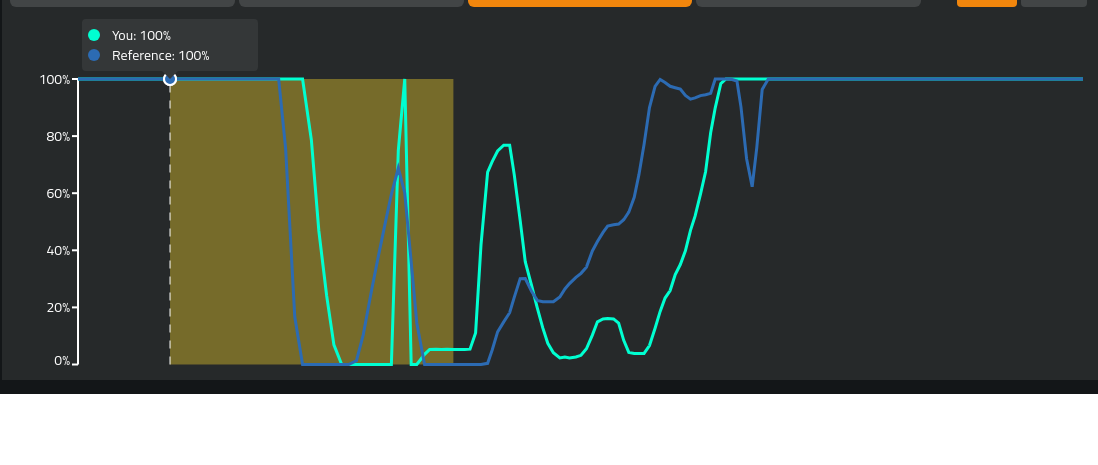
Analyzing the throttle control chart, driverA exhibits a delayed and gradual application of throttle compared to driverB. This is evident from the slower ascent in the graph, indicating that driverA is not accelerating as quickly out of the corner. DriverB, on the other hand, shows a sharper increase in throttle application, which suggests a more confident and earlier acceleration phase. The impact of this difference is significant; driverA's hesitancy to apply full throttle results in lost time during corner exit. To improve lap times, driverA should focus on applying the throttle earlier and more decisively. This will help carry more speed onto the straights and improve overall pace. The chart clearly shows that by adopting a throttle application pattern similar to driverB's, there is potential for driverA to reduce lap times substantially on corner exits.

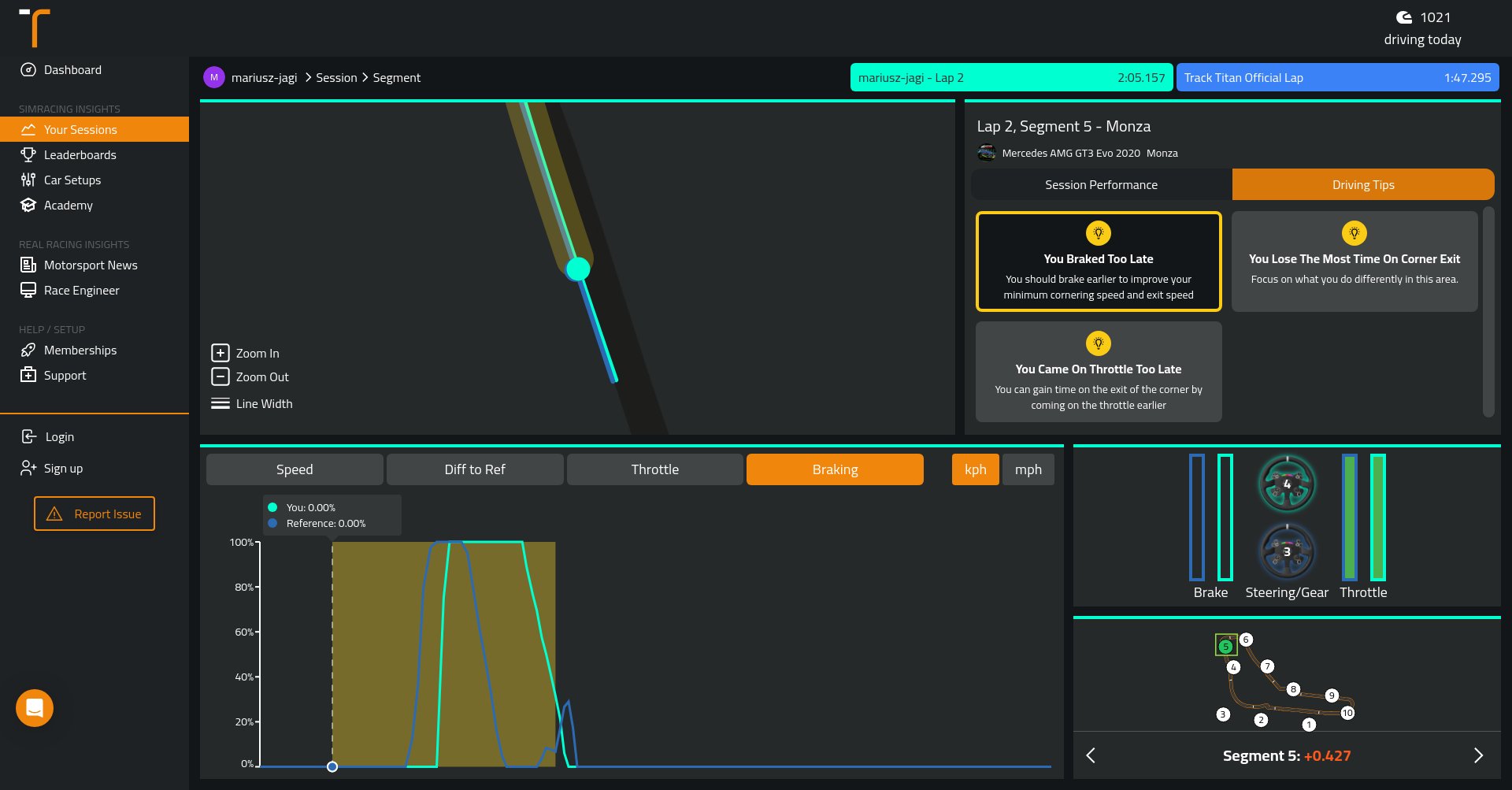
Analyzing the braking control chart, it's evident that driverA and driverB have distinct approaches to braking. DriverA applies the brakes with a sharp increase in pressure, indicating a late and heavy braking action. This contrasts with driverB's smoother and earlier rise in brake application, suggesting a more progressive braking method. The timing of driverA's braking is significantly delayed compared to driverB, which could result in a higher entry speed but less stability and control through the corner. Furthermore, driverA's brake release is abrupt, leading to a rapid transition from braking to throttle. This can unsettle the car and compromise exit speed. In contrast, driverB demonstrates a gradual decrease in brake pressure, indicative of effective trail braking that helps maintain speed through the corner while setting up for an earlier throttle application on exit. To improve performance, driverA should focus on initiating braking earlier and adopting a more progressive brake release to enhance cornering stability and exit speed.