122,247
122K
Laps driven today

iRacing

Le Mans Ultimate

Assetto Corsa Competizione

Assetto Corsa

F1 25

Assetto Corsa EVO

Automobilista 2

Forza Motorsport

F1 24

F1 2021

F1 23

F1 2020


Lap 6
Segment 5
2:02.352
6th Feb 2024
Assetto Corsa Competizione
Paul Ricard - Nissan GTR Nismo GT3 2018

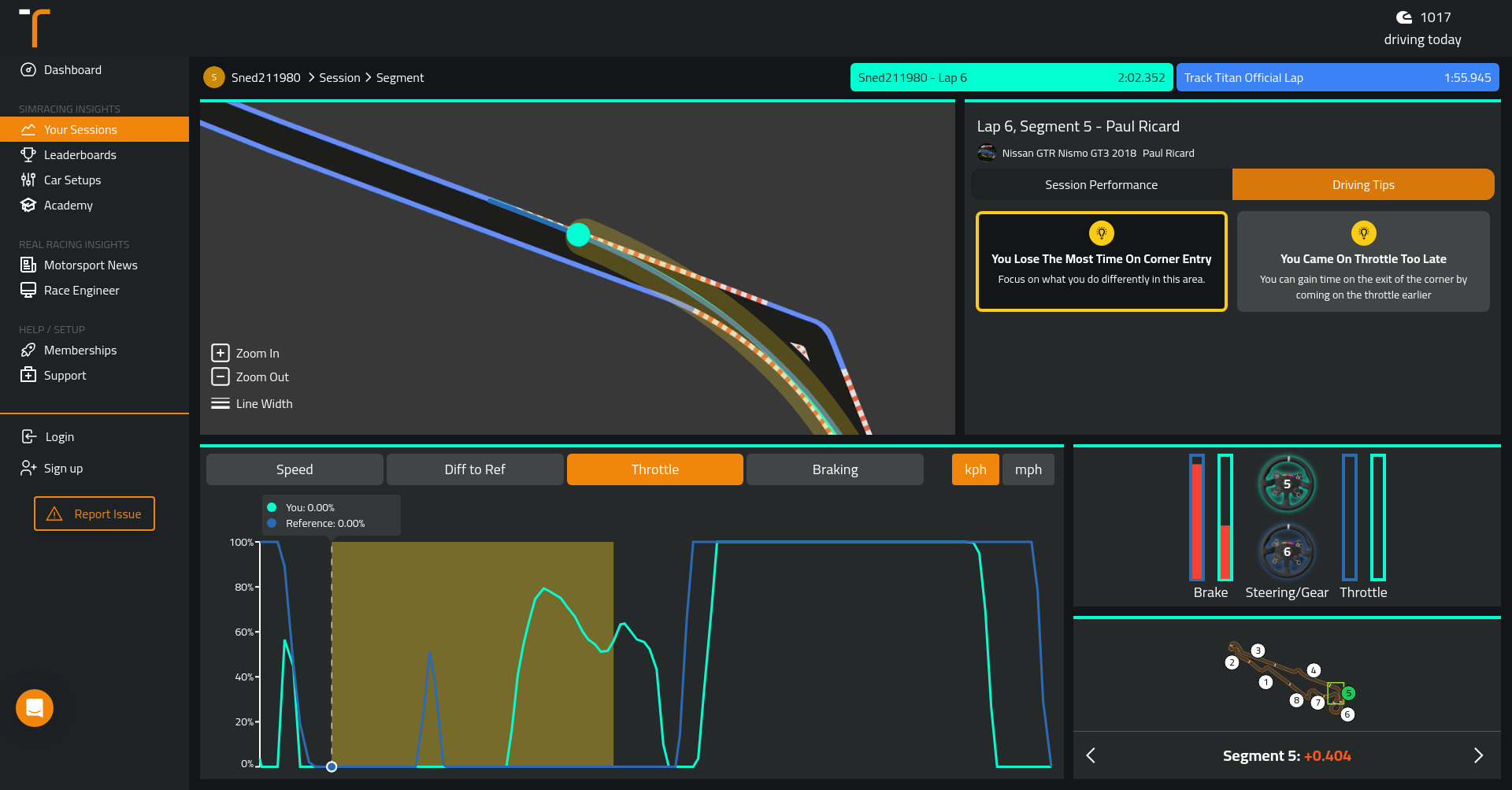
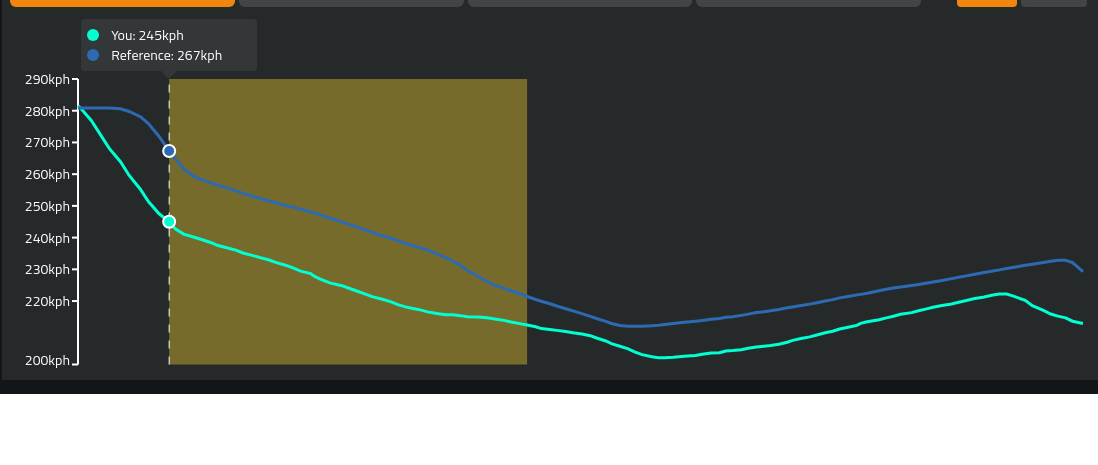
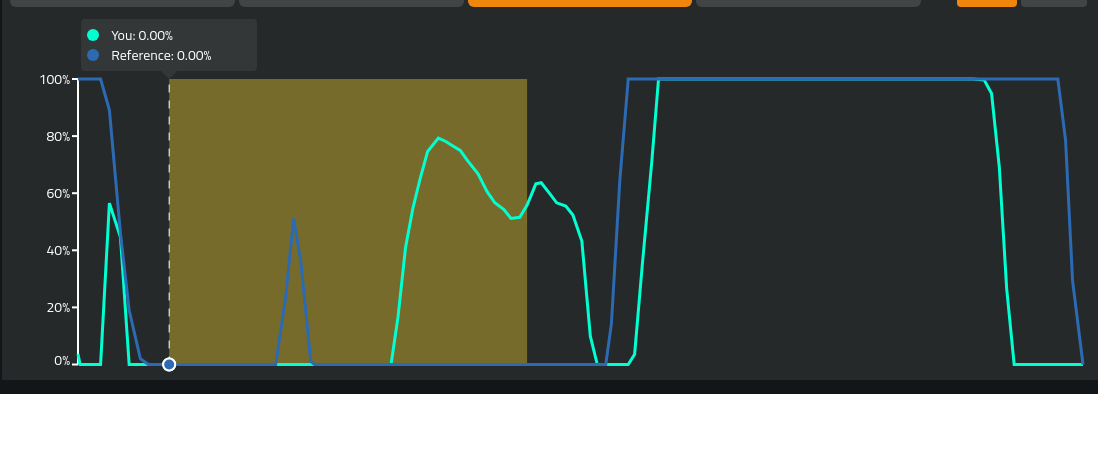
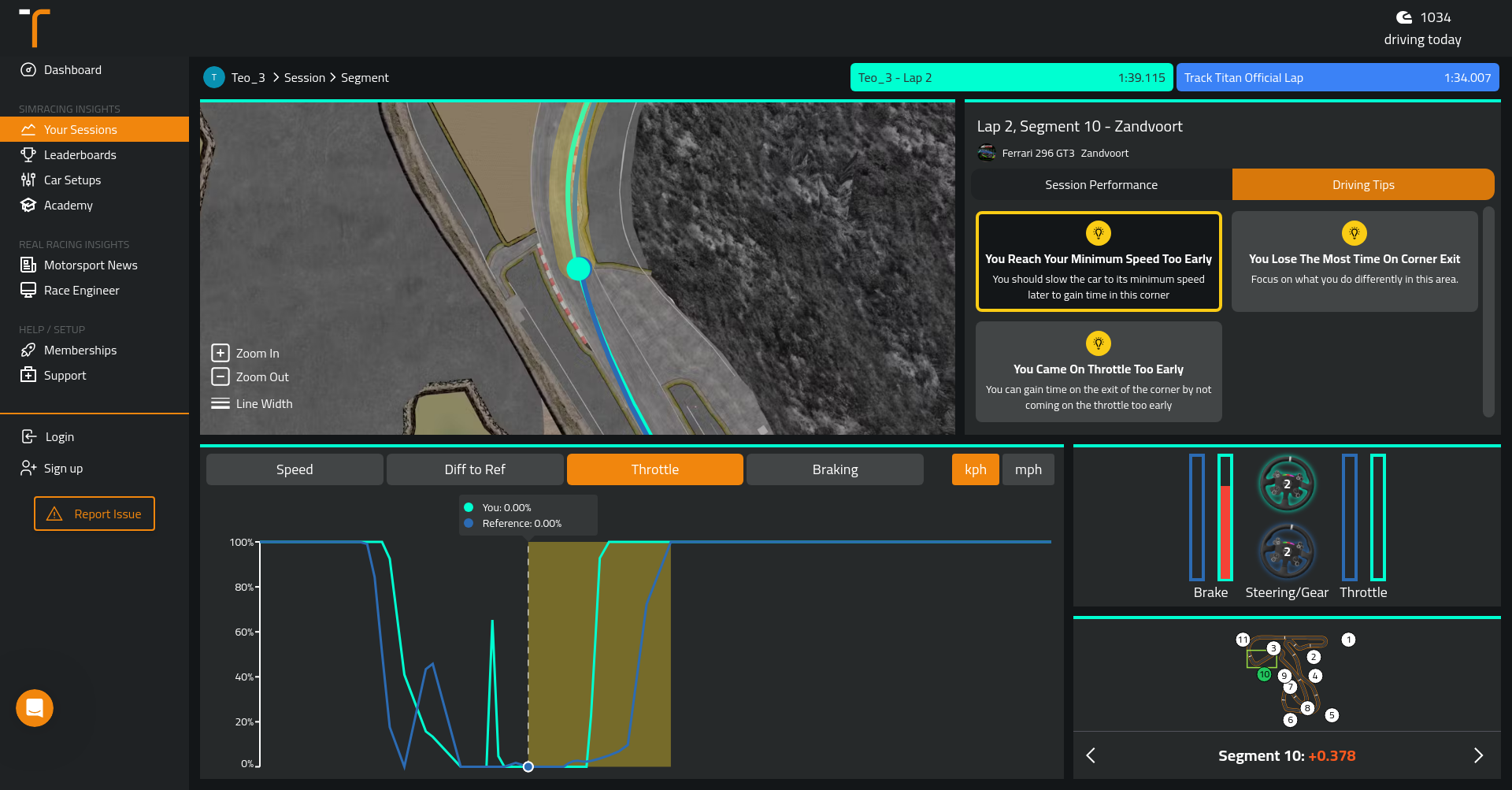
The speed chart analysis reveals that driverB enters the corner with a lower speed than driverA, which is a result of less momentum from the previous corner. This slower entry speed affects the entire corner sequence, leading to a cumulative time loss. Additionally, driverB's minimum speed occurs later in the corner, indicating a delayed throttle application and resulting in a slower exit. To improve lap times, driverB should carry more speed through the entry and apply throttle earlier to increase exit velocity. In terms of throttle control, driverA is cautious and gradual in applying throttle upon exiting the corner, which presents an opportunity for improvement by adopting a more aggressive approach immediately after the apex. DriverB applies throttle earlier and with more confidence, leading to a quicker post-apex acceleration and better drive out of the corner. DriverA should emulate this technique to reduce time lost during corner exits and enhance overall performance on subsequent straights or sections.
Analyzing the speed chart, it's evident that driverB is entering the corner at a significantly lower speed compared to driverA. This discrepancy starts right at the beginning of the chart, indicating that driverB exited the previous corner with less momentum. This initial speed deficit is crucial as it sets the pace for the entire corner sequence, leading to a compounded time loss throughout. Furthermore, driverB's minimum speed in the corner occurs later than that of driverA, suggesting a delayed throttle application. This not only affects the mid-corner phase but also results in a slower exit as seen by the shallower gradient of driverB's speed curve compared to driverA's. To optimize performance, driverB should focus on carrying more speed through corner entry and initiating throttle application earlier to maximize exit velocity and improve overall lap time.

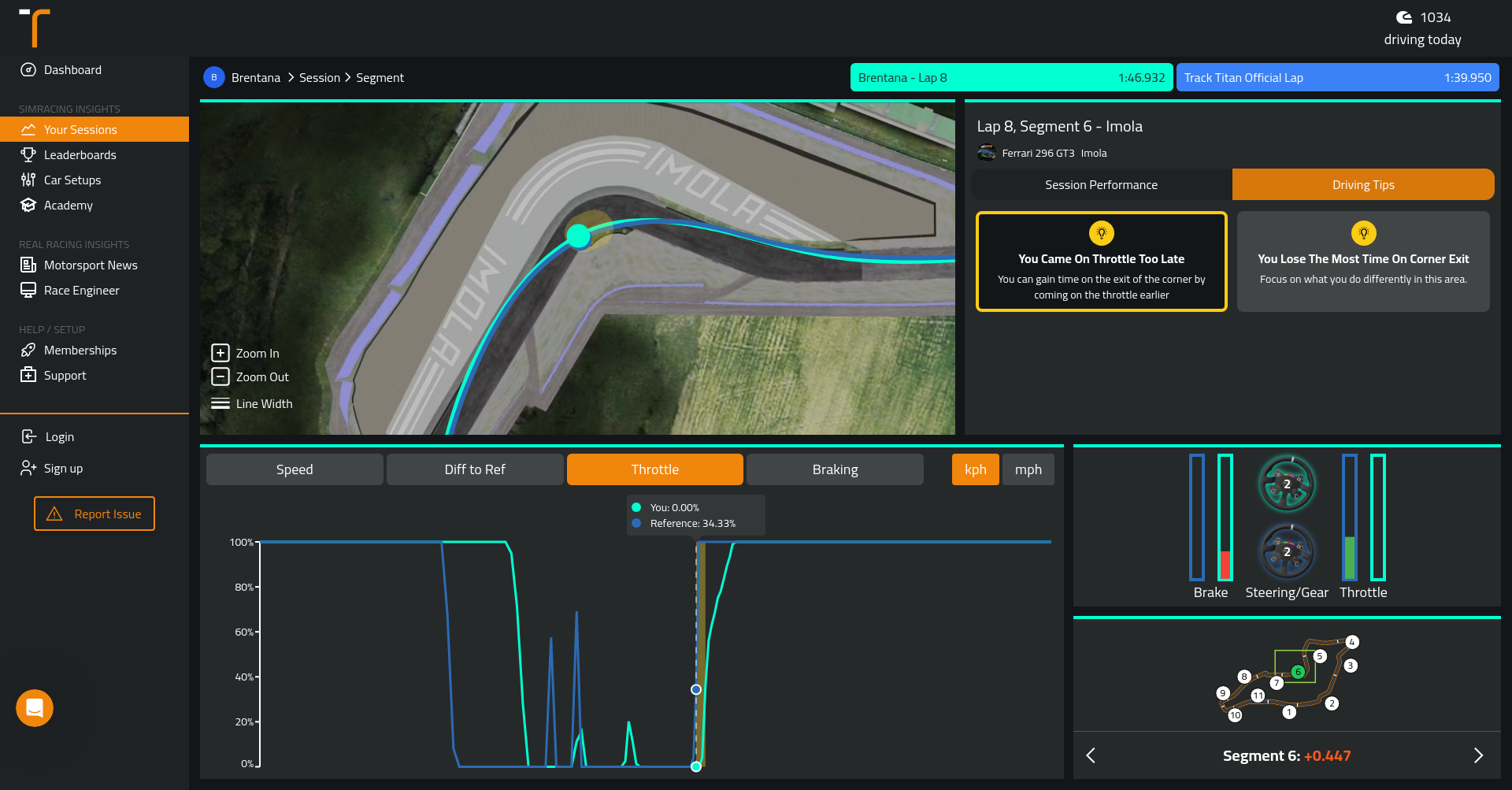
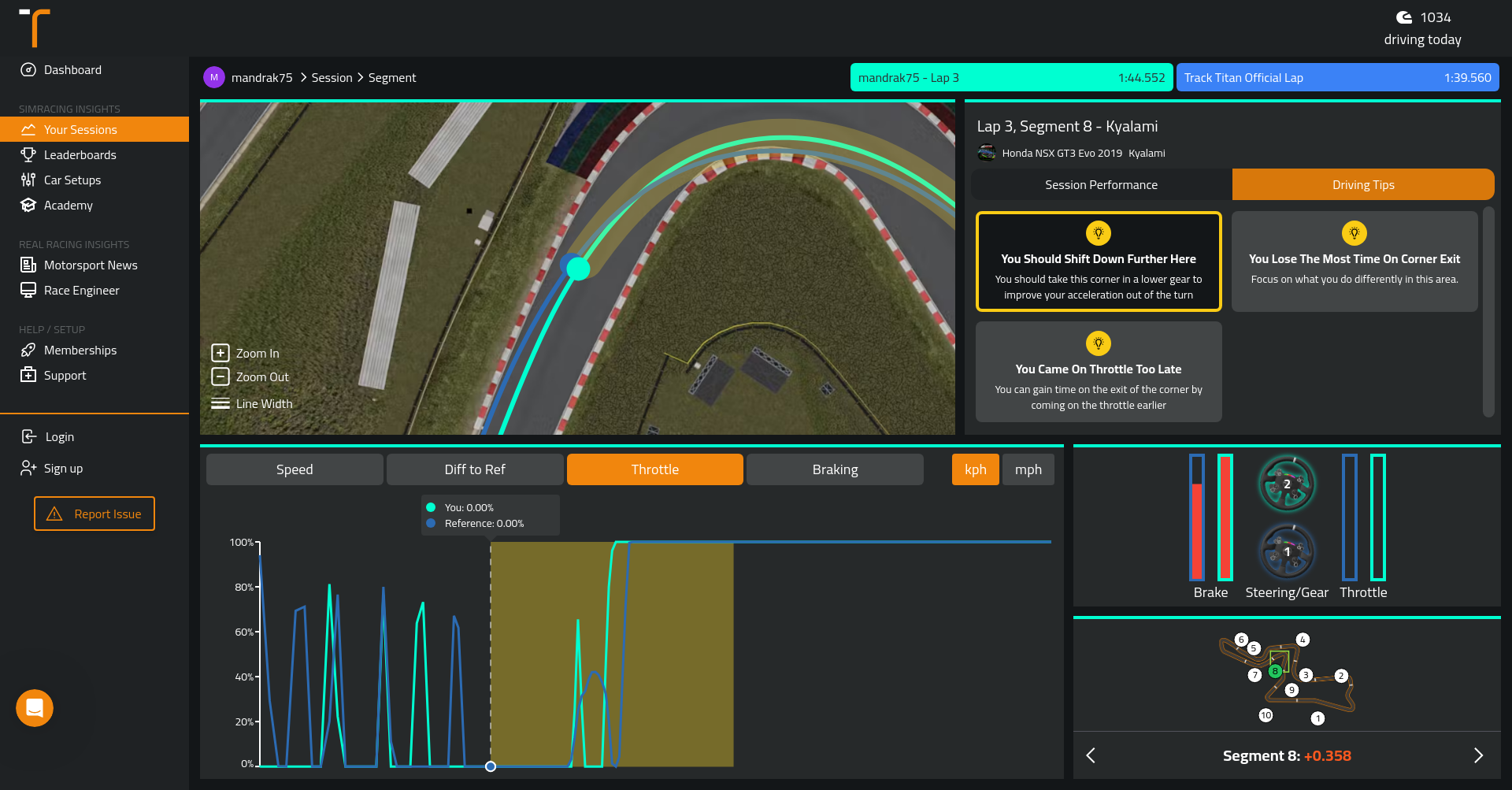
Analyzing the throttle control chart, it's evident that driverA and driverB have markedly different approaches to throttle application. DriverA exhibits a delayed and gradual increase in throttle, suggesting a cautious exit from the corner. This delay in applying full throttle is a clear opportunity for driverA to improve lap times by adopting a more aggressive throttle application as soon as possible after the apex, as demonstrated by driverB. DriverB, on the other hand, applies the throttle much earlier and with greater confidence, resulting in a sharper increase in speed post-apex. This indicates that driverB is maximizing the car's potential by getting back to power sooner, which translates into better drive out of the corner and improved overall speed onto the following straight or section. DriverA should aim to replicate this behavior to minimize time lost during corner exit phases.