122,444
122K
Laps driven today

iRacing

Le Mans Ultimate

Assetto Corsa Competizione

Assetto Corsa

F1 25

Assetto Corsa EVO

Automobilista 2

Forza Motorsport

F1 24

F1 2021

F1 23

F1 2020


Lap 1
Segment 3
1:33.562
6th Feb 2024
iRacing
Brands Hatch Circuit - Grand Prix - Porsche 911 GT3 Cup (992)

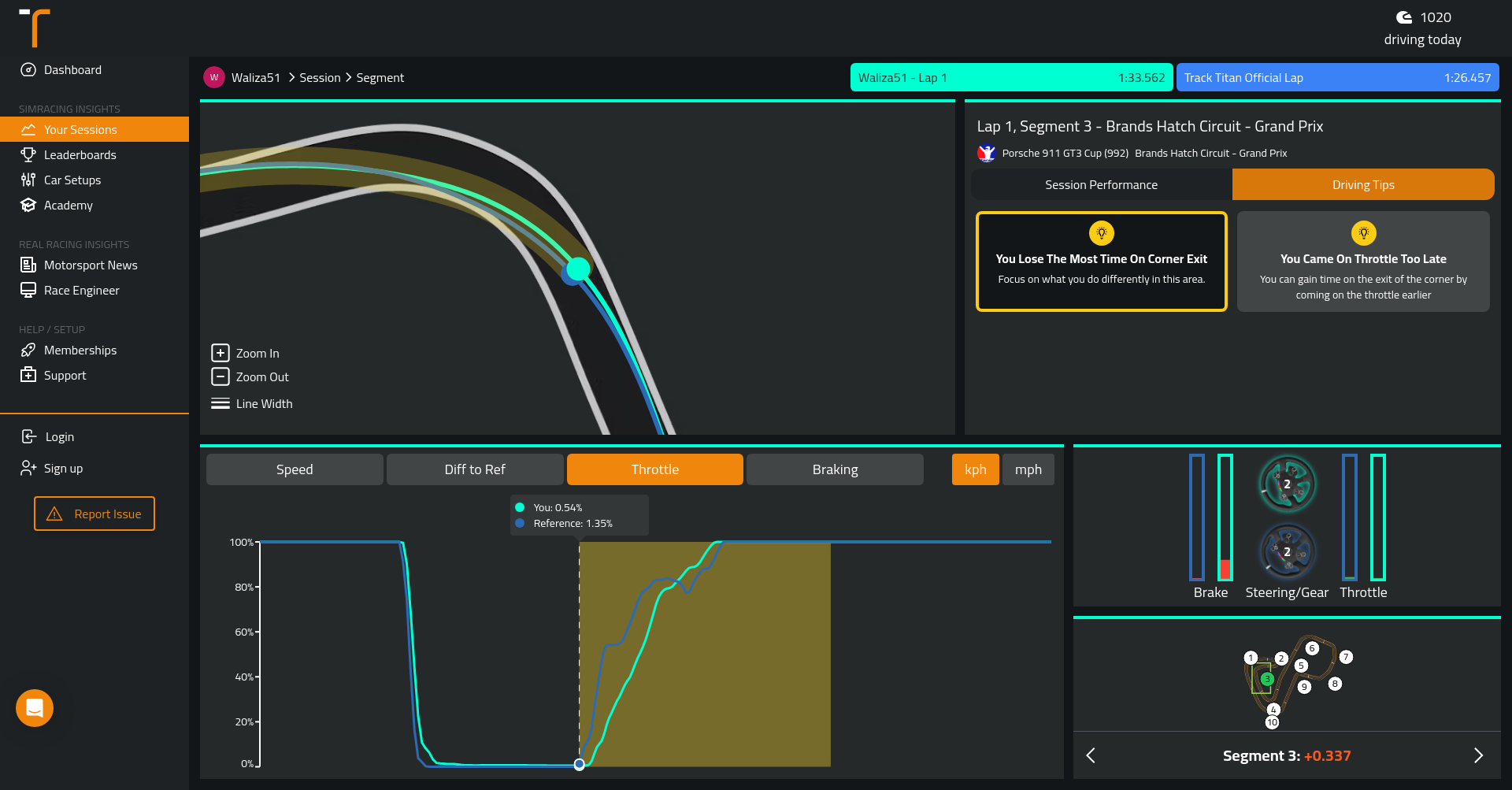
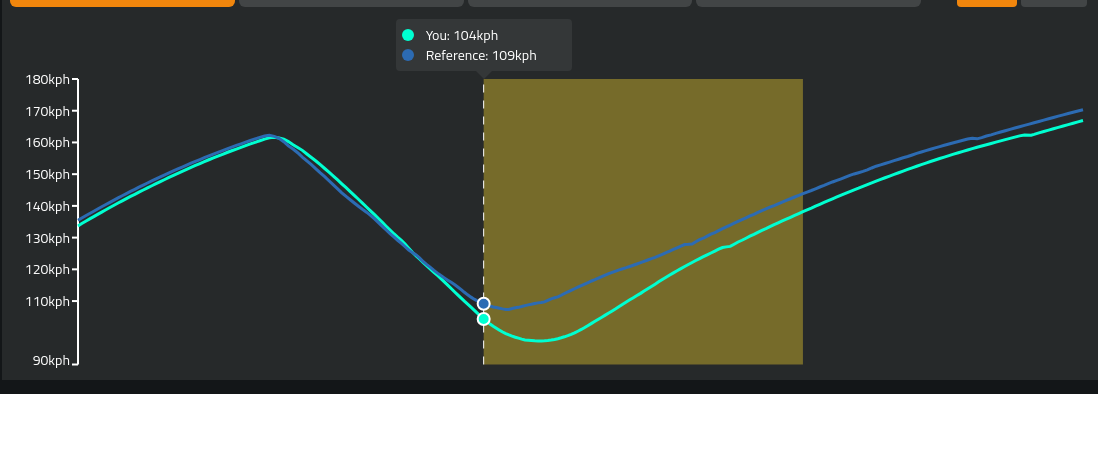
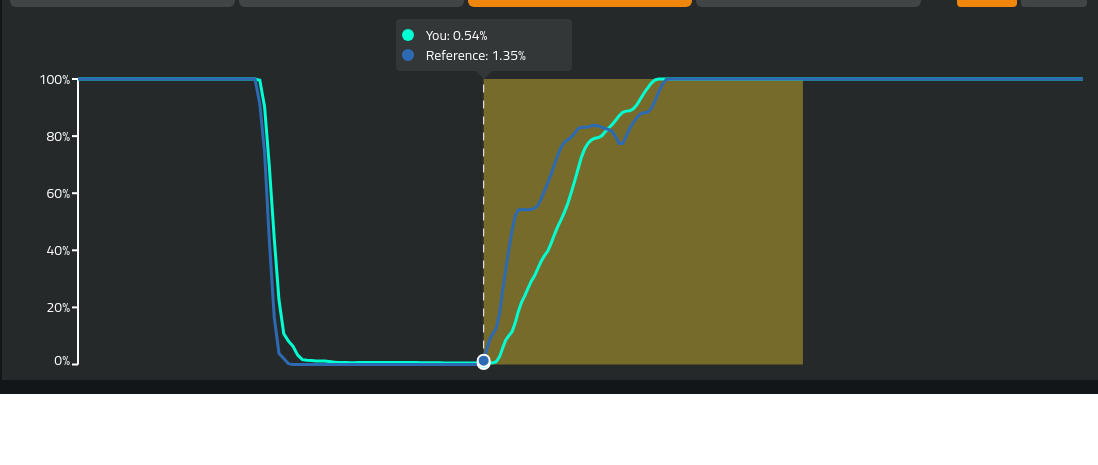
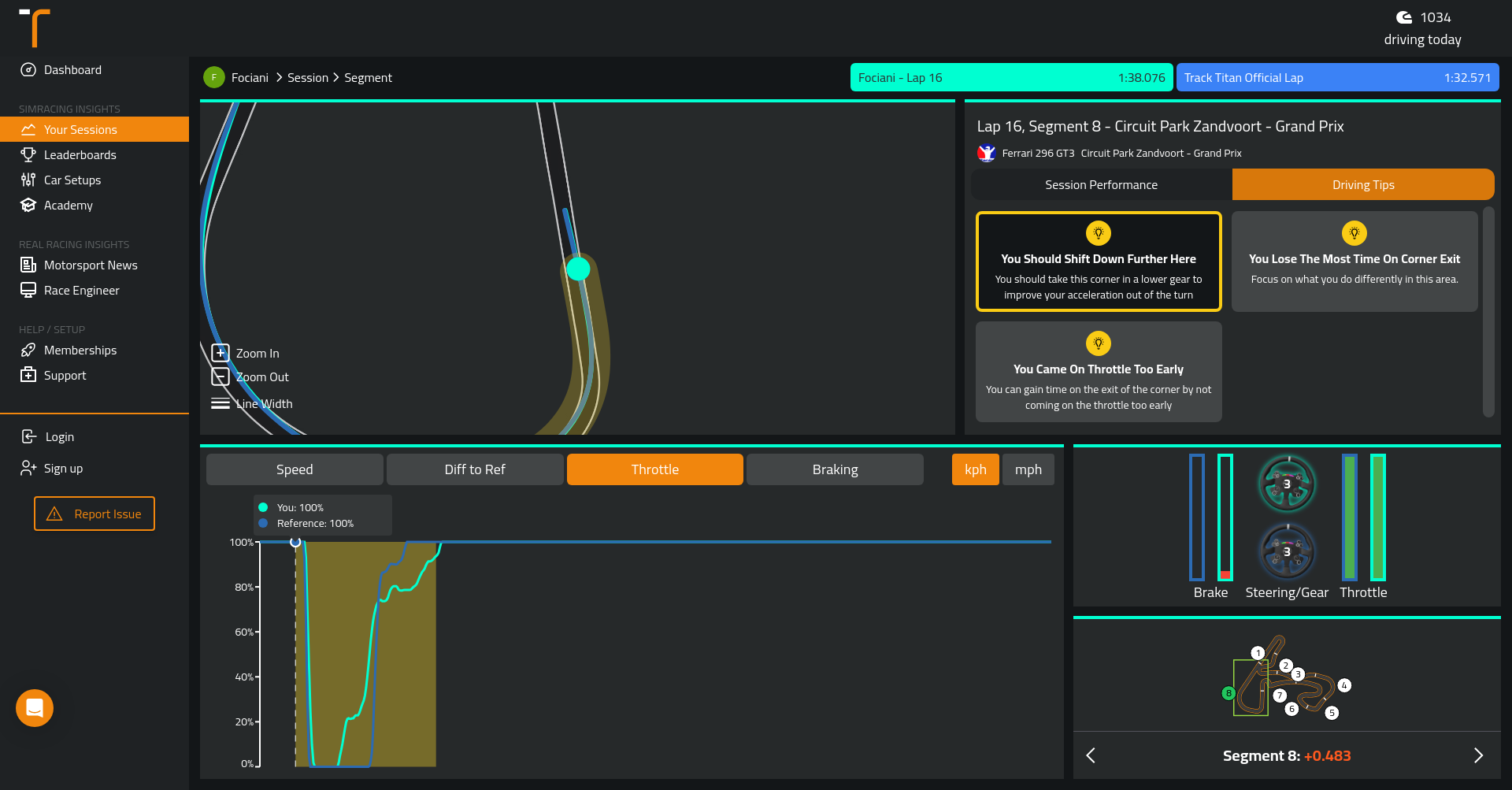
The speed chart analysis reveals that driverB enters the corner with less speed than driverA, indicating a loss of momentum from the previous corner. This initial speed deficit is compounded by a lower minimum speed and a later occurrence of this minimum, suggesting a delayed throttle application by driverB. As a result, driverB's exit speed and acceleration rate are inferior to those of driverA, leading to time lost on corner exit. To improve lap times, driverB should focus on maintaining more speed into the corner entry and applying throttle earlier. In contrast, the throttle control analysis shows that while driverA applies throttle later and more cautiously, resulting in a gradual increase in power delivery, driverB is more aggressive with an earlier and sharper throttle application. This approach allows driverB to achieve better exit speeds and acceleration rates than driverA. To optimize performance, driverA needs to apply throttle earlier and more decisively to match the reference's exit speed and carry more momentum onto the straight. By adopting a strategy similar to driverB's early throttle input, driverA could potentially reduce lap times by gaining time during the crucial phase of corner exit.
Analyzing the speed chart, it's evident that driverB is entering the corner with a lower speed compared to driverA. This suggests that driverB didn't carry as much momentum from the previous corner, which is immediately putting them at a disadvantage. The speed difference at the very start of the chart indicates this issue clearly. As they progress through the corner, driverB's minimum speed is also lower than that of driverA, and it occurs later in the corner. This delayed minimum speed points to a later throttle application by driverB, which correlates with a loss of time on corner exit. The impact of this later throttle application is further highlighted by comparing the exit speeds and acceleration rates of both drivers. DriverB's exit speed is notably lower than that of driverA, and their acceleration rate out of the corner is less steep. This confirms that driverB loses significant time on corner exit due to coming on throttle too late. To improve lap times, focusing on carrying more speed from the previous corner into the entry and applying throttle earlier in this section will be crucial for driverB.

In the provided throttle control analysis, driverA and driverB exhibit distinct differences in their throttle application. DriverA's graph shows a delayed and gradual increase in throttle application, indicating a later and more cautious power delivery. This contrasts with driverB's graph, which displays an earlier and sharper increase in throttle application, suggesting a more aggressive and confident acceleration out of the corner. The impact of these differences is significant. DriverA's late throttle application is causing a loss of time on corner exit compared to driverB. To improve, driverA should focus on applying the throttle earlier and more decisively to match the reference's exit speed. This change would help carry more speed onto the straight, potentially reducing lap times. The data suggests that by emulating driverB's earlier throttle input, driverA could gain time in this critical phase of the corner exit.