117,904
117K
Laps driven today

iRacing

Le Mans Ultimate

Assetto Corsa Competizione

Assetto Corsa

F1 25

Assetto Corsa EVO

Automobilista 2

Forza Motorsport

F1 24

F1 2021

F1 23

F1 2020


Lap 1
Segment 2
4:13.934
6th Feb 2024
iRacing
Circuit des 24 Heures du Mans - 24 Heures du Mans - Porsche 911 GT3 R (992)

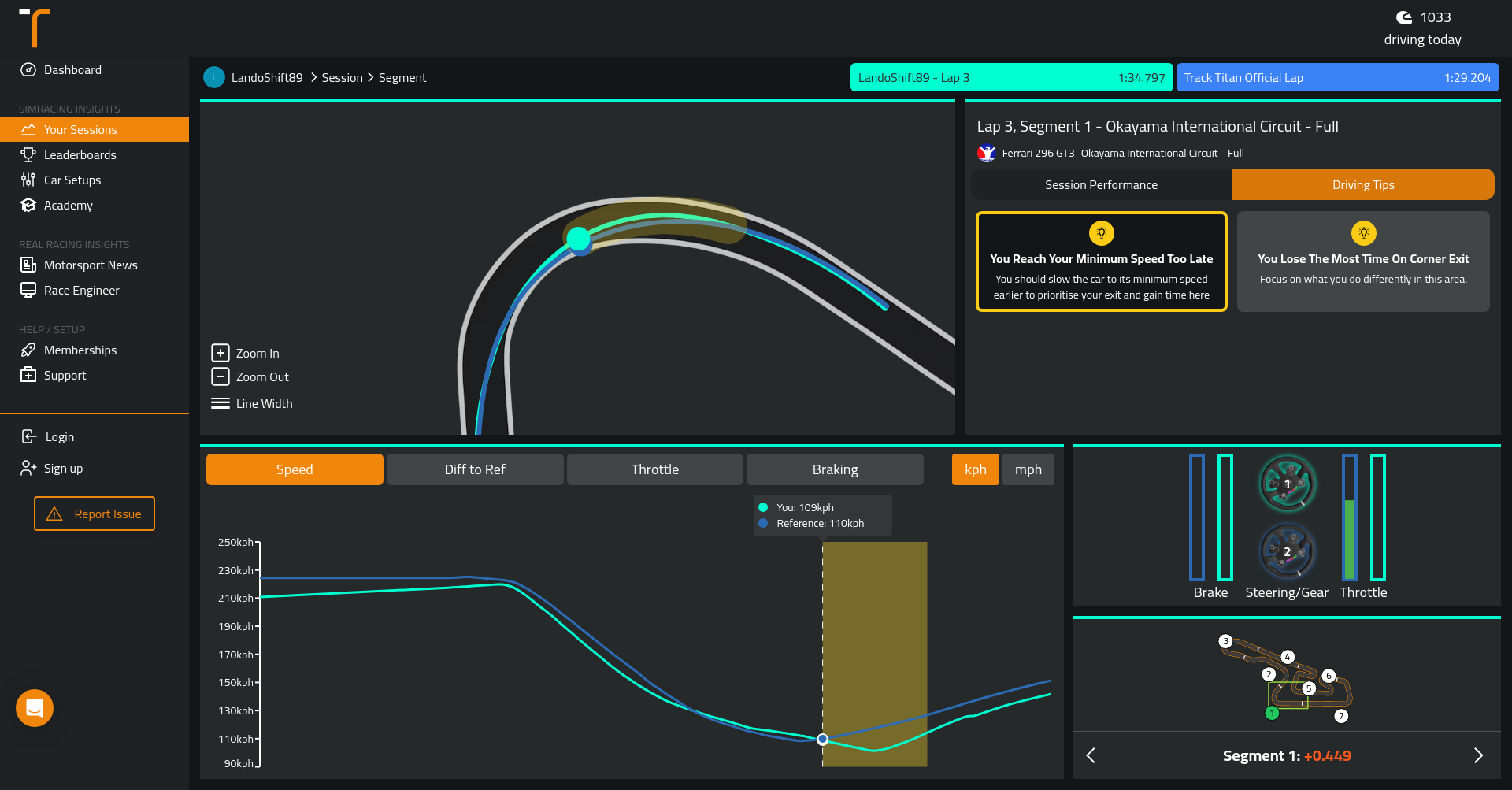
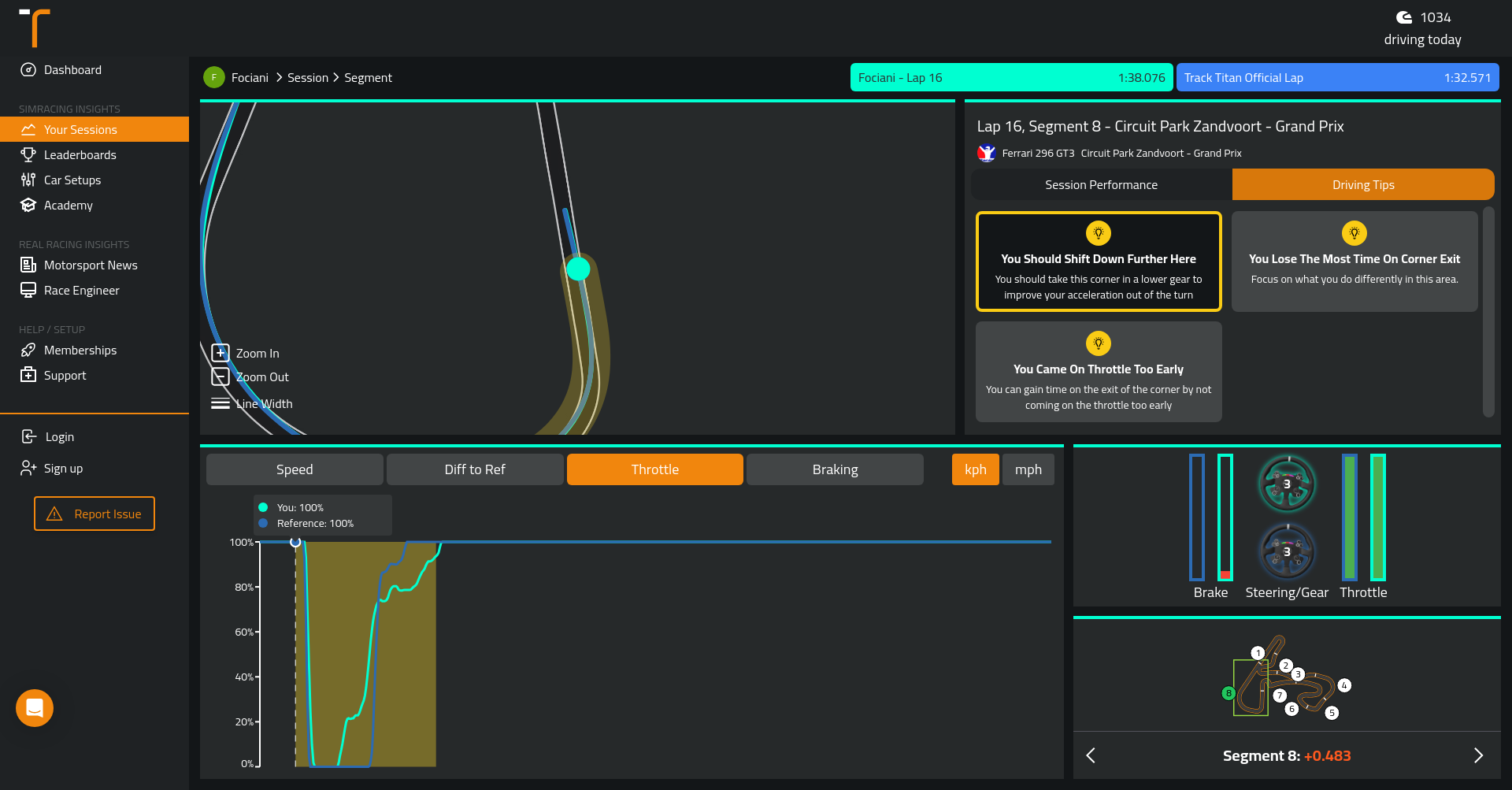
The speed chart analysis reveals that driverB enters the corner at a lower speed than driverA, suggesting a loss of momentum from the previous corner that could result in cumulative time loss. DriverB also reaches their minimum speed later and applies the throttle earlier than driverA, which likely causes understeer or instability, leading to a slower exit. The advice for driverB is to carry more speed through the entry and mid-corner phases and delay throttle application to ensure better traction and a stronger exit. The throttle control chart comparison between driverA and driverB shows that driverA applies the throttle earlier but in a less smooth manner, indicating potential wheelspin or car control issues. In contrast, driverB's gradual and controlled throttle increase suggests better traction and car control. To improve, driverA should delay initial throttle input and focus on gradually increasing it upon exiting the corner for enhanced speed and stability.
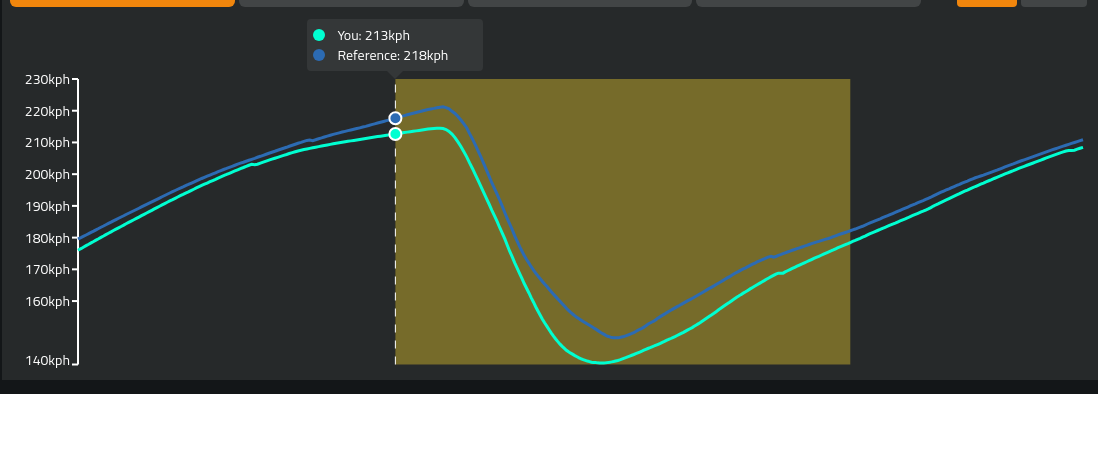
Analyzing the speed chart, it's evident that driverB enters the corner with a lower speed compared to driverA. This is indicated by the initial left side of the chart where driverB's speed is already below that of driverA before reaching the braking zone. This suggests that driverB carried less momentum from the previous corner, which can lead to a cumulative time loss over subsequent sections. In the middle of the corner, there's a noticeable dip in speed for driverB compared to driverA. DriverB reaches their minimum speed later than driverA and subsequently gets on the throttle earlier. This premature throttle application likely caused understeer or instability, preventing driverB from maintaining optimal mid-corner speed and leading to a slower exit. The gradient of driverB's speed increase post-apex is less steep than that of driverA, indicating less effective acceleration out of the corner. To improve lap times, driverB should focus on carrying more speed through the entry and mid-corner phases and delay throttle application slightly to ensure better traction and a stronger exit.

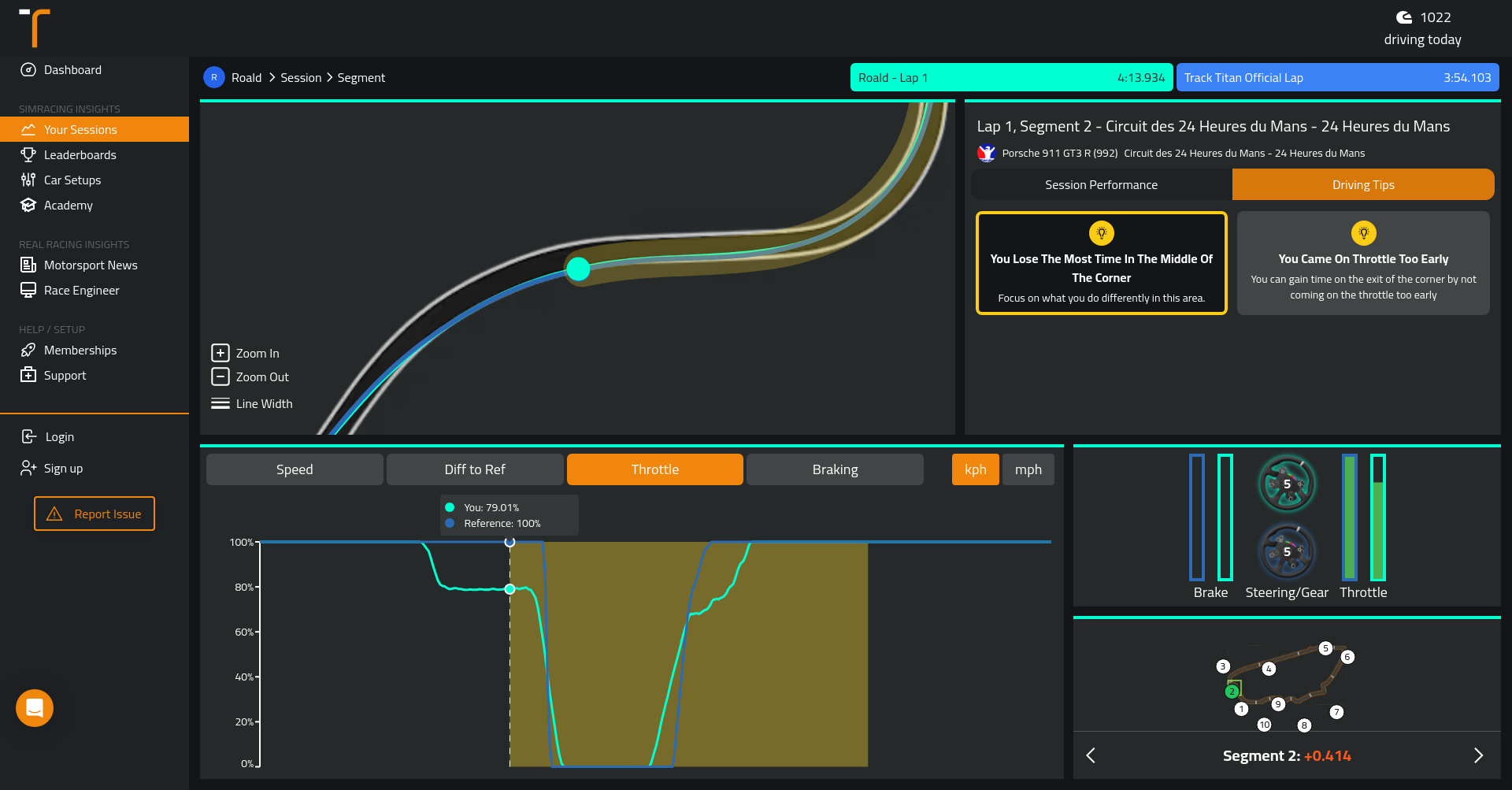
Analyzing the throttle control chart, it's evident that driverA and driverB have distinctly different approaches to throttle application. DriverA initiates throttle input much earlier in the corner compared to driverB. This premature application results in a less smooth increase in throttle, which can be seen as a jagged line on the graph. This suggests that driverA may be struggling with wheelspin or car control, as they are not able to apply the throttle confidently and smoothly. On the other hand, driverB's graph shows a more gradual and controlled increase in throttle application. This indicates better traction and car control through the corner, allowing for a more efficient exit and potentially higher exit speeds. DriverA should aim to replicate this smoother curve by delaying their initial throttle input and focusing on gradually increasing it as they exit the corner to improve their speed and stability.