117,319
117K
Laps driven today

iRacing

Le Mans Ultimate

Assetto Corsa Competizione

Assetto Corsa

F1 25

Assetto Corsa EVO

Automobilista 2

Forza Motorsport

F1 24

F1 2021

F1 23

F1 2020


Lap 7
Segment 4
1:37.407
6th Feb 2024
Assetto Corsa Competizione
Valencia - Porsche 992 GT3 Cup 2021

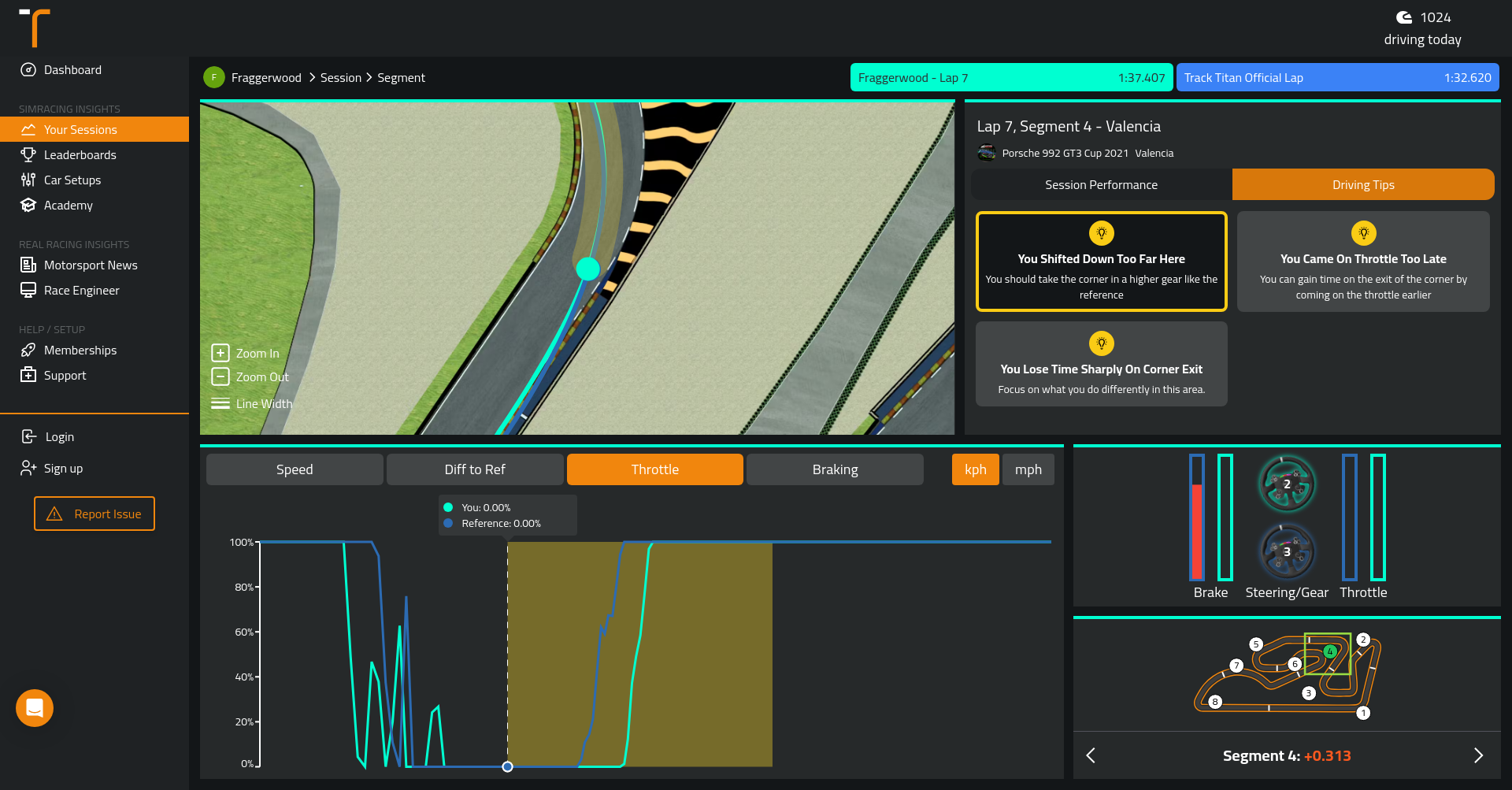
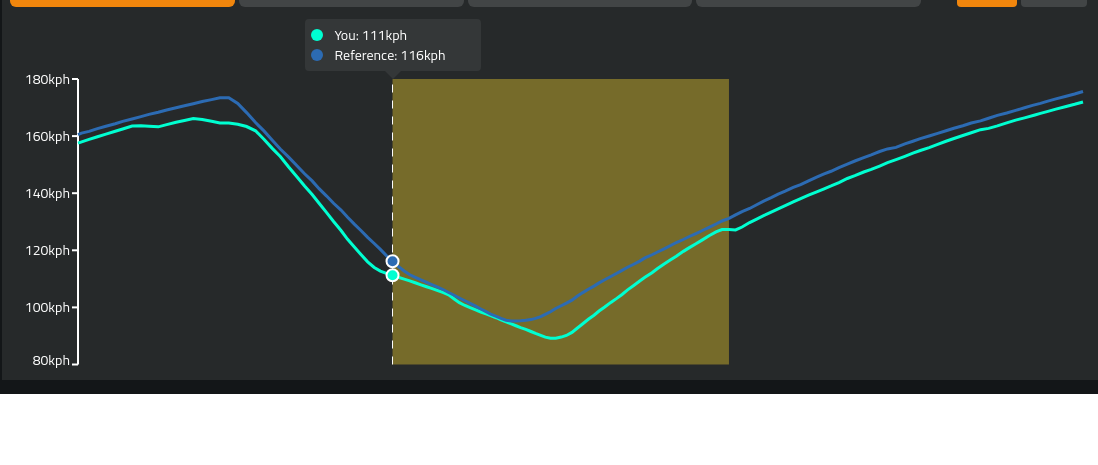
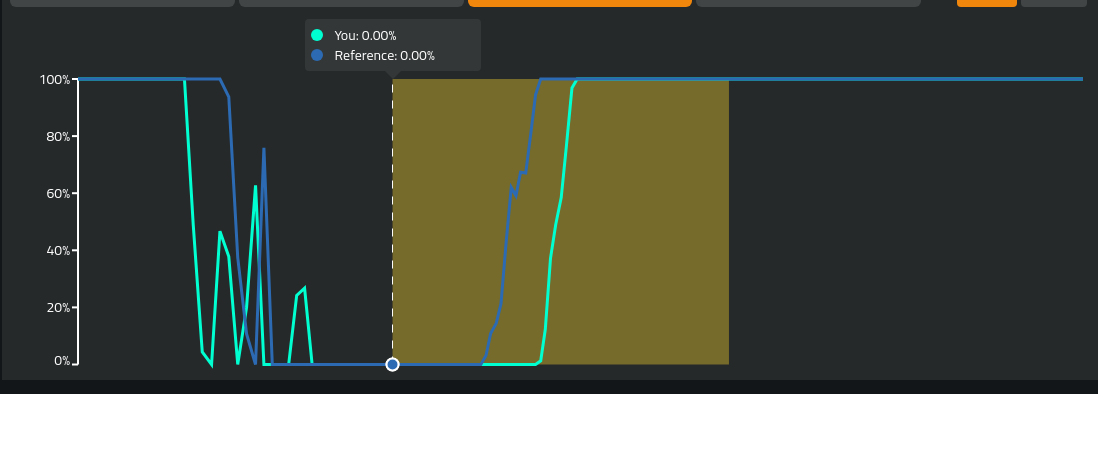
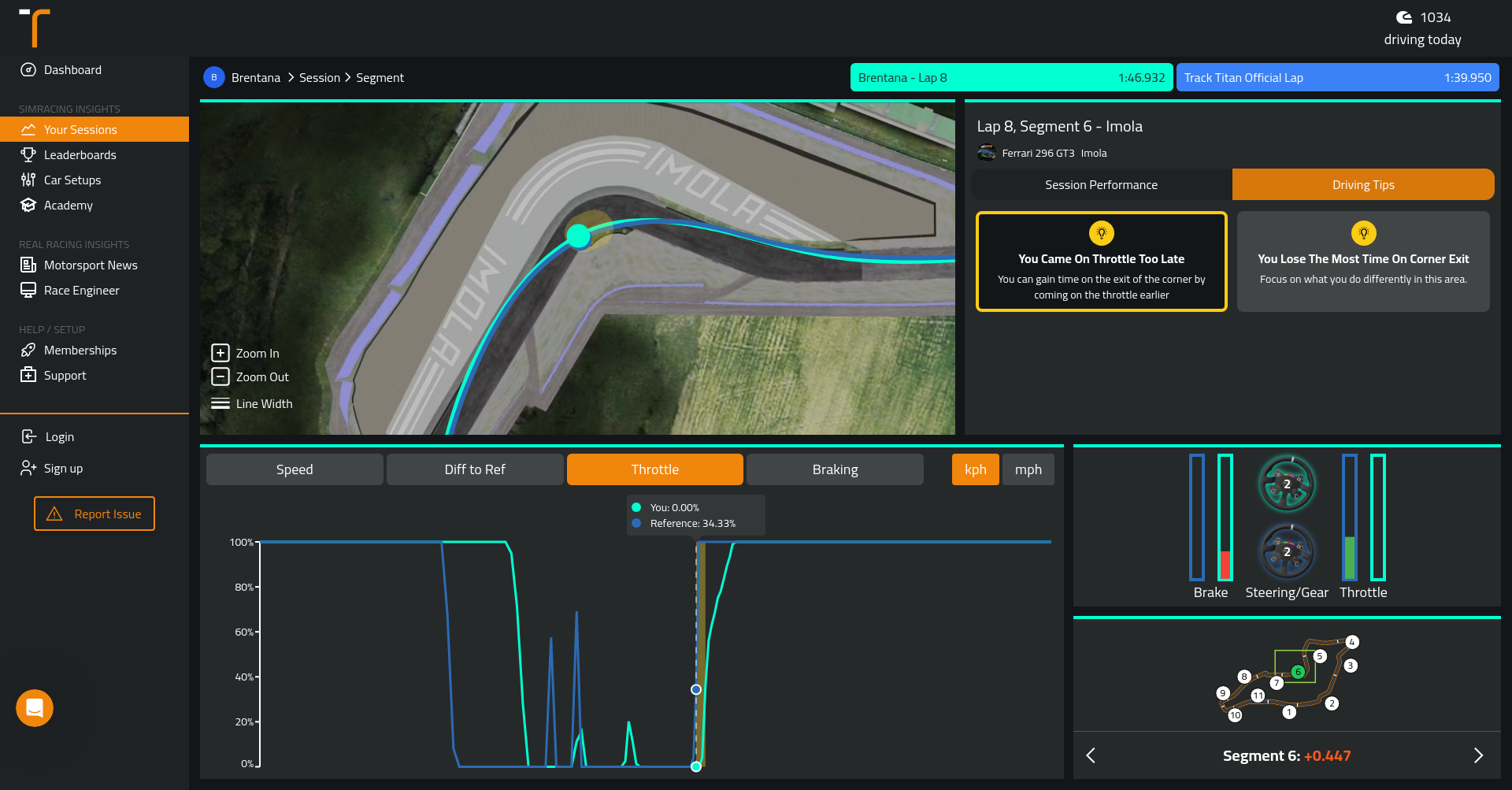
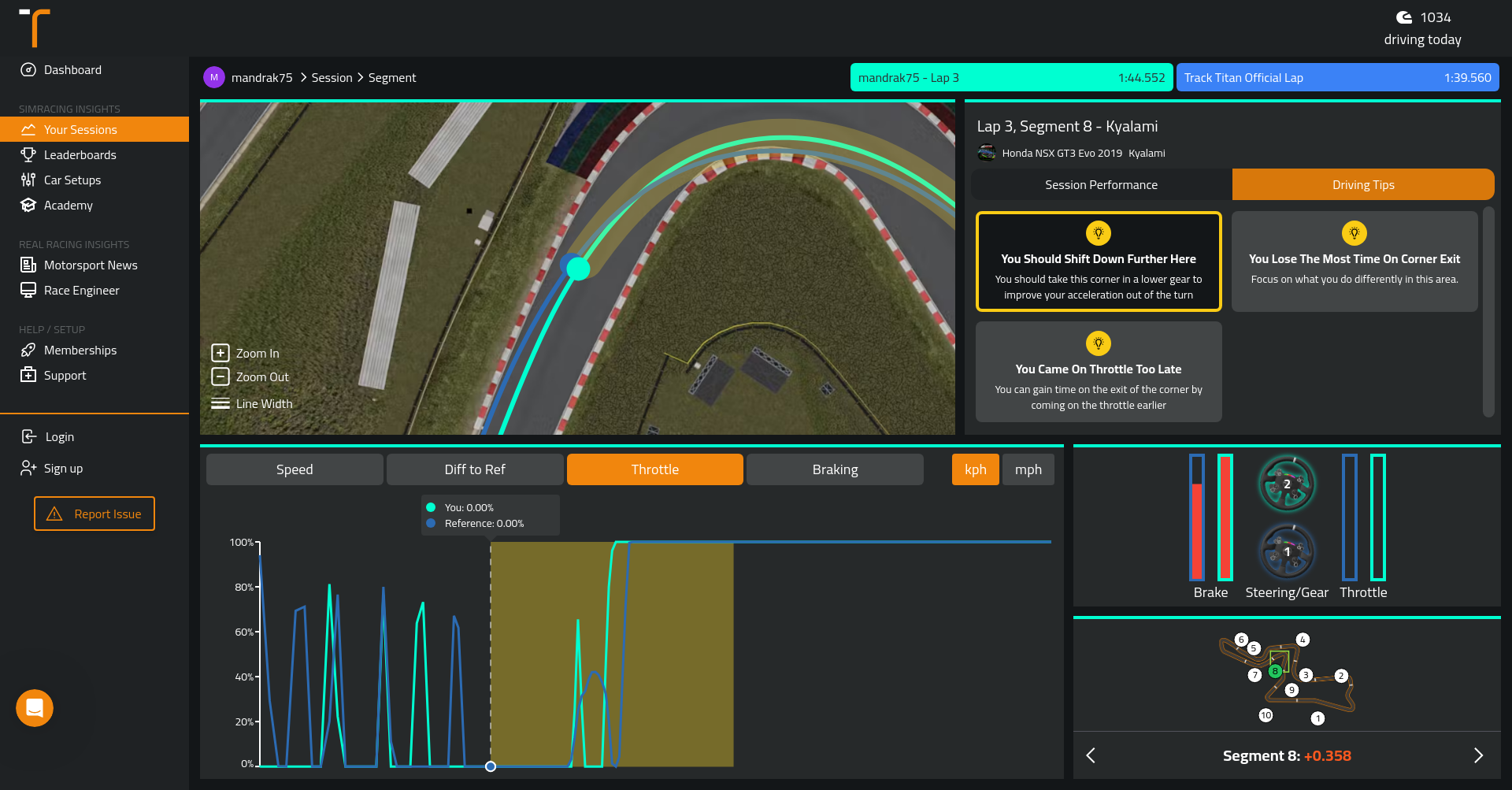
The speed chart analysis reveals that driverB is slower than driverA upon entering and exiting the corner, with a later and lower minimum speed at the apex. This suggests that driverB is not carrying enough momentum from the previous corner and is also slower to get on the throttle, resulting in a significant time loss. To enhance performance, driverB should focus on maintaining higher speeds through the preceding corner and accelerating earlier during corner exit. In contrast, the throttle control chart shows that driverA is hesitant in applying throttle compared to driverB, who starts accelerating much sooner. This early throttle application by driverB allows for a faster corner traversal and improved momentum onto the straight. DriverA's gradual and uneven throttle use indicates possible traction issues or a lack of confidence, leading to suboptimal acceleration out of the corner. For better lap times, driverA needs to work on applying throttle earlier and more smoothly to maximize their exit speed. Overall, both drivers have areas for improvement: driverB needs to work on carrying more speed through corners and accelerating sooner, while driverA should focus on gaining confidence in their throttle application for better traction and acceleration post-apex. By addressing these issues, both drivers can improve their lap times significantly.
Analyzing the speed chart, it's evident that driverB enters the corner with a lower speed compared to driverA. This suggests that driverB exited the previous corner with less momentum, which is a critical area of time loss. The minimum speed of driverB is also lower than that of driverA, and it occurs later in the corner. This indicates that driverB is slower at the apex and gets on the throttle later than driverA, resulting in lost time during corner exit. Furthermore, upon corner exit, there's a noticeable difference in acceleration between the two drivers. DriverB's speed increases at a slower rate compared to driverA, which further contributes to time loss. The delayed throttle application by driverB after the apex prevents them from maximizing their exit speed onto the following straight. To improve lap times, focusing on carrying more speed through the previous corner and getting on the throttle earlier will be crucial for driverB.

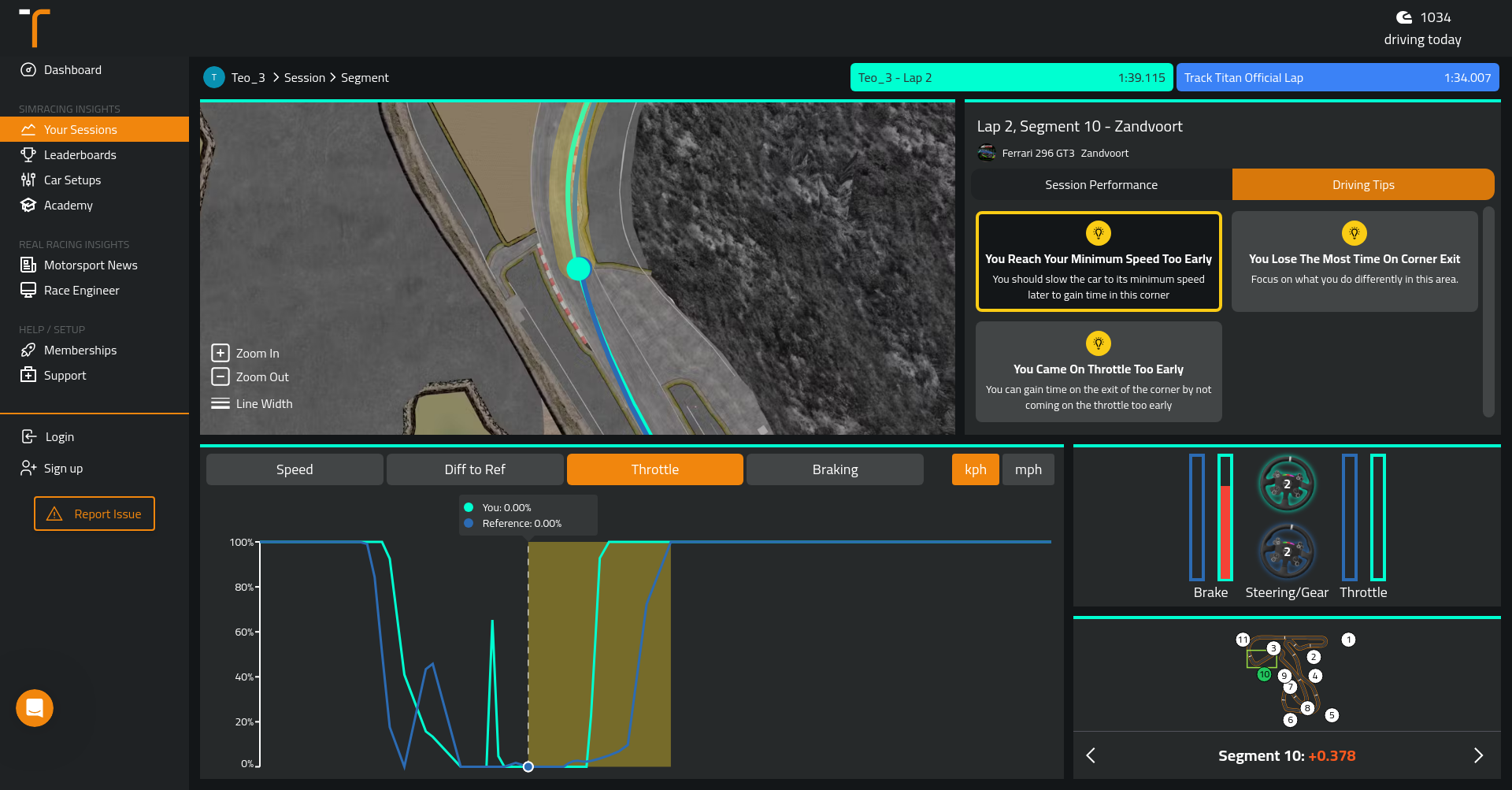
Analyzing the throttle control chart, it's evident that driverA is significantly delayed in applying throttle compared to driverB. DriverB initiates throttle application much earlier, as indicated by the steep incline in their graph line. This early application allows driverB to carry more speed through the corner and onto the straight, capitalizing on momentum and reducing lap times. Furthermore, driverA's gradual and inconsistent throttle application suggests a lack of confidence or traction issues on corner exit. The jagged nature of their graph line post-apex points to difficulty in managing wheelspin or finding the optimal balance between power and grip. In contrast, driverB's smoother curve indicates a more controlled and confident exit phase, allowing for better acceleration out of the corner. DriverA should focus on earlier and smoother throttle application to improve their corner exit speed and overall lap time.