122,247
122K
Laps driven today

iRacing

Le Mans Ultimate

Assetto Corsa Competizione

Assetto Corsa

F1 25

Assetto Corsa EVO

Automobilista 2

Forza Motorsport

F1 24

F1 2021

F1 23

F1 2020


Lap 3
Segment 6
1:40.020
6th Feb 2024
Assetto Corsa Competizione
Misano - Porsche 911 (992) GT3 R

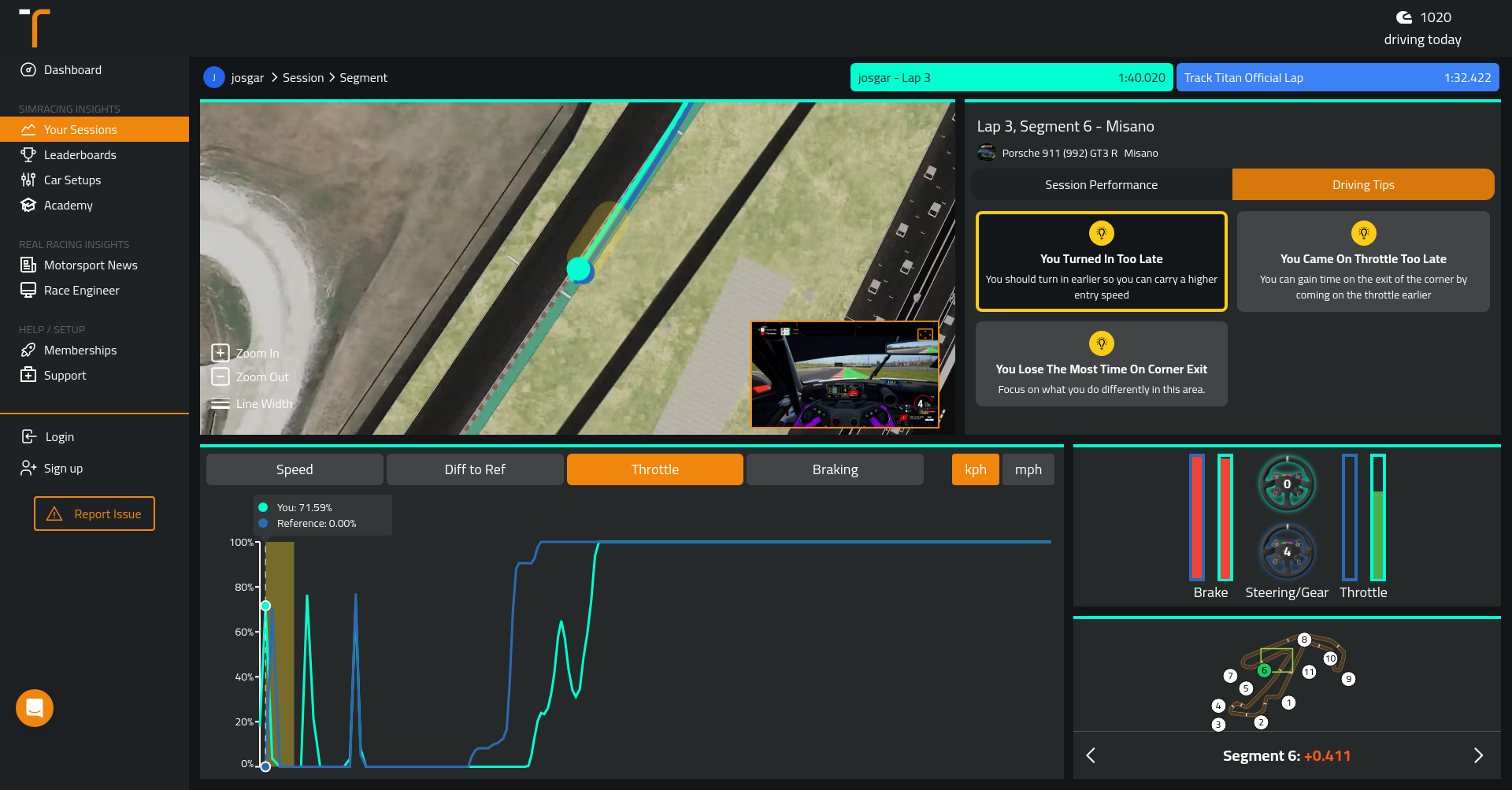
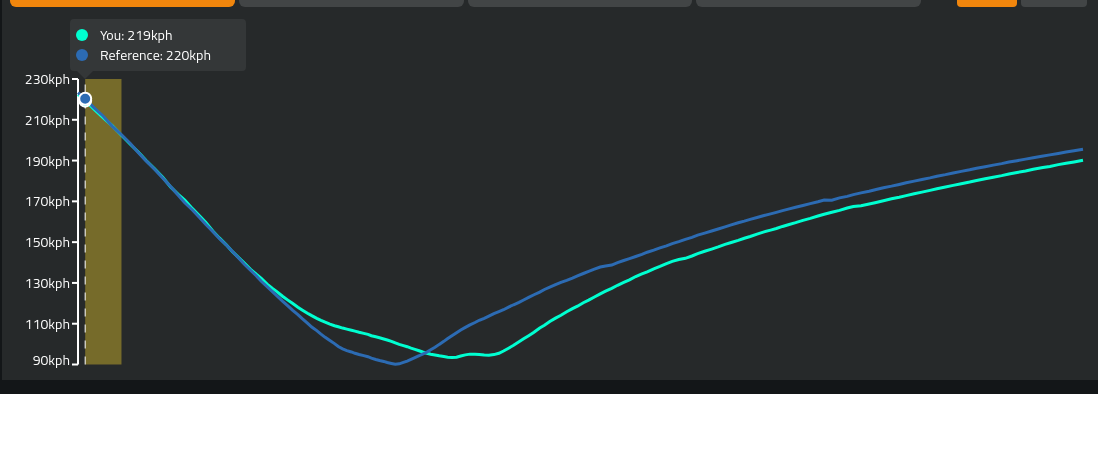
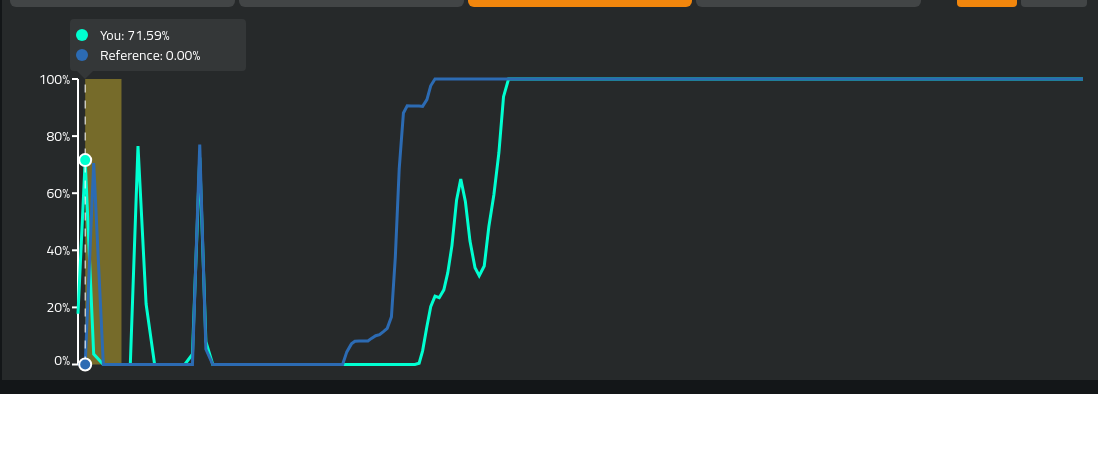
The speed chart analysis reveals that driverB enters the corner at a lower speed than driverA, indicating a lack of momentum from the previous corner. DriverB's minimum speed occurs later in the corner, suggesting a delay in throttle application and resulting in a lower exit speed. To improve, driverB should aim for an earlier turn-in and throttle application to increase exit velocity. In contrast, driverA's throttle control analysis shows a delayed and gradual increase in throttle, leading to time loss on corner exit. DriverB applies the throttle earlier and more decisively, allowing for faster corner exit speeds. DriverA should work on applying the throttle earlier with a smoother transition to full acceleration to enhance performance and maintain speed through the corner. Overall, both drivers have areas to focus on: driverB needs to carry more momentum into the corner and apply the throttle sooner, while driverA must work on timing their throttle application better to avoid losing time during corner exits.
Analyzing the speed chart, it's evident that driverB enters the corner with a lower speed compared to driverA. This is indicated by the initial left side of the chart where driverB's speed is already trailing before reaching the braking zone. This suggests that driverB exited the previous corner with less momentum, which has a cascading effect on their approach and entry into the current corner. Furthermore, a critical observation is that driverB's minimum speed in the corner occurs later than that of driverA, implying a delayed throttle application. This delay in getting back on power results in a lower exit speed for driverB, as seen by the shallower gradient of their speed curve compared to driverA's steeper ascent post-corner. To optimize performance, driverB should focus on turning in earlier to maintain higher entry speed and committing to an earlier throttle application to improve their exit velocity and reduce time lost in this crucial phase of the corner.

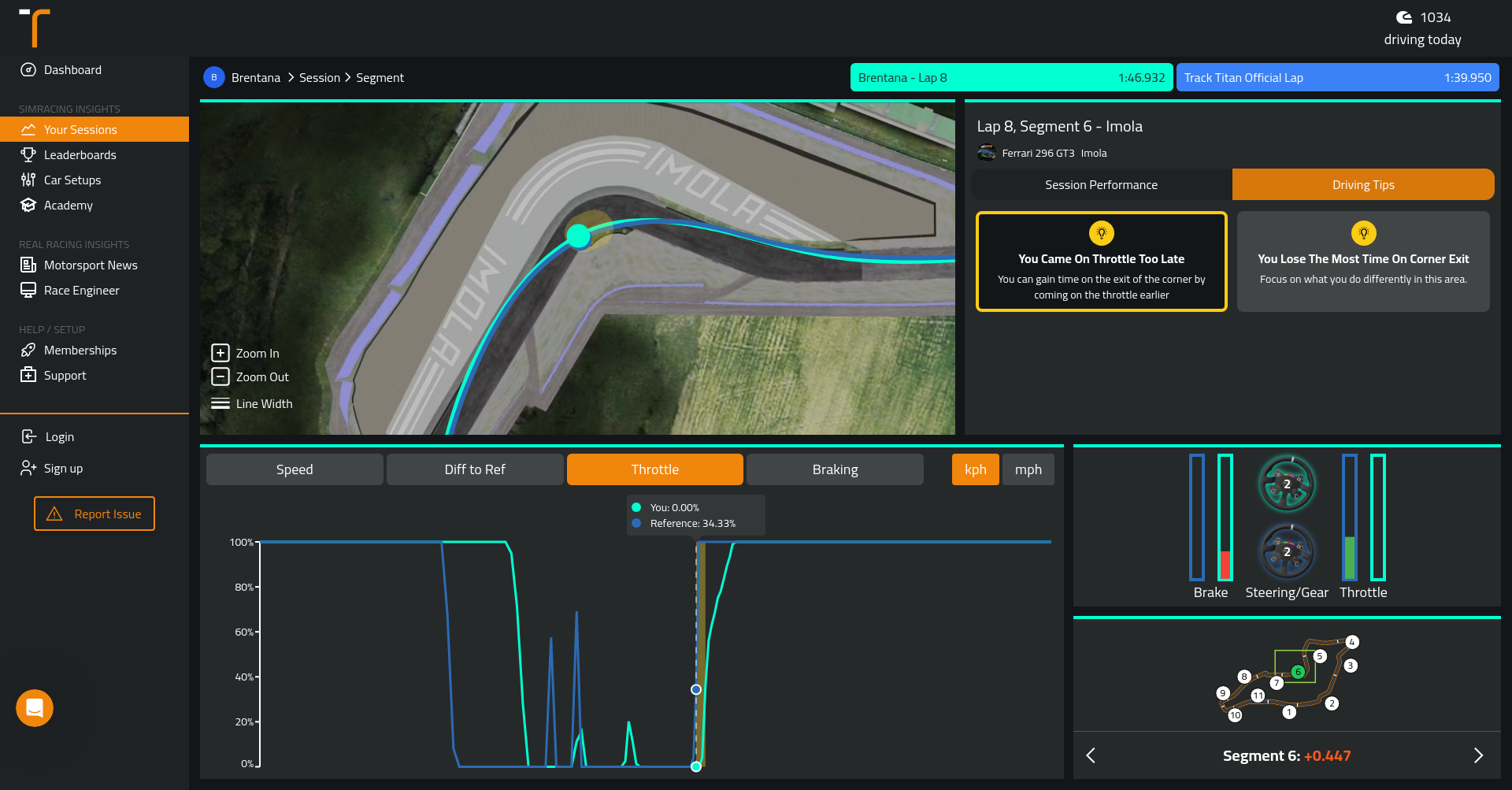
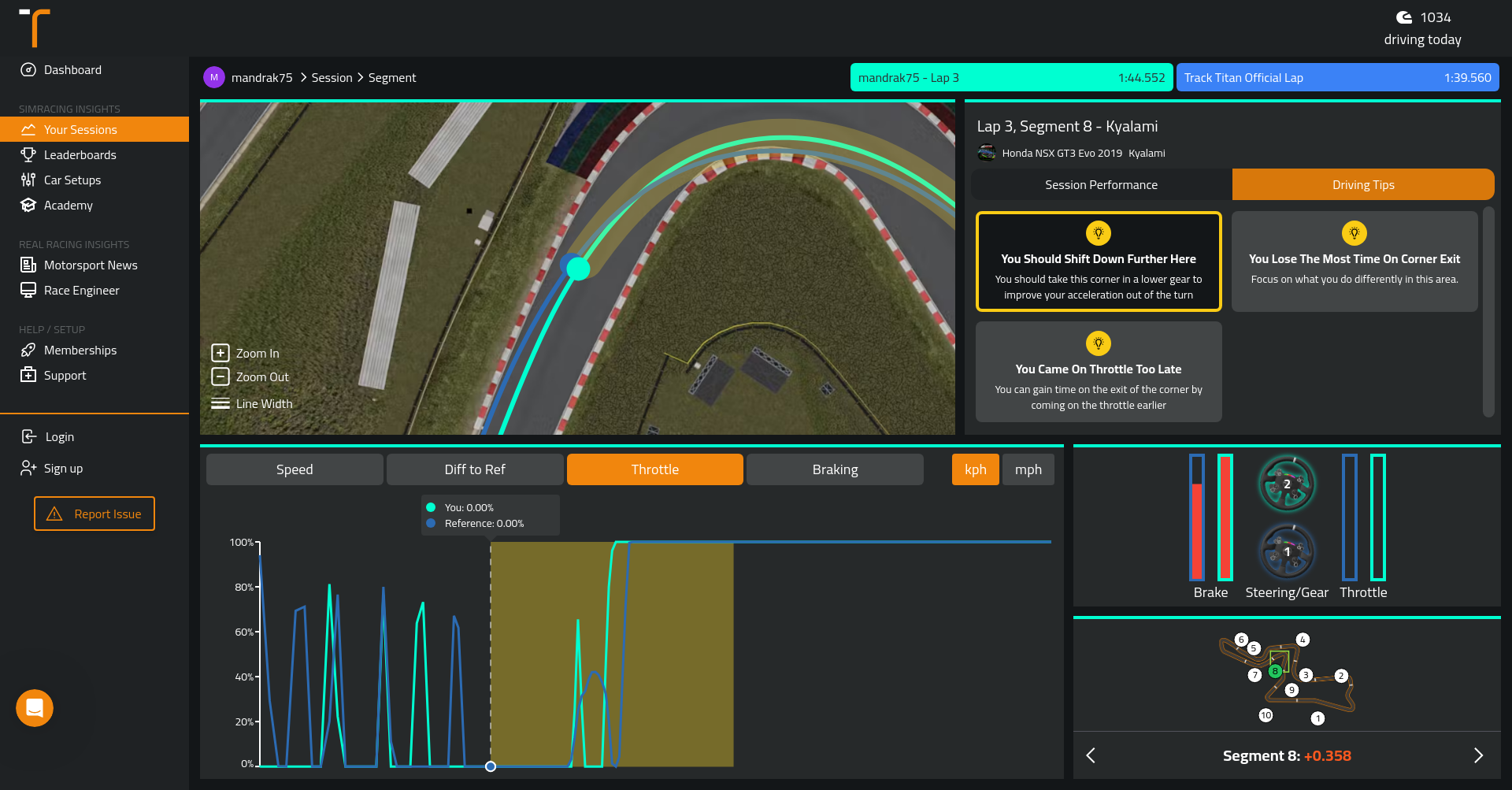
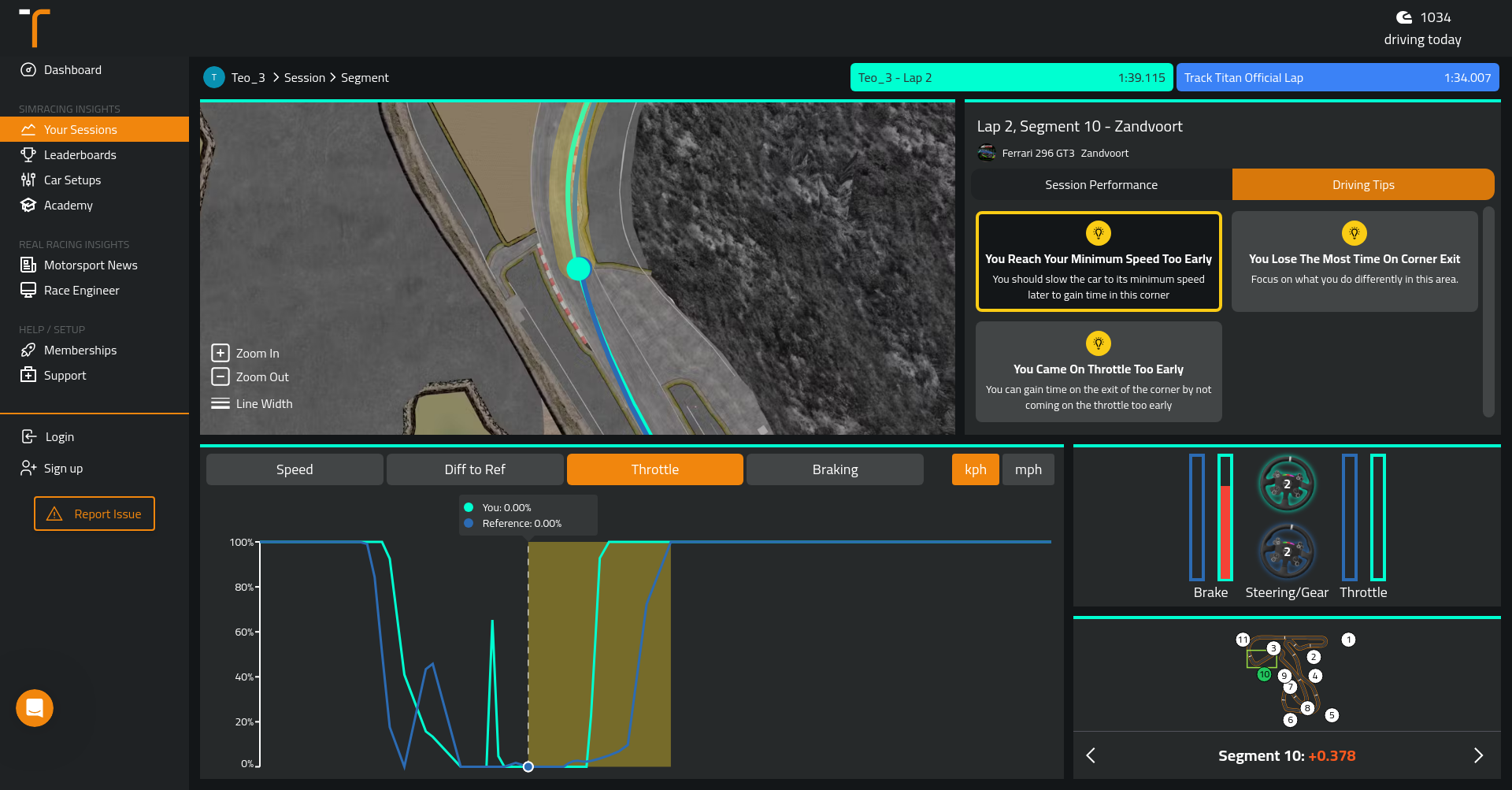
In the provided throttle control analysis, there is a distinct difference between driverA and driverB's throttle application. DriverA's graph shows a delayed and gradual increase in throttle application compared to driverB. This indicates that driverA is coming on the throttle too late, which aligns with the observed loss of time on corner exit. The earlier and more decisive throttle input from driverB suggests they are able to carry more speed out of the corner, gaining time on driverA. Furthermore, the intensity of driverB's throttle application is more immediate and reaches higher percentages quicker than that of driverA. This sharp increase in throttle percentage for driverB implies a confident acceleration with minimal wheelspin, whereas the slower increase for driverA could suggest either hesitation or difficulty managing wheelspin. To improve performance, driverA should focus on earlier throttle application with a smoother transition to full acceleration to maximize exit speed from the corner.