122,247
122K
Laps driven today

iRacing

Le Mans Ultimate

Assetto Corsa Competizione

Assetto Corsa

F1 25

Assetto Corsa EVO

Automobilista 2

Forza Motorsport

F1 24

F1 2021

F1 23

F1 2020


Lap 11
Segment 9
1:38.132
6th Feb 2024
Assetto Corsa Competizione
Oulton Park - Porsche 911 (992) GT3 R

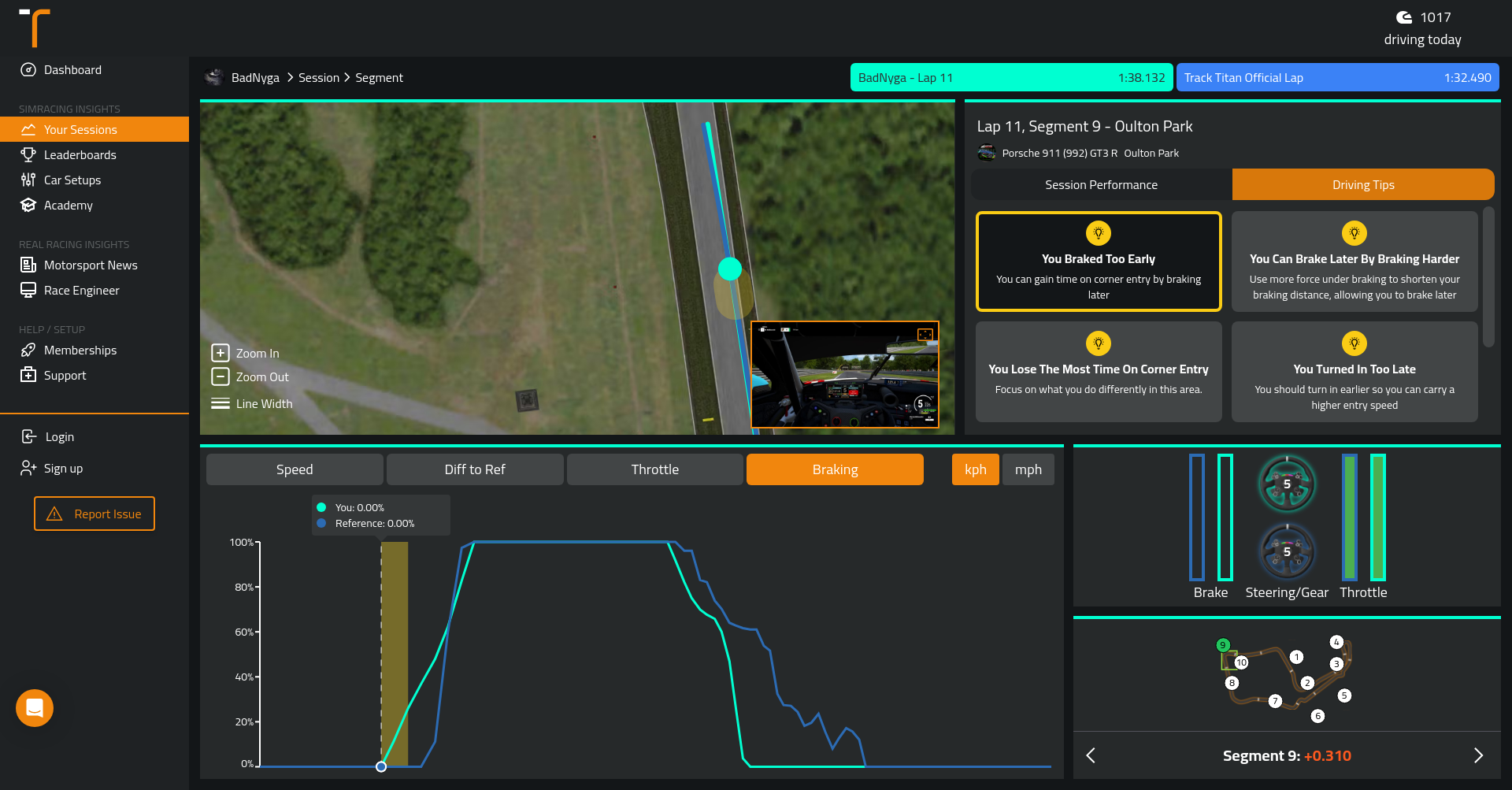
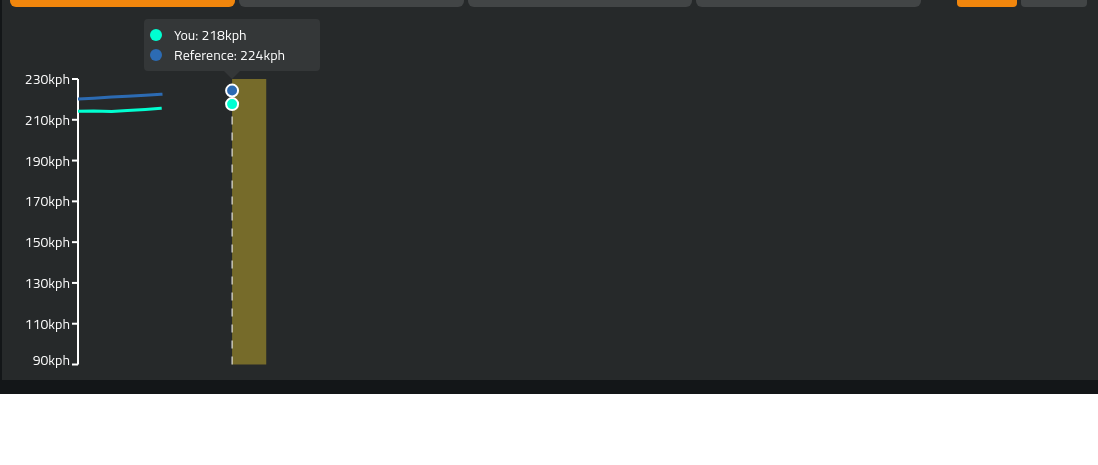
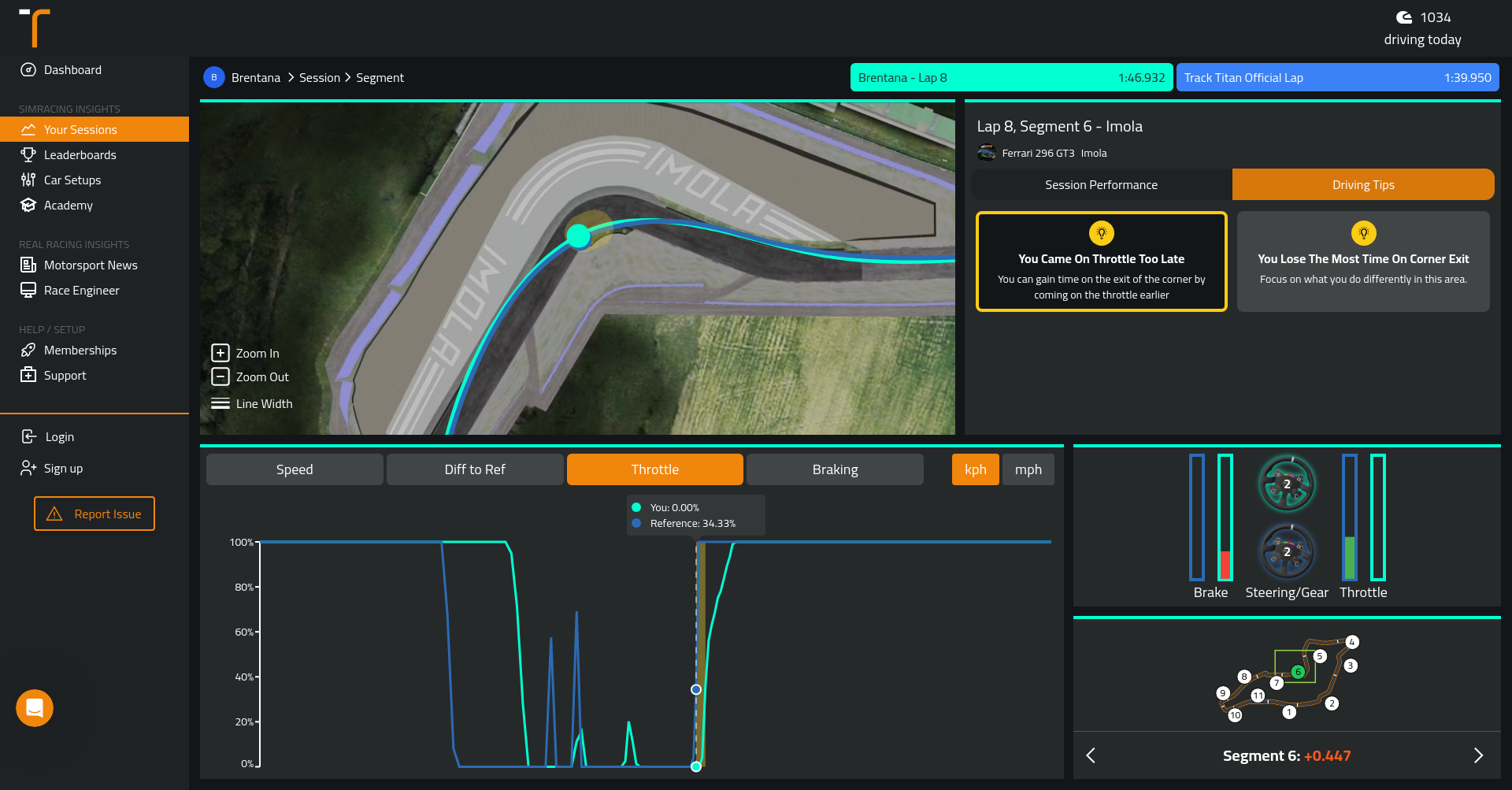
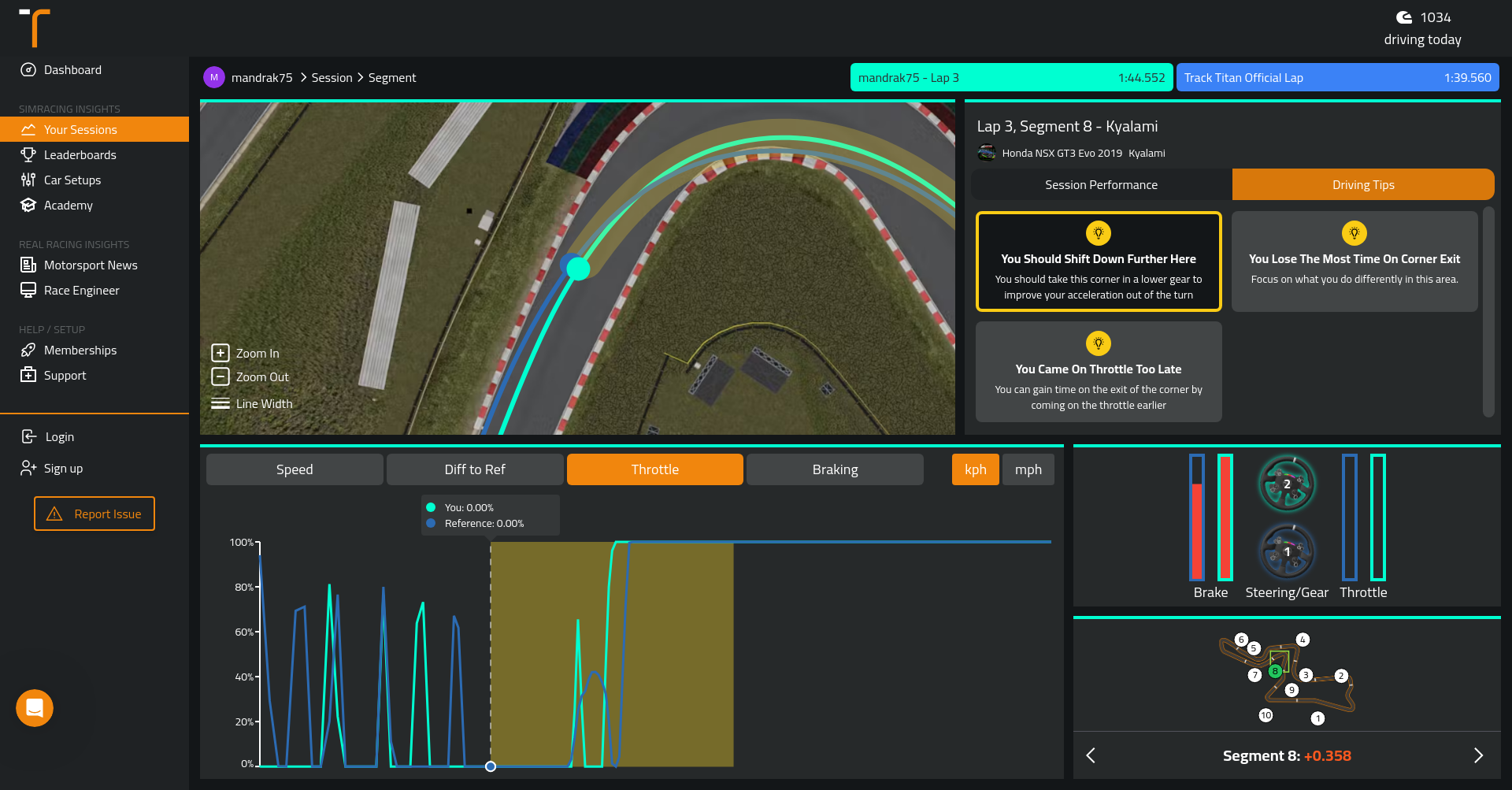
The speed chart analysis reveals that driverB enters the corner at a lower speed than driverA, indicating a loss of momentum from the previous corner. DriverB also reaches their minimum speed later and accelerates out of the corner more slowly than driverA, resulting in lost time. To enhance performance, driverB should turn in earlier, brake later and harder to reach minimum speed sooner, and accelerate earlier. In contrast, the braking control chart shows that driverA begins braking too early and increases brake pressure gradually, which may be too cautious and affect entry speed. On the other hand, driverB brakes later with more intensity, allowing for a higher entry speed into the corner. DriverA could improve lap times by adopting a similar strategy—delaying and intensifying initial brake application to maintain higher speeds entering the corner.
Analyzing the speed chart, it's evident that driverB is entering the corner with a lower speed compared to driverA. This is indicated by the initial left portion of the chart where driverB's speed line starts below that of driverA. This suggests that driverB exited the previous corner with less momentum, which sets them up at a disadvantage even before reaching the braking zone. As we progress through the corner, we observe that driverB reaches their minimum speed later than driverA. This delay in reaching minimum speed means that driverB is slower to get back on the throttle, resulting in a loss of time on corner exit. The gradient of driverB's speed chart post-minimum speed is also less steep compared to driverA's, confirming a later and slower acceleration phase. To improve performance, driverB should focus on carrying more entry speed into the corner by turning in earlier and optimizing their braking—braking later and harder—to reach their minimum speed sooner and facilitate an earlier throttle application.

Analyzing the braking control chart, it's evident that driverA initiates braking significantly earlier than driverB. This early braking results in a longer period of time spent decelerating, which can compromise entry speed into the corner. DriverA's gradual increase in brake application suggests a cautious approach, potentially leaving room for a more aggressive initial brake application to shorten the braking distance. Comparatively, driverB applies brakes later and with greater intensity, as indicated by the steeper initial incline on the chart. This allows driverB to carry more speed closer to the corner and achieve a higher entry speed. DriverA could benefit from emulating this approach by delaying and intensifying their initial brake application, which would enable them to enter the corner at a higher speed and potentially improve their overall lap time.