114,324
114K
Laps driven today

iRacing

Le Mans Ultimate

Assetto Corsa Competizione

Assetto Corsa

F1 25

Assetto Corsa EVO

Automobilista 2

Forza Motorsport

F1 24

F1 2021

F1 23

F1 2020


Lap 3
Segment 9
1:32.872
6th Feb 2024
Assetto Corsa Competizione
Red Bull Ring - Porsche 911 (992) GT3 R

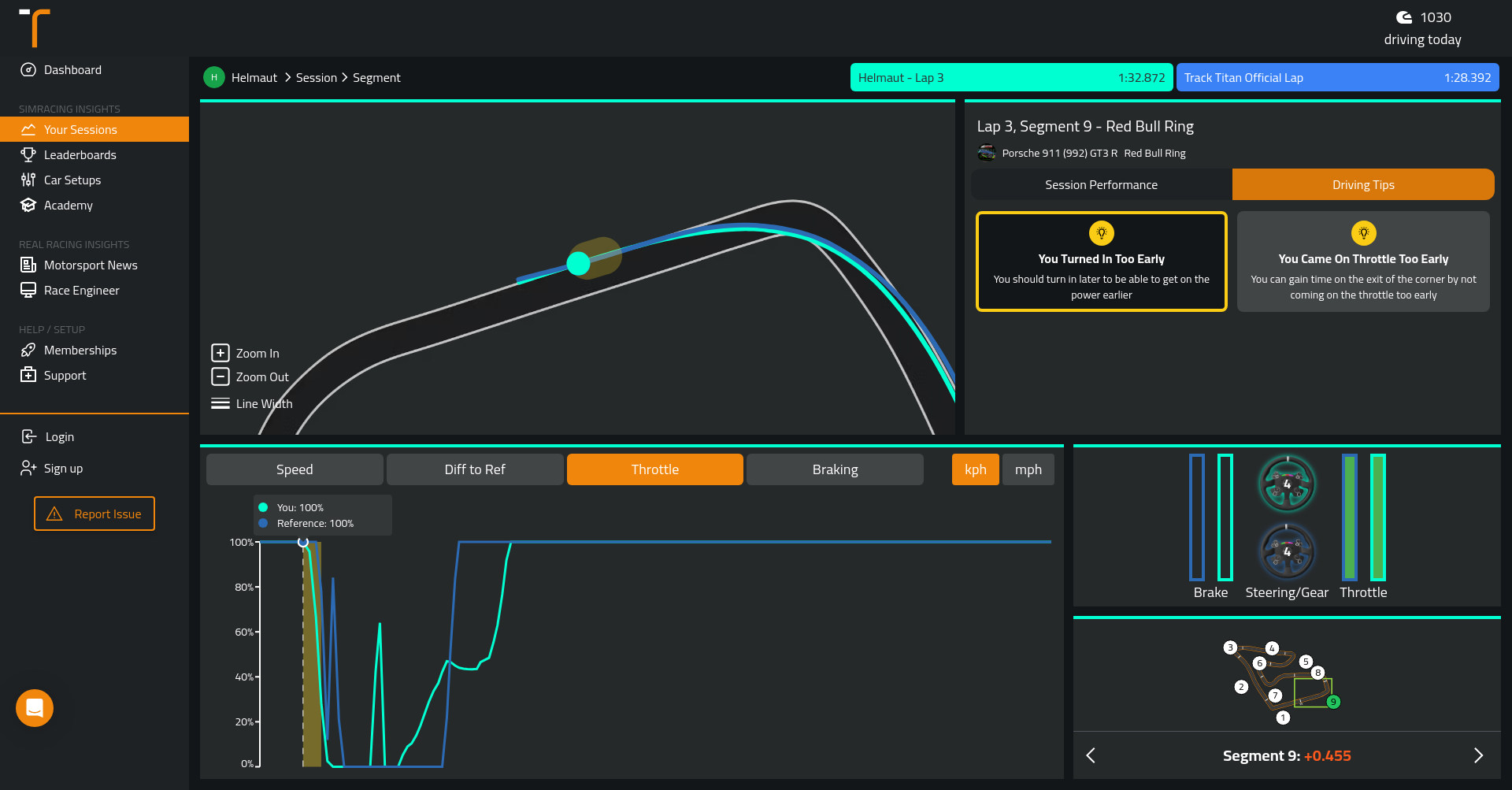
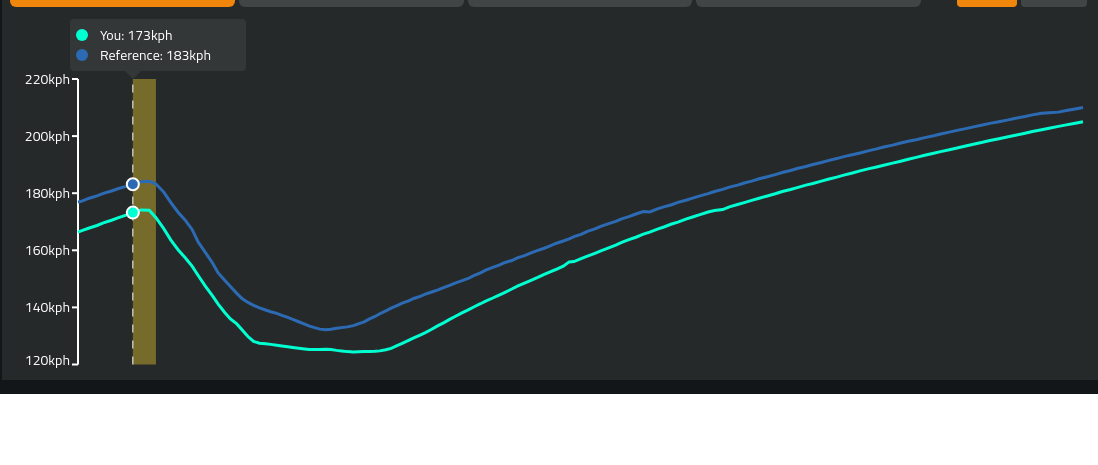
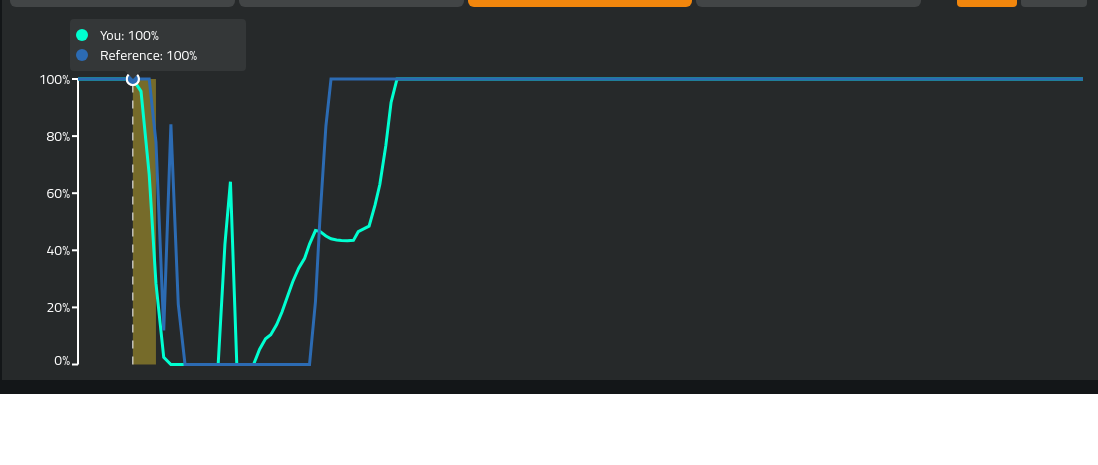
The speed chart analysis reveals that driverB enters the corner at a lower speed than driverA, which affects their pace throughout the section. DriverB's minimum speed is also lower and occurs later, indicating a delayed throttle application and a slower exit. To improve, driverB should aim for a later turn-in to enable an earlier throttle application, enhancing exit speeds and lap times. In terms of throttle control, driverA applies the throttle earlier but less smoothly than driverB, potentially causing wheelspin or loss of traction. DriverB waits longer before applying the throttle but does so more progressively, suggesting better traction management. DriverA's aggressive early throttle likely hinders their exit speed due to poor traction, while driverB's gradual increase optimizes grip and acceleration. For better performance, driverA should delay their throttle input to achieve a smoother transition to full acceleration without compromising stability or speed on corner exit.
Analyzing the speed chart, it's evident that driverB is entering the corner with a lower speed compared to driverA. This is indicated by the initial left portion of the chart where driverB's speed line is below that of driverA. This suggests that driverB did not carry as much speed out of the previous corner, which has a cascading effect on their pace through the subsequent section. As we progress through the corner, there's a noticeable difference in minimum speeds between the two drivers. DriverB's minimum speed dips lower than that of driverA and occurs later in time, indicating a delayed throttle application. This results in a slower exit as seen by the less steep incline of driverB's speed line compared to driverA's. To improve, driverB should focus on turning in later which will allow for an earlier and more effective throttle application, leading to better exit speeds and overall faster lap times.

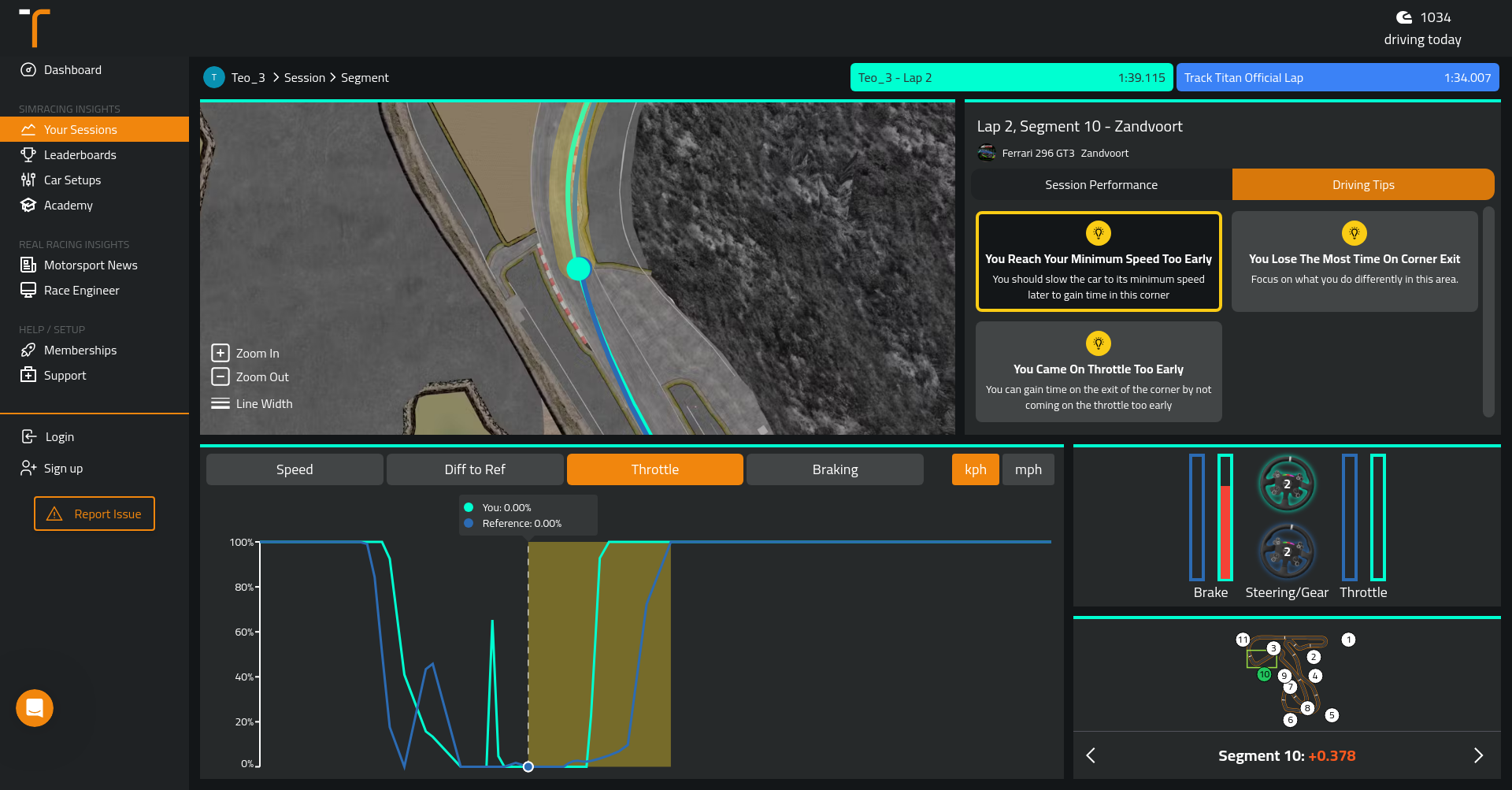
Analyzing the throttle control chart, it is evident that driverA and driverB exhibit distinct differences in their throttle application. DriverA initiates throttle application at a significantly earlier point compared to driverB. This premature application results in a less smooth increase, indicating potential wheelspin or loss of traction as driverA tries to accelerate out of the corner. In contrast, driverB demonstrates patience, applying the throttle later but with a smoother and more progressive increase. This suggests better traction management and a more controlled exit from the corner. The intensity of throttle application also differs between the two drivers. DriverA's early and aggressive application likely compromises their exit speed due to suboptimal traction. On the other hand, driverB's gradual increase in throttle allows for maximization of grip and a stronger acceleration phase. To improve performance, driverA should delay their throttle input to match the timing of driverB, ensuring a smoother transition to full acceleration without sacrificing stability or speed on corner exit.