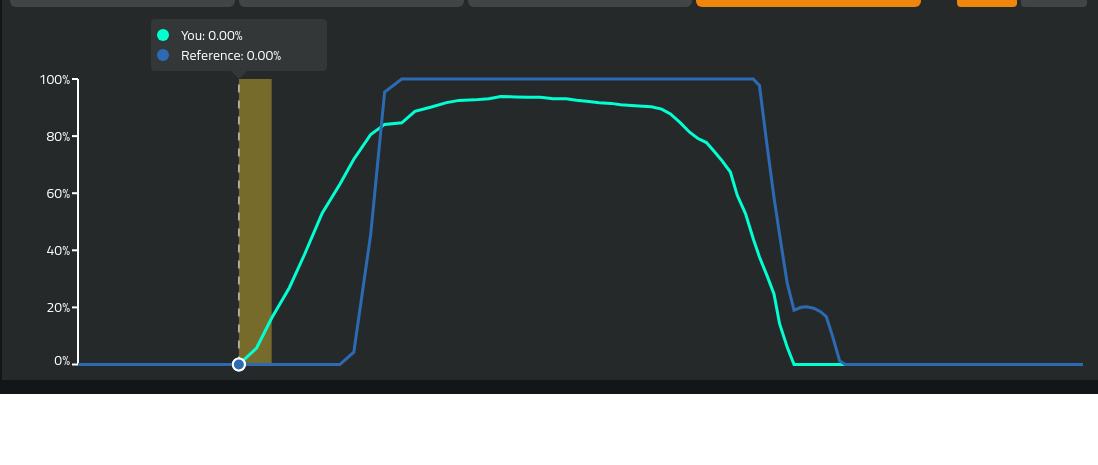
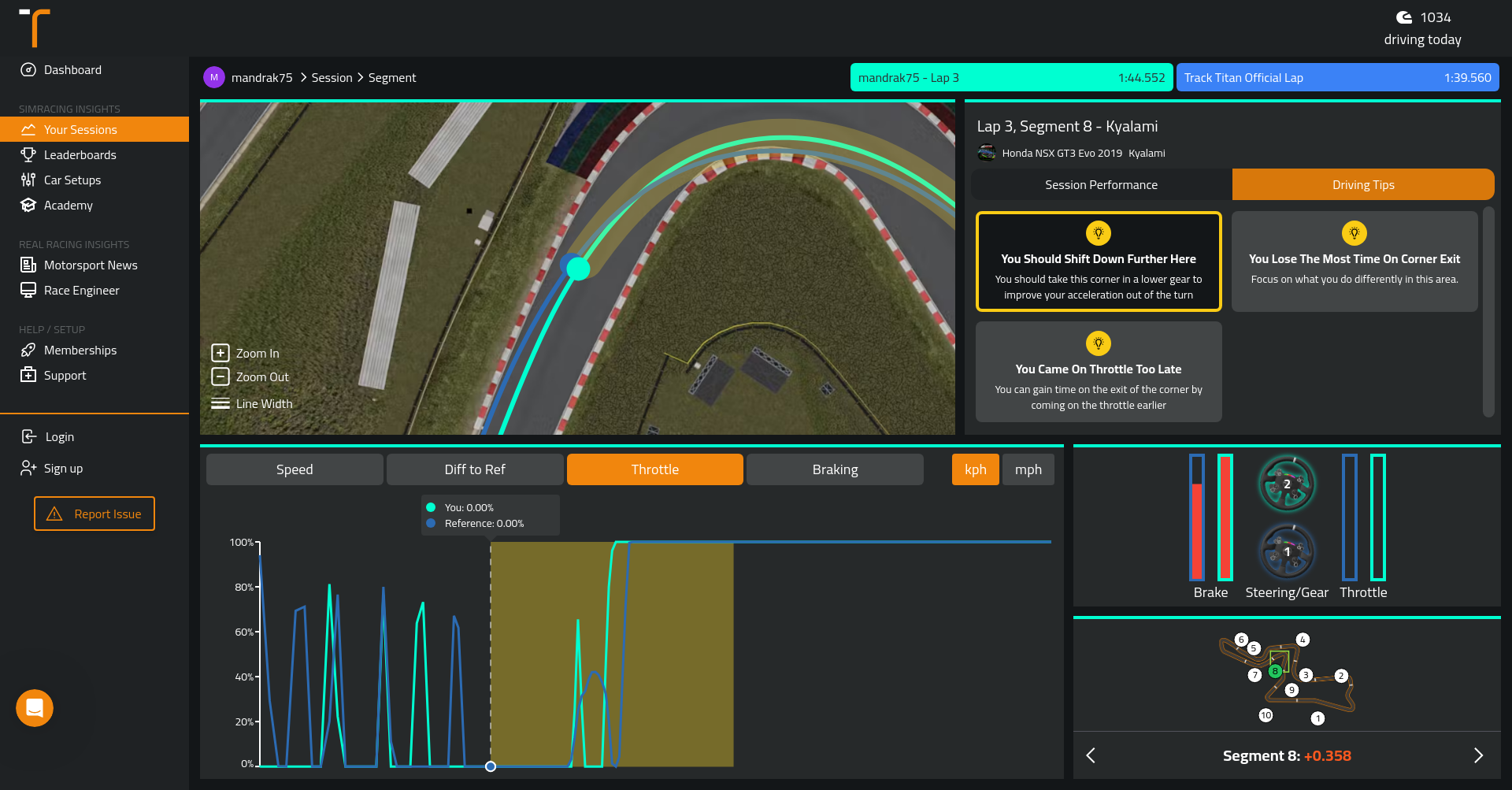
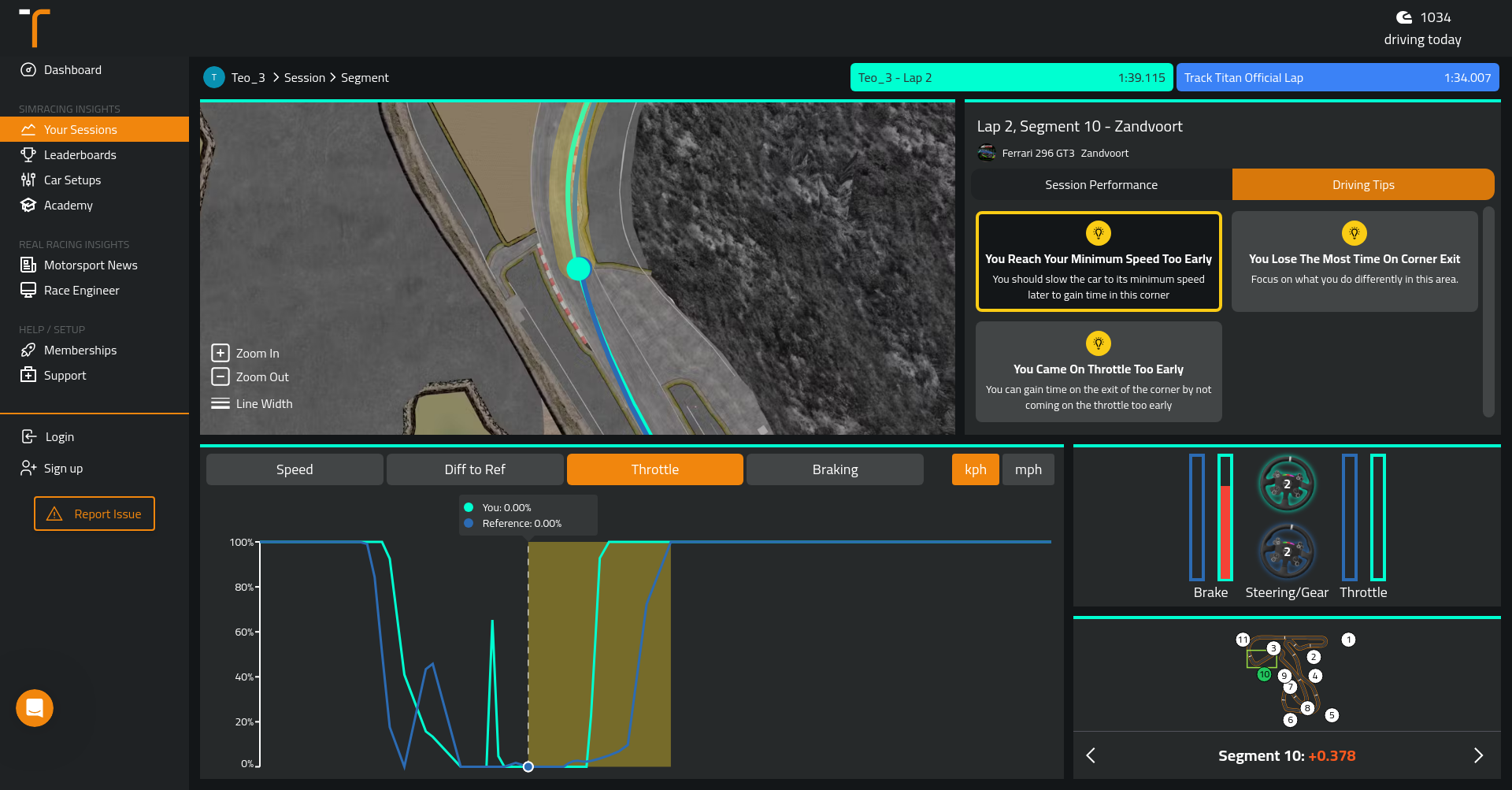
The speed chart analysis reveals that driverB enters corners with less speed than driverA, due to a slower exit from the previous corner. This lower entry speed sets a slower pace for the entire corner, resulting in a compounded time deficit. DriverB's minimum speed also occurs later than driverA's, indicating a delayed throttle application and a slower exit. To improve, driverB should carry more entry speed by optimizing their braking point to brake later and harder, turn in earlier, and apply the throttle with patience for better traction and a faster exit.
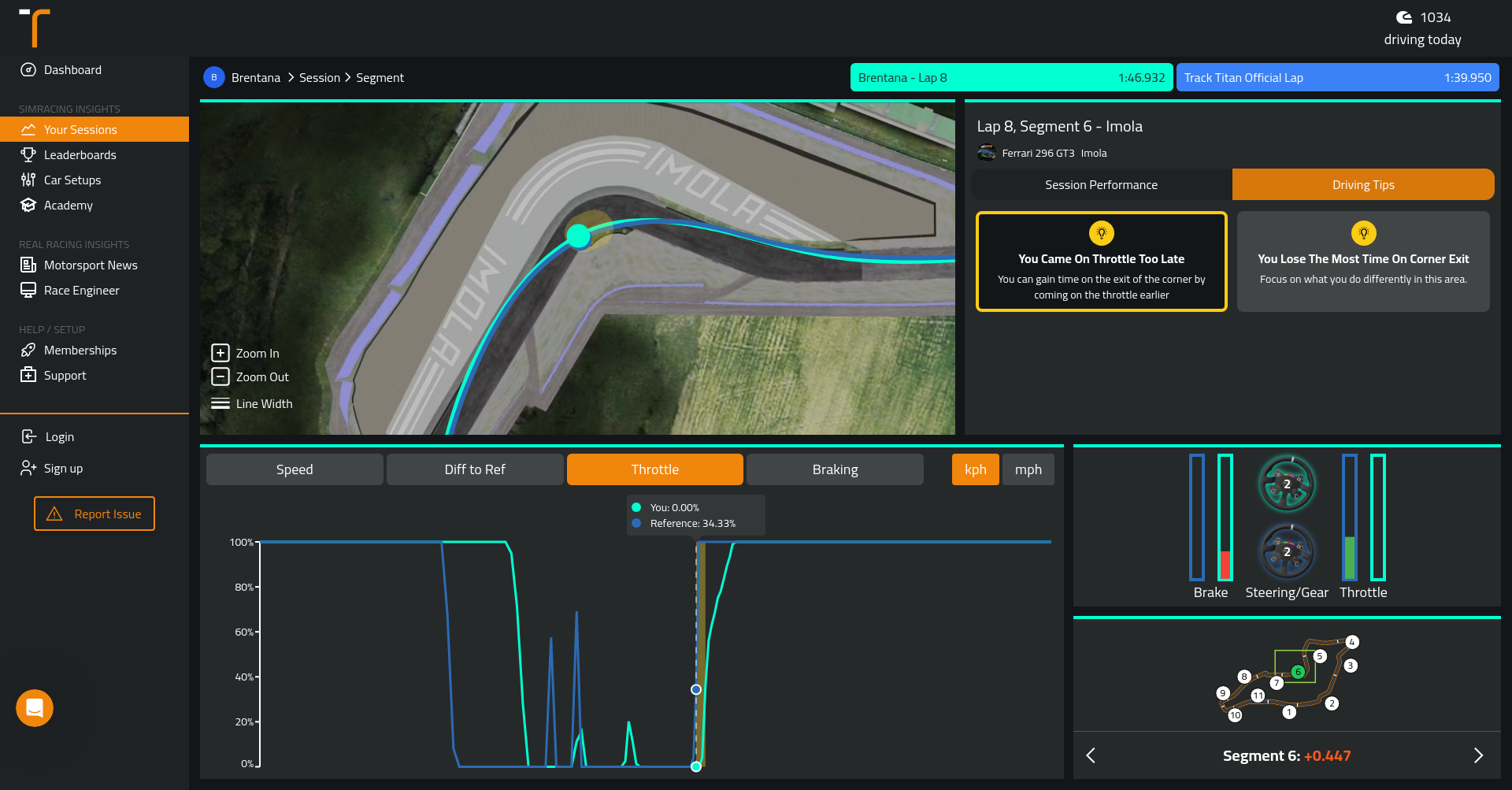
In terms of throttle control, driverA applies the throttle gradually which may manage wheelspin but leads to less stability and lower exit speeds due to premature acceleration. DriverB's sharper increase in throttle application suggests a more aggressive acceleration out of the corner. DriverA should delay their throttle input slightly to match driverB's timing for better traction and faster corner exits.
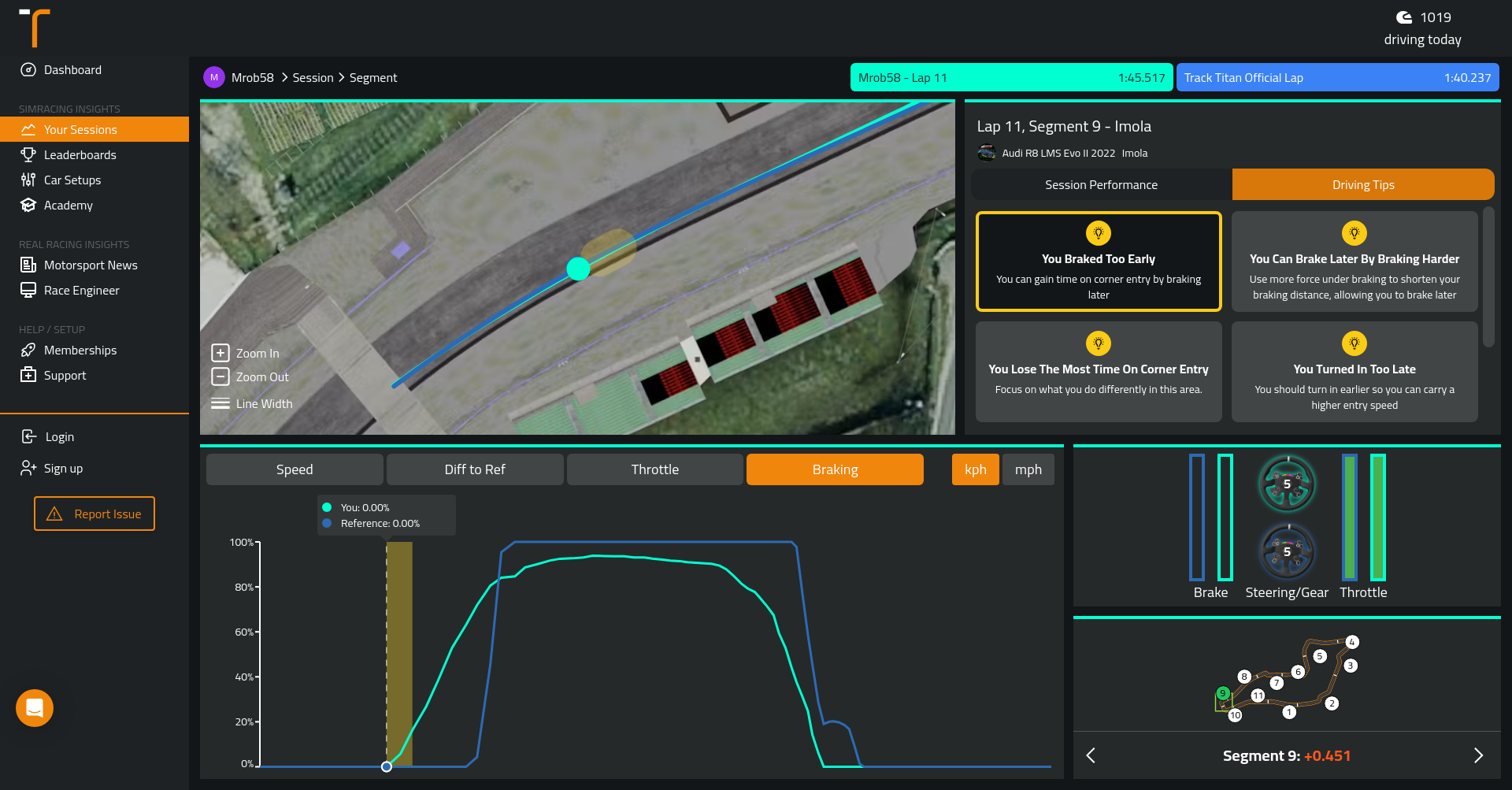
The braking analysis chart shows that driverA brakes much earlier than driverB, leading to a longer period of reduced speed before the corner and impacting their overall time. DriverB brakes later and with more intensity, maintaining higher speeds longer before the corner. Although driverA seems to be trail braking into the corner, it doesn't compensate for early braking initiation. To improve performance, driverA should delay their braking point and apply greater force upon initial brake application to maintain higher speeds into the corner like driverB does.
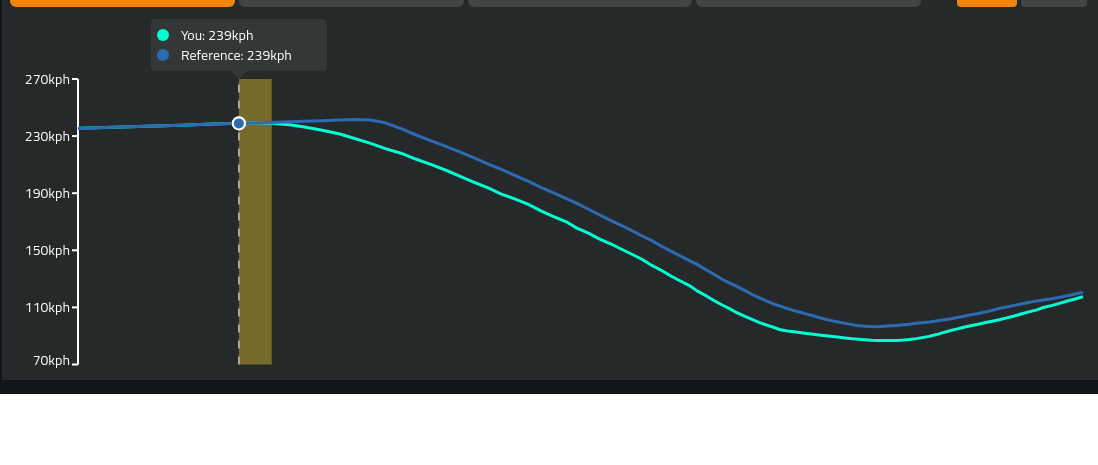
Analyzing the speed chart, it's evident that driverB is entering the corner at a significantly lower speed compared to driverA. This is indicated by the initial gap in speed at the very start of the chart on the left, suggesting that driverB exited the previous corner with less momentum. This early loss in speed is critical as it sets a lower pace for driverB throughout the entire corner, leading to a compounded time deficit.
Furthermore, driverB's minimum speed occurs later than that of driverA, which implies a delayed throttle application. This results in a slower exit as seen by the less steep gradient of their speed increase post-corner. To improve, driverB should focus on carrying more entry speed by turning in earlier and optimizing their braking point to brake later and harder. Additionally, patience on throttle application will ensure better traction and ultimately a faster exit, aligning their acceleration phase more closely with that of driverA for improved overall corner performance.
Analyzing the throttle control chart, it's evident that driverA and driverB have distinct differences in their throttle application. DriverA applies the throttle in a more gradual manner, which suggests a cautious approach to acceleration, potentially to manage wheelspin. In contrast, driverB exhibits a sharper increase in throttle application, indicating a more aggressive and confident acceleration out of the corner.
The timing of these applications is also crucial. DriverA comes onto the throttle significantly earlier than driverB, which could lead to less stability and lower exit speeds due to premature acceleration. This early application likely compromises the exit speed and overall lap time. DriverB's later but more forceful application allows for better traction and higher speeds upon corner exit, translating into a more efficient drive out of the turn and improved lap times. DriverA should delay throttle input slightly to match the timing of driverB for better traction and ultimately faster corner exits.
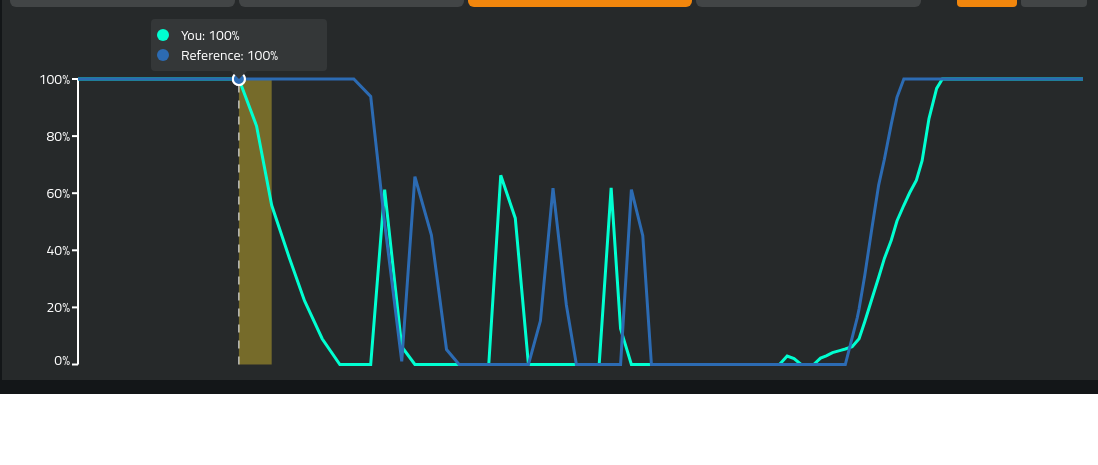
In the provided braking analysis chart, there is a clear discrepancy between driverA and driverB's braking inputs. DriverA initiates braking much earlier than driverB, as indicated by the earlier rise in brake application percentage. This early braking results in a longer period of reduced speed for driverA, which directly impacts their corner entry speed and overall time. Conversely, driverB applies the brakes later and with more intensity, which is evident from the steeper incline in their brake application curve. This allows driverB to maintain a higher speed for longer before the corner, shortening their braking distance and potentially leading to a faster corner entry.
Additionally, driverA's gradual decrease in brake pressure suggests they are trail braking into the corner; however, this technique does not seem to compensate for the time lost due to early braking initiation. To improve performance, driverA should focus on delaying their braking point and applying greater force upon initial brake application. Emulating driverB's approach could lead to maintaining higher speeds into the corner and improving overall lap times.