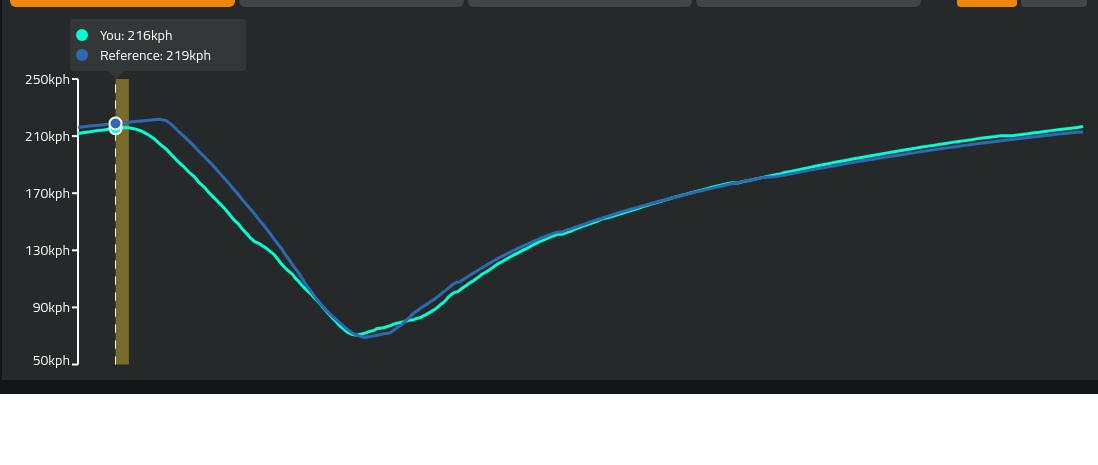
The speed chart analysis reveals that driverB starts the corner with a lower speed than driverA, suggesting a less effective exit from the previous corner. This sets a slower pace for driverB throughout the section, negatively affecting lap times. DriverB's minimum speed occurs later than driverA's, indicating a delay in throttle application and subsequent acceleration out of the corner. To improve, driverB should brake later and harder to maintain higher entry speed and delay throttle application to enhance exit speed.
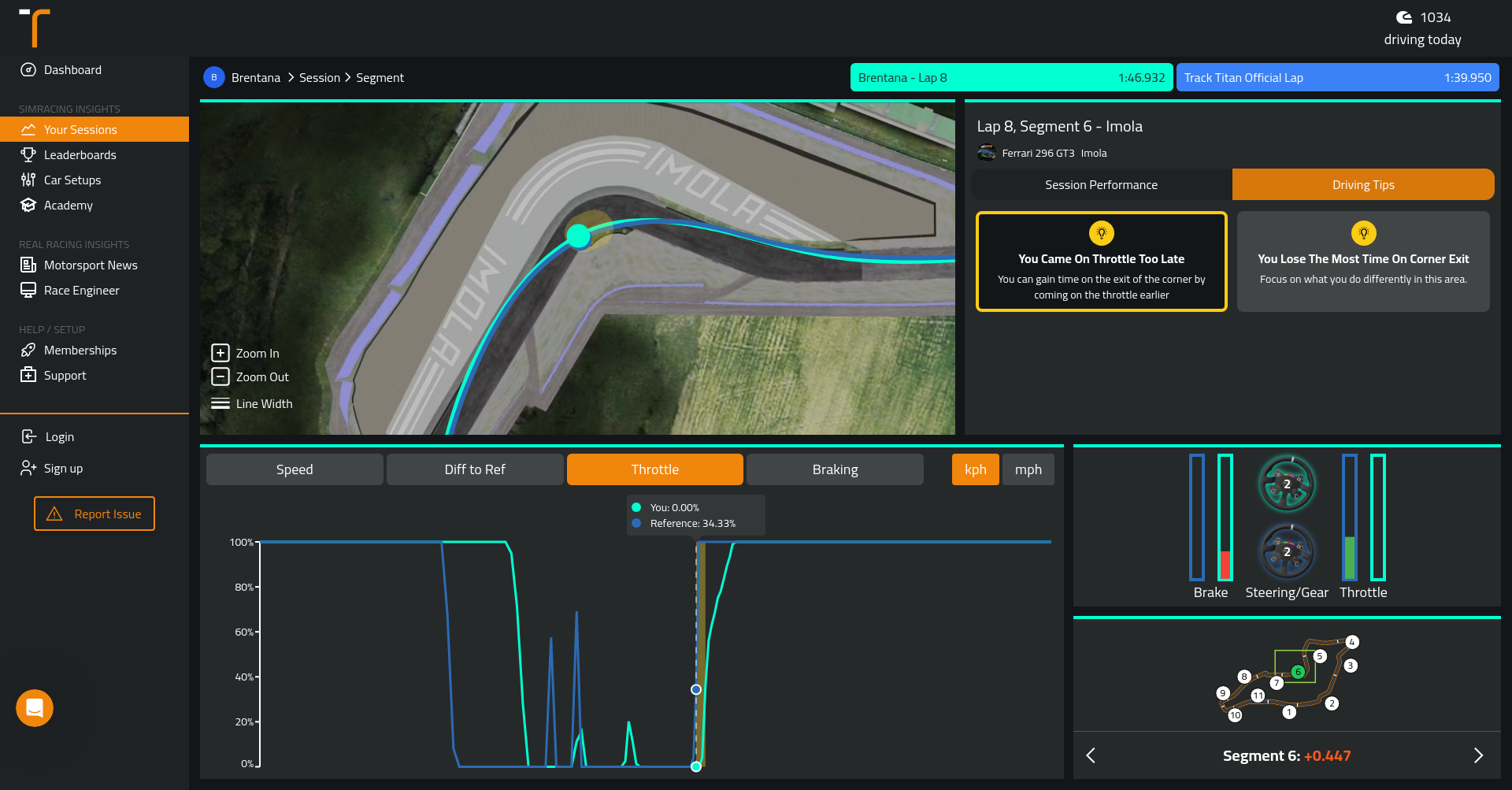
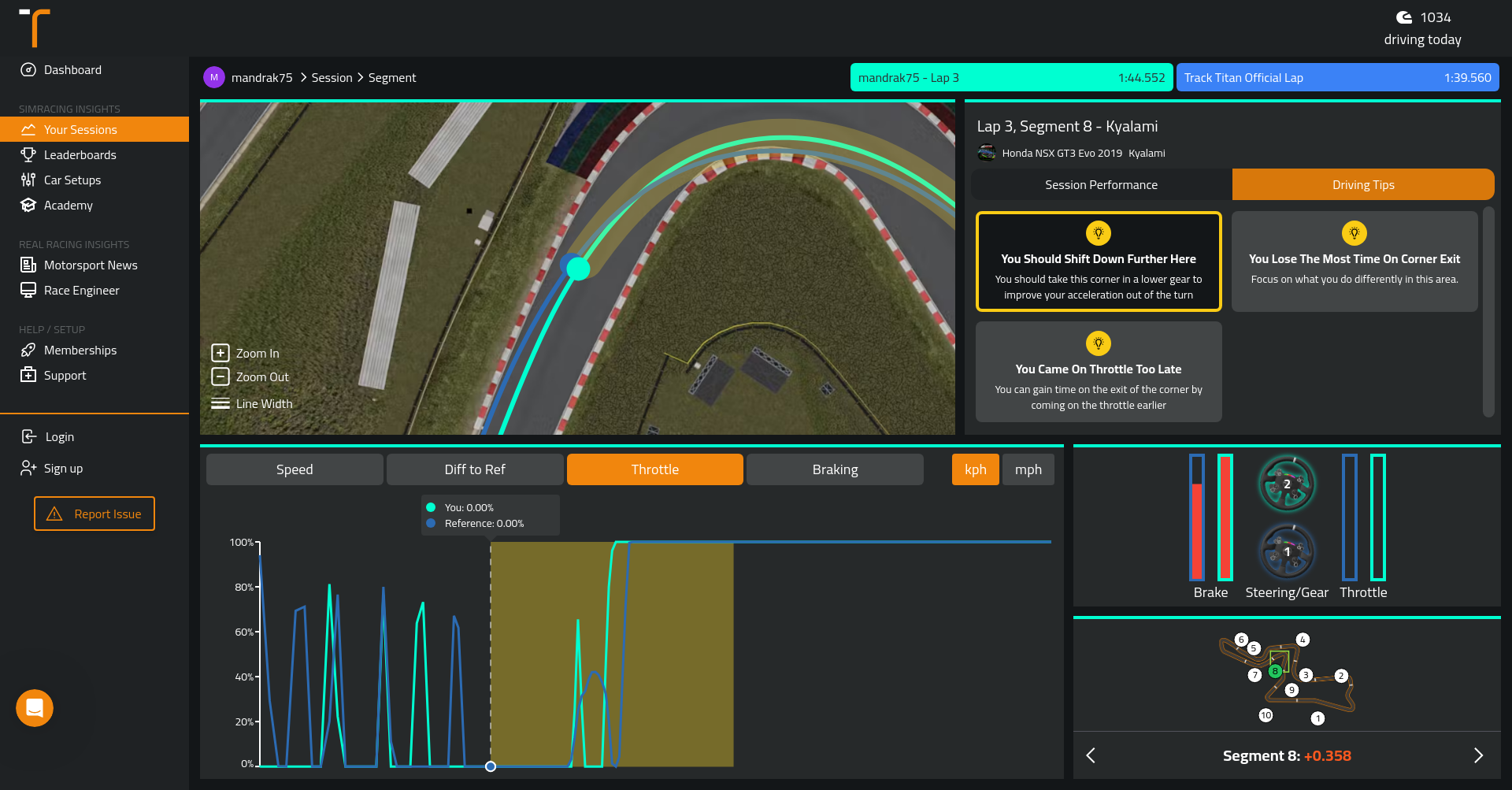
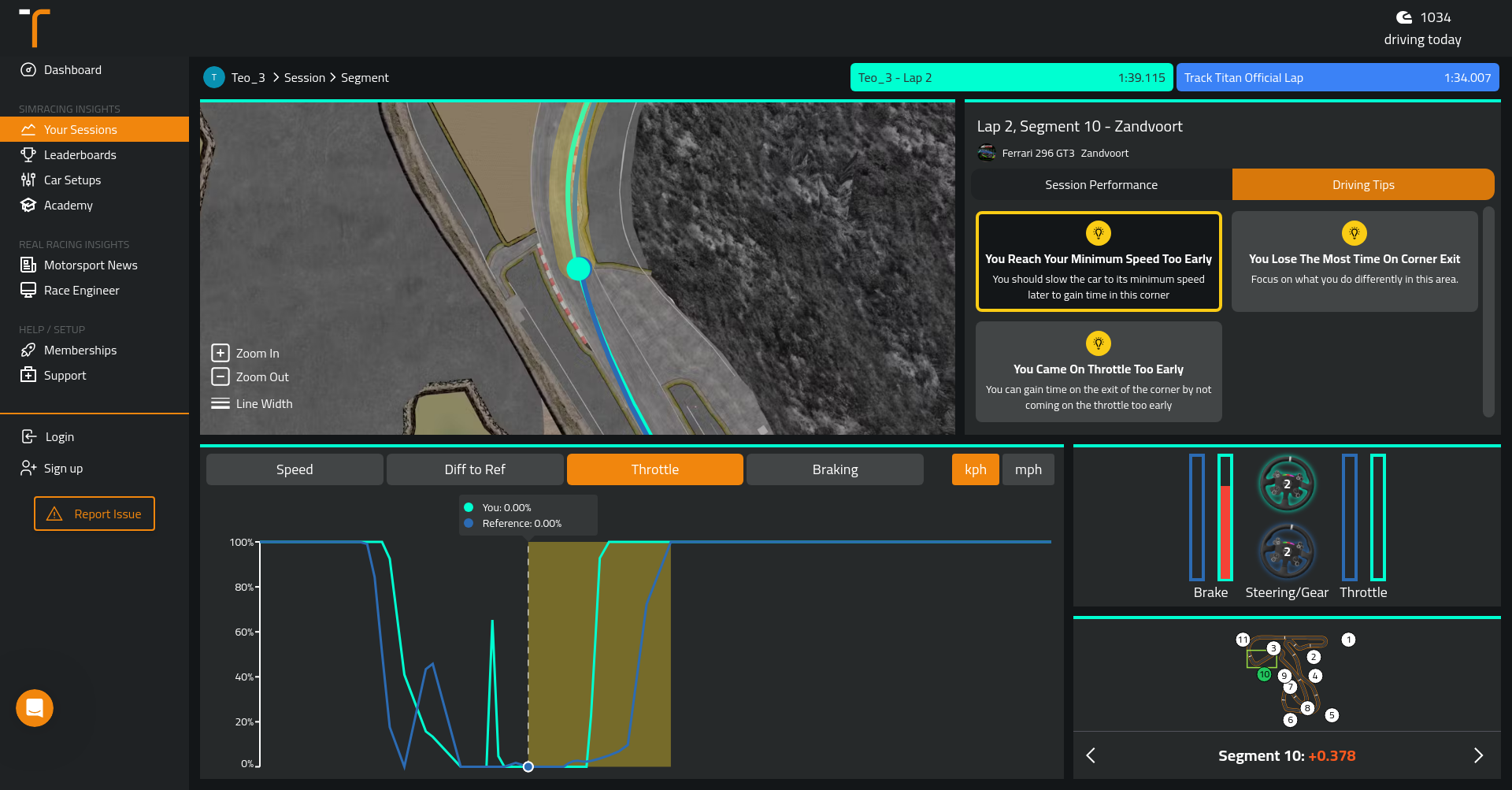
In terms of throttle control, driverA applies the throttle more gradually than driverB, who increases throttle application quickly and aggressively. This aggressive approach could lead to higher exit speeds if controlled properly. However, driverA's jagged throttle inputs suggest issues with wheelspin or grip confidence, leading to inefficient acceleration. DriverA should smooth out their throttle inputs and apply power more decisively to improve momentum and traction.
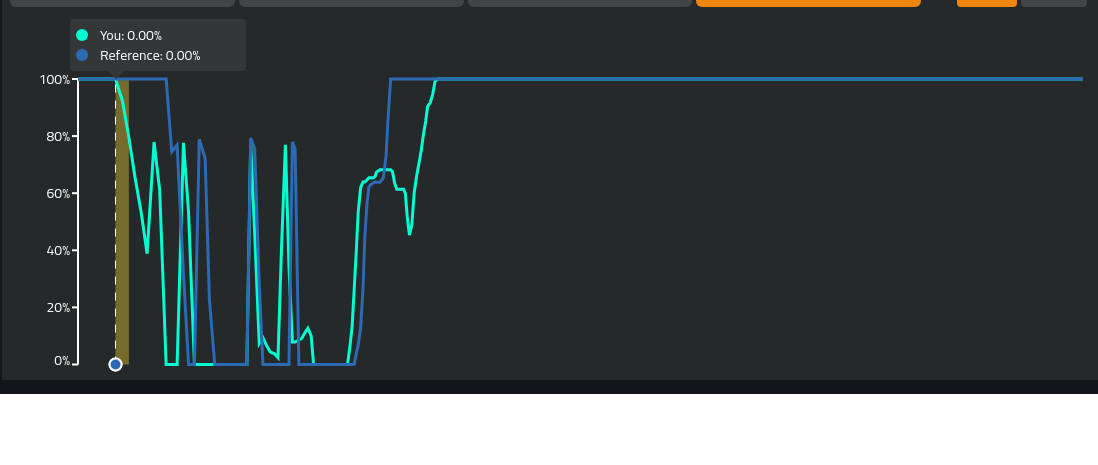
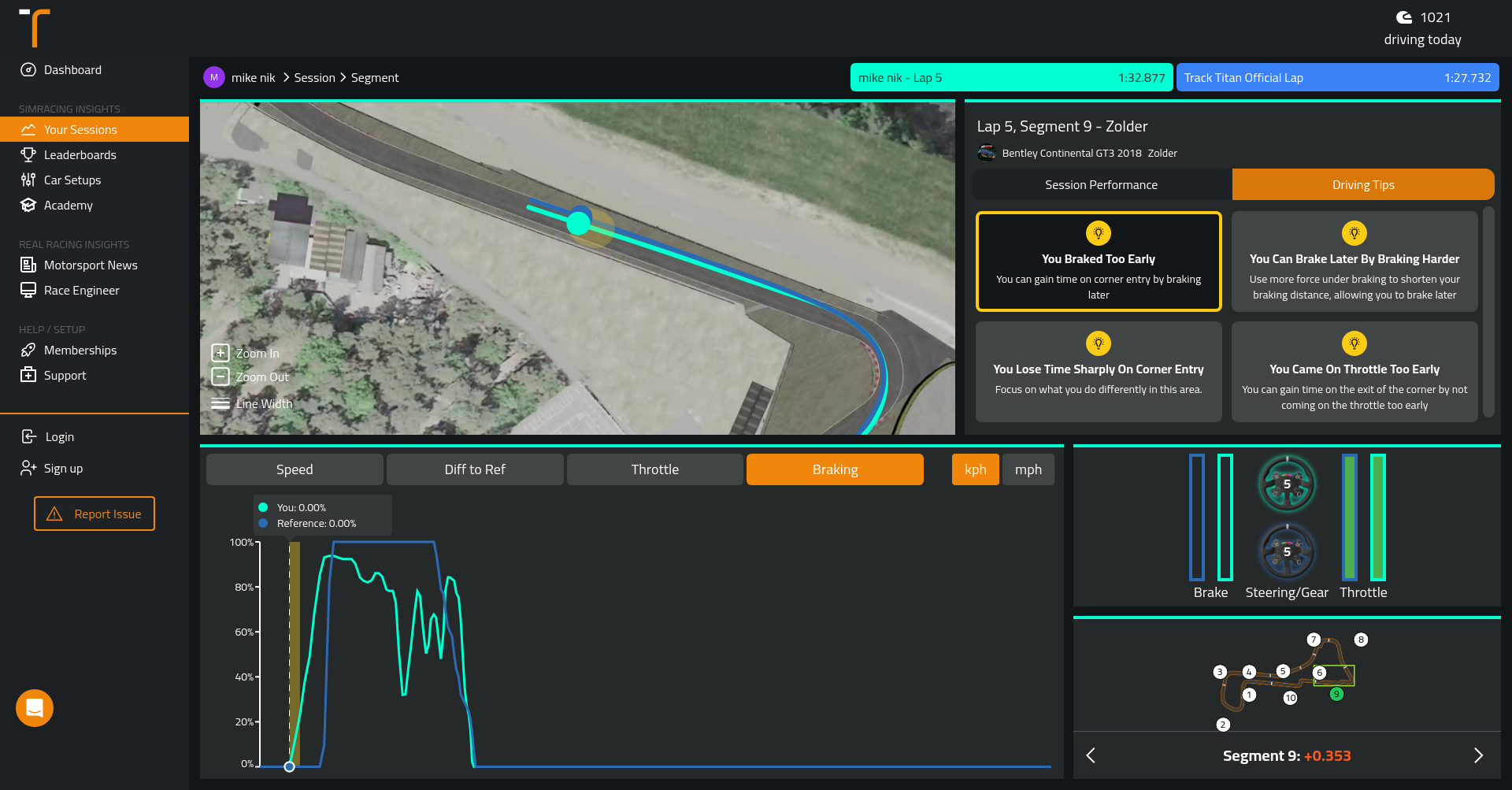
The braking analysis chart shows that driverA brakes earlier and less intensely than driverB, resulting in a lower entry speed into the corner. In contrast, driverB applies brakes later with greater force, allowing for a faster approach into the turn. For better performance, driverA needs to delay braking and increase initial brake pressure to carry more speed into the corner. Adapting to a more aggressive braking technique like that of driverB—braking later and harder—will likely yield faster lap times for driverA.
Analyzing the speed chart, it's evident that driverB is entering the corner at a lower speed compared to driverA. This discrepancy starts right at the beginning of the chart, indicating that driverB exited the previous corner with less momentum. The impact of this is significant as it sets a slower pace for the entire section, compromising overall lap time.
As we progress through the corner, driverB's minimum speed occurs later than that of driverA, suggesting a delayed throttle application. This results in driverB accelerating later out of the corner, which is further evidenced by a less steep gradient in their speed chart compared to driverA. To improve lap times, driverB should focus on braking later and harder to maintain higher entry speed and delay throttle application slightly to avoid early acceleration that can compromise their exit speed.
Analyzing the throttle control chart, it's evident that driverA and driverB have distinct differences in their throttle application. DriverA applies the throttle more gradually compared to driverB, who shows a quicker and more aggressive increase in throttle application. This suggests that driverB is accelerating harder out of the corner, which could potentially lead to a higher exit speed and better lap times if managed correctly.
However, the jagged nature of driverA's throttle application indicates a struggle with wheelspin or lack of confidence in the car's grip. This hesitation results in lost time as the car is not being accelerated as efficiently as possible. To improve, driverA should focus on smoothing out their throttle inputs, applying power more decisively to maintain momentum and maximize traction. By emulating the more confident and aggressive approach of driverB, while maintaining control to avoid wheelspin, driverA can potentially improve their exit speeds and overall lap times.
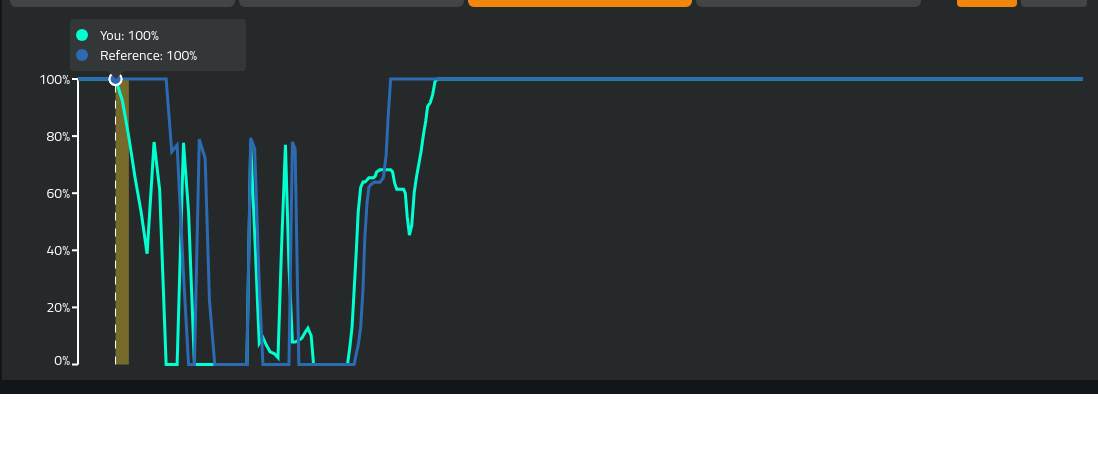
In the provided braking analysis chart, driverA exhibits a notably earlier and less intense brake application compared to driverB. DriverA's brake pressure ramps up gradually, indicating a conservative approach to the corner entry. This early braking leads to a lower entry speed, which could be causing a loss of time at this critical phase of the corner. On the other hand, driverB applies the brakes later and with more force, achieving a higher initial brake pressure. This suggests that driverB is utilizing a more aggressive braking technique that allows for carrying more speed into the corner.
To improve performance, driverA should focus on delaying their braking point and applying greater initial brake pressure. By doing so, they can shorten their braking distance and maintain a higher speed entering the corner, which could result in improved lap times. It's essential for driverA to adapt their technique to mirror the more effective braking pattern demonstrated by driverB – braking later and harder initially before easing off as needed for the turn-in.