122,247
122K
Laps driven today

iRacing

Le Mans Ultimate

Assetto Corsa Competizione

Assetto Corsa

F1 25

Assetto Corsa EVO

Automobilista 2

Forza Motorsport

F1 24

F1 2021

F1 23

F1 2020


Lap 4
Segment 6
1:51.152
7th Feb 2024
Assetto Corsa Competizione
Monza - BMW M4 GT3 2022

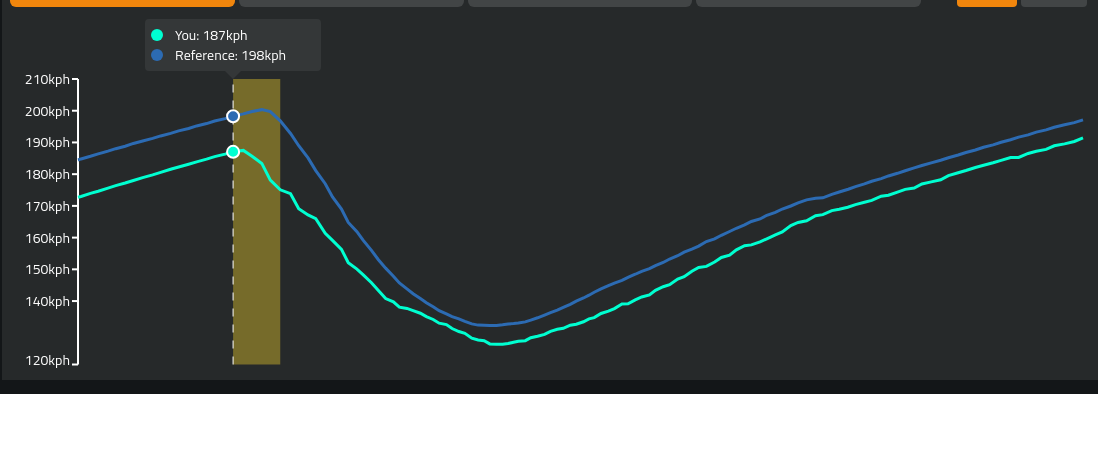
The speed chart analysis reveals that driverB enters the corner at a lower speed than driverA, carrying less momentum from the previous corner. This results in a lower minimum speed at the apex for driverB and a later application of throttle, leading to slower acceleration out of the corner. To enhance performance, driverB should focus on maintaining higher speed through the previous corner's exit and optimizing throttle use after the apex. In terms of throttle control, driverA applies throttle earlier but with a less smooth curve, indicating possible wheelspin or grip loss due to early power delivery. Their throttle input plateaus, suggesting they are modulating to maintain vehicle control, which may affect exit speed. On the other hand, driverB's gradual and consistent throttle increase suggests better traction and stability upon corner exit. DriverA could benefit from delaying turn-in and being more patient with throttle application to improve their corner exit speed and overall lap times.
Analyzing the speed chart, it's evident that driverB is entering the corner with a lower speed compared to driverA. This can be observed at the very start of the chart where driverB's speed line begins below that of driverA. This indicates that driverB has carried less speed from the exit of the previous corner into this one, which has a cascading effect on their overall pace through this section. As we progress through the corner, there is a noticeable difference in minimum speeds; driverB's minimum speed is lower than that of driverA and occurs later in the corner. This suggests that driverB is slower at the apex and consequently gets on the throttle later than driverA, leading to a delayed acceleration phase. The gradient of driverB's speed increase post-apex is also less steep compared to driverA, indicating less effective acceleration out of the corner. To improve lap times, focusing on carrying more speed through the previous corner exit and optimizing throttle application after reaching the apex will be key for driverB.

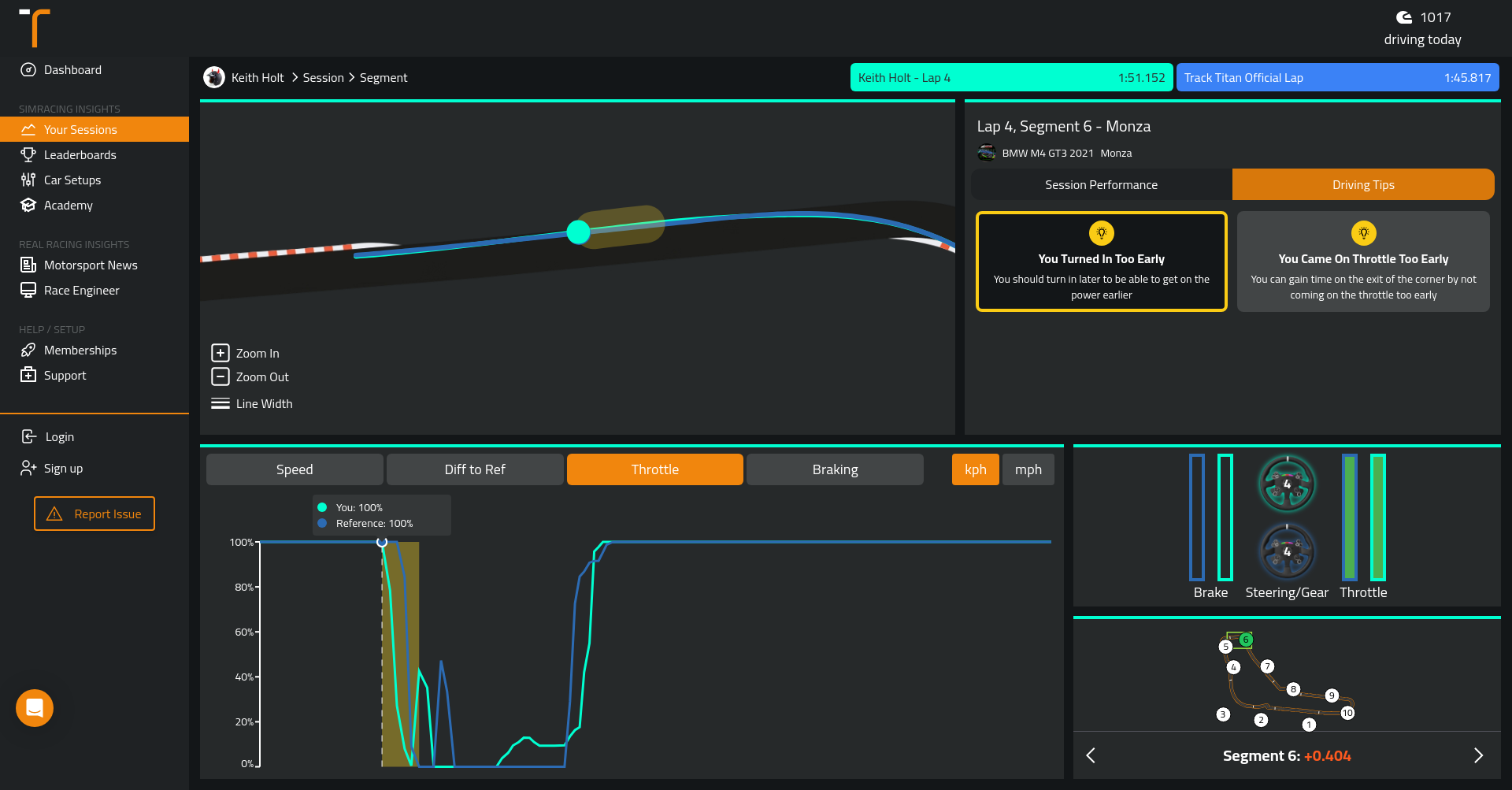
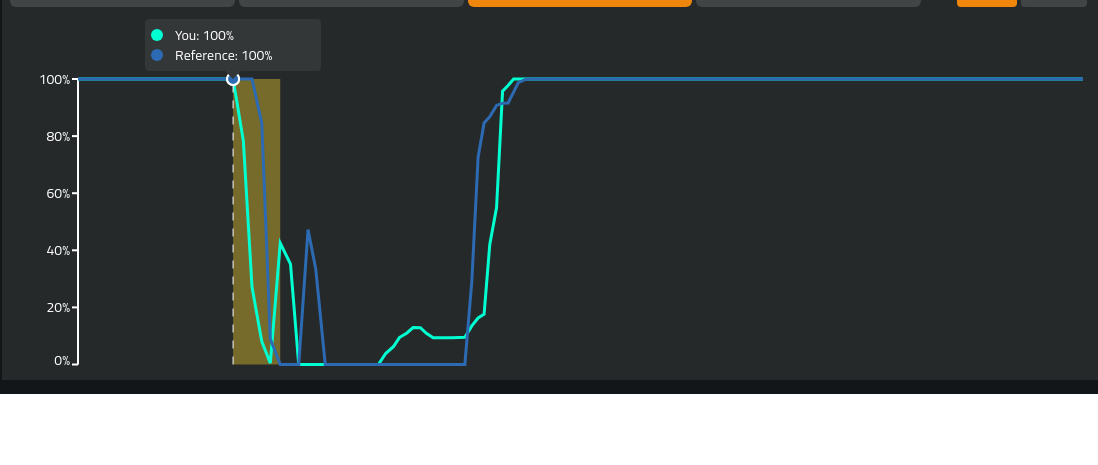
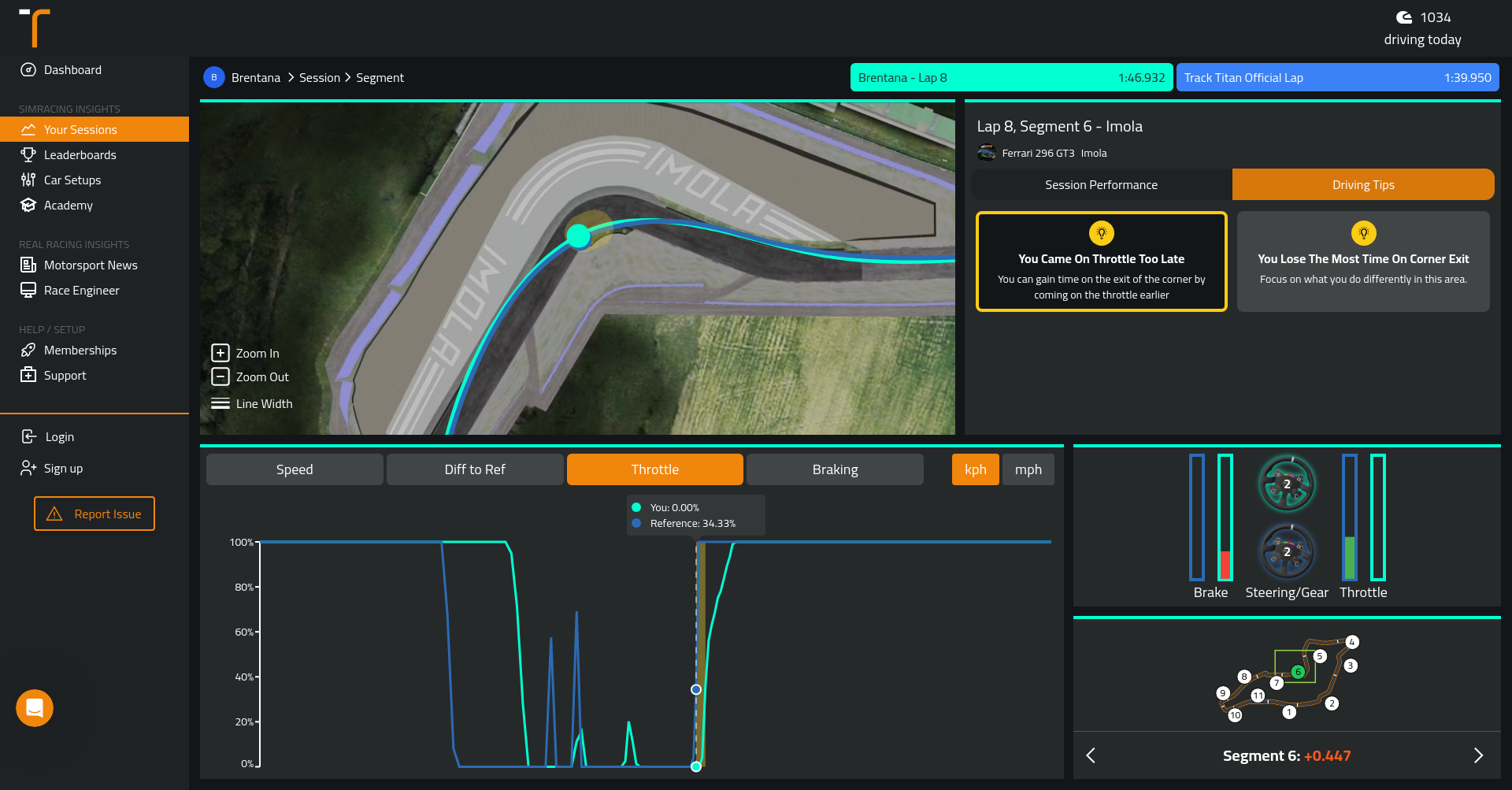
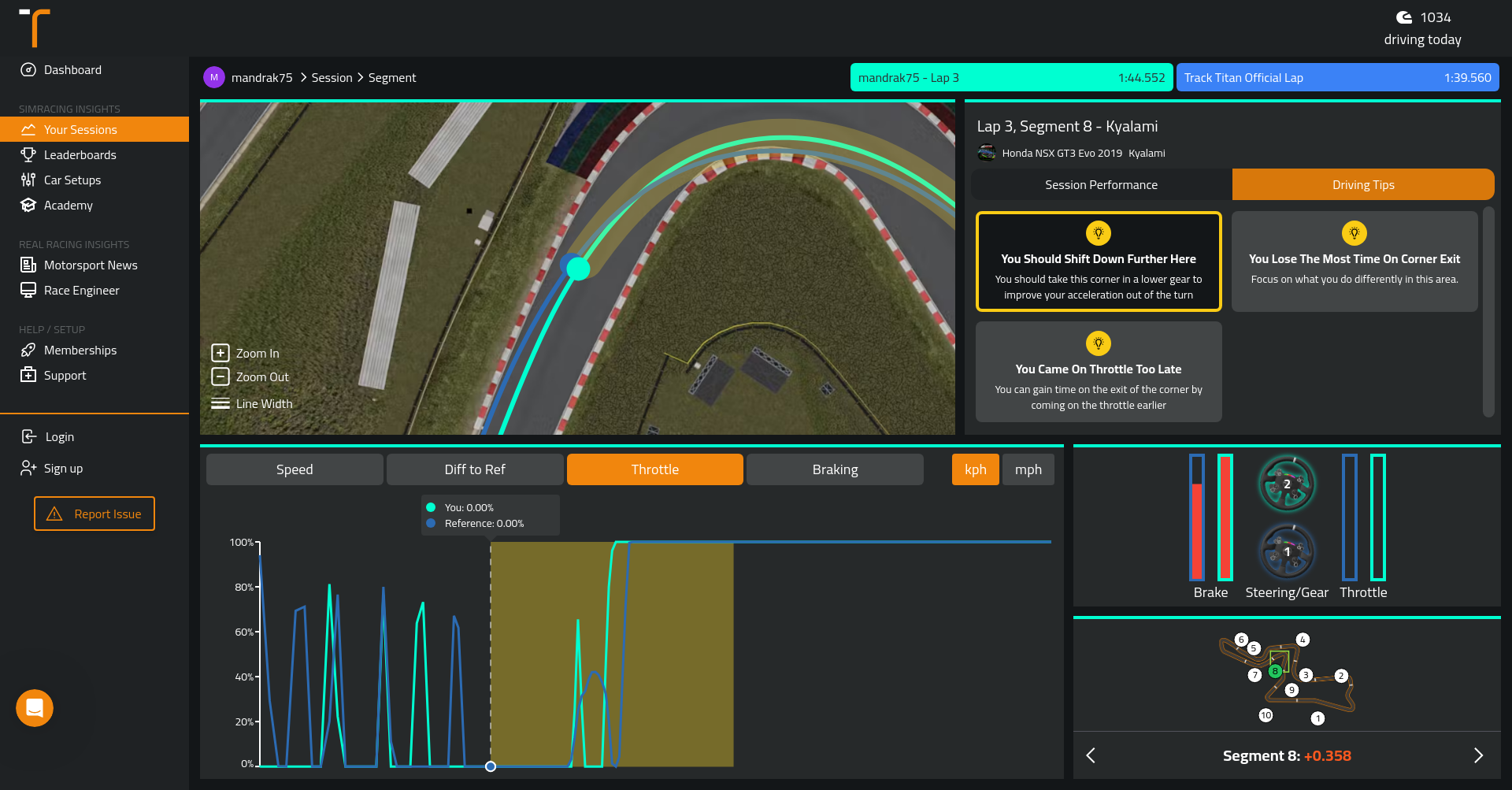
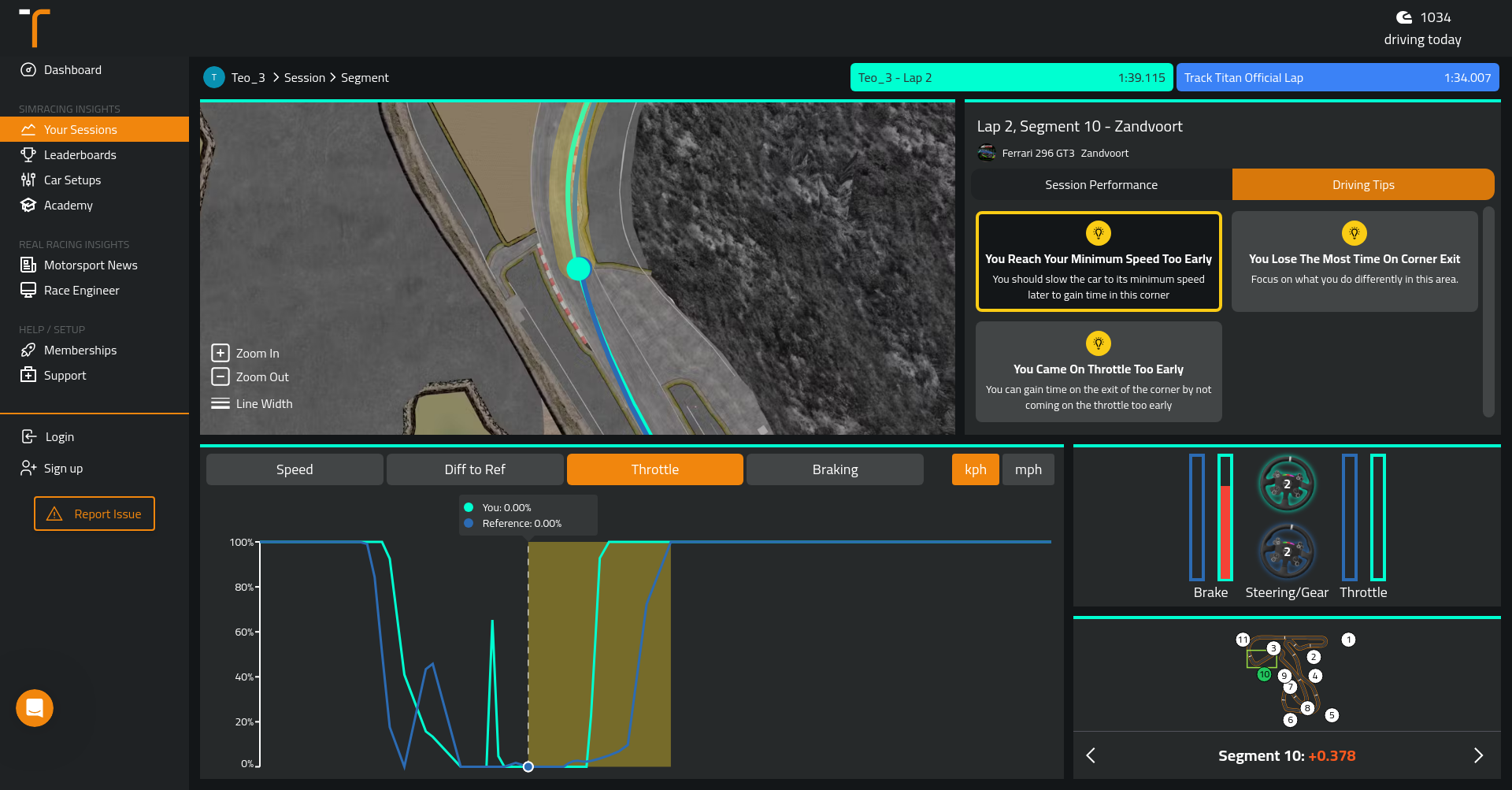
Analyzing the throttle control chart, it's evident that driverA initiates throttle application significantly earlier than driverB. This premature application results in a less smooth curve, indicating potential wheelspin or loss of grip due to the early power delivery. DriverA's throttle input increases rapidly but then plateaus, suggesting a need to modulate the throttle to maintain control of the vehicle, which can compromise exit speed. In contrast, driverB's graph shows a more gradual and consistent increase in throttle application. This indicates a controlled acceleration that likely allows for better traction and stability through the corner exit. The smoother curve on driverB's graph suggests that by delaying throttle input slightly longer than driverA, they are able to apply power more effectively, leading to potentially higher exit speeds and better lap times. DriverA should consider adopting a similar approach by delaying their turn-in and being more patient with the throttle to improve their corner exit performance.