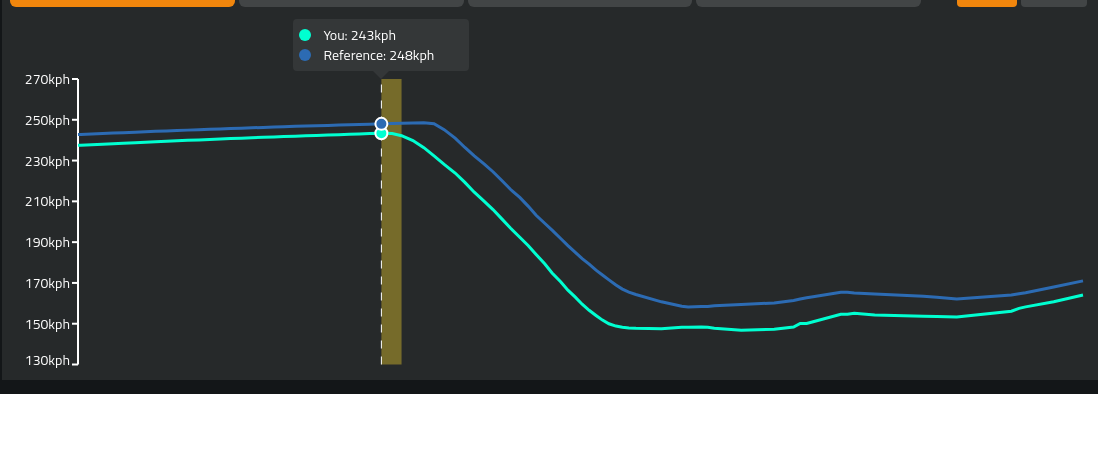
The speed chart analysis reveals that driverB enters the corner with a lower speed than driverA, suggesting a lack of momentum from the previous corner. This impacts their approach and exit from the current corner. DriverB's slower acceleration out of the corner, indicated by a later and less steep increase in speed, highlights the need for earlier and more confident throttle application to enhance exit speed and improve lap times.
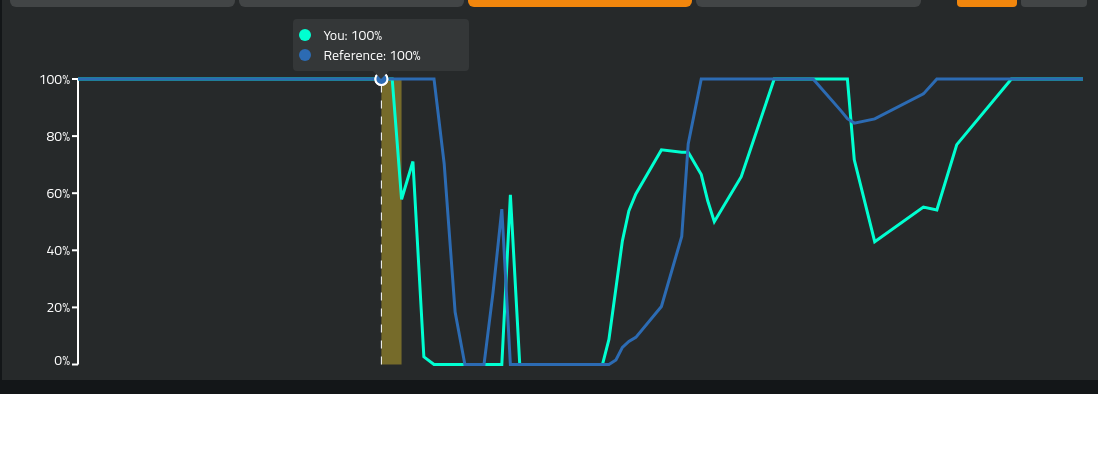
DriverA, on the other hand, applies throttle too early, resulting in a less smooth acceleration curve and potential traction issues. By delaying throttle input for a smoother acceleration like driverB, driverA could gain better control and potentially increase exit speed, leading to faster lap times.
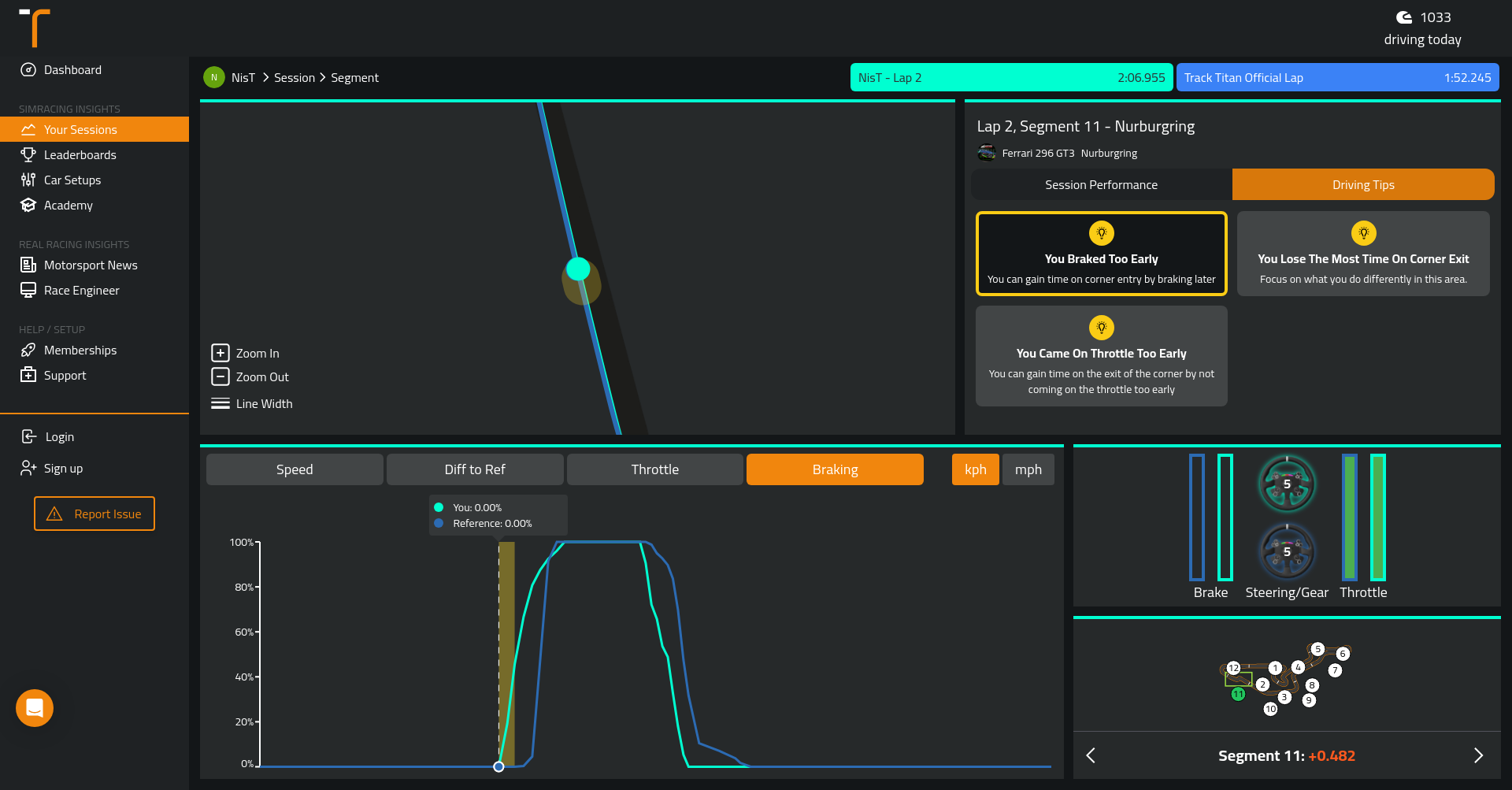
The braking analysis shows that driverA brakes significantly earlier than driverB, leading to a lower entry speed into the corner. Additionally, driverA's gradual brake release suggests extended trail braking but does not translate into a faster exit. The premature throttle application likely causes understeer or suboptimal traction. To improve performance, driverA should adjust their braking and throttle timing and intensity to optimize both entry and exit speeds in corners.
Analyzing the speed chart, it's evident that driverB is entering the corner with a lower speed compared to driverA. This is indicated by the initial left portion of the chart where driverB's speed line starts below that of driverA. This suggests that driverB exited the previous corner with less momentum, which has a cascading effect on their approach to the current corner.
Focusing on the corner exit, there's a noticeable difference in acceleration between both drivers. DriverB's minimum speed occurs later than driverA's, and their subsequent acceleration is less steep. This indicates that driverB got on the throttle later and more cautiously, resulting in a slower exit speed compared to driverA. To improve lap times, driverB should focus on optimizing their throttle application to ensure earlier and more confident acceleration out of the corner.
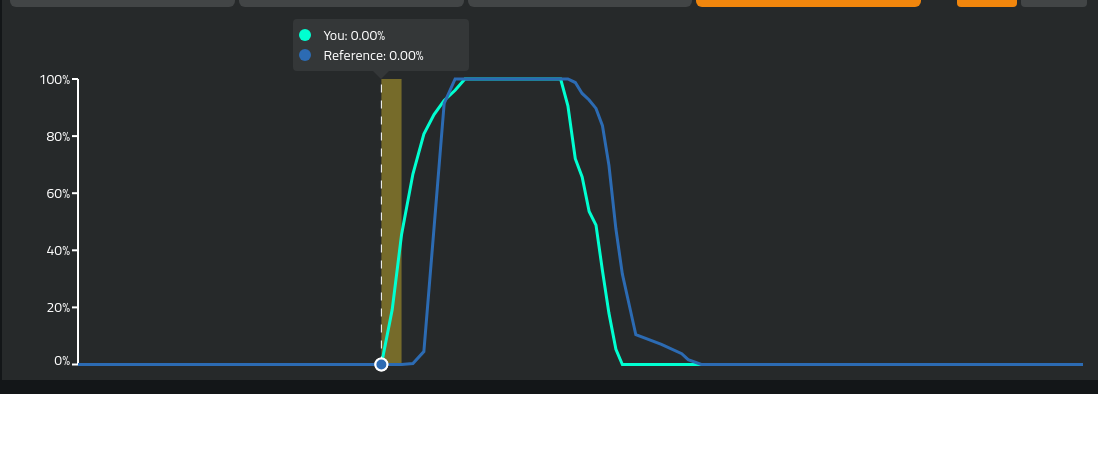
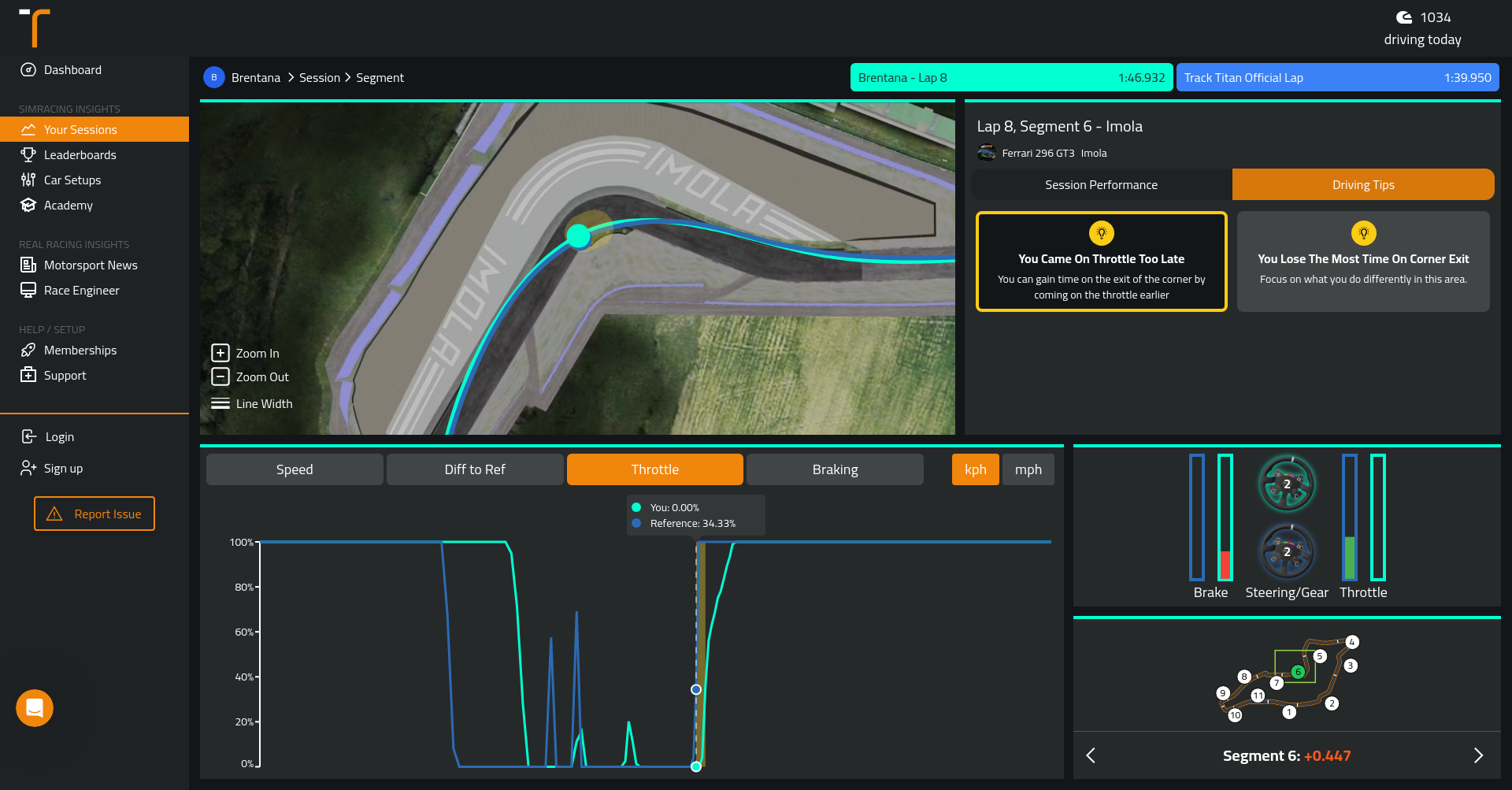
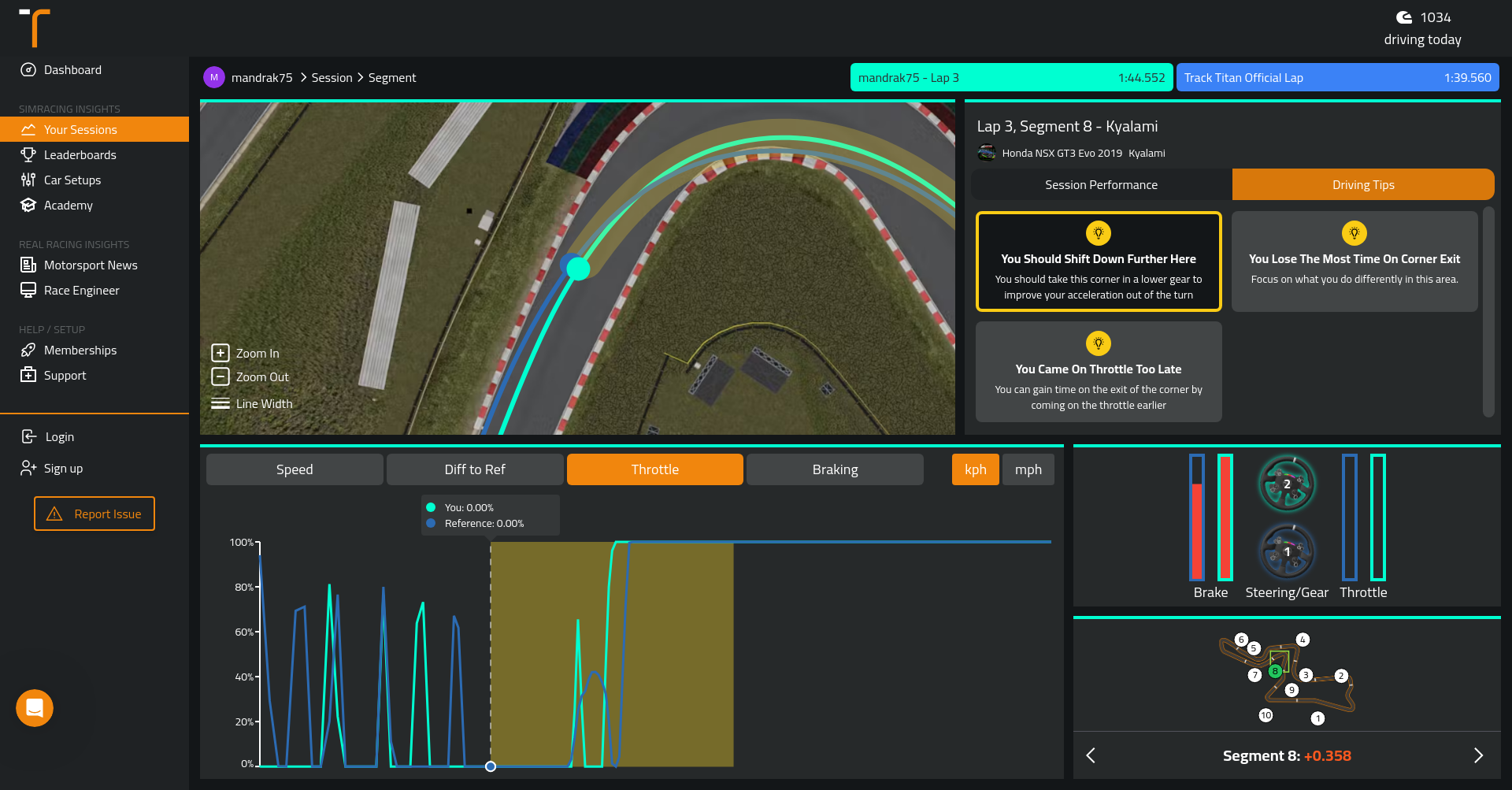
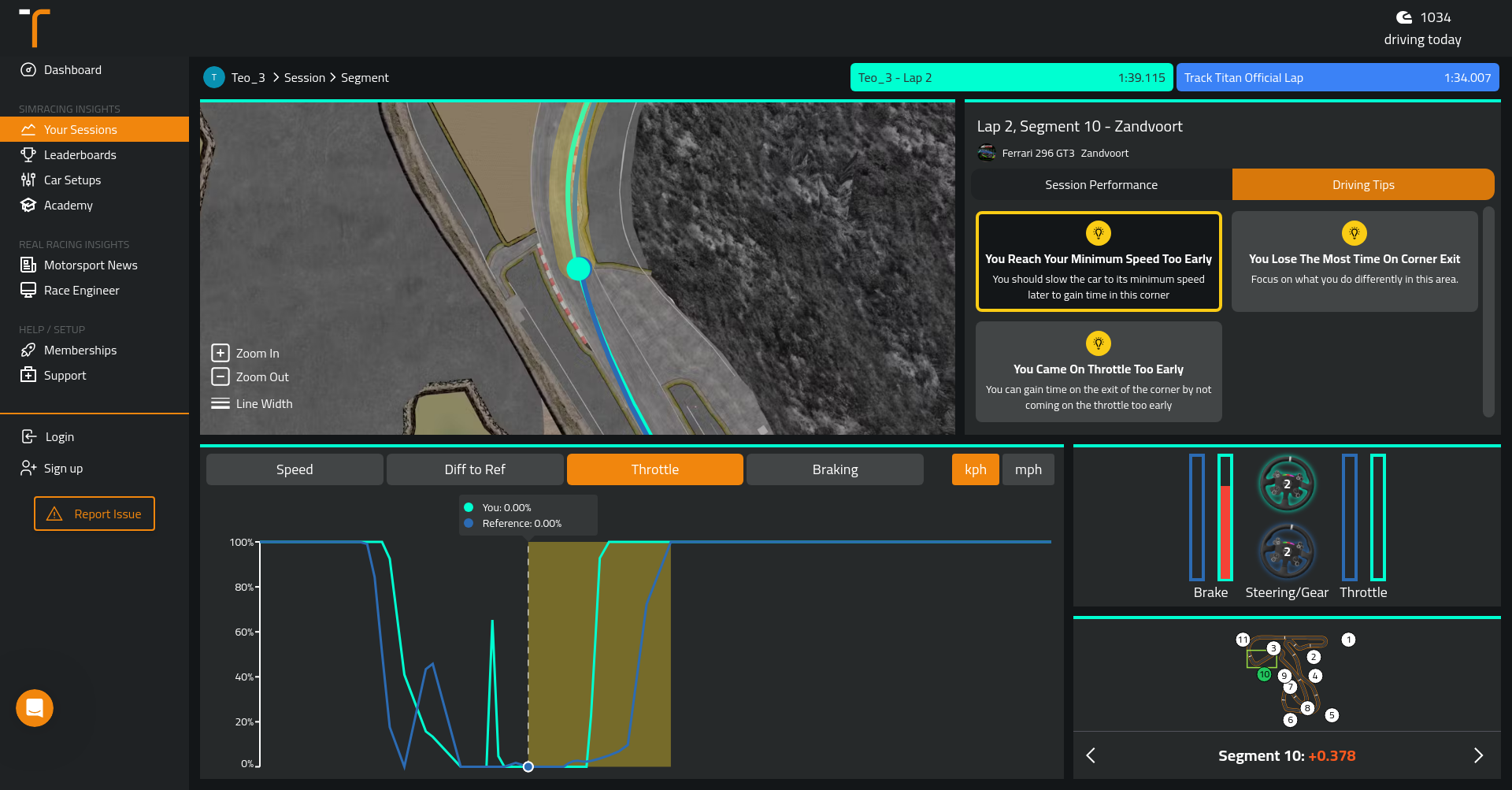
Analyzing the throttle control chart, it's evident that driverA initiates throttle application significantly earlier than driverB. This premature application results in a less smooth curve, suggesting potential wheelspin or loss of traction as driverA tries to accelerate out of the corner. In contrast, driverB's graph shows a more gradual and controlled increase in throttle, indicating better traction management and a smoother exit from the corner.
Furthermore, driverA's early throttle application is likely compromising their exit speed. The data suggests that by delaying throttle input and focusing on a smoother acceleration curve like that of driverB, driverA could maintain better control and potentially increase their exit speed. This adjustment would likely result in improved lap times, particularly in corners where exit speed is crucial for overall performance on the track.
In the provided braking analysis chart, driverA exhibits a significantly earlier application of the brakes compared to driverB. This early braking is indicated by the quick increase in brake application well before driverB begins to brake. DriverA's premature braking results in a lower entry speed into the corner, which could be contributing to lost time compared to driverB.
Furthermore, driverA's brake release is more gradual than that of driverB, suggesting a longer period of trail braking. However, this does not translate into a faster corner exit for driverA. The data indicates that driverA comes on throttle earlier than necessary, as shown by the cessation of braking. This premature throttle application likely causes understeer or a lack of optimal traction, which hinders acceleration out of the corner and leads to additional time lost relative to driverB. Adjusting the timing and intensity of both braking and throttle inputs will be crucial for improving lap times for driverA.