117,319
117K
Laps driven today

iRacing

Le Mans Ultimate

Assetto Corsa Competizione

Assetto Corsa

F1 25

Assetto Corsa EVO

Automobilista 2

Forza Motorsport

F1 24

F1 2021

F1 23

F1 2020


Lap 10
Segment 8
1:32.862
7th Feb 2024
Assetto Corsa Competizione
Red Bull Ring - Ferrari 296 GT3

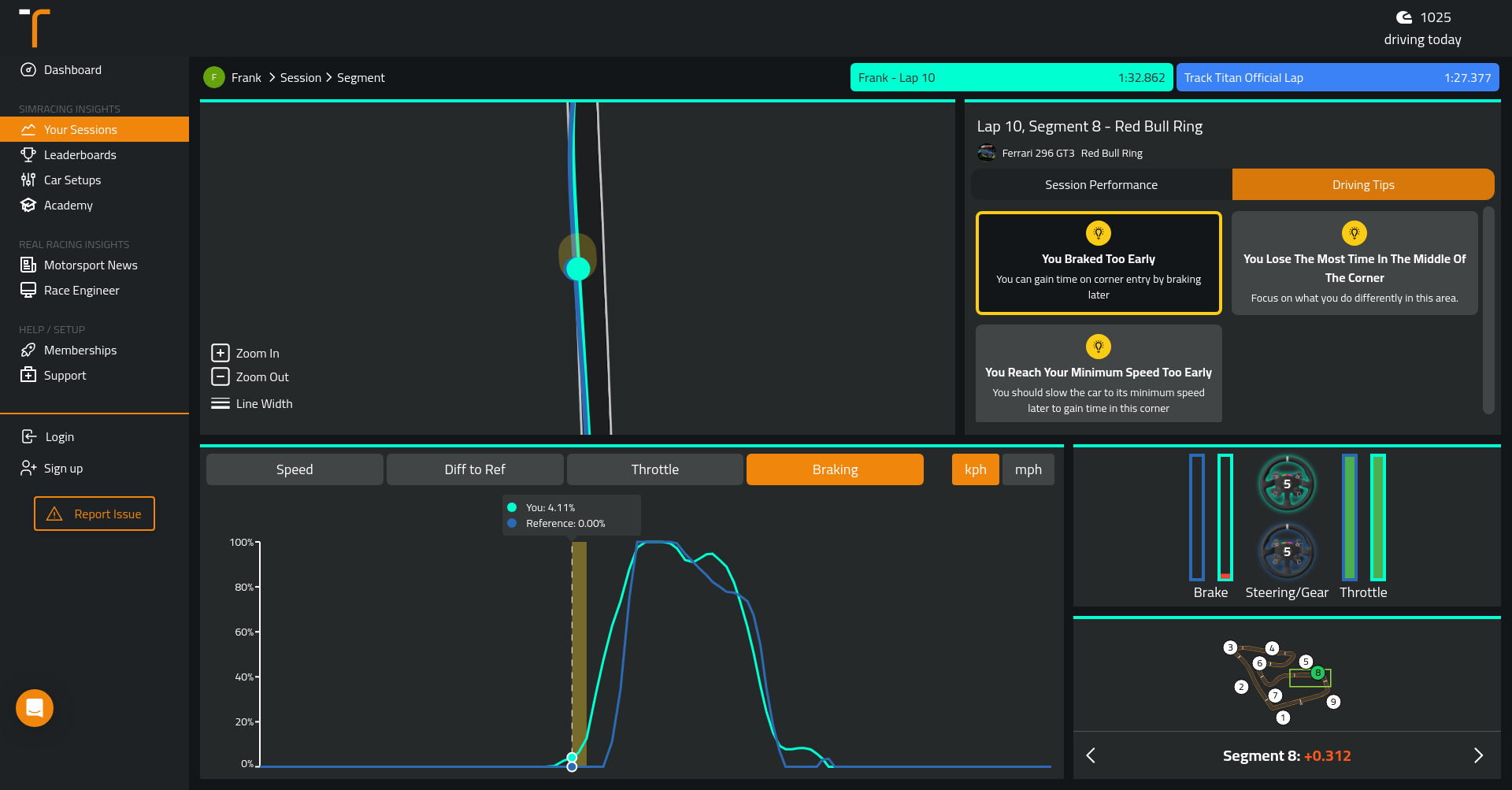
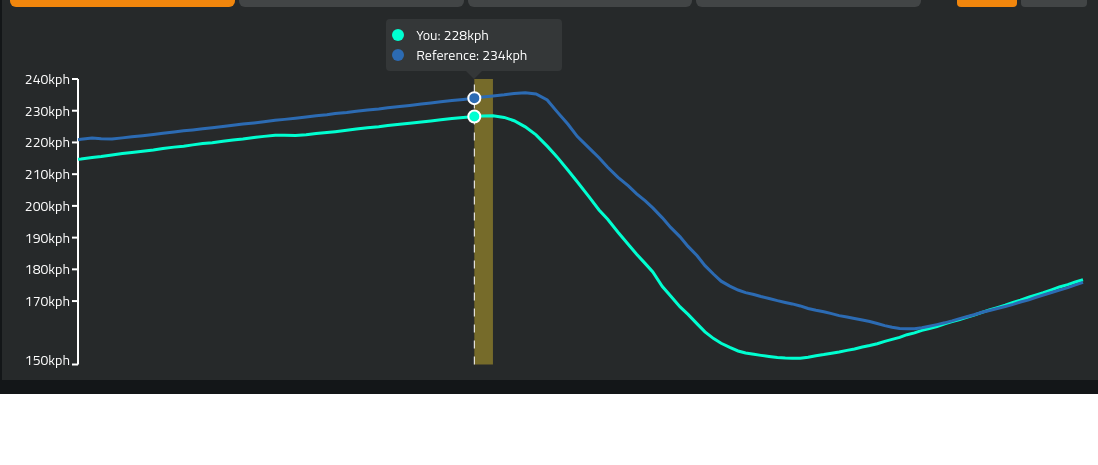
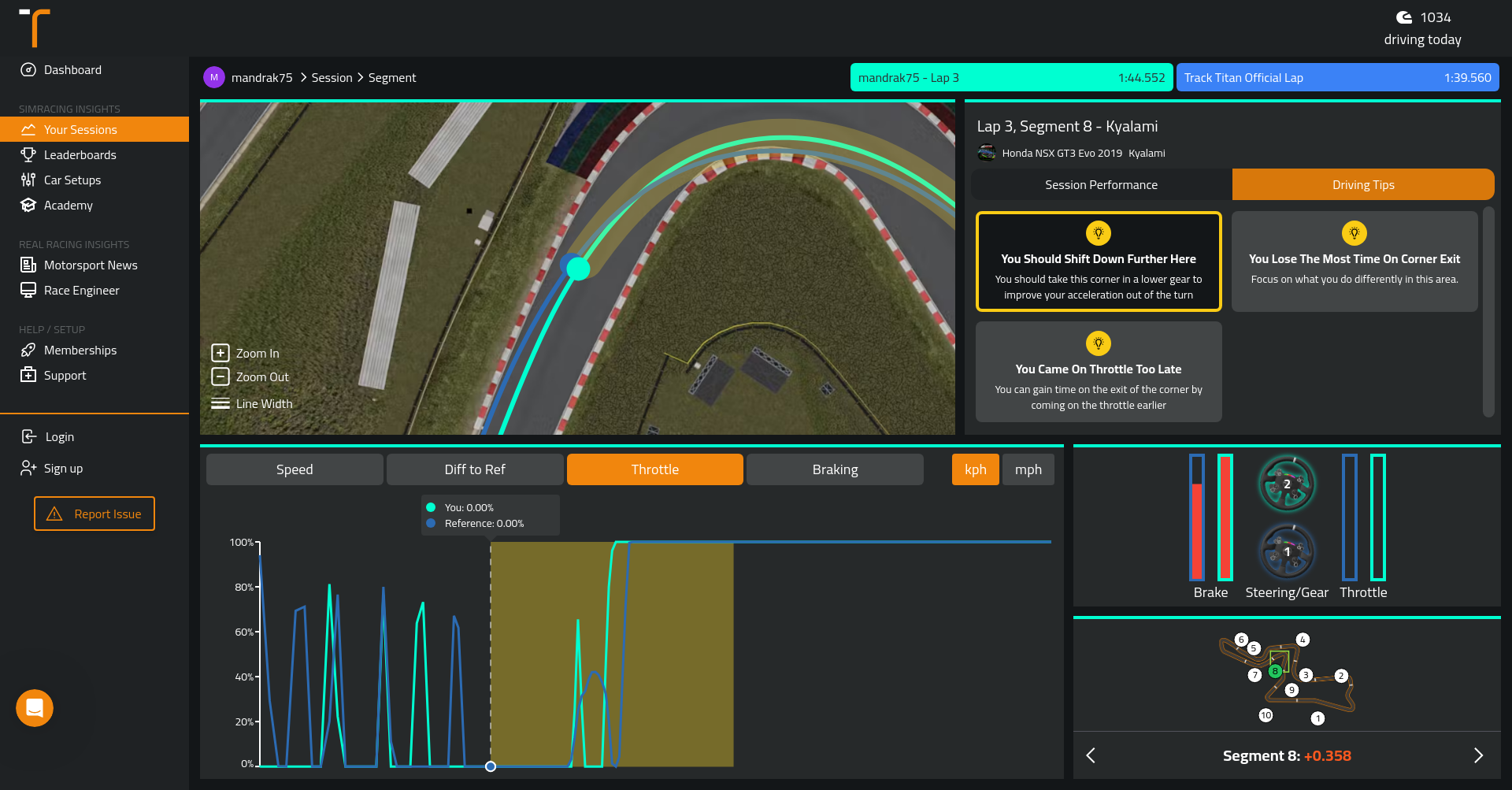
The speed chart analysis reveals that driverB starts at a lower speed than driverA, suggesting a slower exit from the previous corner and entering the current corner at a disadvantage. DriverB's cautious approach leads to an earlier and lower minimum speed in the mid-corner phase, resulting in time loss due to carrying this reduced speed for an extended period. To enhance performance, driverB should aim to brake later and sustain a higher minimum cornering speed, allowing for earlier acceleration and increased speeds upon exiting the corner. Examining the braking control chart, it's clear that driverA begins braking much earlier than driverB, reaching a higher peak of brake application quickly. This indicates an intense initial braking phase for driverA. Meanwhile, driverB starts braking later with less intensity, which is beneficial as it allows for carrying more speed into the corner. The data suggests that driverA could improve lap times by adopting a similar approach to driverB—delaying and moderating initial brake application to maintain higher entry speeds into corners.
Analyzing the speed chart, it's evident that driverB is entering the corner with a speed deficit compared to driverA. This is immediately noticeable at the very start of the chart on the left, where driverB's speed is already lower, indicating a slower exit from the previous corner. This initial speed difference sets up driverB at a disadvantage even before approaching the braking zone for the current corner. During the mid-corner phase, driverB's minimum speed occurs noticeably earlier and is lower than that of driverA. This premature reduction in speed suggests an overly cautious approach to corner entry and indicates that driverB is not utilizing the full potential of the braking zone. Consequently, this leads to a loss of time as driverB reaches their minimum cornering speed too soon and maintains this lower speed for a longer duration compared to driverA. To improve performance, driverB should focus on braking later and managing a higher minimum cornering speed to carry more momentum through the mid-corner, which will lead to earlier acceleration and potentially higher speeds upon corner exit.

Analyzing the braking control chart, it's evident that driverA engages the brakes significantly earlier than driverB. This early braking is indicated by the steep increase in brake application percentage before driverB even begins to brake. DriverA reaches a higher peak of brake application, suggesting not only an earlier but also a more intense initial braking phase compared to driverB. In contrast, driverB applies the brakes later and with less intensity, as shown by a more gradual slope on the chart. This suggests that driverB is utilizing a later braking point and possibly benefiting from carrying more speed into the corner. The data indicates that driverA could improve lap times by emulating this aspect of driverB's technique, specifically by delaying and moderating the initial brake application to maintain higher entry speed into the corner.