114,324
114K
Laps driven today

iRacing

Le Mans Ultimate

Assetto Corsa Competizione

Assetto Corsa

F1 25

Assetto Corsa EVO

Automobilista 2

Forza Motorsport

F1 24

F1 2021

F1 23

F1 2020


Lap 2
Segment 4
2:05.075
7th Feb 2024
Assetto Corsa Competizione
Silverstone - Ferrari 296 GT3

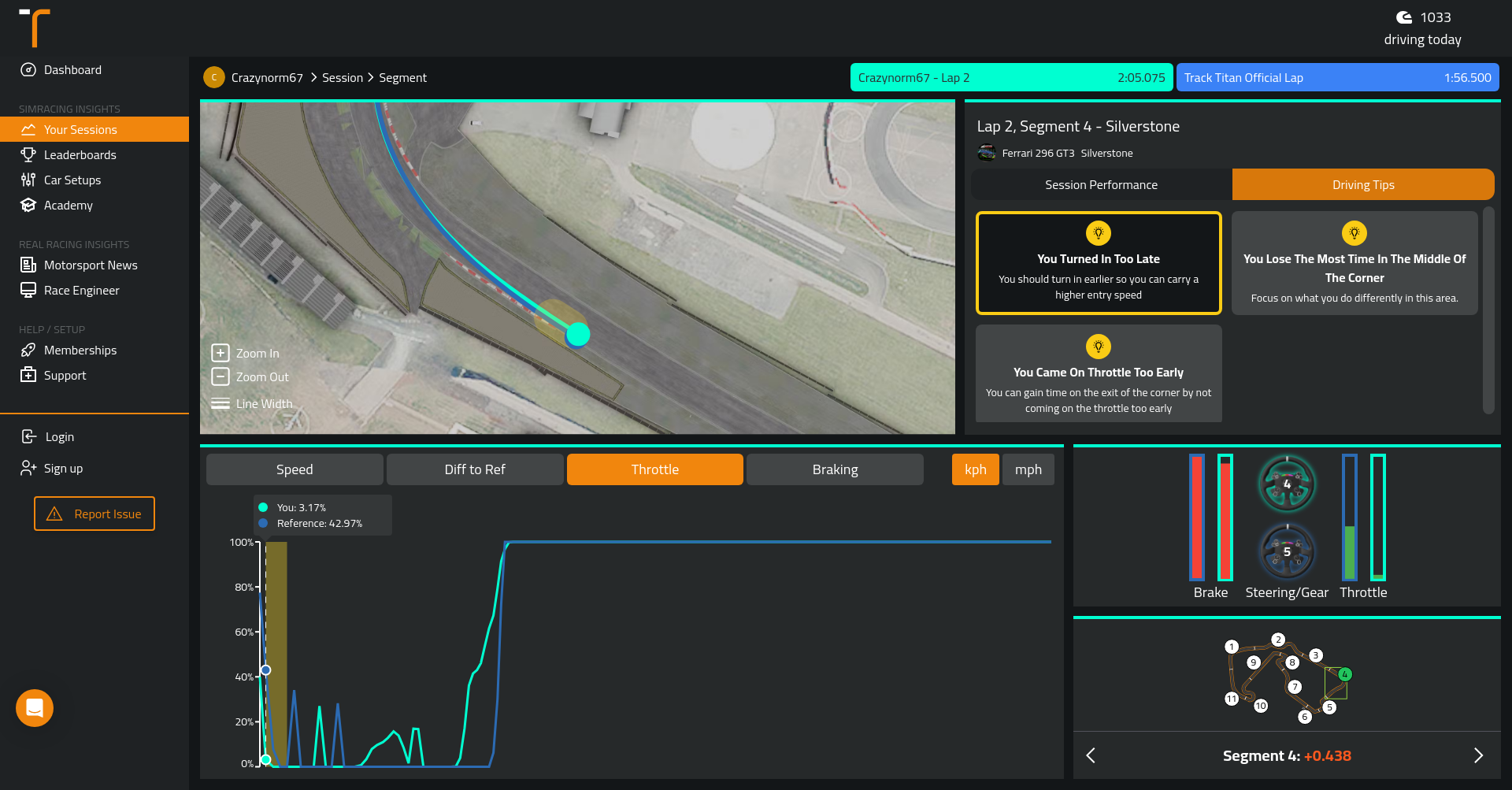
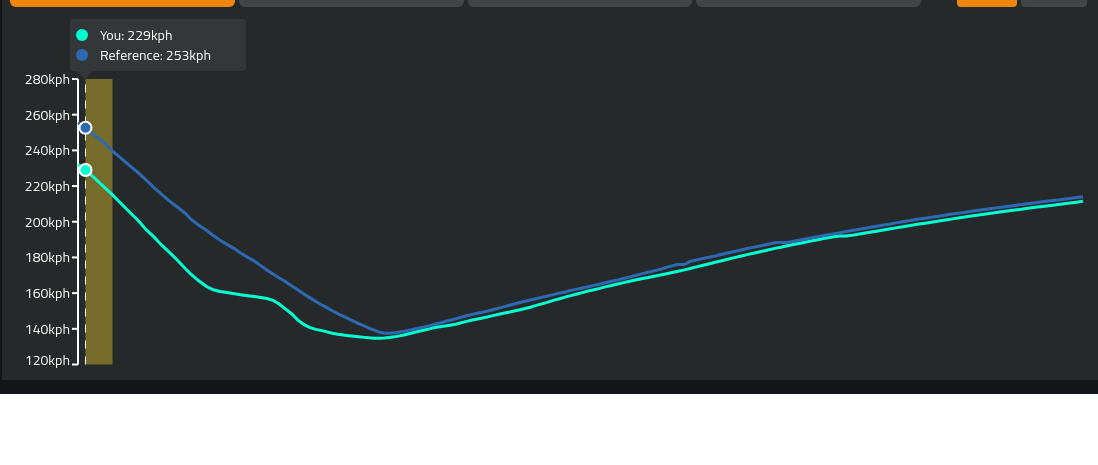
The speed chart analysis reveals that driverB enters the corner with a lower speed than driverA, suggesting that driverB did not carry enough speed from the previous corner. At the slowest point of the corner, driverB's minimum speed is lower and occurs later than driverA's, leading to a later throttle application and delayed acceleration. This results in time lost on corner exit for driverB, as indicated by a less steep increase in speed post-corner. In terms of throttle control, driverA applies the throttle more abruptly, which may cause understeer or grip loss due to early acceleration. On the other hand, driverB's smoother throttle application ensures better traction and stability for faster exit speeds. However, driverA's inconsistent throttle input during the mid-corner phase suggests difficulty in maintaining a consistent speed, which is also where time is often lost. This inconsistency might be related to a late turn-in. To improve performance, it is recommended that driverA focuses on smoother throttle transitions and avoids accelerating too early to maintain control and potentially carry more speed throughout the corner. This approach could help in reducing time deficits and achieving better overall lap times.
Analyzing the speed chart for driverB compared to driverA, it's evident that driverB is entering the corner with a lower speed. This is indicated by the initial left portion of the chart where driverB's speed graph starts at a notably lower point than that of driverA. This suggests that driverB did not carry as much speed out of the previous corner, which sets them up at a disadvantage right from the beginning of this section. Furthermore, in the middle of the corner, there is a significant speed difference where driverB's minimum speed dips lower than that of driverA and occurs later. This indicates that not only is driverB slower at the slowest point of the corner, but they also get on throttle later than driverA, leading to delayed acceleration and consequently a time loss on corner exit. The gradient of driverB's speed increase post-corner is less steep compared to driverA's, confirming this delay in acceleration and further contributing to time lost in this section.

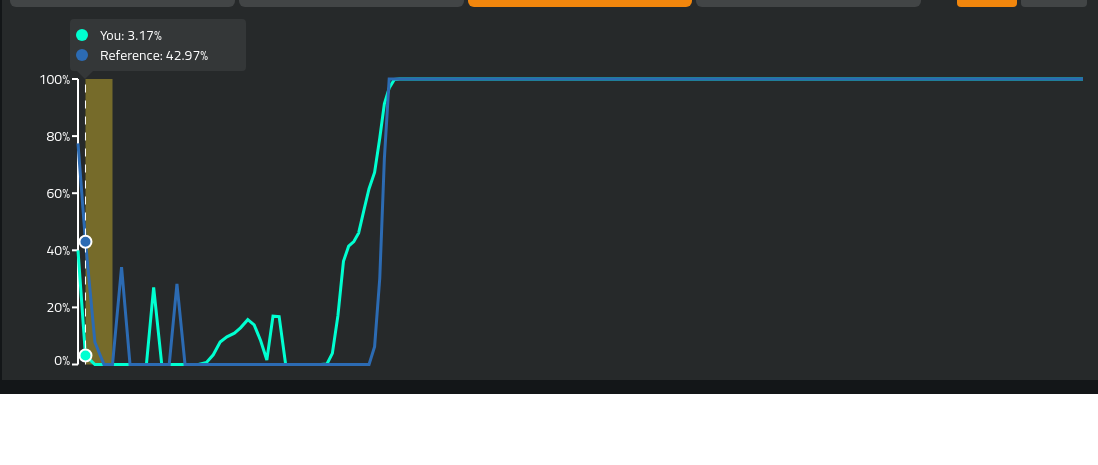
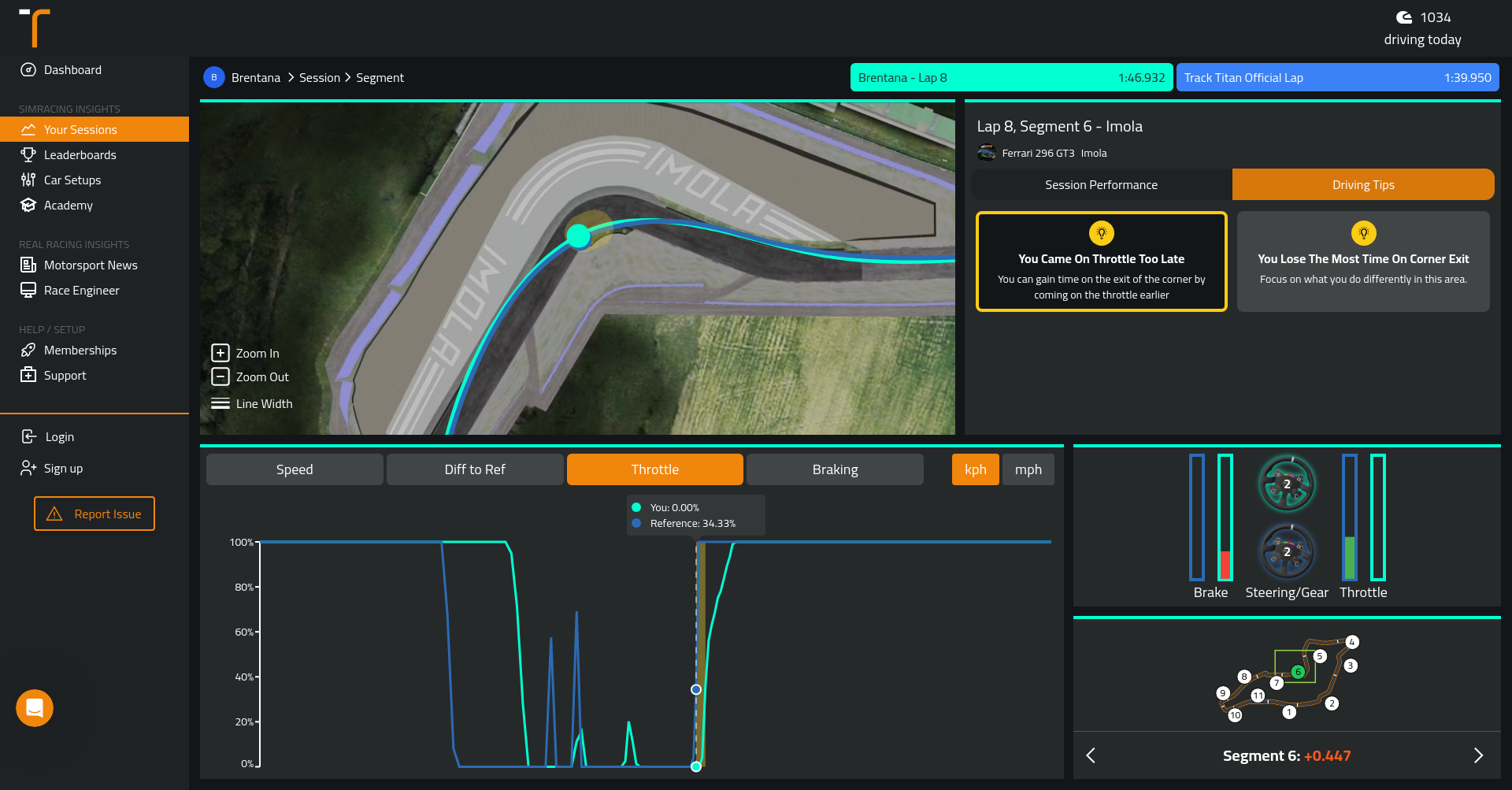
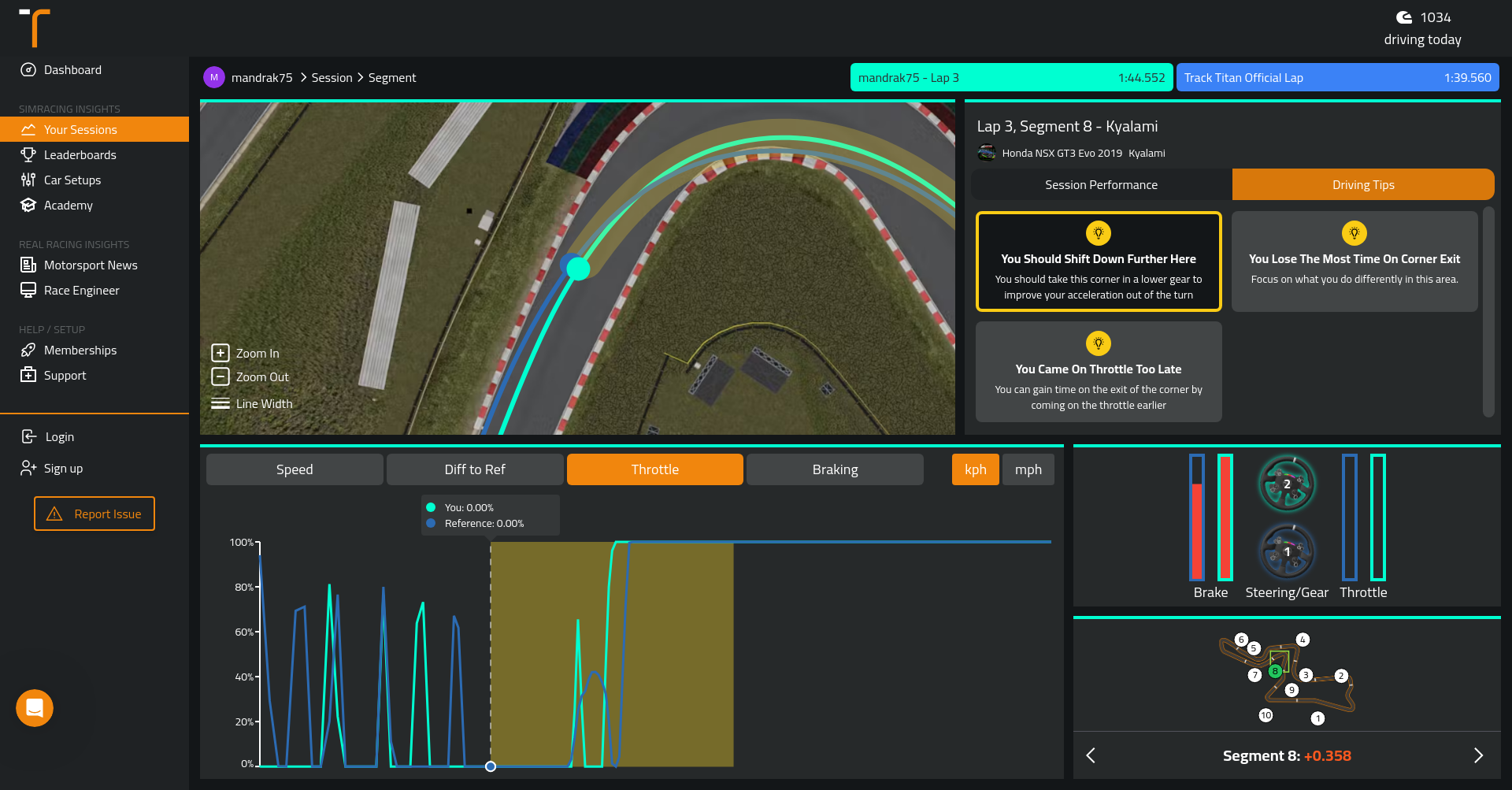
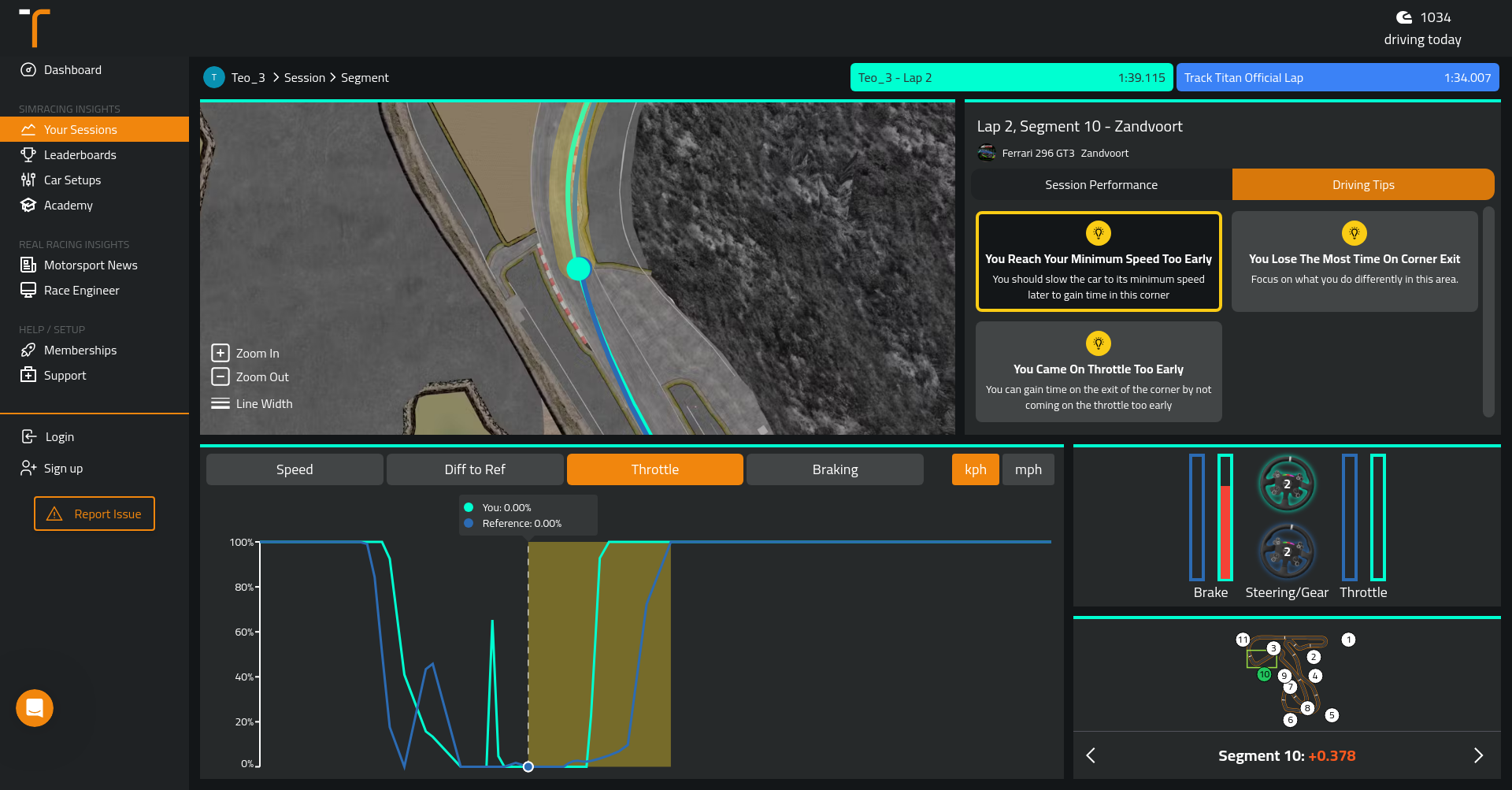
Analyzing the throttle control chart, it's evident that driverA and driverB have different approaches to throttle application. DriverA's throttle input shows a more abrupt increase, suggesting a quicker transition from braking to acceleration. This is indicative of driverA coming on the throttle too early, which can lead to understeer or a loss of grip. In contrast, driverB exhibits a smoother and more gradual application of throttle. This controlled approach allows for better traction and stability, leading to faster exit speeds. In the mid-corner phase, where time is most commonly lost, driverA's inconsistent throttle application could be contributing to their time deficit. The jagged nature of their input likely indicates difficulty in maintaining consistent speed through the corner, which correlates with the late turn-in noted earlier. To improve, driverA should focus on a smoother transition onto the throttle and avoid accelerating too early to maintain better control and potentially carry more speed through the entirety of the corner.