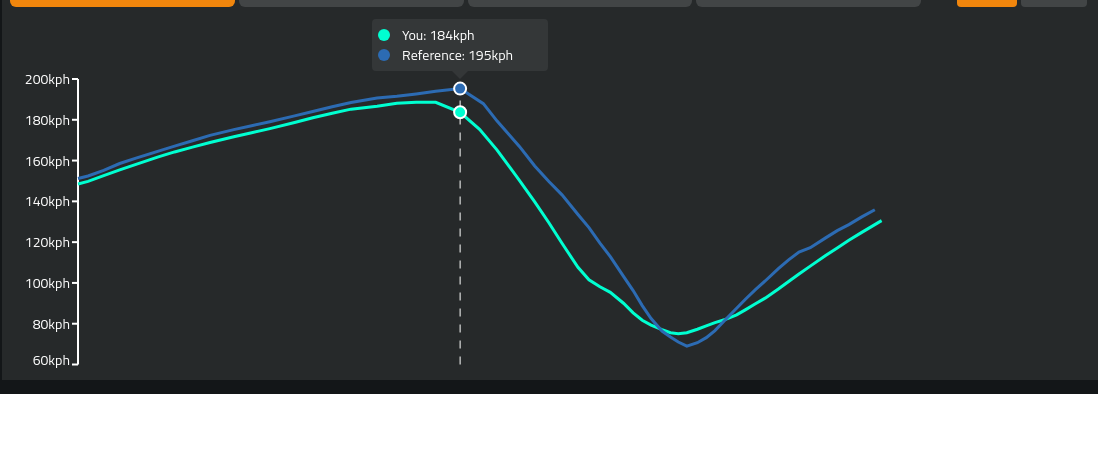
DriverB's approach to corners is less effective than DriverA's, as evidenced by the speed chart. DriverB enters corners at a lower speed and accelerates later, resulting in slower exit speeds and overall time loss. To improve, DriverB should carry more speed from the previous corner and apply throttle earlier for better exit speeds.
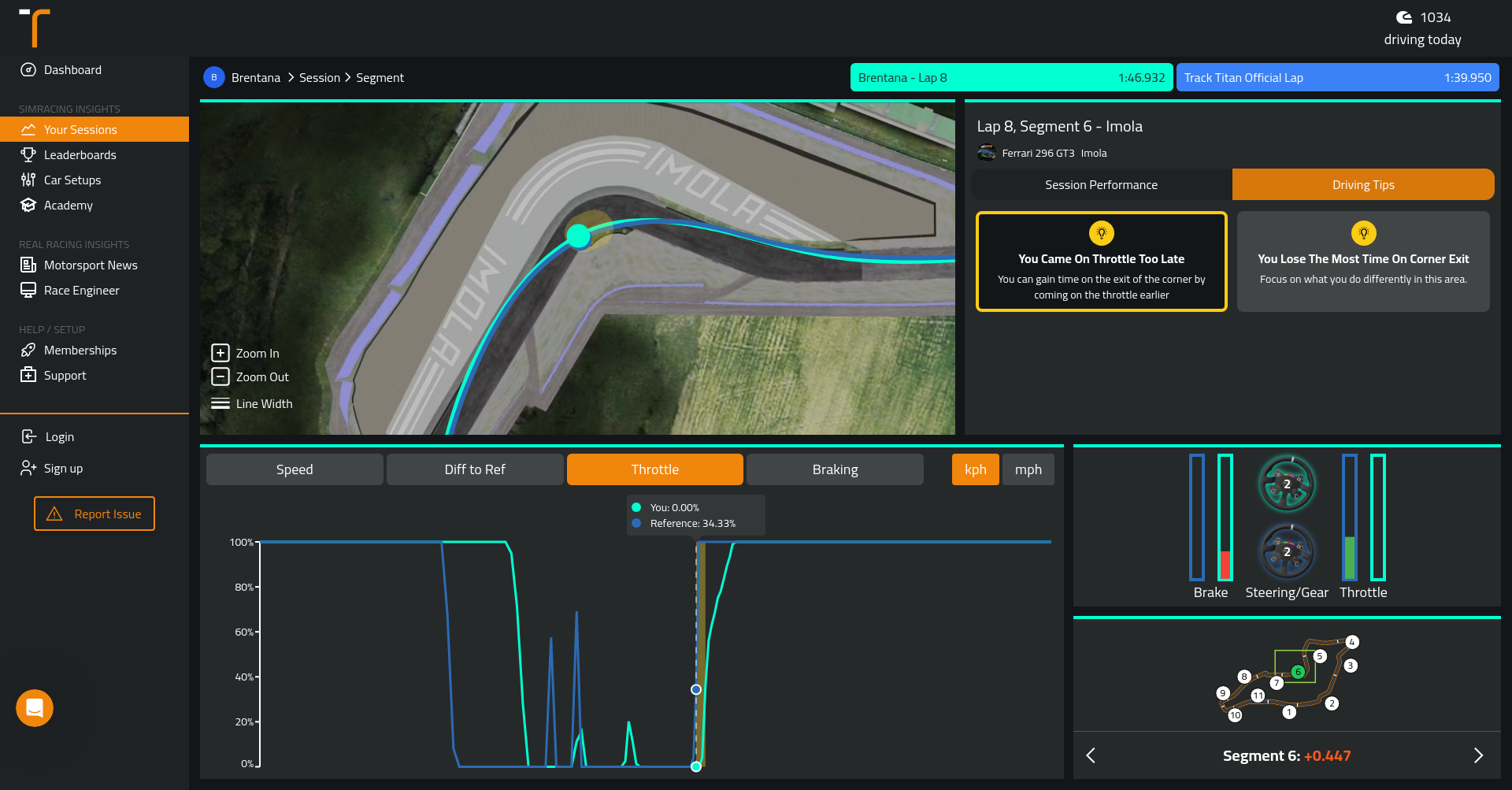
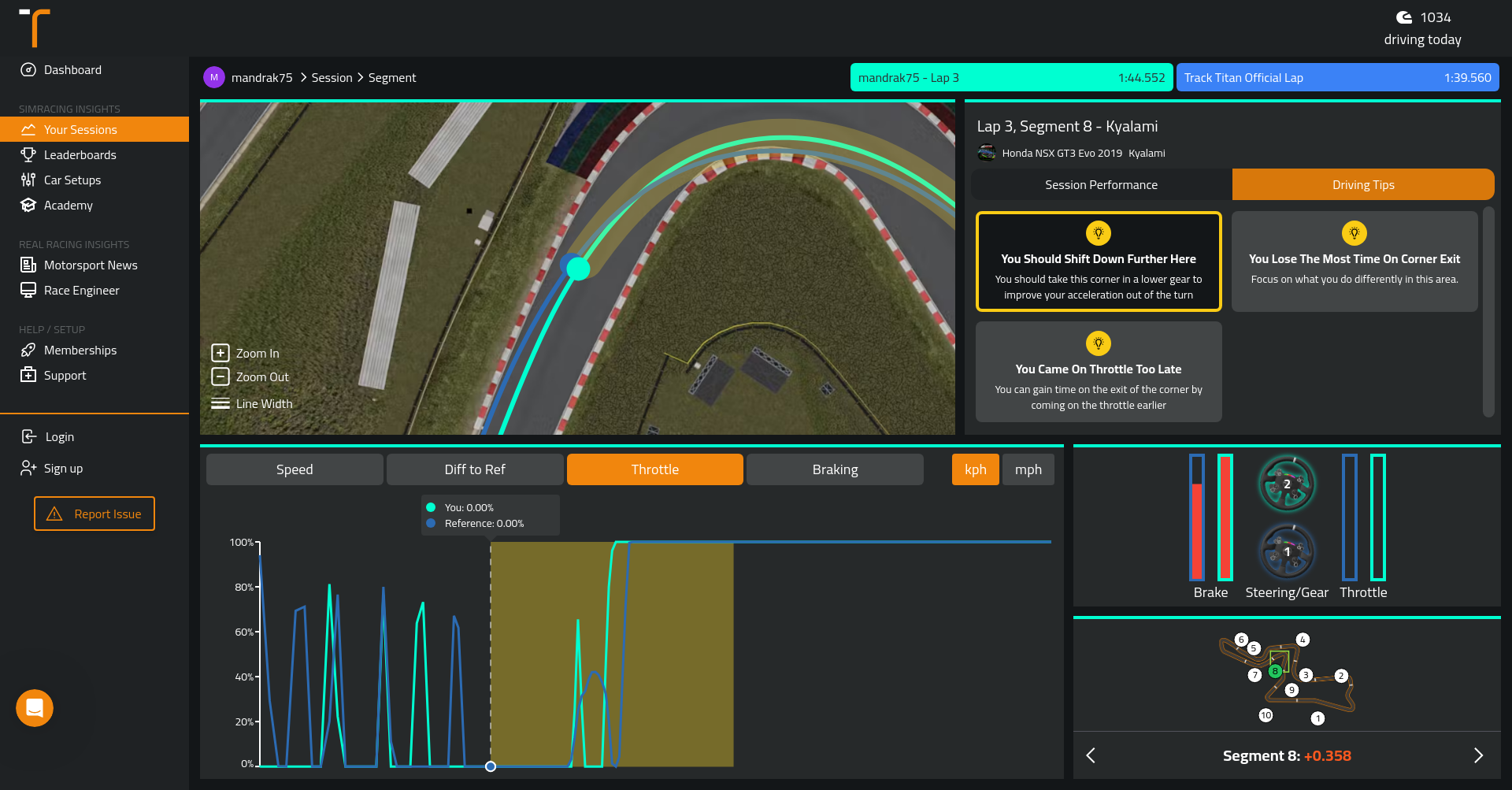
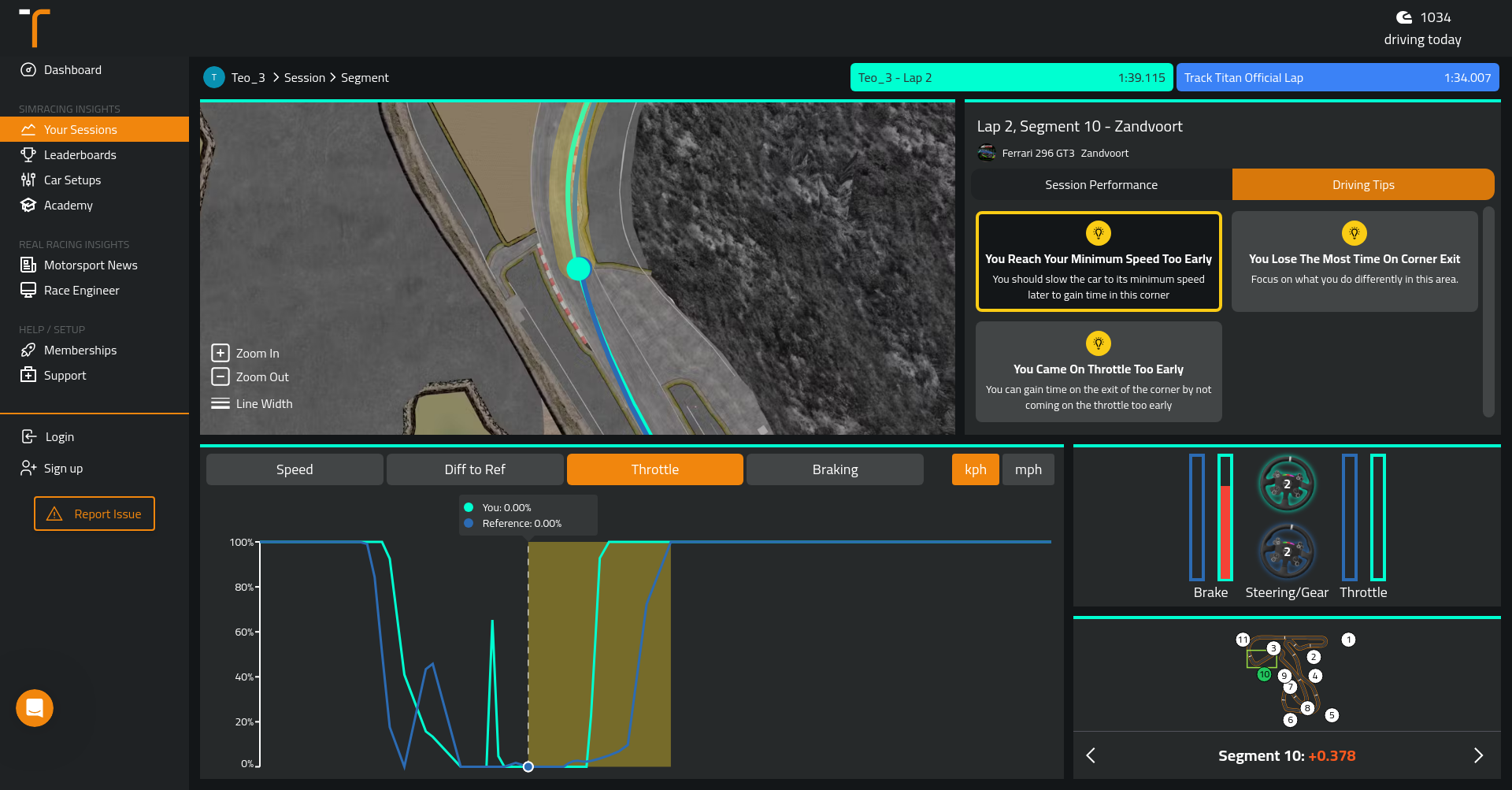
The throttle control chart reveals that DriverA is cautious with acceleration, gradually increasing throttle, which may cost time compared to DriverB's aggressive and immediate throttle application. This suggests that DriverA might be struggling with wheelspin or grip confidence. To maximize acceleration out of turns, DriverA should apply throttle earlier and more decisively.
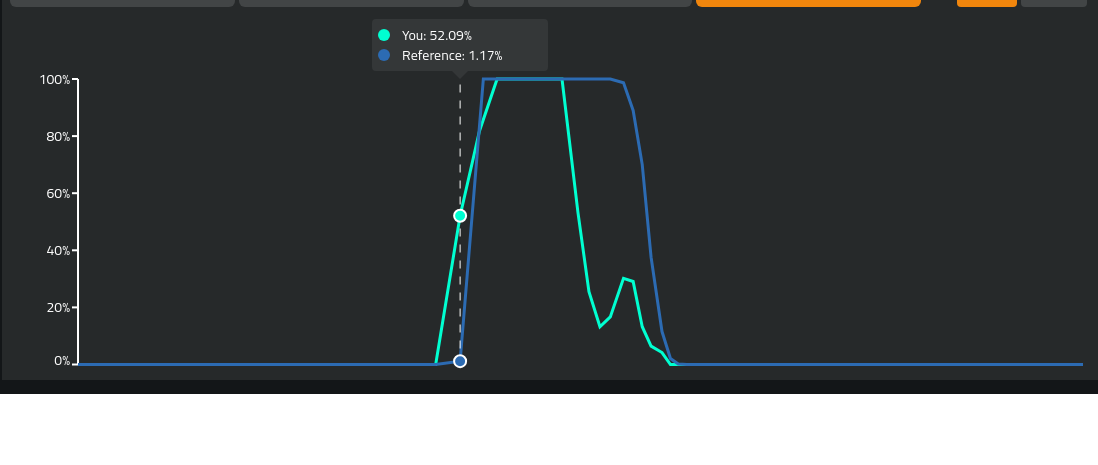
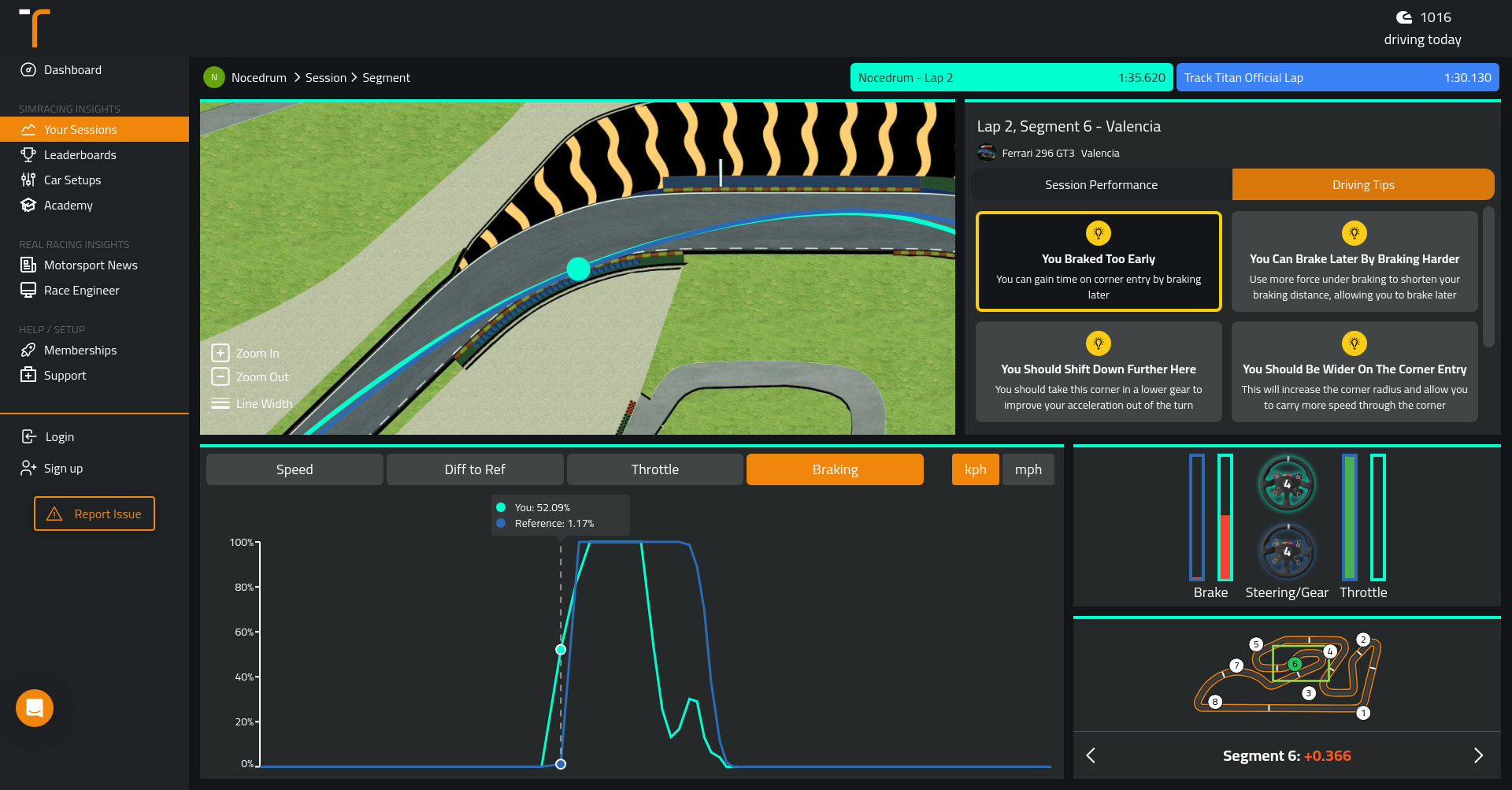
Braking analysis shows that DriverA brakes aggressively but may not effectively utilize trail braking, as indicated by a less smooth decrease in brake pressure. In contrast, DriverB's smoother braking technique suggests better vehicle control and use of trail braking to maintain higher cornering speeds. For improved performance, DriverA should aim for a smoother braking curve like DriverB's to optimize trail braking into turns.
Analyzing the speed chart, it's evident that driverB enters the corner with a lower speed compared to driverA. This indicates that driverB exited the previous corner with less momentum, which is immediately putting them at a disadvantage as they approach the next turn. The data shows that driverB's minimum speed in the corner is lower than that of driverA, and it occurs later in the corner. This suggests that driverB is on the throttle later than driverA, leading to delayed acceleration and consequently a time loss on corner exit.
Furthermore, when comparing the gradient of the speed charts post-corner, driverB's speed increases at a slower rate than that of driverA. This further confirms that not only did driverB get on the throttle later but also struggled to accelerate out of the turn effectively. To improve performance, focusing on carrying more speed from the previous corner into this one and working on earlier throttle application will be crucial for better exit speeds and overall lap time reduction for driverB.
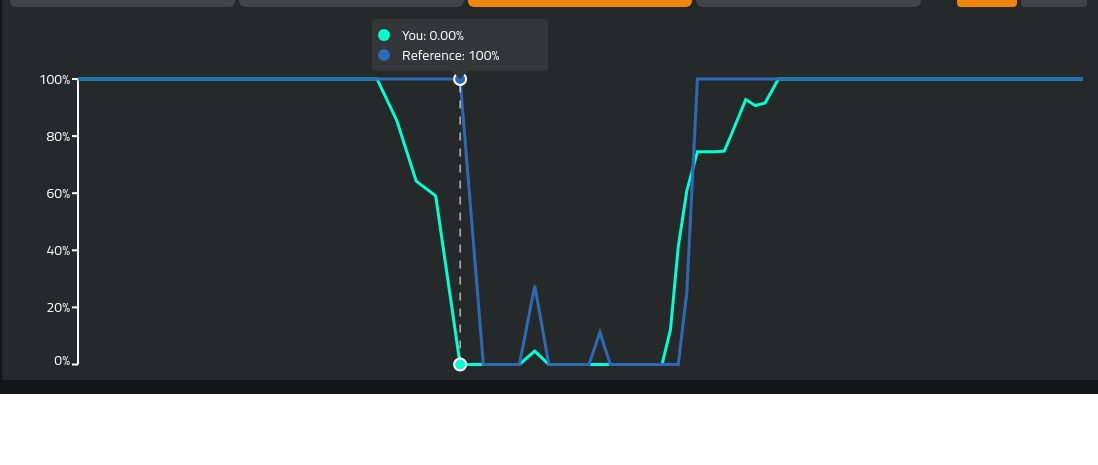
Analyzing the throttle control chart, it's evident that driverA and driverB have distinct differences in their throttle application. DriverA's graph shows a more gradual increase in throttle, which suggests a cautious approach to acceleration out of the corner. This delayed and progressive application may be costing driverA valuable time, especially when compared to driverB's more aggressive and immediate increase in throttle application. DriverB hits the throttle hard right at the apex, which is likely contributing to a faster exit speed and better lap times.
Furthermore, driverA's hesitation or smoothness in applying the throttle could indicate a struggle with wheelspin or a lack of confidence in the car's grip levels. In contrast, driverB demonstrates confidence by applying full throttle much sooner, indicating better traction management or car control. To improve performance, driverA should focus on coming onto the throttle earlier and with more conviction to maximize acceleration out of the turn.
In the provided braking analysis chart, driverA and driverB exhibit distinct differences in their brake application. DriverA initiates braking with a sharp increase in brake pressure, reaching a higher peak than driverB. This indicates a more aggressive approach to the braking zone, potentially allowing driverA to carry more speed into the corner. However, the subsequent decrease in brake pressure is less smooth compared to driverB, suggesting that driverA may not be utilizing trail braking as effectively to maintain speed through the corner.
On the other hand, driverB applies brakes with a less steep incline and peaks at a lower percentage of brake application. This smoother application and release of brakes could indicate better control over the vehicle's deceleration and a more effective use of trail braking. DriverB's technique allows for maintaining higher speeds through the corner by carrying momentum and potentially leading to better acceleration upon corner exit. To improve performance, driverA should consider adopting a smoother braking curve similar to that of driverB, focusing on gradual reduction of brake pressure to optimize trail braking into the turn.