117,319
117K
Laps driven today

iRacing

Le Mans Ultimate

Assetto Corsa Competizione

Assetto Corsa

F1 25

Assetto Corsa EVO

Automobilista 2

Forza Motorsport

F1 24

F1 2021

F1 23

F1 2020


Lap 2
Segment 5
1:50.530
6th Feb 2024
Assetto Corsa Competizione
Imola - Ferrari 488 Challenge Evo 2020

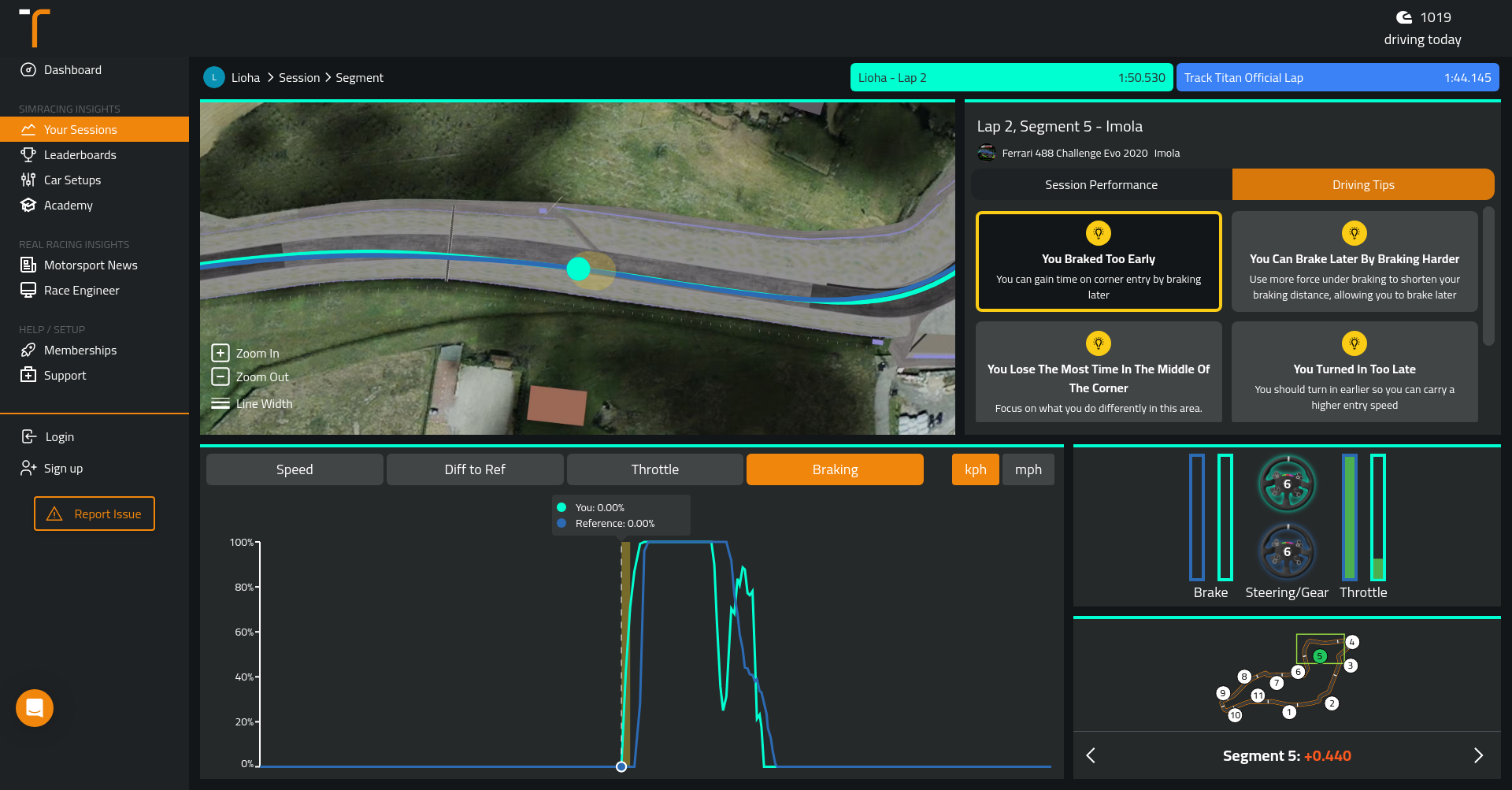
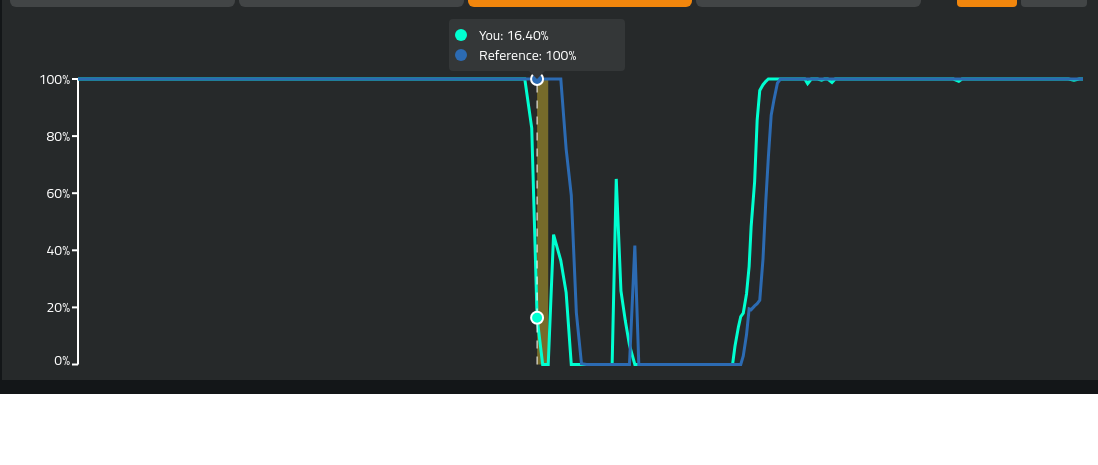
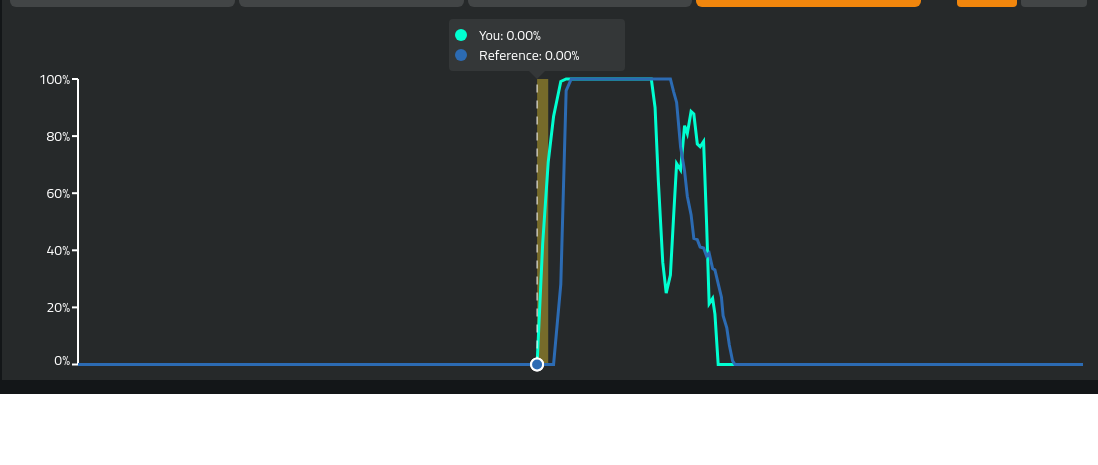
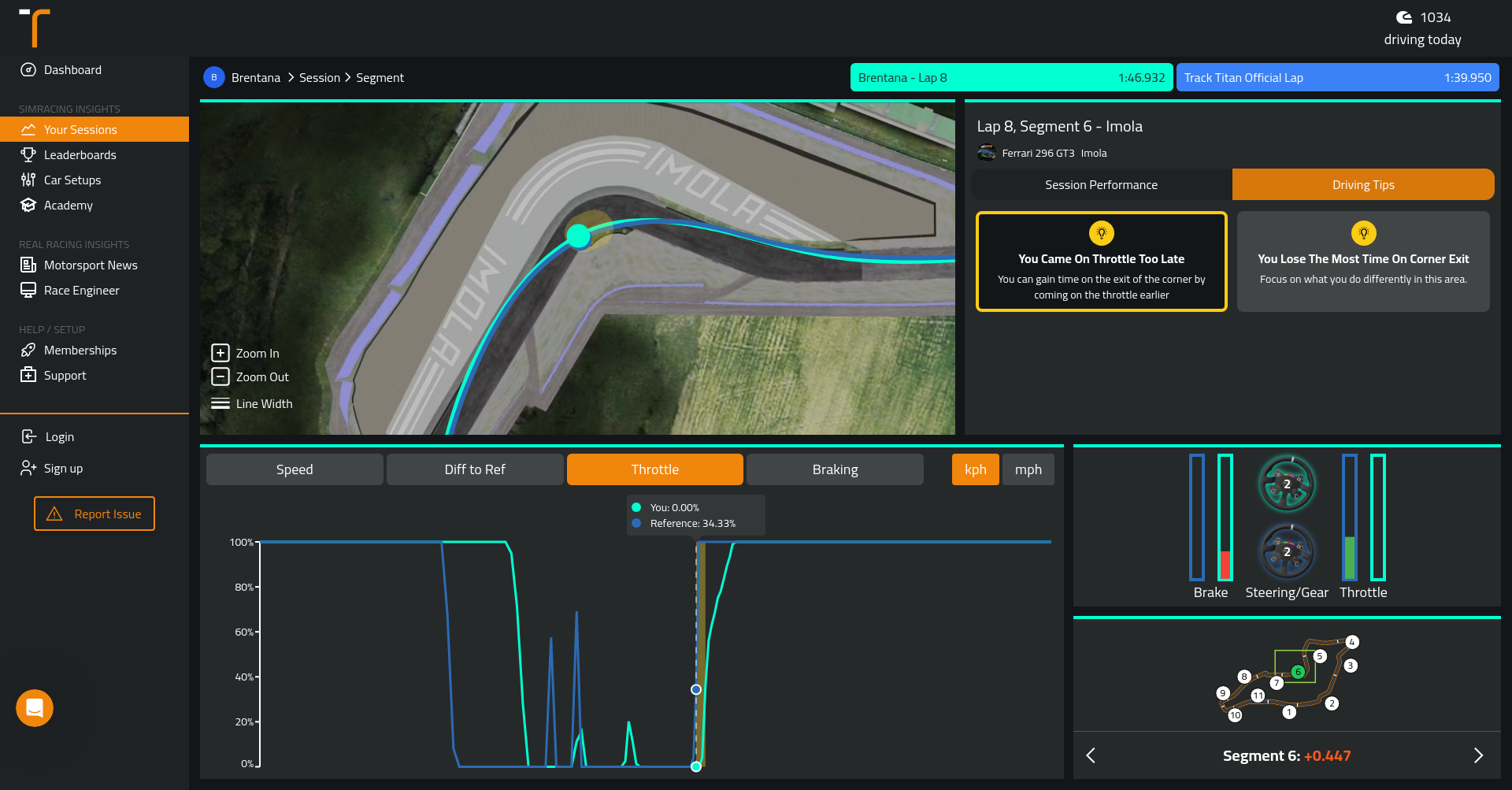
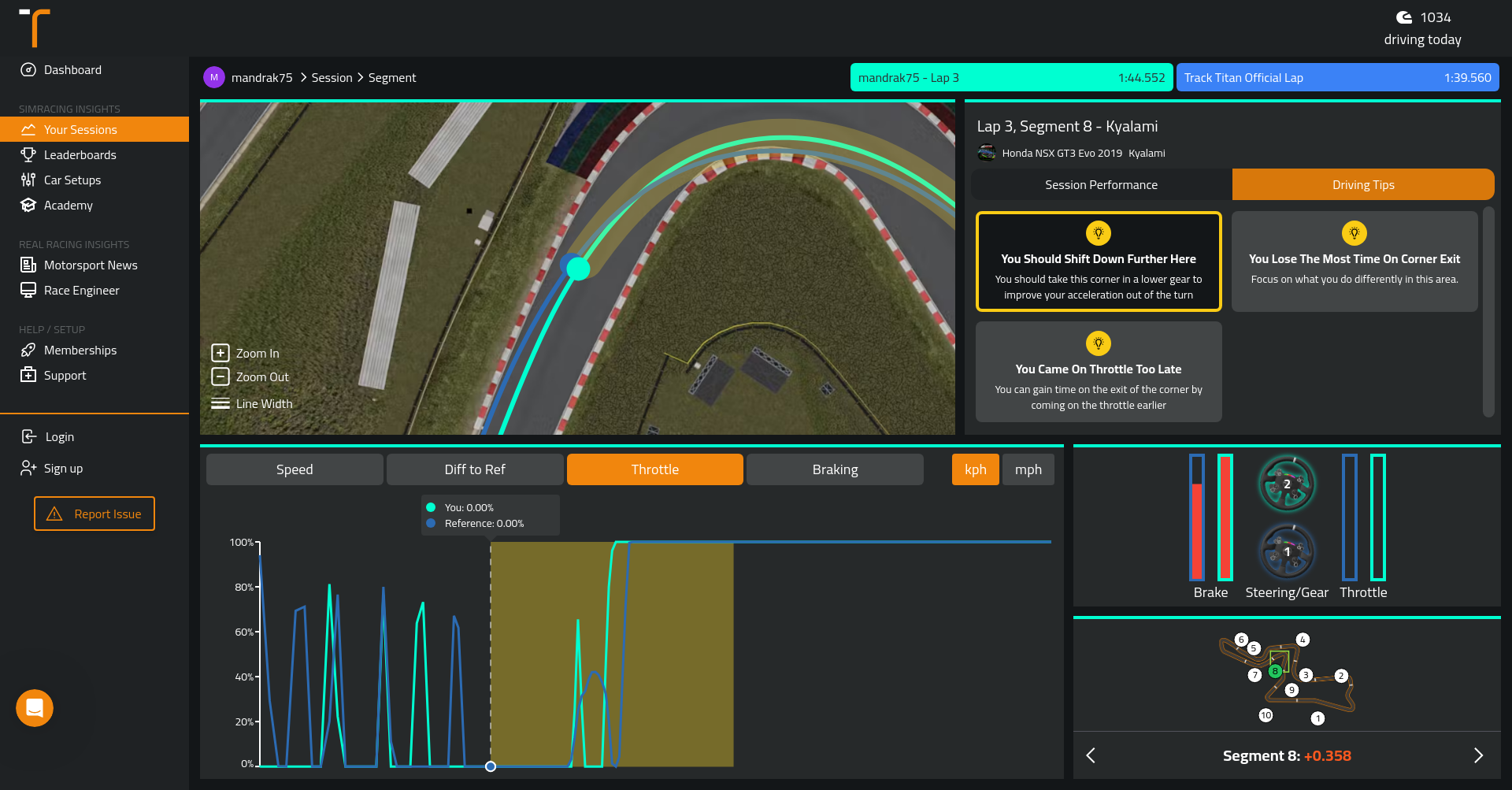
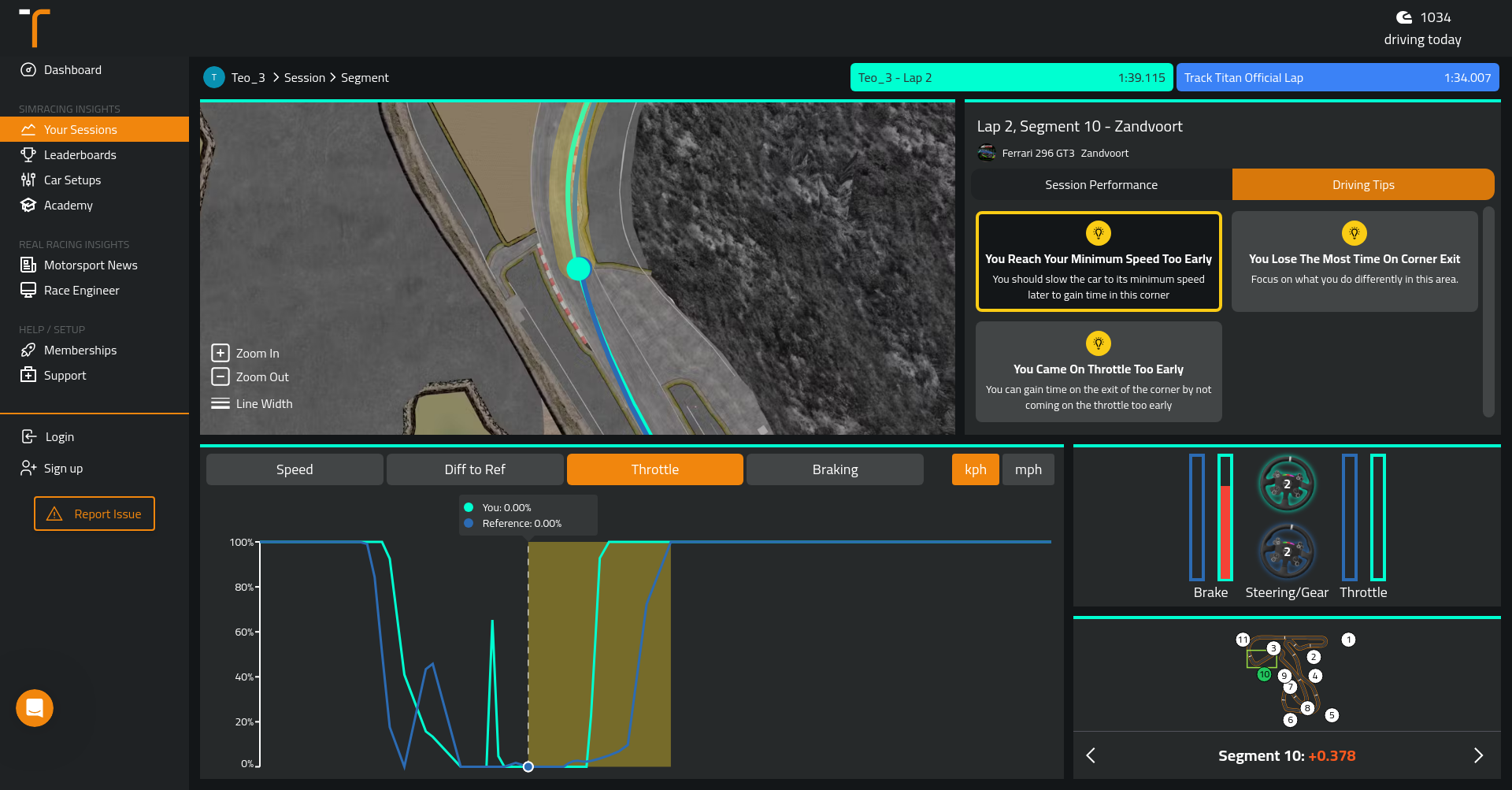
The throttle control chart reveals that driverA is applying the throttle too early in the corner, leading to a jagged increase in throttle and possible wheelspin or traction issues. This negatively affects their exit speed and overall corner performance. In contrast, driverB applies the throttle more gradually and smoothly, indicating better traction management and power transfer. To improve, driverA should delay their throttle input to achieve a smoother application pattern, enhancing stability and potentially increasing exit speed for faster laps. On the braking control chart, driverA begins braking earlier than driverB, resulting in a longer period of reduced speed and impacting their corner entry speed. DriverB brakes later but with more intensity, shortening the braking distance and maintaining a higher entry speed into the corner. DriverA's gradual reduction in brake pressure suggests a longer trail-braking phase compared to driverB's quicker transition from braking to turning. For better performance, driverA should aim to delay and intensify their initial brake application to carry more speed into the corner like driverB, which could lead to reduced lap times.
Analyzing the throttle control chart, it's evident that driverA is applying throttle significantly earlier than driverB. This premature application results in a less smooth increase in throttle, which can be observed as a more jagged line compared to driverB's smoother curve. This suggests that driverA may be experiencing wheelspin or struggling to maintain traction, which is detrimental to their exit speed and overall corner performance. Furthermore, driverB demonstrates a more gradual and controlled increase in throttle application. This indicates better traction management and a more efficient transfer of power to the track. DriverA should aim to replicate this smoother application pattern by delaying their throttle input slightly. By doing so, they can achieve better stability and potentially improve their exit speed, leading to faster lap times.

Analyzing the braking control chart, it's evident that driverA initiates braking significantly earlier than driverB. This early braking results in a longer period of reduced speed for driverA, which directly impacts their corner entry speed and overall time. DriverB, on the other hand, applies the brakes later and with more intensity, as indicated by the steeper initial incline in brake application percentage. This suggests that driverB is utilizing a harder braking approach to shorten the braking distance and maintain a higher entry speed into the corner. Furthermore, driverA gradually reduces brake pressure, indicating a longer trail-braking phase into the corner. In contrast, driverB's quicker reduction in brake application points to a more aggressive transition from braking to turning. To improve performance, driverA should focus on delaying and intensifying their initial brake application to match the more efficient pattern demonstrated by driverB. This adjustment could help carry more speed into the corner and potentially reduce lap times.