117,904
117K
Laps driven today

iRacing

Le Mans Ultimate

Assetto Corsa Competizione

Assetto Corsa

F1 25

Assetto Corsa EVO

Automobilista 2

Forza Motorsport

F1 24

F1 2021

F1 23

F1 2020


Lap 5
Segment 5
1:57.310
6th Feb 2024
Assetto Corsa Competizione
Monza - Ferrari 488 GT3 2018

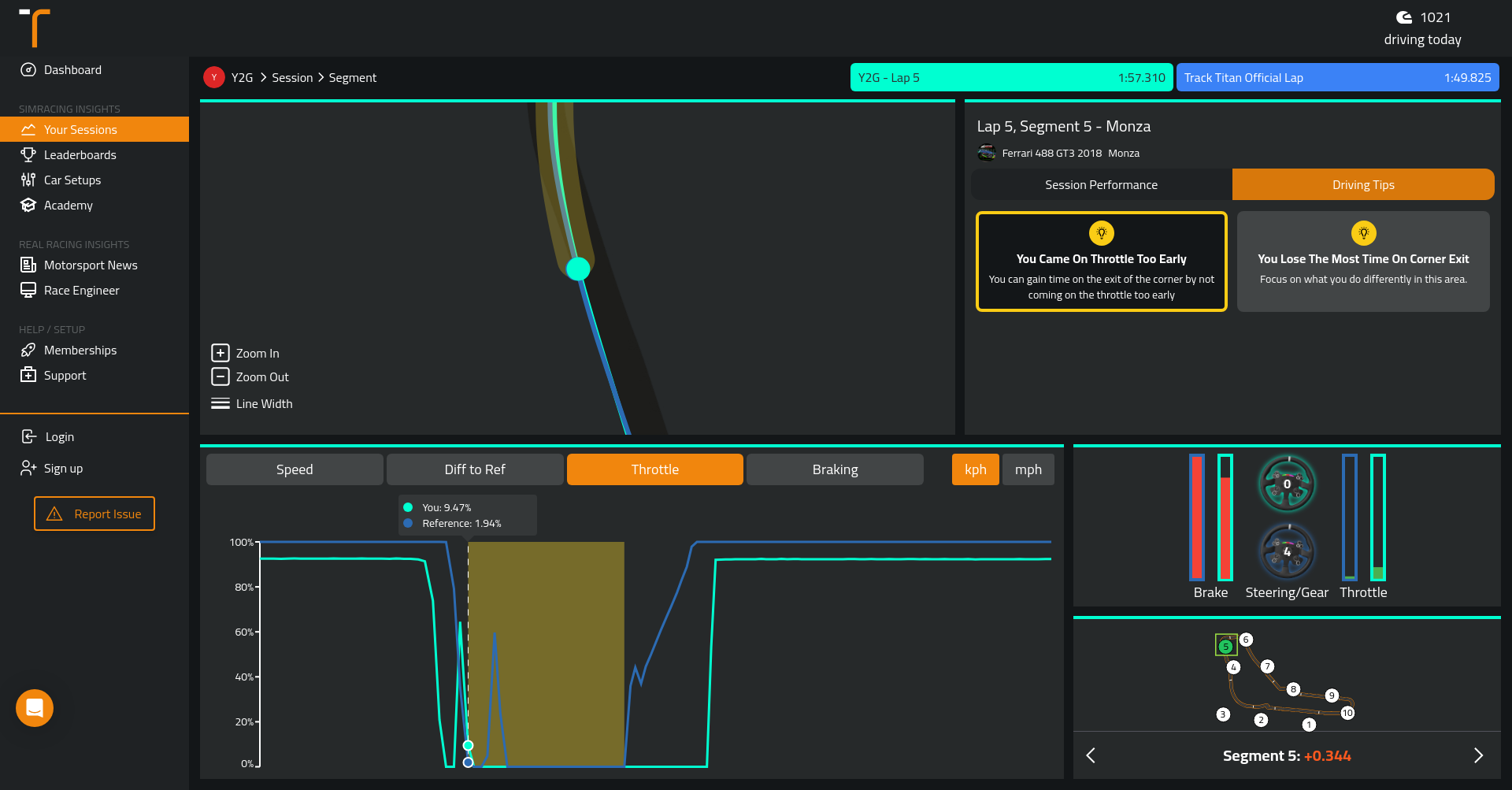
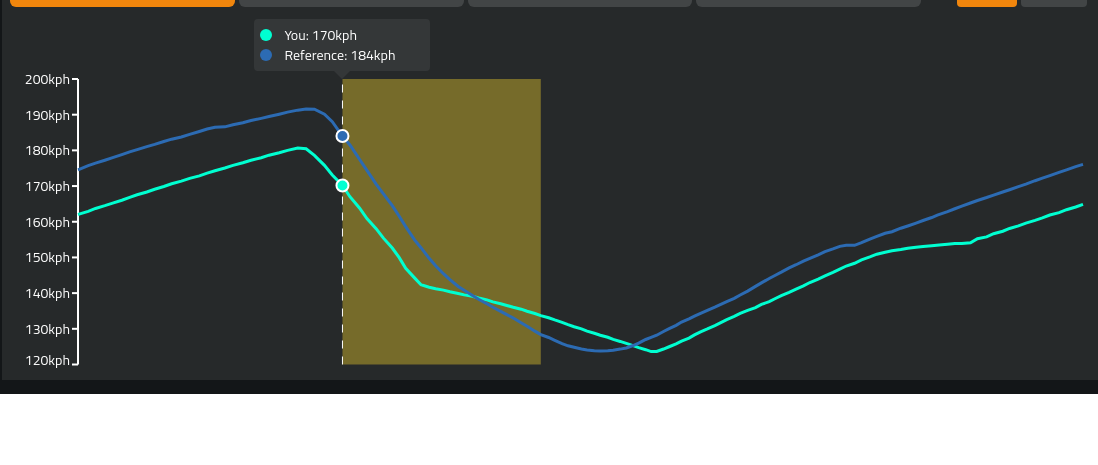
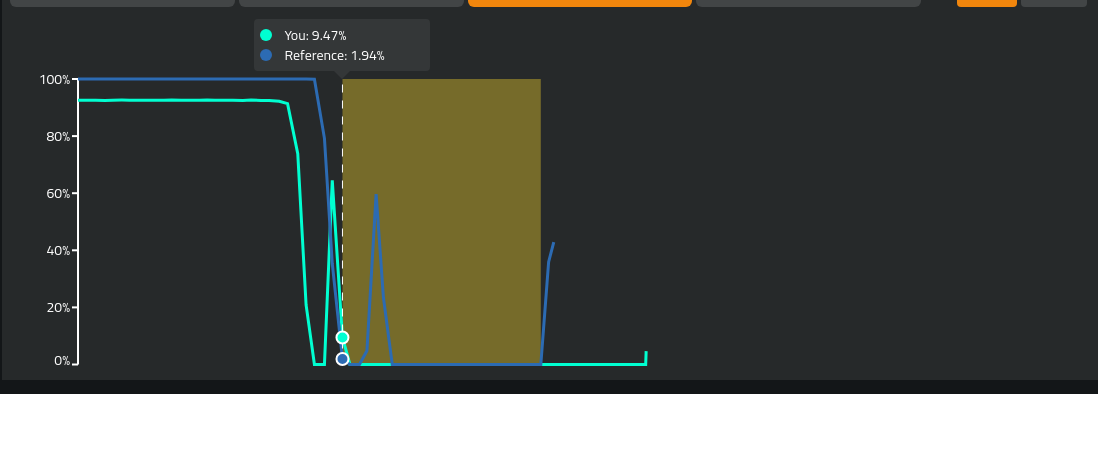
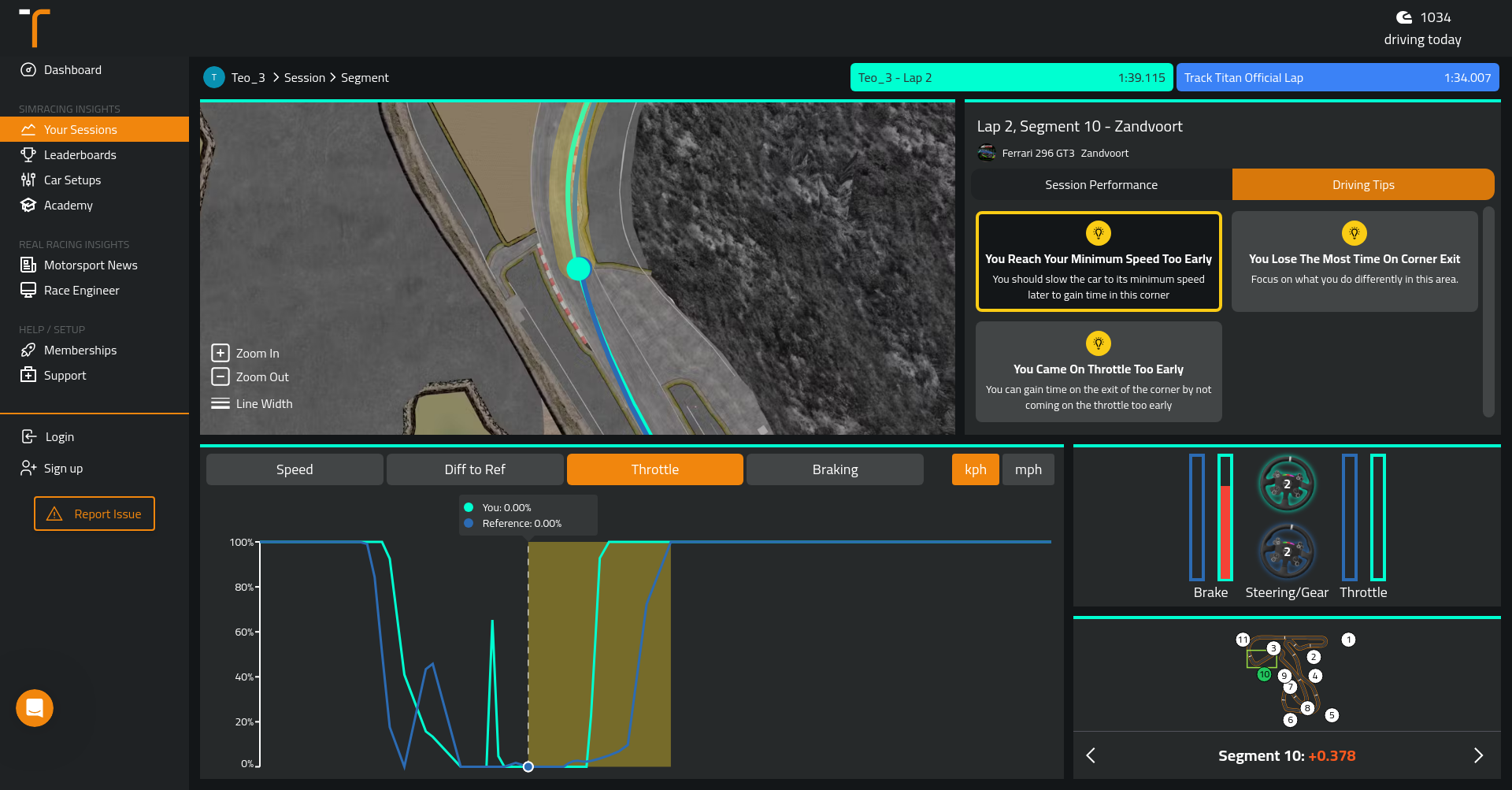
The speed chart analysis reveals that driverB is consistently slower than driverA, starting with a lower speed at the corner entry due to a slower exit from the previous corner. DriverB's minimum speed occurs later than driverA's, indicating hesitancy and possibly excessive or late braking. This leads to a delayed throttle application, which is also prematurely applied, hindering the exit speed. DriverB needs to focus on applying the throttle smoother and later to maximize exit speed and improve lap times. On the other hand, driverA applies throttle too early and aggressively in the corner, likely causing traction loss and time as the vehicle isn't properly positioned for acceleration. In contrast, driverB's gradual and later throttle application suggests better control and traction during corner exit. To enhance performance, driverA should emulate driverB's disciplined power application by applying throttle smoothly and at a later stage in the corner for better grip and acceleration onto the straight.
Analyzing the speed chart, it's evident that driverB is entering the corner with a speed deficit compared to driverA. This is noticeable at the very start of the chart where driverB's speed is already lower, indicating a slower exit from the previous corner. This initial speed difference carries through to the corner entry, which sets up driverB for a slower overall corner sequence. The minimum speed of driverB occurs noticeably later than that of driverA, suggesting that driverB is hesitant on corner entry and possibly braking too much or too late. Consequently, this delay in reaching minimum speed leads to a later application of throttle, which aligns with the observation that driverB comes on throttle too early. This premature throttle application prevents driverB from maximizing exit speed, resulting in a lower speed at corner exit compared to driverA. The gradient of driverB's speed increase post-corner is also less steep than that of driverA, confirming a loss of time on corner exit due to earlier but inefficient throttle application. To improve lap times, focusing on smoother and later throttle application will be key for driverB.

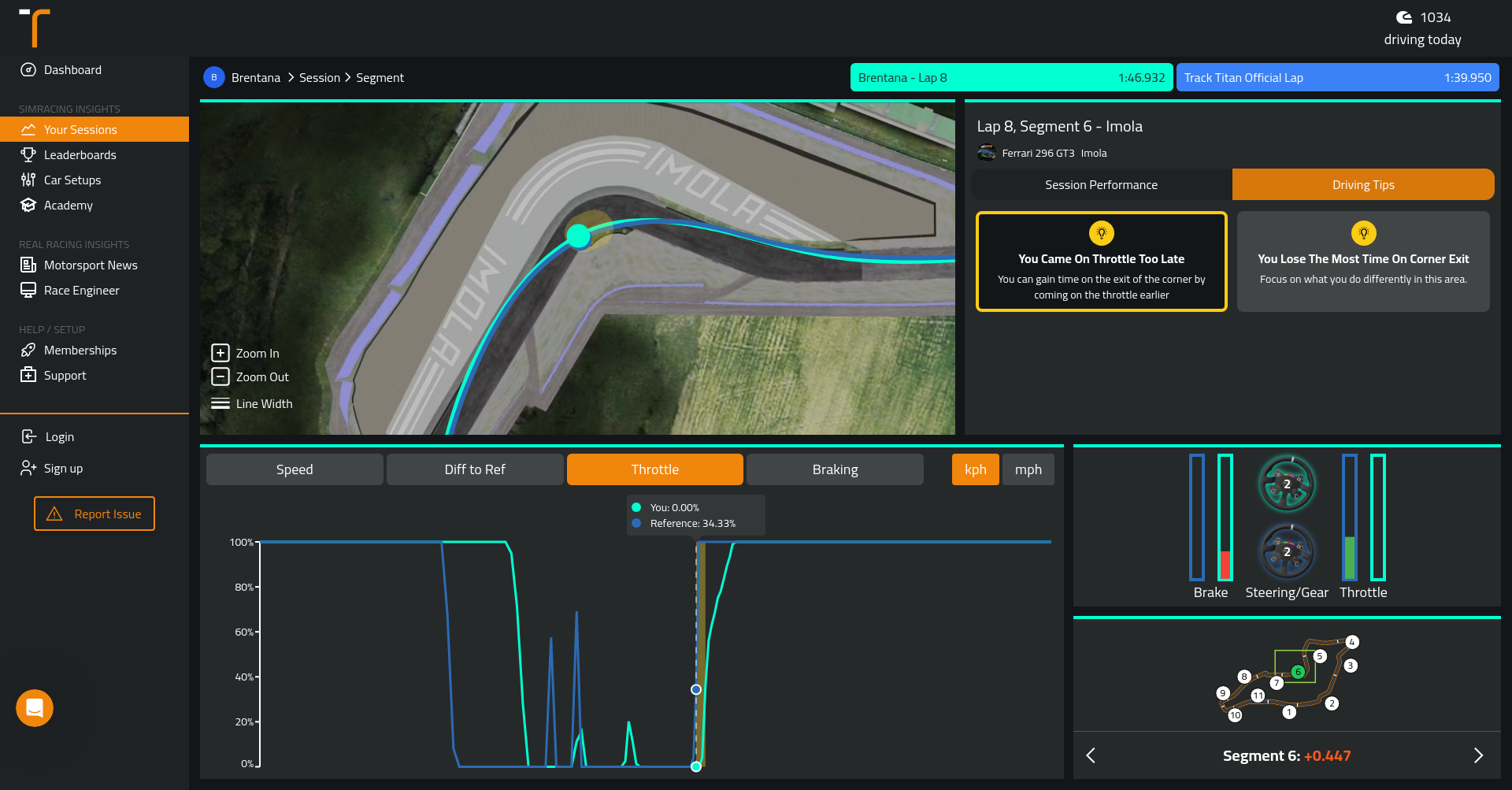
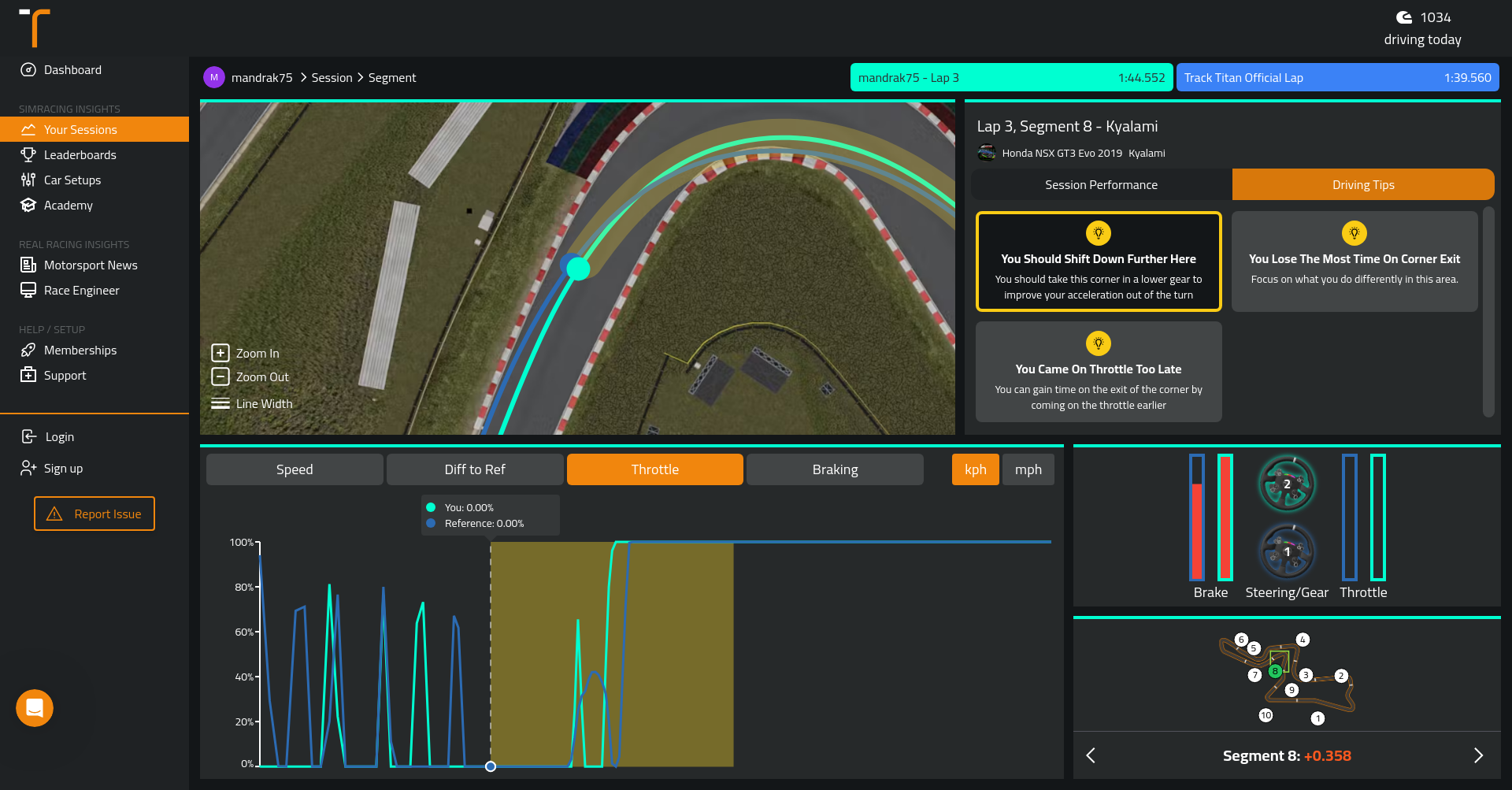
In the provided throttle control analysis, driverA exhibits a premature and aggressive application of throttle compared to driverB. Specifically, driverA's throttle input spikes sharply at an earlier point in the corner, which suggests an attempt to accelerate before achieving the optimal corner exit position. This early application likely leads to a loss of traction and subsequently, time, as the vehicle would not be settled enough for such acceleration. Conversely, driverB demonstrates a more gradual and later application of throttle. This indicates a controlled exit from the corner, allowing for better traction and acceleration onto the straight. The smoother curve of driverB's throttle input reflects a disciplined approach to power application, ensuring that speed is maximized without compromising grip. DriverA should aim to replicate this smoother throttle increase at a later point in the corner to improve exit speed and overall lap time.