122,247
122K
Laps driven today

iRacing

Le Mans Ultimate

Assetto Corsa Competizione

Assetto Corsa

F1 25

Assetto Corsa EVO

Automobilista 2

Forza Motorsport

F1 24

F1 2021

F1 23

F1 2020


Lap 1
Segment 5
1:54.247
6th Feb 2024
Assetto Corsa Competizione
Monza - Honda NSX GT3 Evo 2019

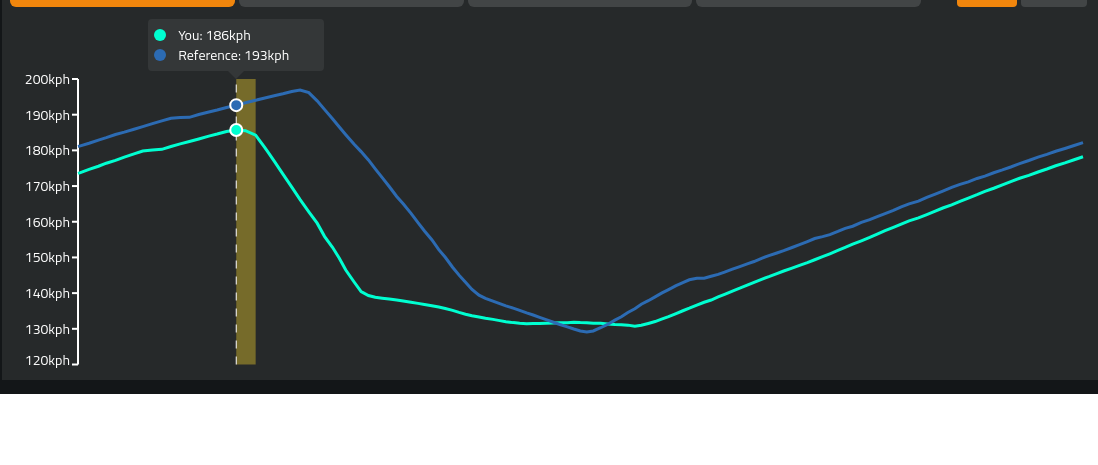
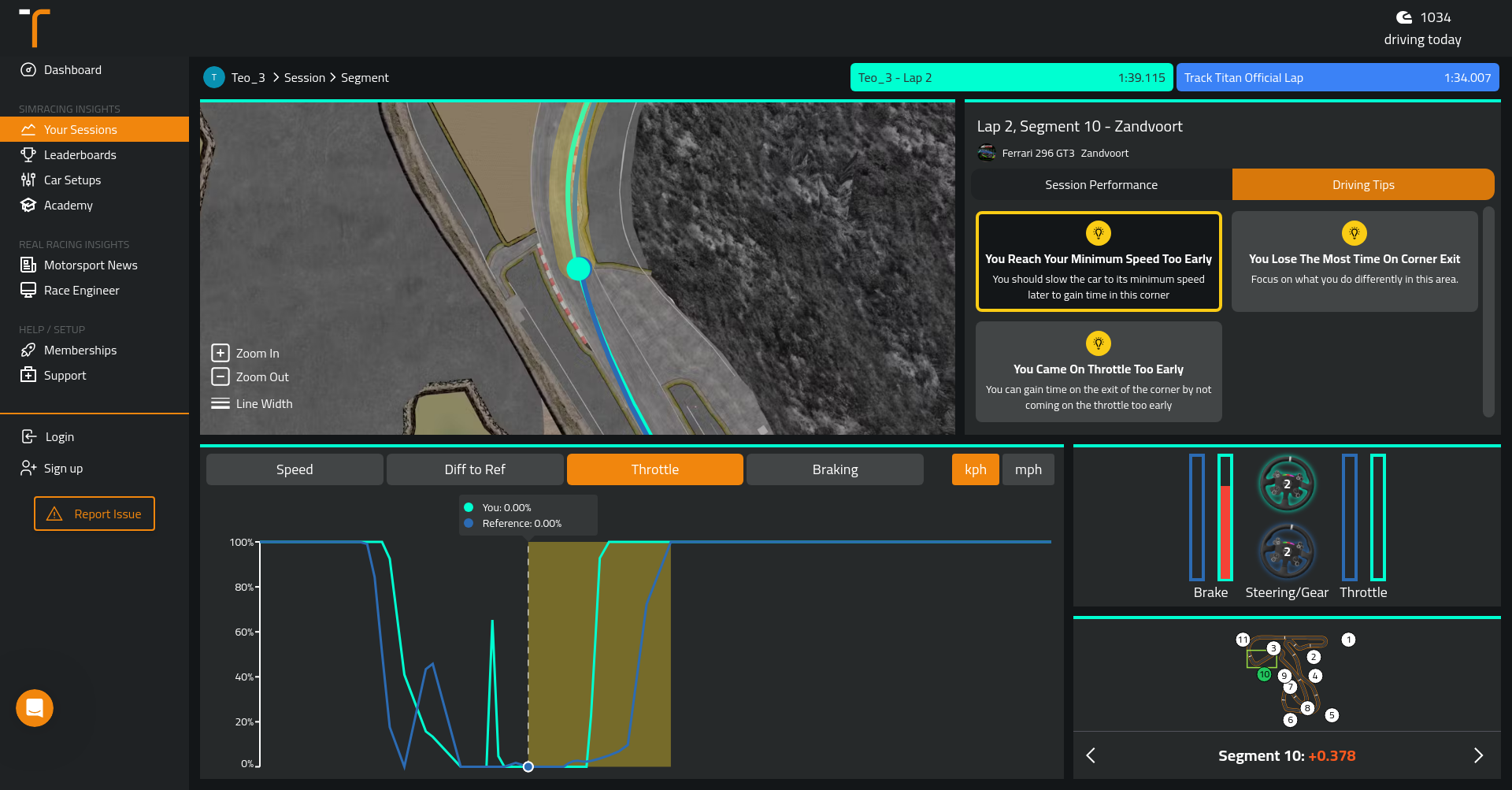
Analyzing the speed chart, it's clear that driverB is at a disadvantage from the onset, entering the corner with less speed than driverA. This slower entry speed continues throughout the corner, with driverB also having a lower minimum speed and a delayed acceleration out of the corner. To improve lap times, driverB needs to focus on carrying more entry speed and timing their acceleration correctly. In terms of throttle control, driverA is cautious with a gradual increase in throttle application, while driverB applies the throttle more aggressively. However, driverA comes on throttle too early, leading to less traction and a slower exit speed. DriverB's later but sharper increase in throttle application suggests better traction management and a stronger exit from the corner. DriverA should delay their throttle input slightly to ensure better grip and more effective acceleration out of turns. Looking at braking analysis, driverA brakes earlier and with more intensity compared to driverB's later and more gradual approach. This early braking by driverA leads to time loss on corner entry due to reduced speed when approaching the turn. DriverB's technique allows for carrying more speed into the corner by effectively using trail braking. To optimize performance, driverA should delay and moderate their initial brake application to maintain higher entry speed and improve overall cornering performance.
Analyzing the speed chart, it's evident that driverB is entering the corner at a significantly lower speed compared to driverA. This is immediately apparent at the very start of the chart, indicating that driverB exited the previous corner with less momentum. This initial speed deficit sets a disadvantageous pace for driverB throughout the entire corner. As we progress through the corner, we notice that driverB's minimum speed is lower than that of driverA and occurs later in the corner. This suggests that driverB is not only carrying less speed into the corner but also delaying their acceleration out of it. The result is a compounded time loss both at entry and exit, as seen by a gentler gradient in speed increase post-apex for driverB compared to driverA. To optimize performance, focusing on carrying more entry speed and timing acceleration correctly will be crucial for improving lap times.

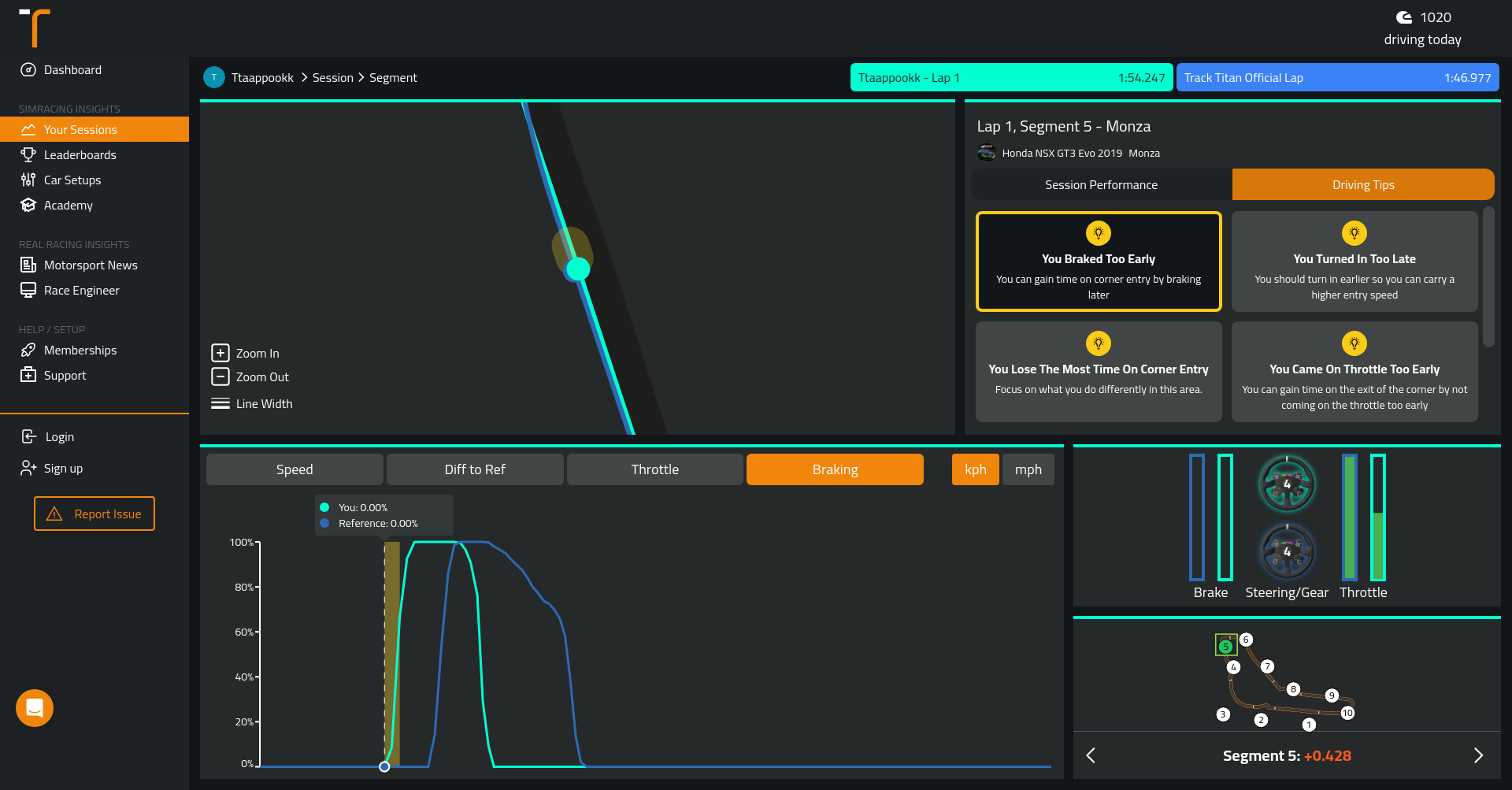
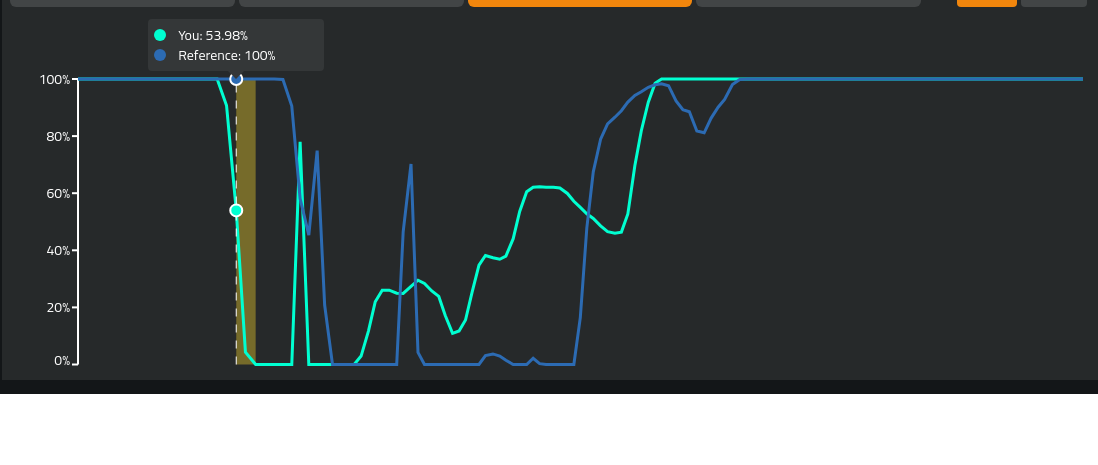
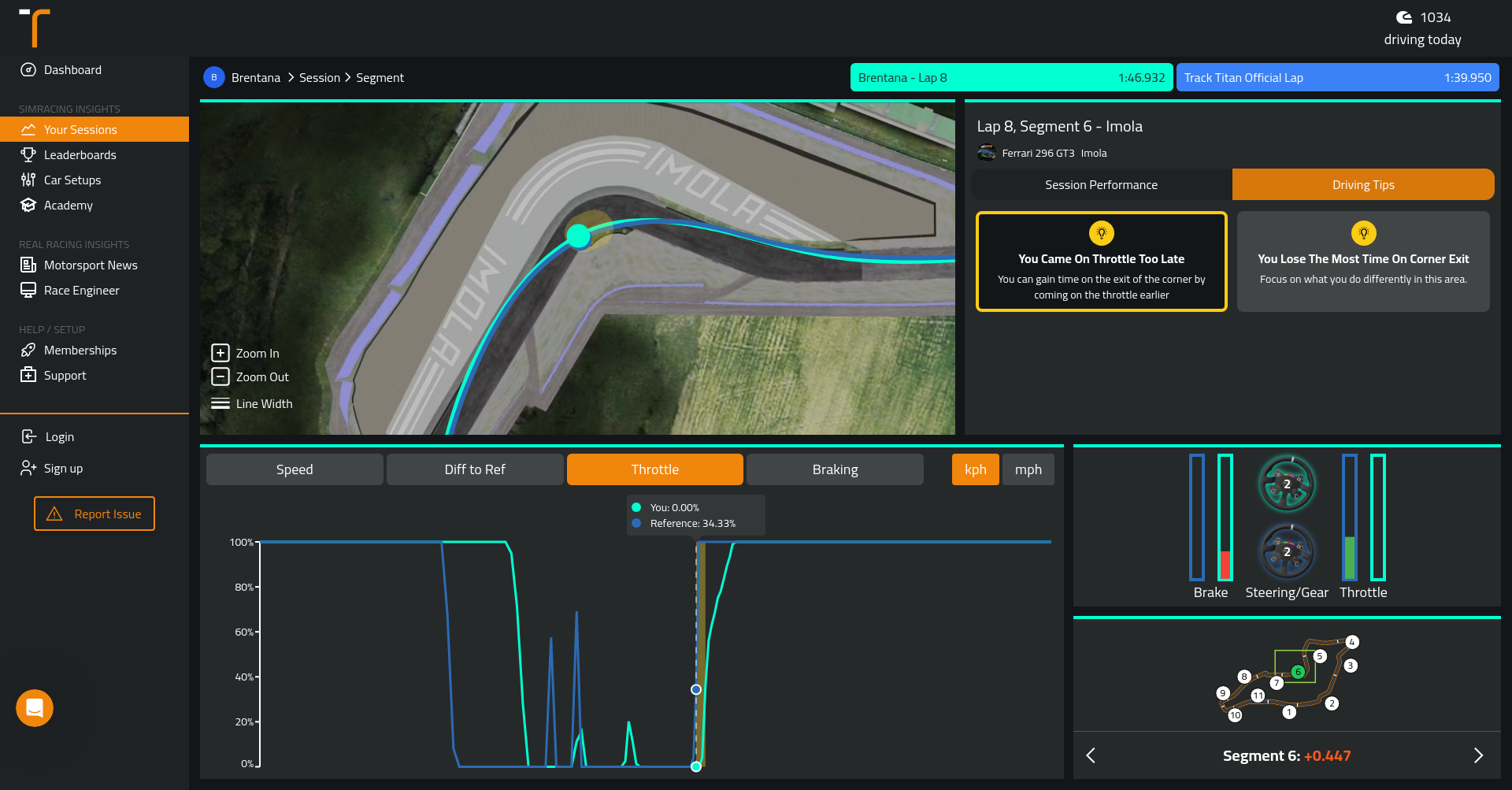
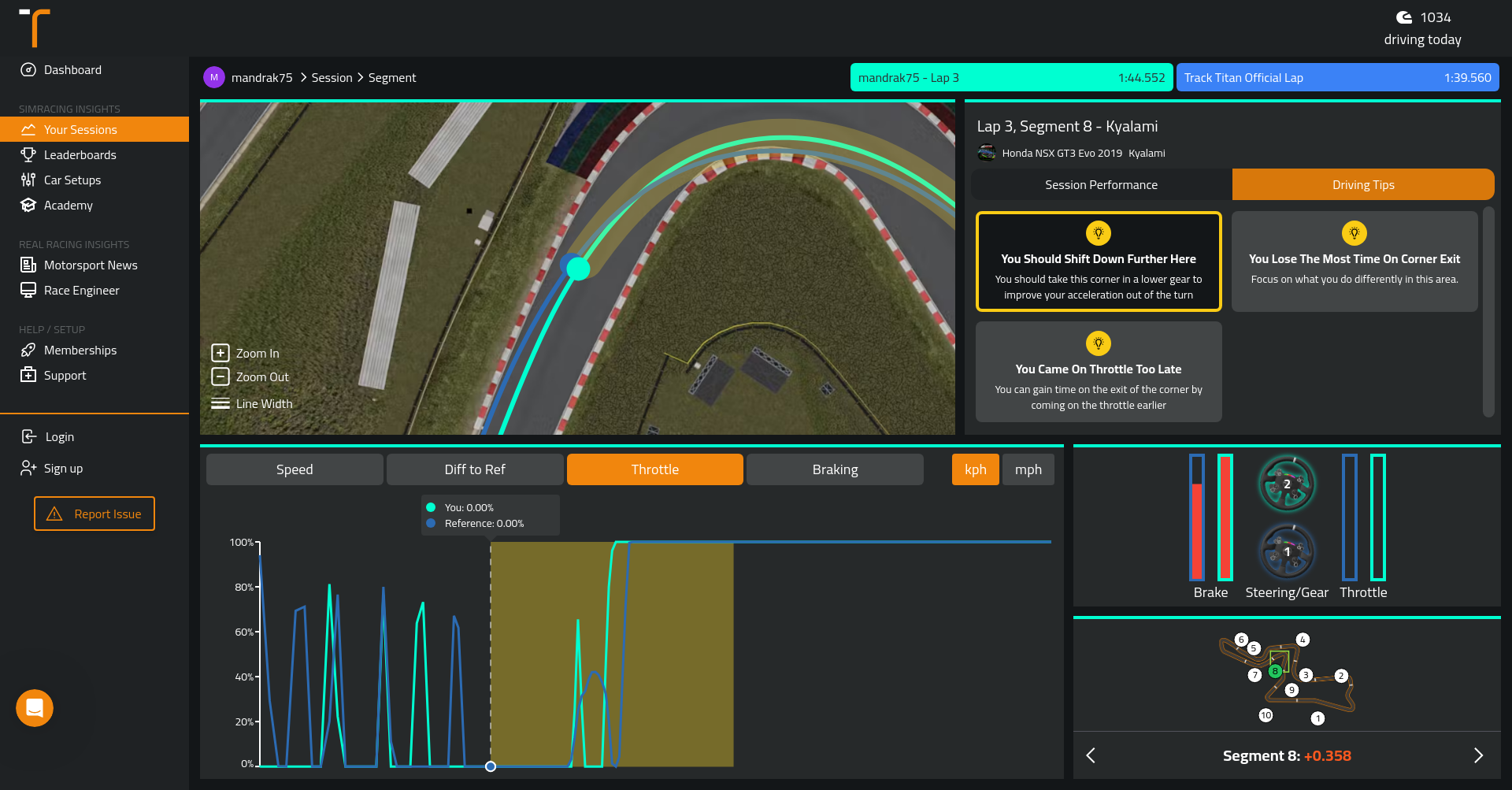
In the provided throttle control chart, there is a distinct difference between driverA and driverB's inputs. DriverA exhibits a gradual increase in throttle application, which suggests a cautious approach to acceleration and possibly an attempt to manage wheelspin. In contrast, driverB applies the throttle more aggressively and with greater confidence, indicated by the steeper curve on the chart. This implies that driverB is more effectively utilizing the car's power to accelerate out of the corner. Furthermore, driverA comes on throttle significantly earlier than driverB, as shown by the earlier rise in their curve. This premature application likely leads to less traction and ultimately a slower exit speed. DriverB's later but sharper increase in throttle application suggests better traction management and a stronger exit from the corner. To improve performance, driverA should focus on delaying throttle input slightly to match the timing of driverB, ensuring better grip and more effective acceleration out of turns.

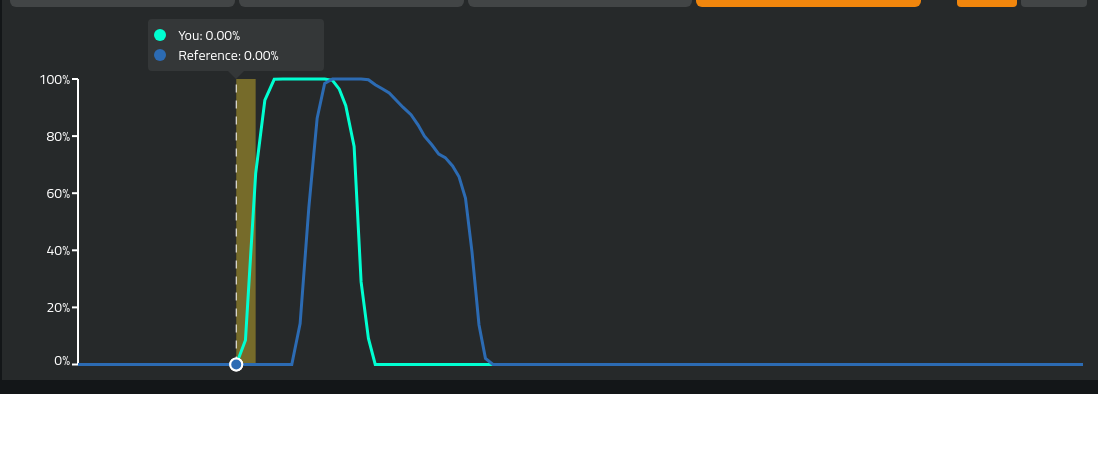
In the provided braking analysis chart, driverA exhibits a significantly earlier and sharper increase in brake application compared to driverB. This indicates that driverA is engaging the brakes much sooner and with more intensity at the initial braking point. This early braking results in a loss of time on corner entry, as it reduces the speed earlier than necessary when approaching the turn. On the other hand, driverB applies the brakes later and with a more gradual increase, suggesting a more effective use of trail braking into the corner. This technique allows driverB to carry more speed into the corner, optimizing the entry phase and setting up for a better exit. DriverA could benefit from emulating this approach by delaying and moderating their initial brake application to maintain higher entry speed and improve overall cornering performance.