117,319
117K
Laps driven today

iRacing

Le Mans Ultimate

Assetto Corsa Competizione

Assetto Corsa

F1 25

Assetto Corsa EVO

Automobilista 2

Forza Motorsport

F1 24

F1 2021

F1 23

F1 2020


Lap 8
Segment 8
1:34.345
6th Feb 2024
Assetto Corsa Competizione
Red Bull Ring - Honda NSX GT3 Evo 2019

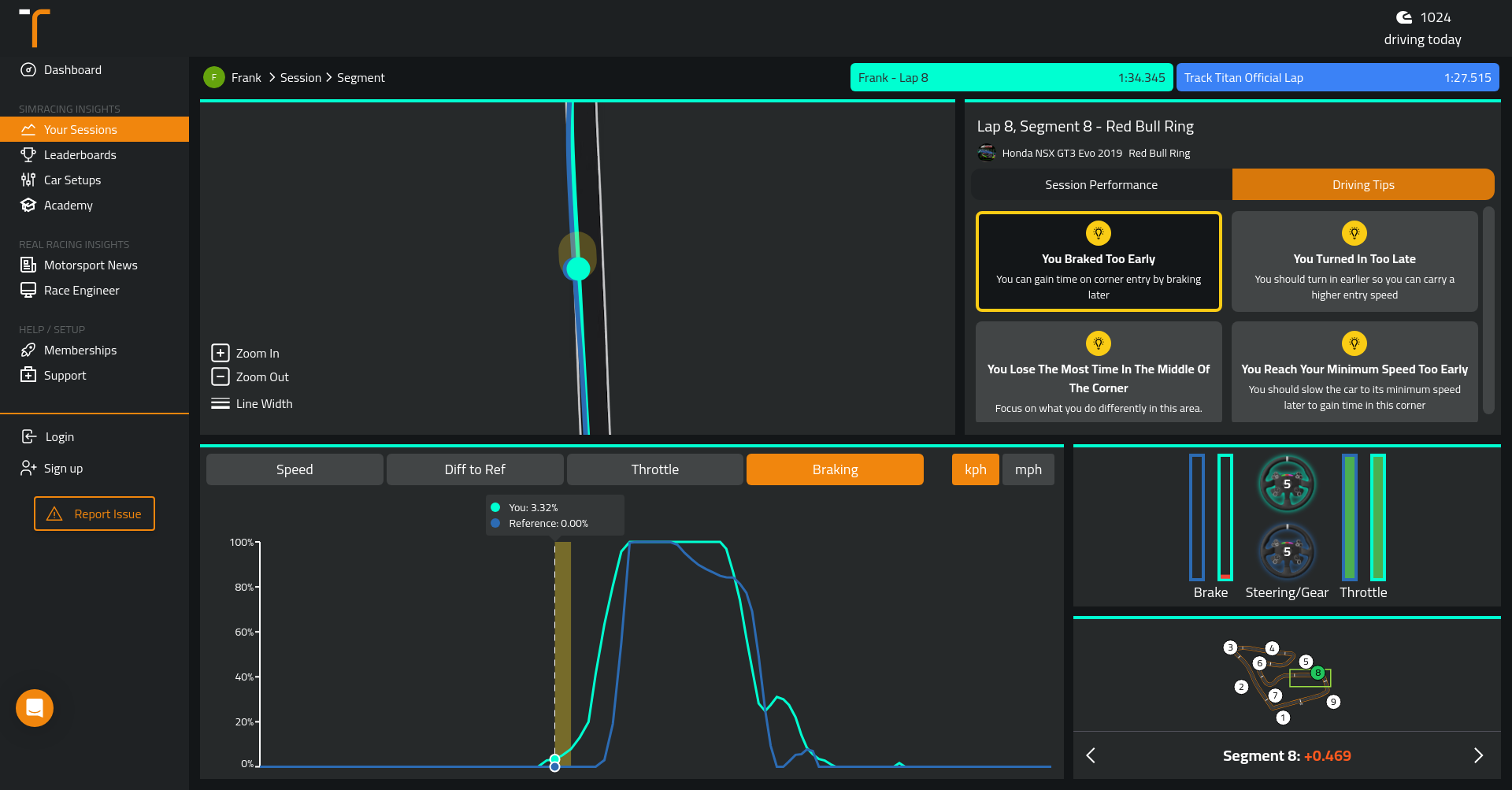
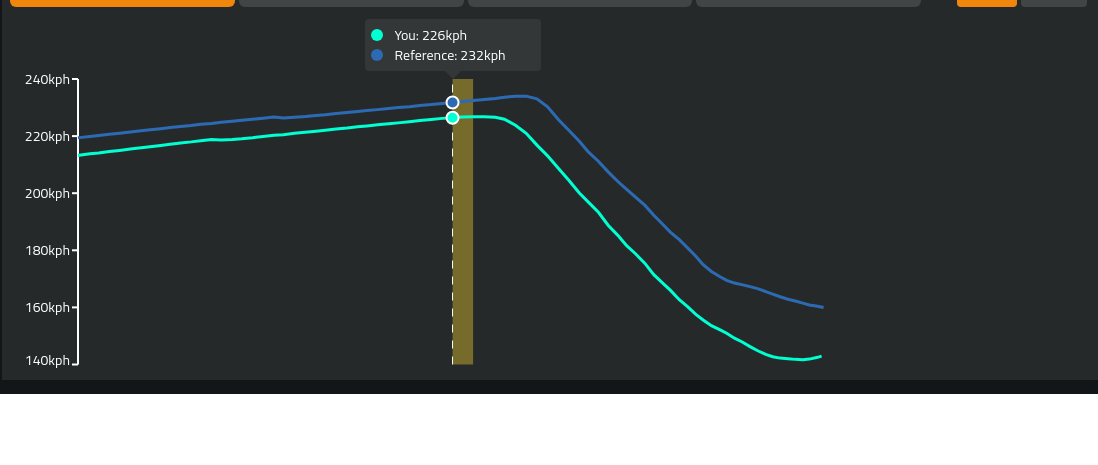
The speed chart analysis reveals that driverB is entering the corner at a lower speed than driverA, due to a slower exit from the previous corner. This results in compromised momentum and a reduced entry speed into the current corner. DriverB's early braking leads to a lower mid-corner speed and a delayed throttle application, losing most of their time in mid-corner management. To improve lap times, driverB should brake later and aim for a later apex to maintain higher speed through the corner. On the other hand, driverA is braking too early, indicated by an earlier rise in brake application percentage on the braking analysis chart. This early braking leads to a lower entry speed compared to driverB, who brakes later and maintains higher speed longer. DriverA also reaches peak brake pressure sooner and releases brakes earlier than driverB, reaching minimum cornering speed too early and losing time in the middle of the corner. DriverB's more effective trail braking technique allows for maintaining more mid-corner speed. For better performance, driverA should focus on braking later and modulating brake pressure more smoothly to carry more speed throughout the entire corner.
Analyzing the speed chart, it's evident that driverB is entering the corner at a significantly lower speed compared to driverA. This is highlighted by the initial left side of the chart where driverB's speed graph starts at a lower point before the braking zone, indicating a slower exit from the previous corner. The impact of this is a reduced entry speed into the current corner, which compromises overall momentum. Furthermore, as we progress through the corner, driverB reaches their minimum speed much earlier than driverA. This premature deceleration suggests an early brake application by driverB. Consequently, this leads to a lower mid-corner speed and delayed throttle application compared to driverA, who maintains a higher minimum speed and accelerates sooner. This difference in mid-corner management is where driverB loses most time, as indicated by the more gradual increase in speed after the corner's apex compared to driverA's sharper climb in velocity. DriverB should focus on braking later and aiming for a later apex to carry more speed through the middle of the corner and onto the exit for improved lap times.

In the provided braking analysis chart, driverA initiates braking significantly earlier than driverB, as indicated by the earlier rise in brake application percentage. This early braking results in a lower entry speed into the corner for driverA compared to driverB, who maintains a higher speed for longer before applying the brakes. DriverA's premature braking is a clear area where time is being lost, as it prevents carrying higher entry speed into the corner. Furthermore, driverA reaches their peak brake pressure sooner and starts to release the brakes earlier than driverB. This suggests that driverA is reaching their minimum cornering speed too early, which correlates with losing time in the middle of the corner. DriverB's later and more gradual reduction in brake pressure likely indicates effective trail braking, which helps maintain more speed through the mid-corner phase. To improve performance, driverA should focus on braking later and modulating brake pressure more smoothly to carry more speed through the entire corner.