122,247
122K
Laps driven today

iRacing

Le Mans Ultimate

Assetto Corsa Competizione

Assetto Corsa

F1 25

Assetto Corsa EVO

Automobilista 2

Forza Motorsport

F1 24

F1 2021

F1 23

F1 2020


Lap 2
Segment 6
1:31.065
6th Feb 2024
Assetto Corsa Competizione
Brands Hatch - Emil Frey Jaguar G3 2012

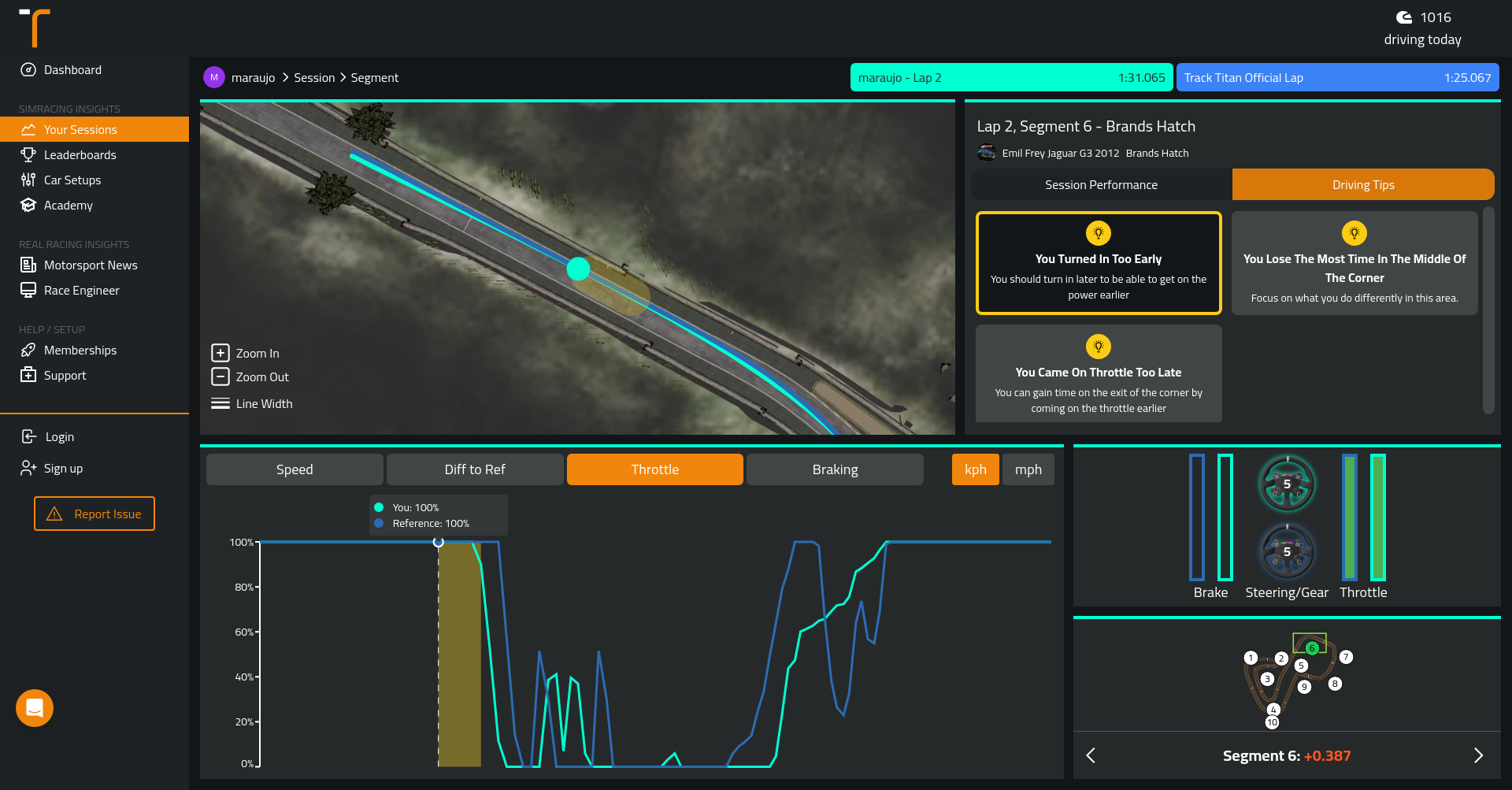
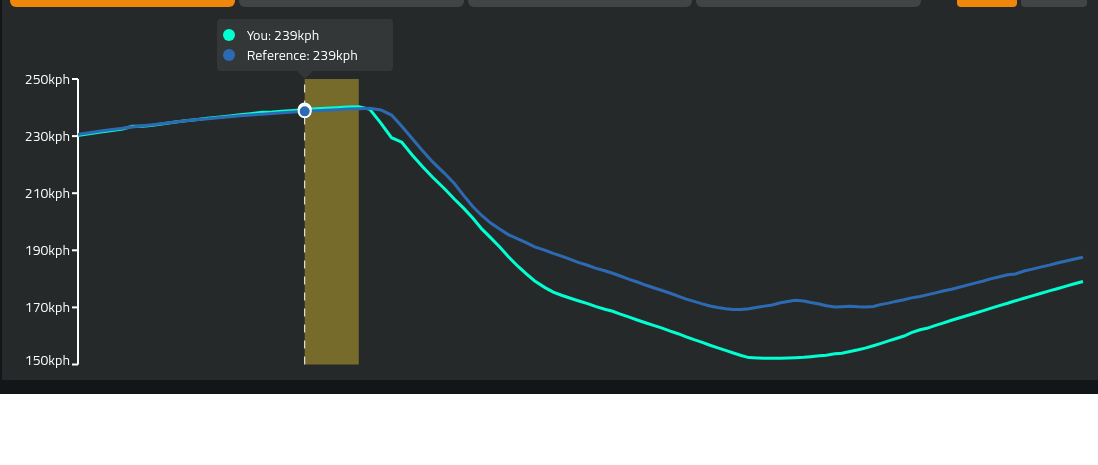
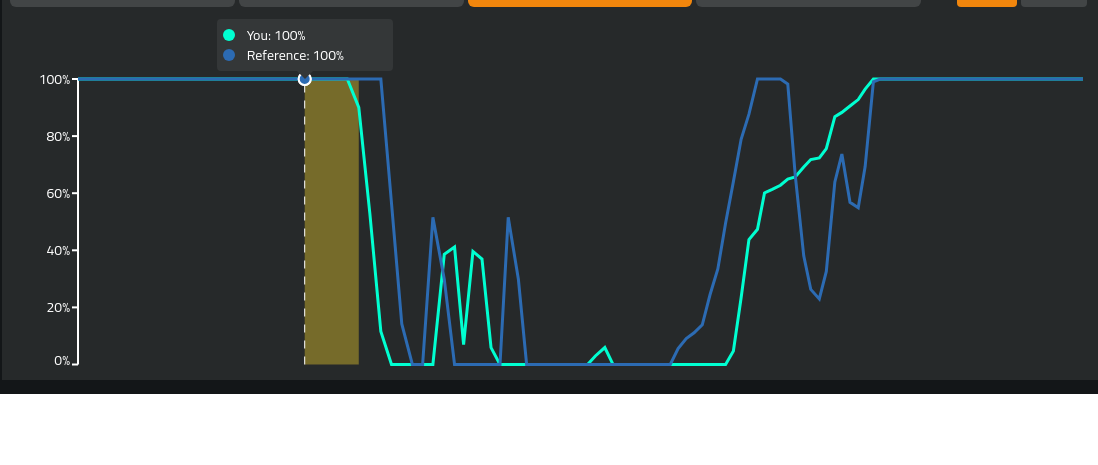
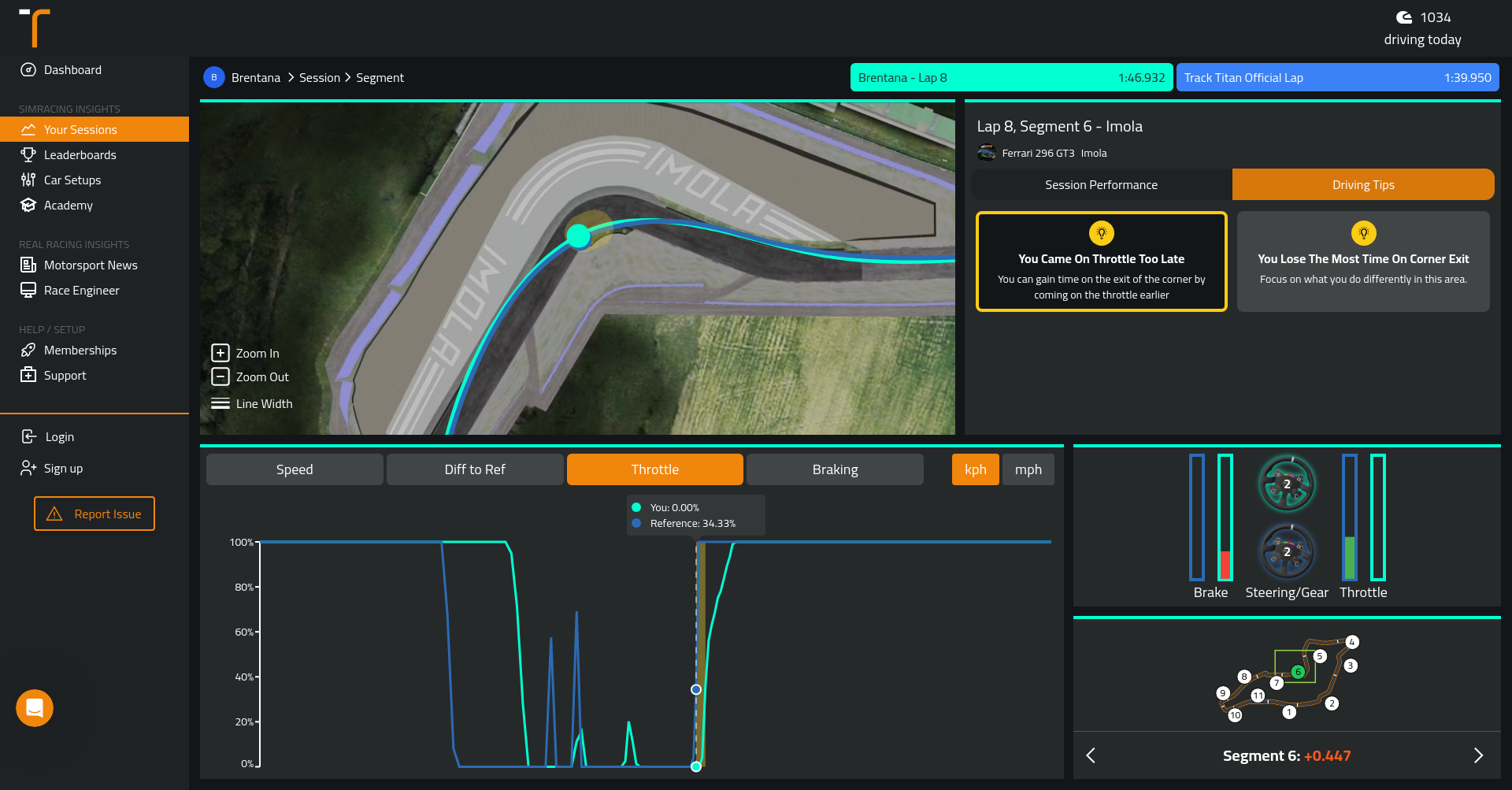
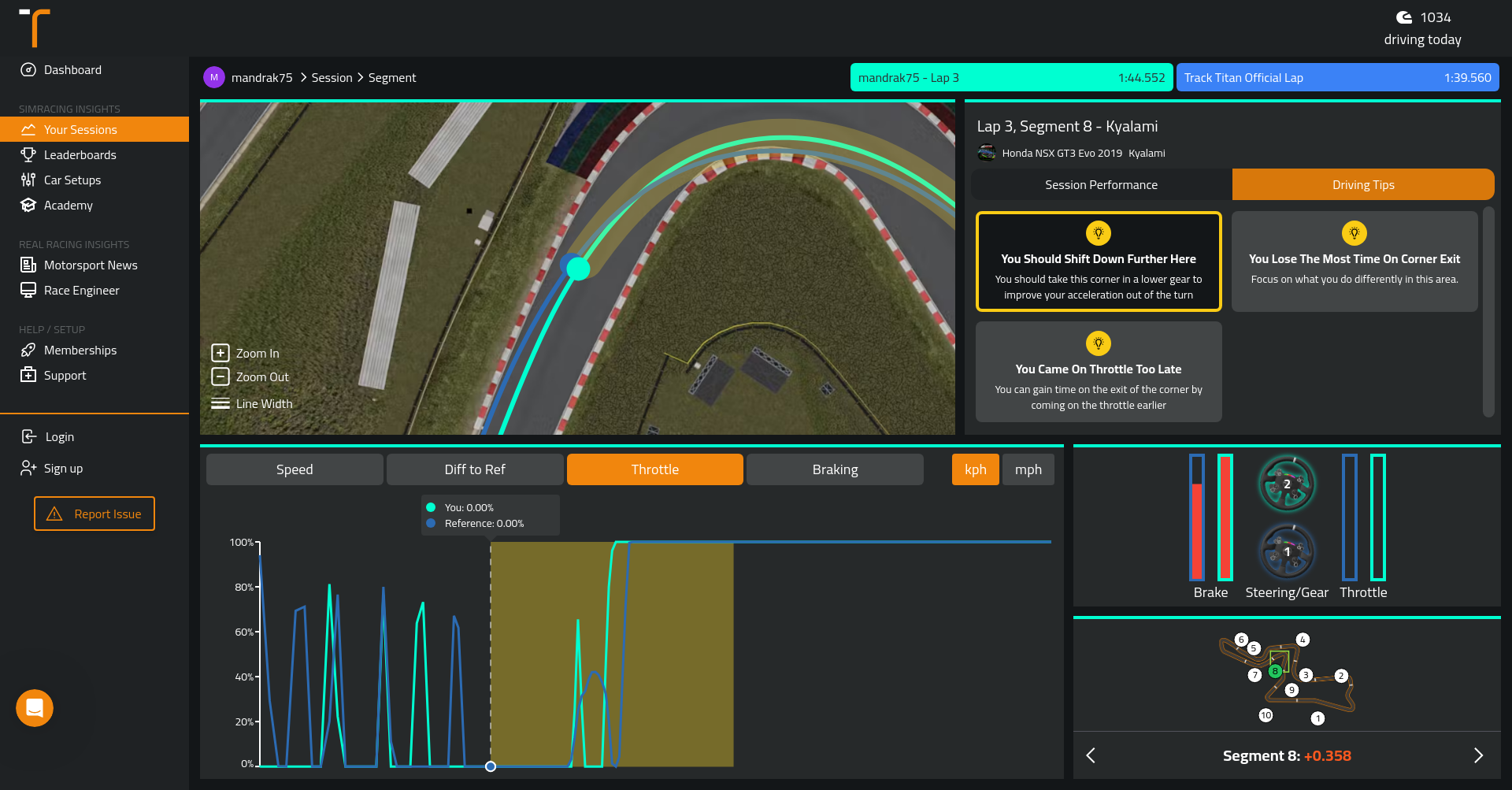
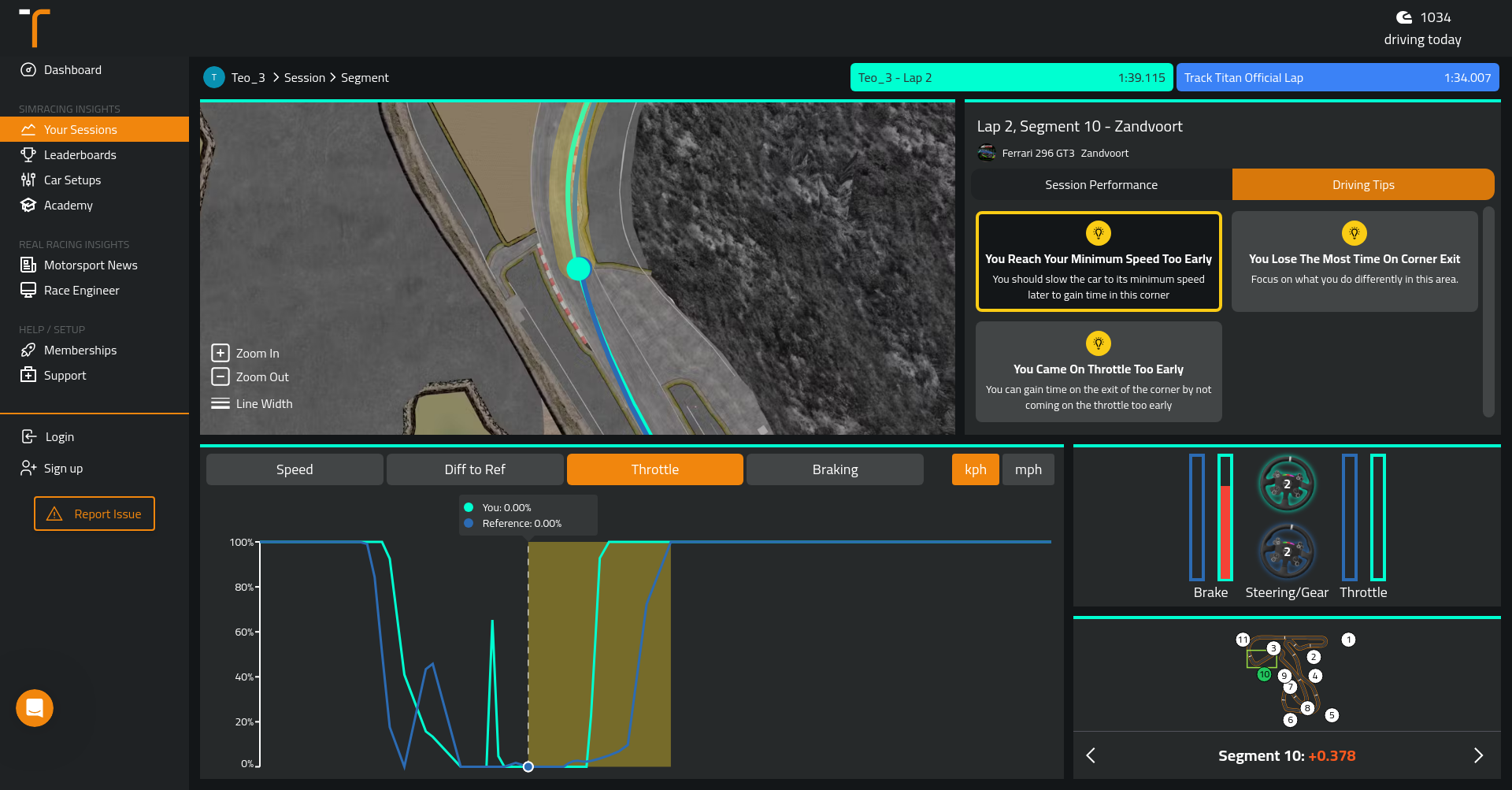
The speed chart analysis reveals that driverB is at a disadvantage from the start, entering the corner with less speed than driverA. This is due to carrying less speed out of the previous corner. Throughout the middle of the corner, driverB's minimum speed is reached later than driverA's, indicating an early turn-in and late throttle application. This results in a slower exit speed and reduced acceleration out of the corner for driverB. To enhance lap times, driverB should aim for a later turn-in to allow for earlier throttle application. On the other hand, driverA shows a delayed and gradual increase in throttle on their control chart, suggesting they are coming on throttle too late after the corner. This delay is costing them time during corner exit. In contrast, driverB demonstrates a quicker and more decisive throttle increase, indicating an earlier acceleration out of the turn. During the mid-corner phase where driverA loses most time, their flatter throttle curve compared to driverB's suggests hesitation in applying throttle aggressively or promptly. This hesitation prevents optimal speed maintenance through the corner and onto subsequent straights. For improved lap times, it's recommended that driverA adopt a more assertive mid-corner throttle application similar to that of driverB.
Analyzing the speed chart, it's evident that driverB is entering the corner with a lower speed compared to driverA. This is indicated by the initial left side of the chart where driverB's speed line starts below that of driverA. This suggests that driverB carried less speed out of the previous corner, which sets them up at a disadvantage even before approaching the current corner. As we progress through the middle of the corner, there's a noticeable dip in speed for driverB compared to driverA, with driverB reaching their minimum speed later than driverA. This delay in reaching minimum speed indicates that driverB turned in too early and consequently came on throttle too late. The impact here is significant; because they got on the power later than driverA, this resulted in a slower exit speed and less acceleration out of the corner, as shown by the shallower gradient of their speed line post-corner. To improve lap times, focusing on a later turn-in to optimize throttle application earlier will be crucial for driverB.

Analyzing the throttle control chart, it's evident that driverA and driverB have markedly different approaches to throttle application. DriverA's graph shows a delayed and gradual increase in throttle, indicating a later application coming out of the corner. This aligns with the observation that driverA comes on throttle too late, which is likely costing time on corner exit. In contrast, driverB's graph displays a quicker and more decisive increase in throttle application, suggesting an earlier and more confident acceleration out of the turn. In the middle of the corner, where driverA loses most time, there is a noticeable difference in throttle control between the two drivers. DriverA's graph has a flatter curve compared to driverB's, which means driverA is not applying the throttle as aggressively or as soon as driverB. This hesitation restricts driverA from carrying optimal speed through the corner and onto the following straight. To improve lap times, driverA should focus on mimicking driverB's more assertive throttle application in this critical mid-corner phase.