114,876
114K
Laps driven today

iRacing

Le Mans Ultimate

Assetto Corsa Competizione

Assetto Corsa

F1 25

Assetto Corsa EVO

Automobilista 2

Forza Motorsport

F1 24

F1 2021

F1 23

F1 2020


Lap 4
Segment 5
1:52.872
6th Feb 2024
Assetto Corsa Competizione
Monza - Lamborghini Huracan GT3 EVO 2019

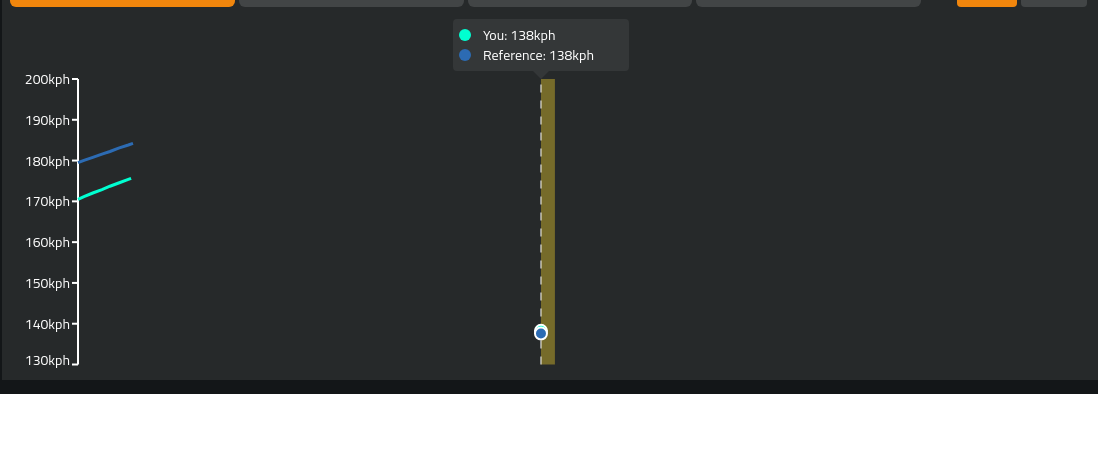
The speed chart analysis reveals that driverB enters the corner at a lower speed than driverA, indicating less momentum from the previous corner. DriverB's minimum speed occurs later in the corner, suggesting a delay in throttle application and resulting in a slower exit. To improve lap times, driverB should carry more speed through the latter part of the corner and optimize throttle timing for earlier acceleration and a stronger exit. On the other hand, driverA applies throttle earlier during corner exit but with less effectiveness, potentially causing wheelspin or lack of full traction. This results in time loss compared to driverB's more gradual and controlled throttle application, which ensures better traction and a faster exit. DriverA's throttle application is also more erratic compared to driverB's smooth increase. For better performance, driverA should delay throttle input to match driverB's timing and apply it smoothly to maximize grip and exit speed.
Analyzing the speed chart, it's evident that driverB is entering the corner with a lower speed compared to driverA. This is indicated by the initial leftmost part of the chart where driverB's speed graph starts below that of driverA. This suggests that driverB carried less speed from the exit of the previous corner, which sets them up at a disadvantage even before addressing the current corner. As we progress through the corner, we notice that driverB's minimum speed occurs noticeably later than that of driverA, which implies a delay in throttle application. This delay results in a slower exit as seen by the gentler slope of driverB's speed graph compared to driverA's steeper incline post-minimum speed point. To improve lap times, driverB should focus on carrying more speed through the latter part of the corner and optimizing their throttle application timing to ensure earlier acceleration and a more robust exit speed.

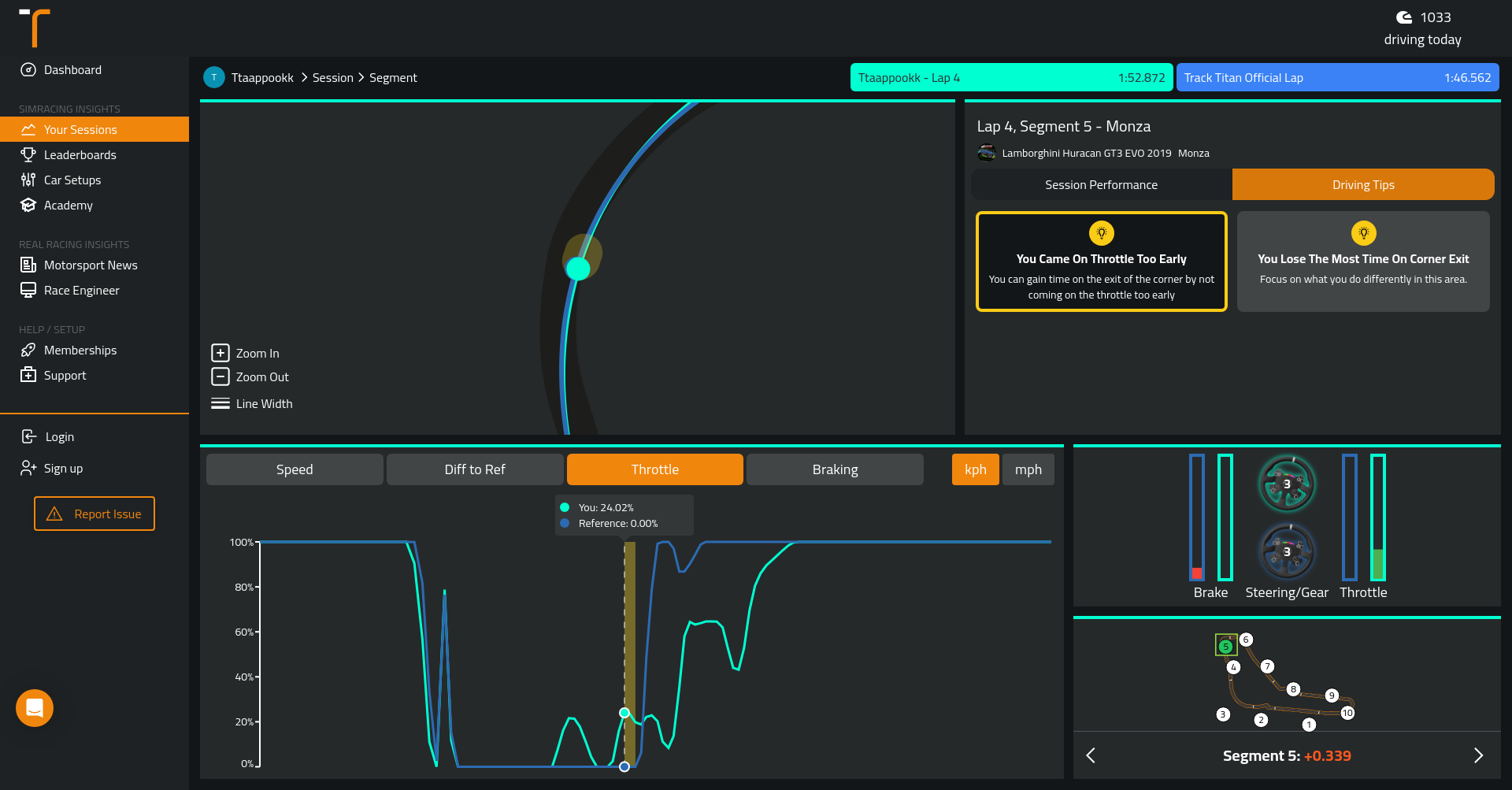
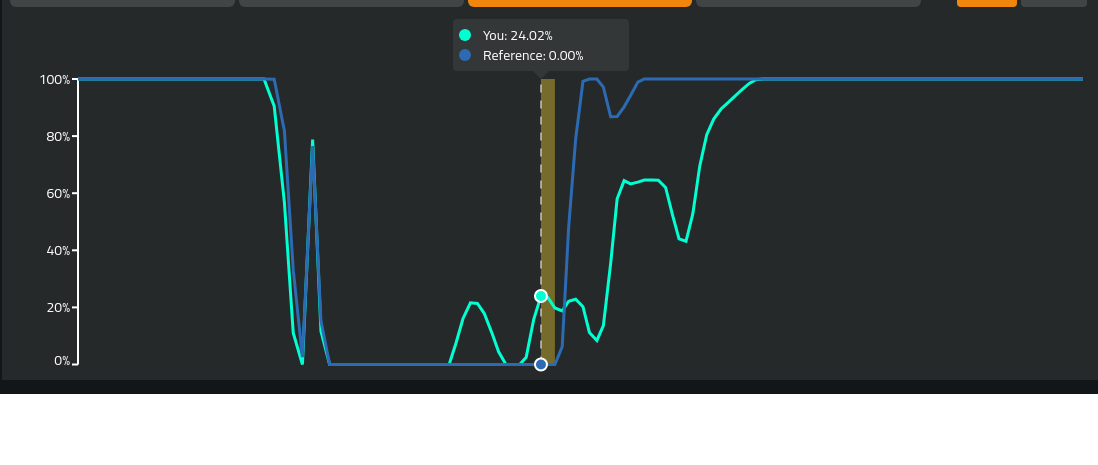
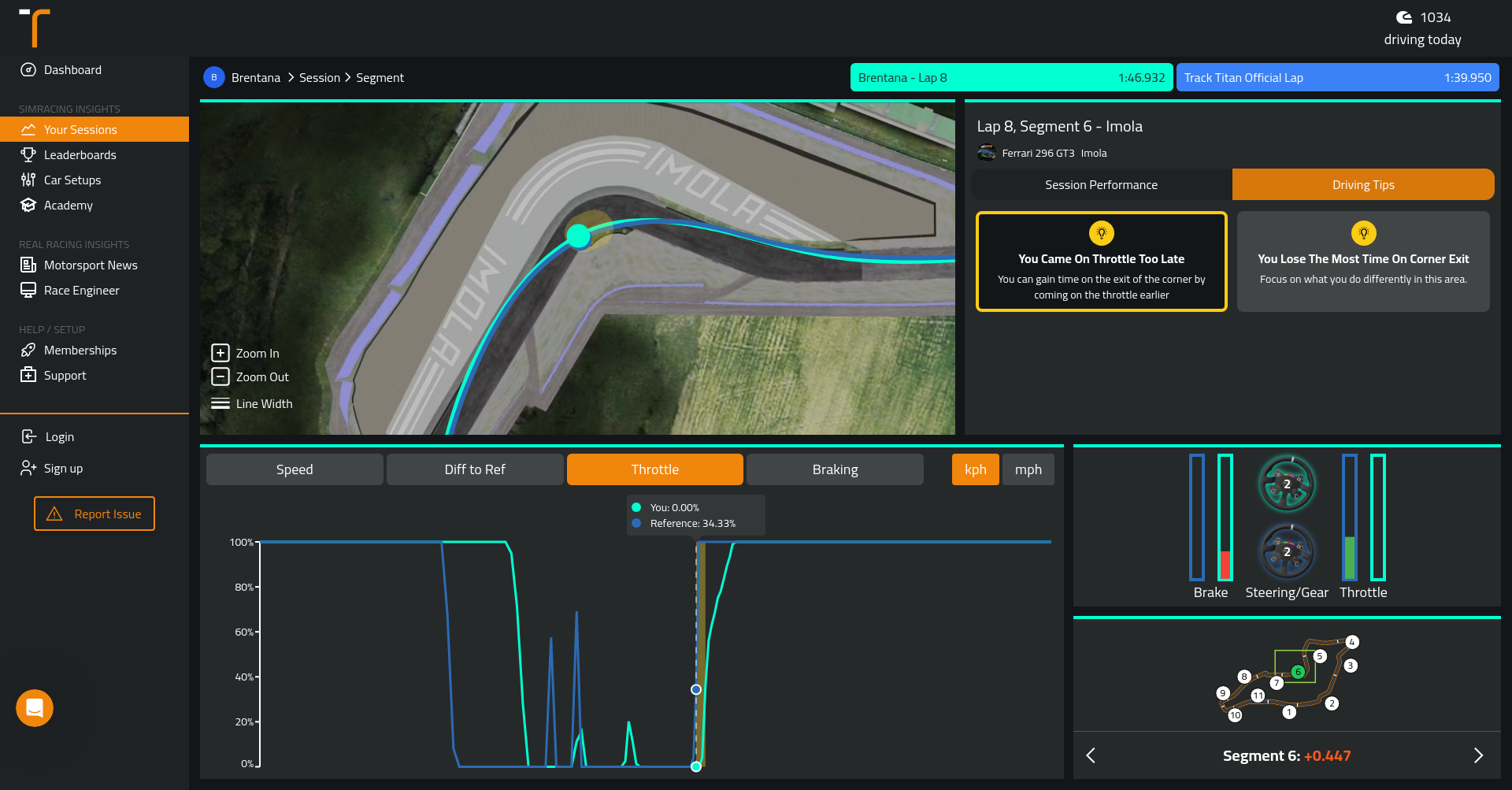
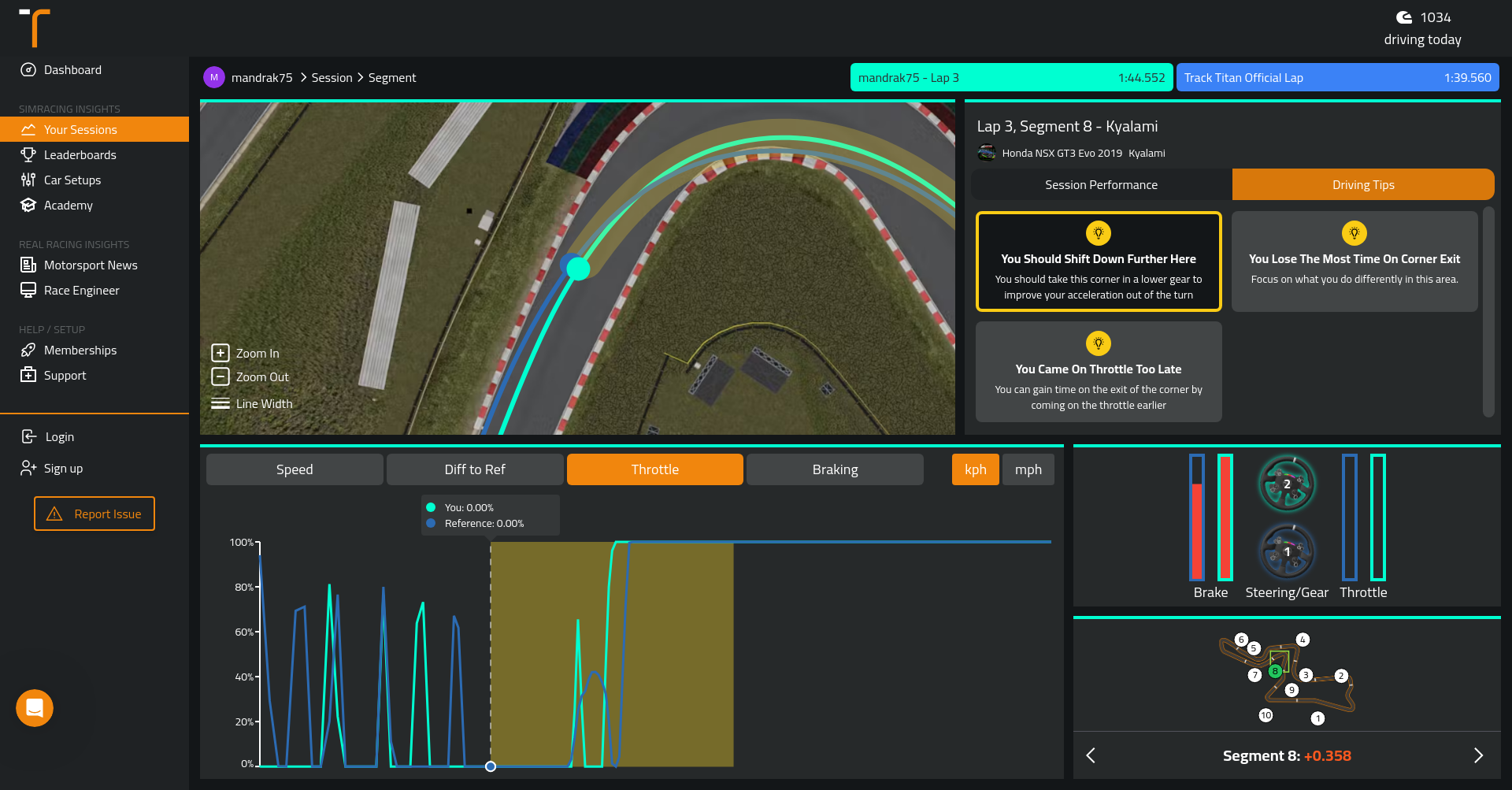
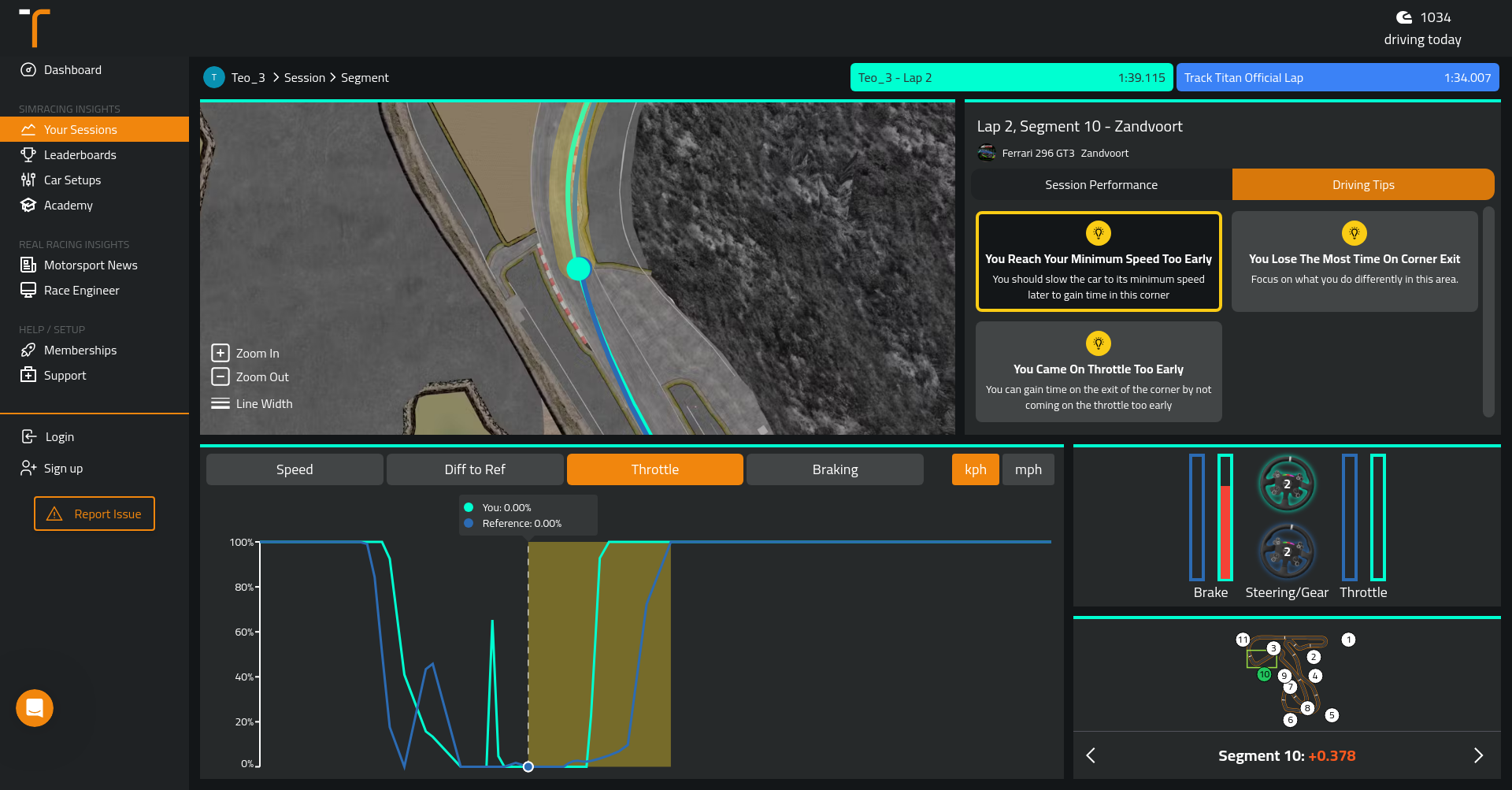
Upon examining the throttle control chart, it is evident that driverA initiates throttle application significantly earlier than driverB during corner exit. This premature application of throttle by driverA leads to a less effective exit as it suggests potential wheelspin or a lack of full traction, which in turn results in lost time compared to driverB. The graph shows driverB's application is more gradual and deliberate, indicating better traction and control, which allows for a stronger and faster exit from the corner. Furthermore, the intensity of throttle application from driverA fluctuates more compared to the smooth increase demonstrated by driverB. This inconsistency from driverA likely contributes to instability and further time loss. To improve performance, driverA should focus on delaying throttle input slightly to match the timing of driverB and work on applying the throttle in a smoother, more controlled manner to maximize grip and exit speed.