120,898
120K
Laps driven today

iRacing

Le Mans Ultimate

Assetto Corsa Competizione

Assetto Corsa

F1 25

Assetto Corsa EVO

Automobilista 2

Forza Motorsport

F1 24

F1 2021

F1 23

F1 2020


Lap 3
Segment 9
1:31.635
6th Feb 2024
Assetto Corsa Competizione
Red Bull Ring - Maserati MC20 GT2

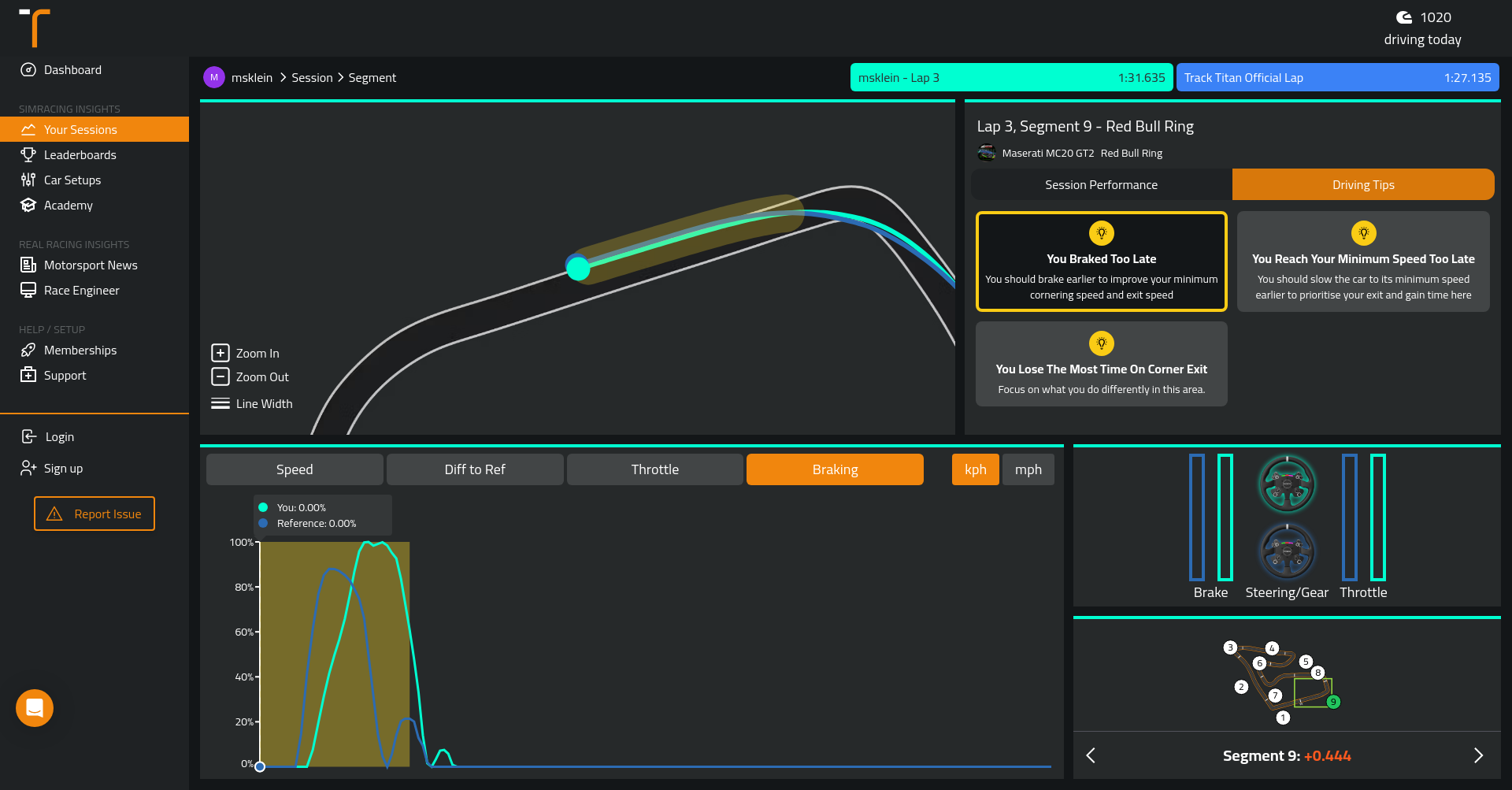
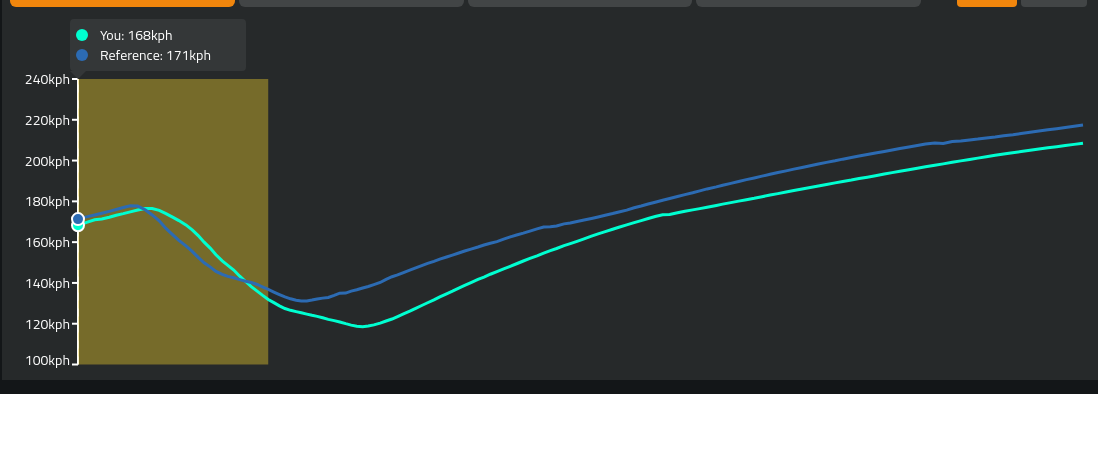
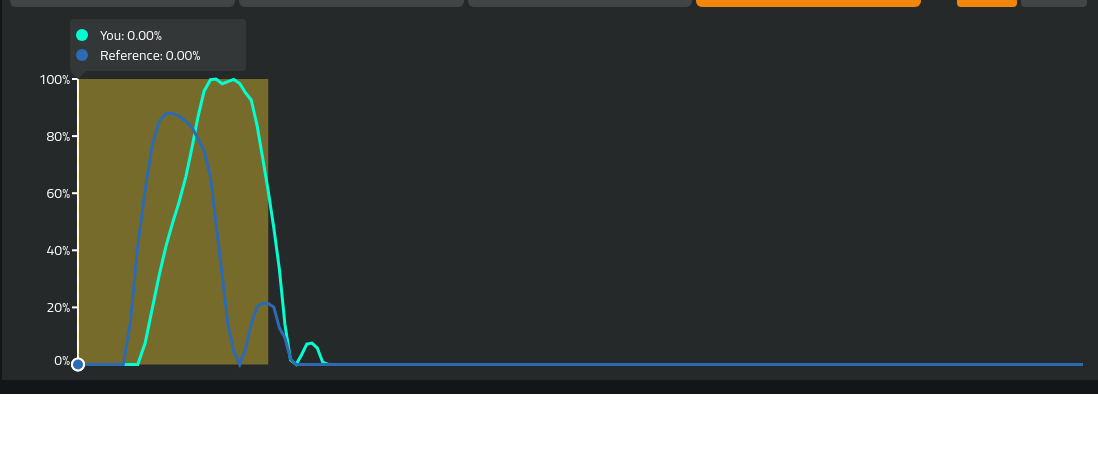
The speed chart analysis reveals that driverB enters the corner at a lower speed than driverA, suggesting a lack of momentum from the previous turn. This early disadvantage means driverB is already behind before the corner begins. Throughout the corner, driverB's minimum speed is reached later and they remain on the brakes longer, delaying throttle application and compromising exit speed. To improve, driverB should brake earlier to maintain a higher minimum cornering speed and enable earlier acceleration for a better exit. The braking control chart shows that driverA brakes less intensely and later than driverB, who exhibits a sharp increase in brake pressure indicating heavy braking. DriverA's approach allows for entering the corner at higher speeds but may risk reducing minimum cornering speed and exit velocity. DriverB gradually reduces brake pressure, suggesting trail braking to balance the car for a better exit, while driverA releases the brakes abruptly which could lead to instability or underutilization of grip during corner entry and mid-corner phases, affecting overall lap time. In summary, to optimize lap times, it is crucial to carry momentum from one turn into another, apply brakes effectively to maintain higher minimum speeds through corners, and transition smoothly onto throttle for powerful exits. Balancing braking intensity with timing can help in maximizing grip and stability through turns.
Analyzing the speed chart, it's evident that driverB is entering the corner with a lower speed compared to driverA. This indicates that driverB did not carry as much speed out of the previous corner, which sets them at a disadvantage even before approaching the current turn. The impact of this is significant as it sets the stage for the entire cornering sequence, with driverB already playing catch-up. As we progress through the corner, we notice that driverB reaches their minimum speed later than driverA. This delay suggests that driverB is on the brakes for longer and therefore getting on the throttle later than driverA, which compromises their exit speed. The gradient of driverB's speed increase post-apex is less steep compared to driverA's, confirming a loss of time due to later acceleration. To improve lap times, driverB should focus on braking earlier to achieve a higher minimum cornering speed and facilitate an earlier transition to throttle application for a stronger exit.

Analyzing the braking control chart, it's evident that driverA applies the brakes with less intensity and later compared to driverB. DriverB initiates a sharp increase in brake application, indicating a heavy braking maneuver, which is absent in driverA's data. This suggests that driverA is entering the corner at a higher speed due to later and softer braking, which could compromise the minimum cornering speed and exit speed. Furthermore, driverB's brake application decreases more gradually compared to driverA, who releases the brakes more abruptly. This gradual reduction is indicative of trail braking by driverB, a technique used to balance the car through the corner and set up for a better exit. DriverA's sudden release of brakes could lead to instability or underutilization of grip during corner entry and mid-corner phases, ultimately affecting exit speed and overall lap time.