114,324
114K
Laps driven today

iRacing

Le Mans Ultimate

Assetto Corsa Competizione

Assetto Corsa

F1 25

Assetto Corsa EVO

Automobilista 2

Forza Motorsport

F1 24

F1 2021

F1 23

F1 2020


Lap 2
Segment 6
1:49.667
6th Feb 2024
Assetto Corsa Competizione
Barcelona - McLaren 720S GT3 Evo 2023

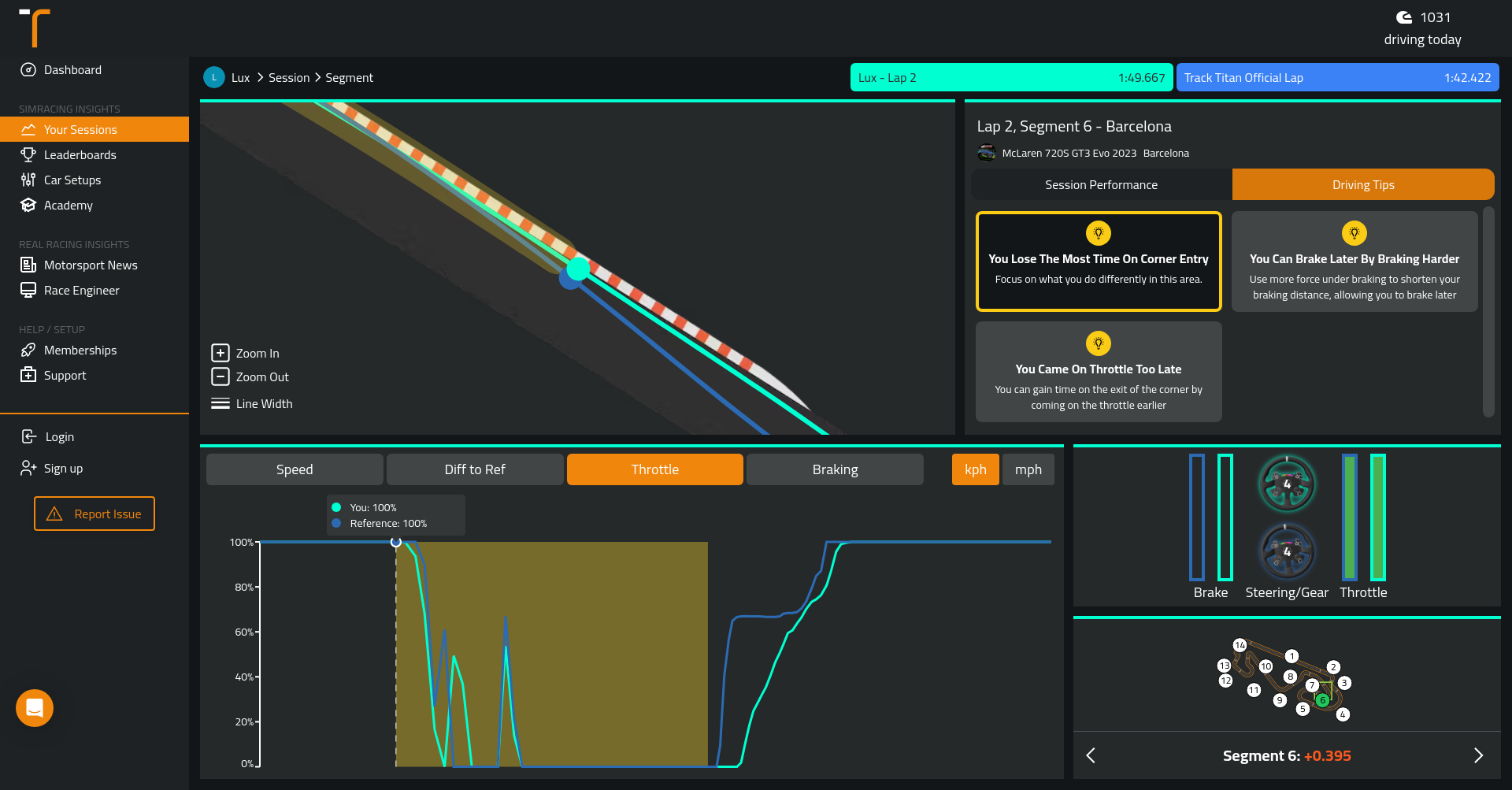
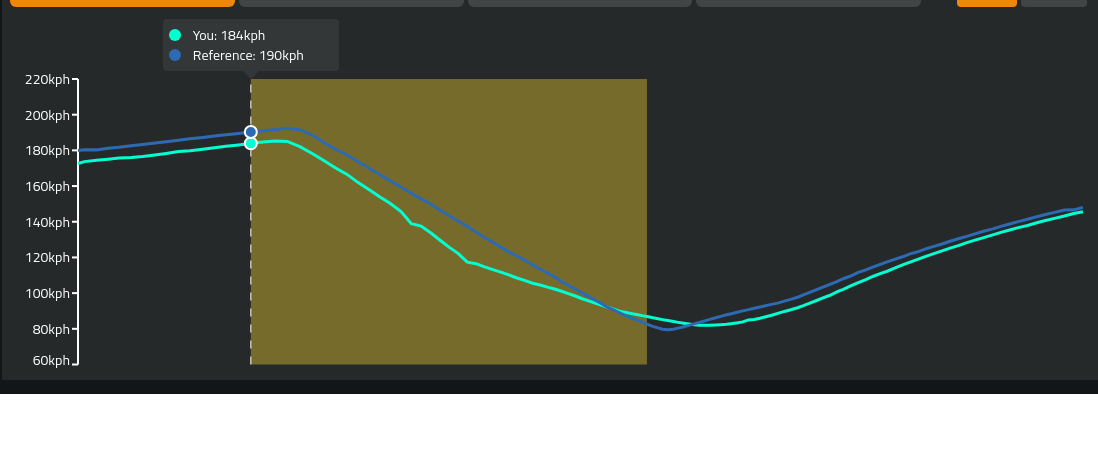
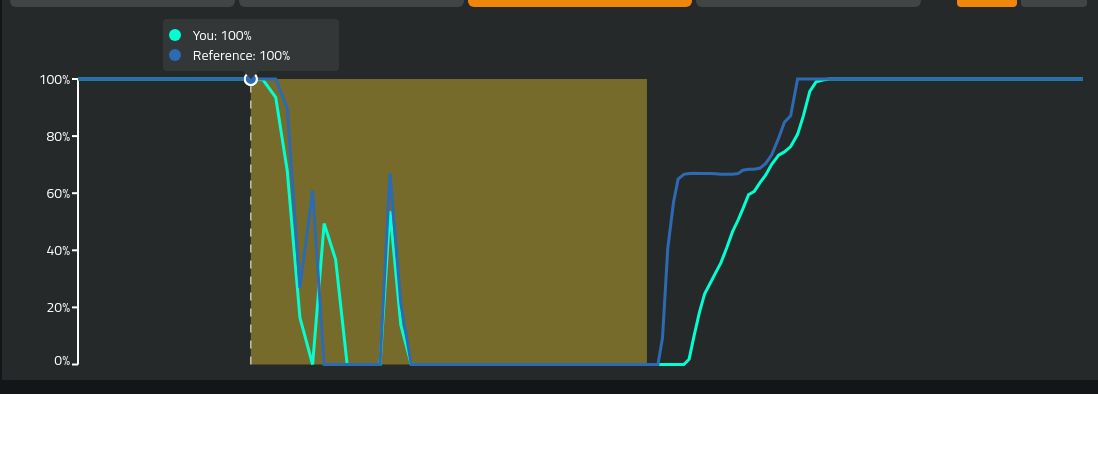
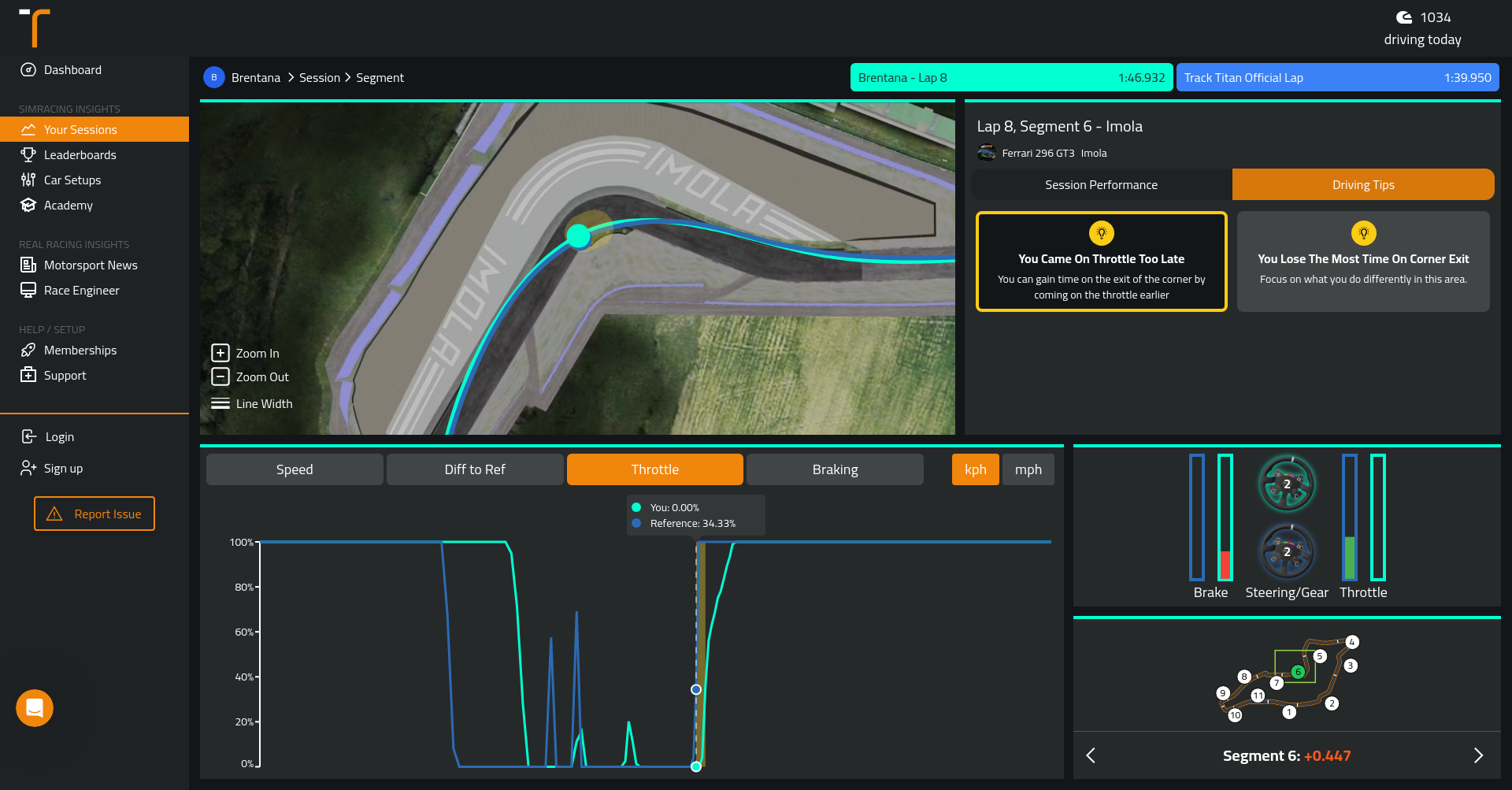
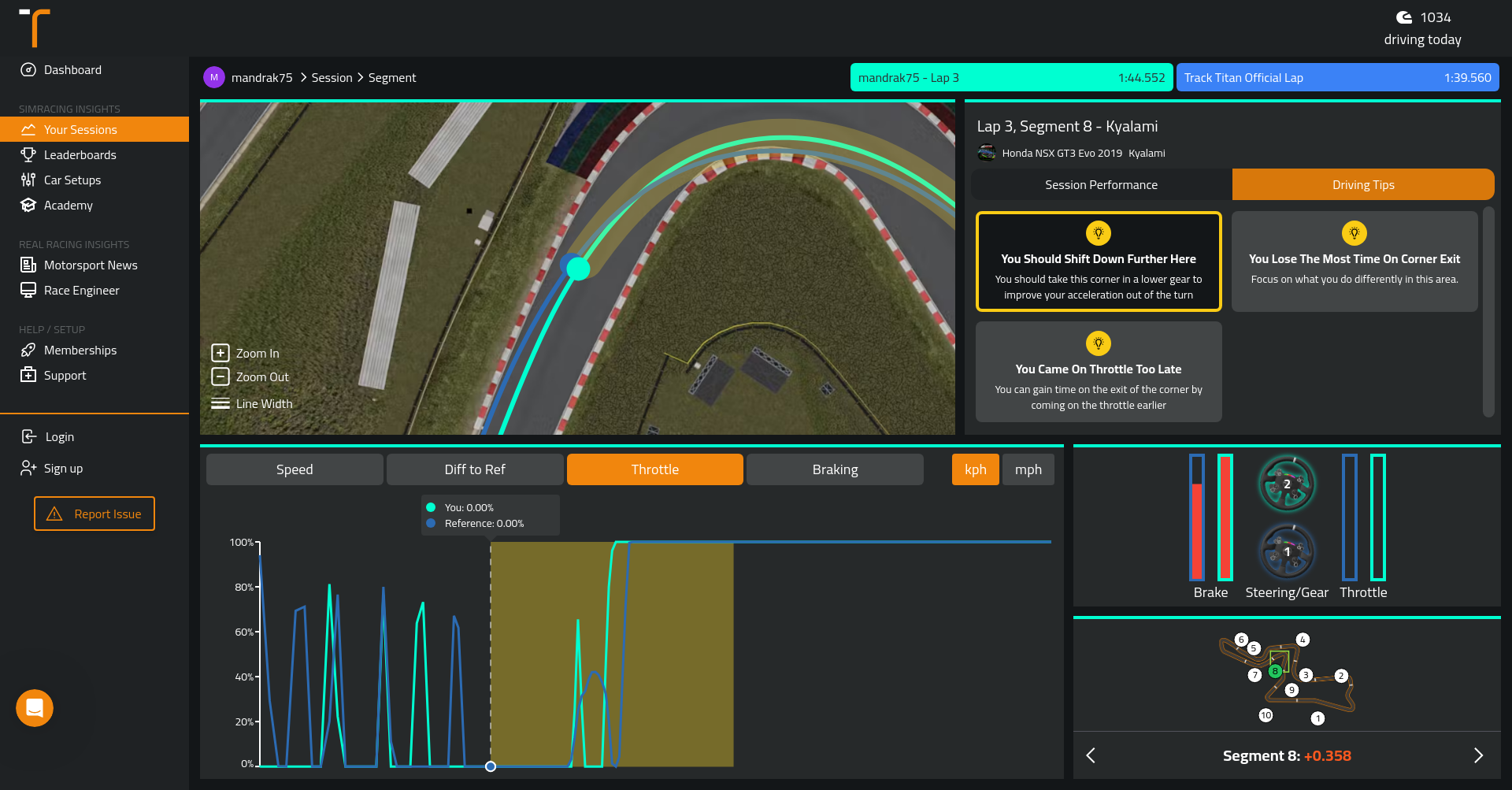
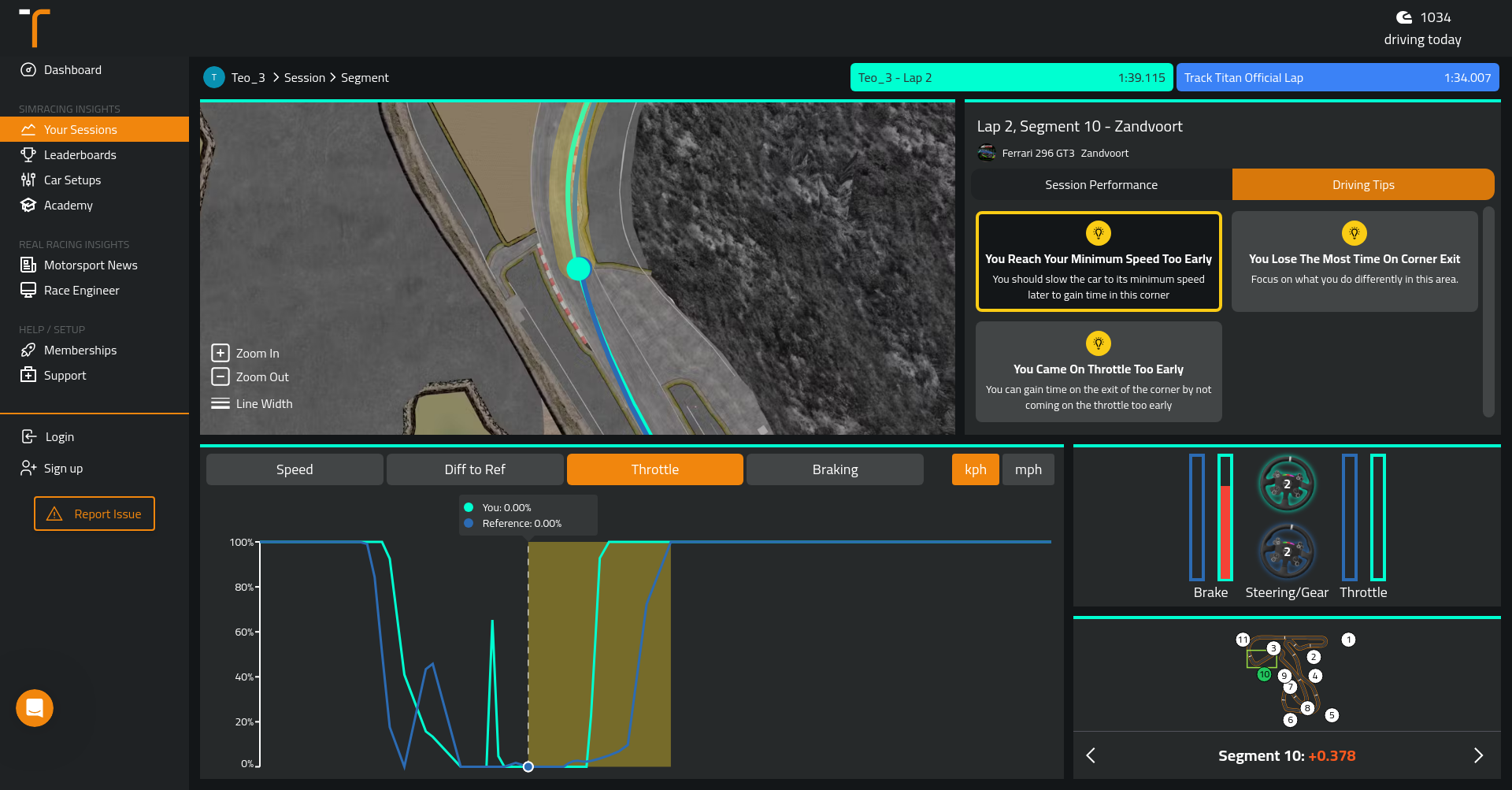
The speed chart analysis reveals that driverB is slower than driverA, particularly at corner entry, due to a conservative approach to braking and a delayed throttle application. DriverB starts with a lower speed from the previous corner, indicating a loss of momentum. They also begin decelerating earlier and more gradually than driverA, resulting in a slower approach to the current corner. During the mid-corner phase, driverB's minimum speed is reached later and maintained longer before accelerating, which further contributes to time loss compared to driverA's quicker acceleration out of the corner. To improve lap times, driverB should focus on carrying more speed through corner entry and exiting the previous corner faster. A firmer braking approach could enable later braking into corners, potentially shortening the braking distance and allowing for earlier acceleration. On the other hand, throttle control analysis shows that driverA applies throttle later than driverB throughout the chart. DriverA's gradual throttle application suggests hesitancy or lack of confidence, leading to lost time during corner exits. Additionally, driverA does not reach full throttle as intensely as driverB does. For better performance, driverA needs to apply throttle earlier and with more conviction to fully utilize the car's acceleration capabilities and match the pace set by driverB.
Analyzing the speed chart, it's evident that driverB is losing significant time on corner entry compared to driverA. At the very start of the chart, we see that driverB's speed is already lower than that of driverA, indicating a slower exit from the previous corner and a consequent loss of momentum leading into the current corner. This initial speed deficit continues as both drivers approach the braking zone, with driverB's deceleration phase starting earlier and more gradually than driverA's, suggesting a conservative approach to braking. Furthermore, during the mid-corner phase, driverB reaches their minimum speed later than driverA and maintains this lower speed for an extended period before throttle application. This delay in getting back on the throttle results in lost time as driverB cannot accelerate as early or as aggressively as driverA. The subsequent acceleration phase for driverB also has a less steep gradient compared to driverA's, which confirms a timeloss due to later acceleration out of the corner. To improve lap times, focusing on carrying more speed through corner entry and exiting the previous corner with higher velocity will be crucial for driverB. Additionally, adopting a firmer braking approach to shorten braking distance could allow for later braking into corners.

In the provided throttle control analysis, driverA consistently applies throttle later than driverB throughout the chart. This delayed response is evident in the graph where driverB's line shows a quicker and more decisive increase in throttle application, indicating a faster transition from braking to acceleration. DriverA's gradual and less steep line suggests hesitancy or a lack of confidence in applying full throttle, which results in lost time during corner exits. Furthermore, driverA's peak throttle application never reaches the same intensity as driverB's, particularly noticeable at the point where both drivers should be at full throttle. This implies that driverA is not utilizing the full potential of the car's acceleration capabilities. To improve lap times, driverA should focus on applying throttle earlier and with more conviction to match the reference pace set by driverB.