114,324
114K
Laps driven today

iRacing

Le Mans Ultimate

Assetto Corsa Competizione

Assetto Corsa

F1 25

Assetto Corsa EVO

Automobilista 2

Forza Motorsport

F1 24

F1 2021

F1 23

F1 2020


Lap 3
Segment 9
1:44.682
7th Feb 2024
Assetto Corsa Competizione
Imola - McLaren 720S GT3 Evo 2023

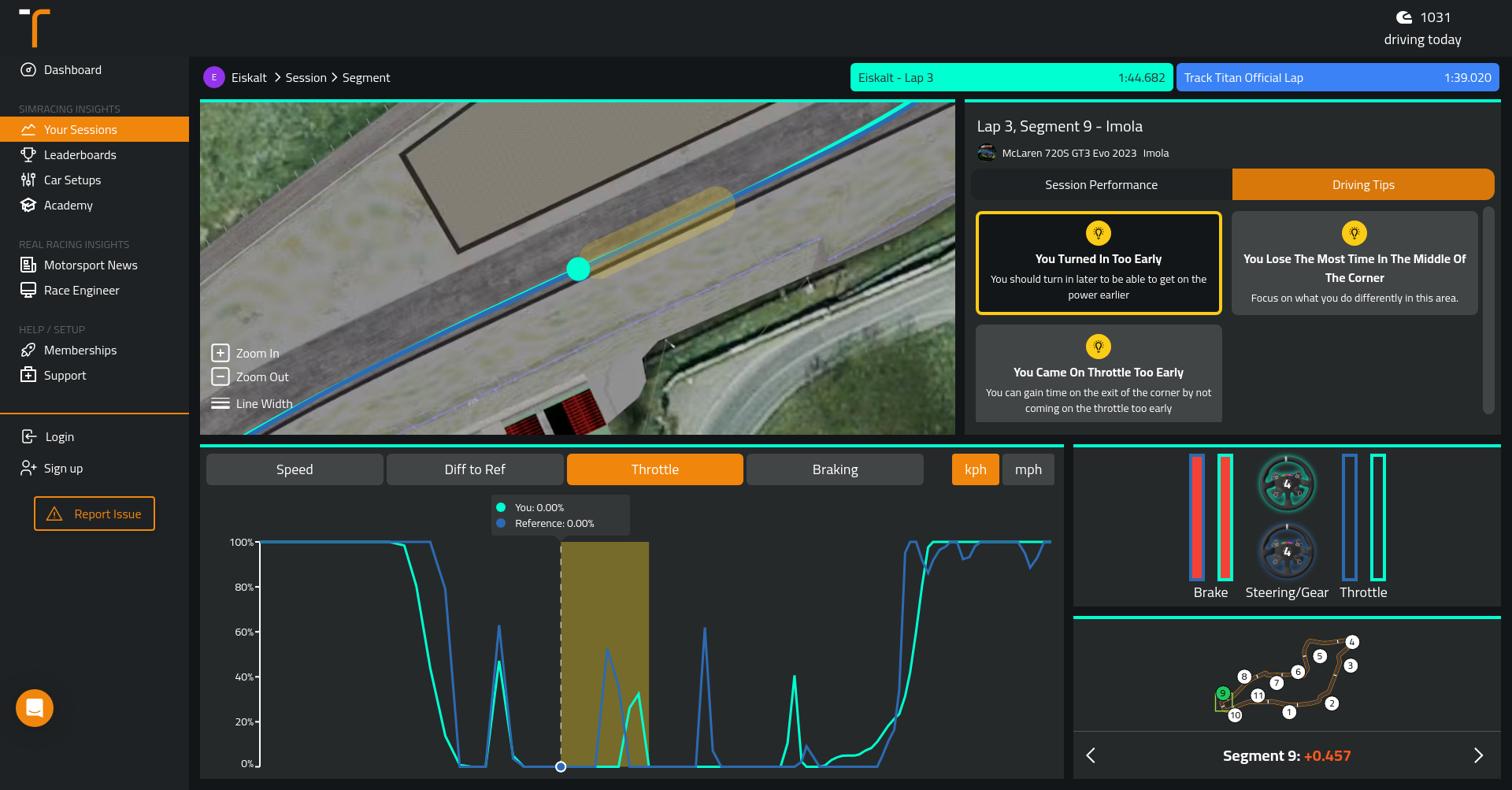
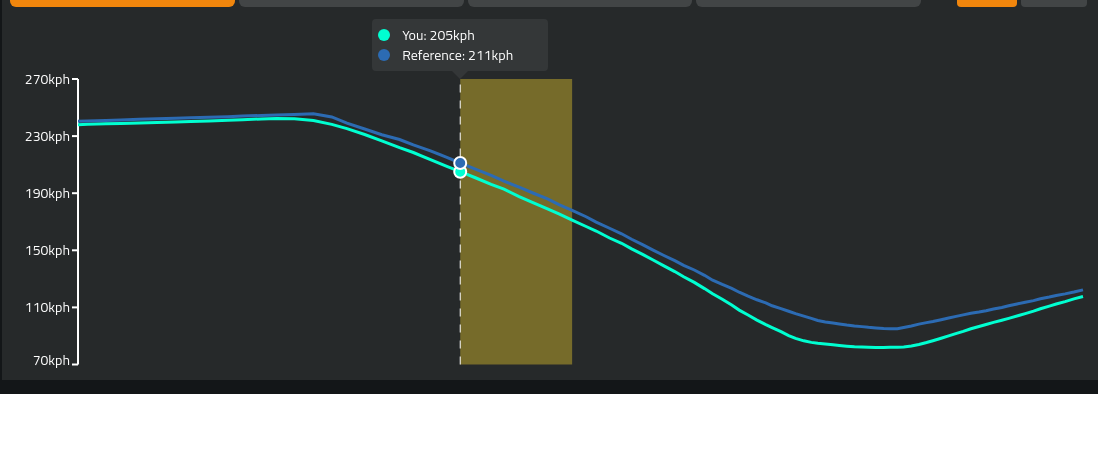
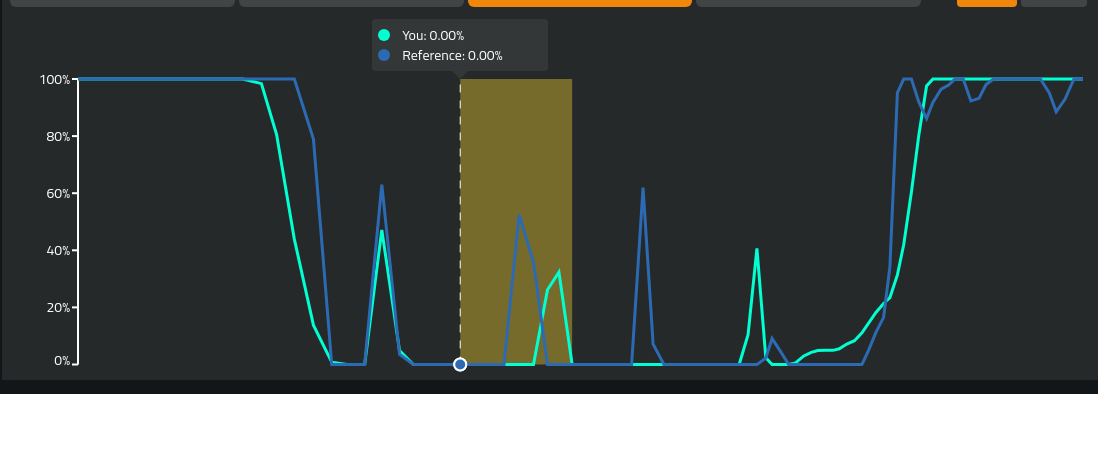
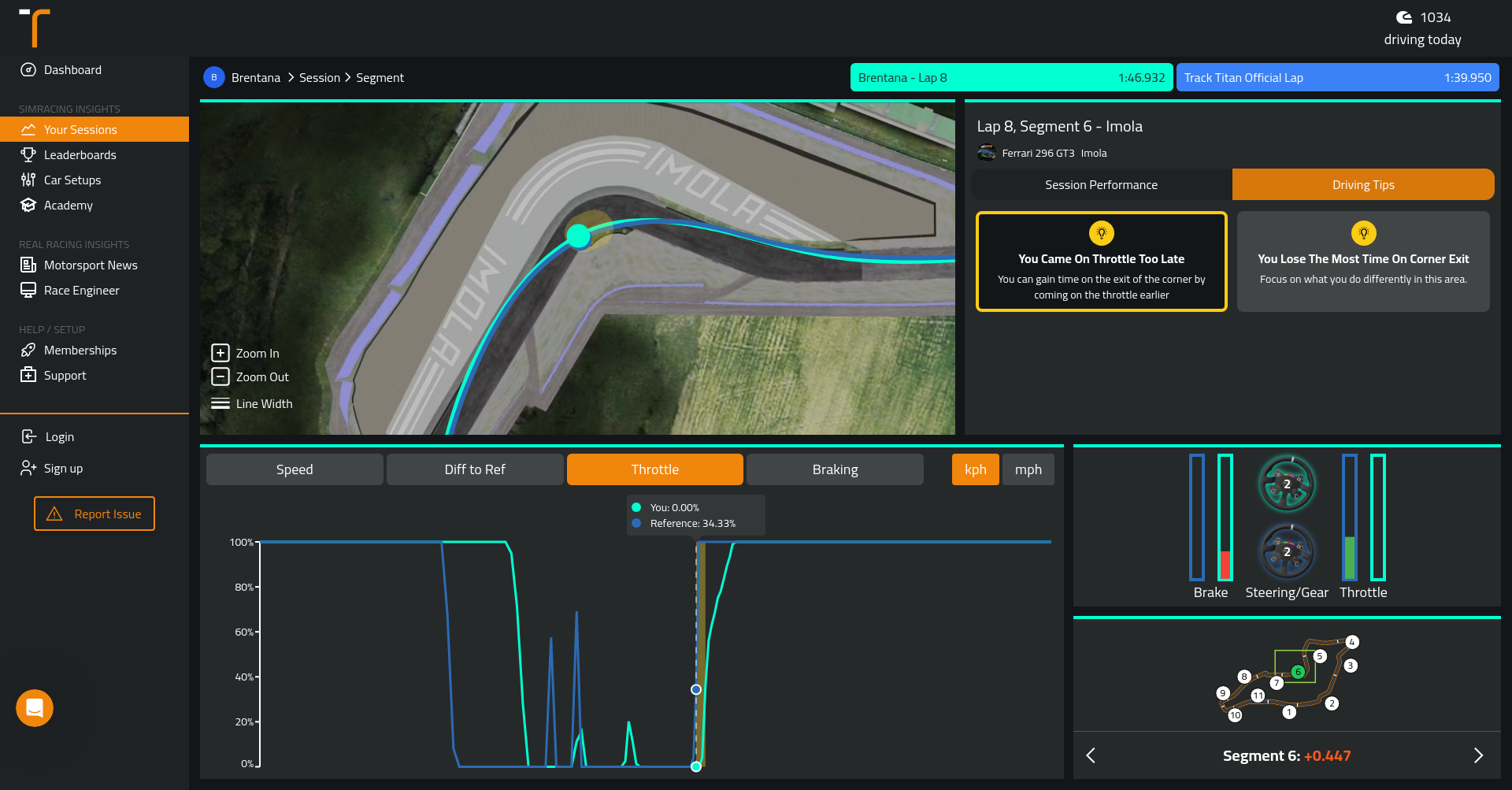
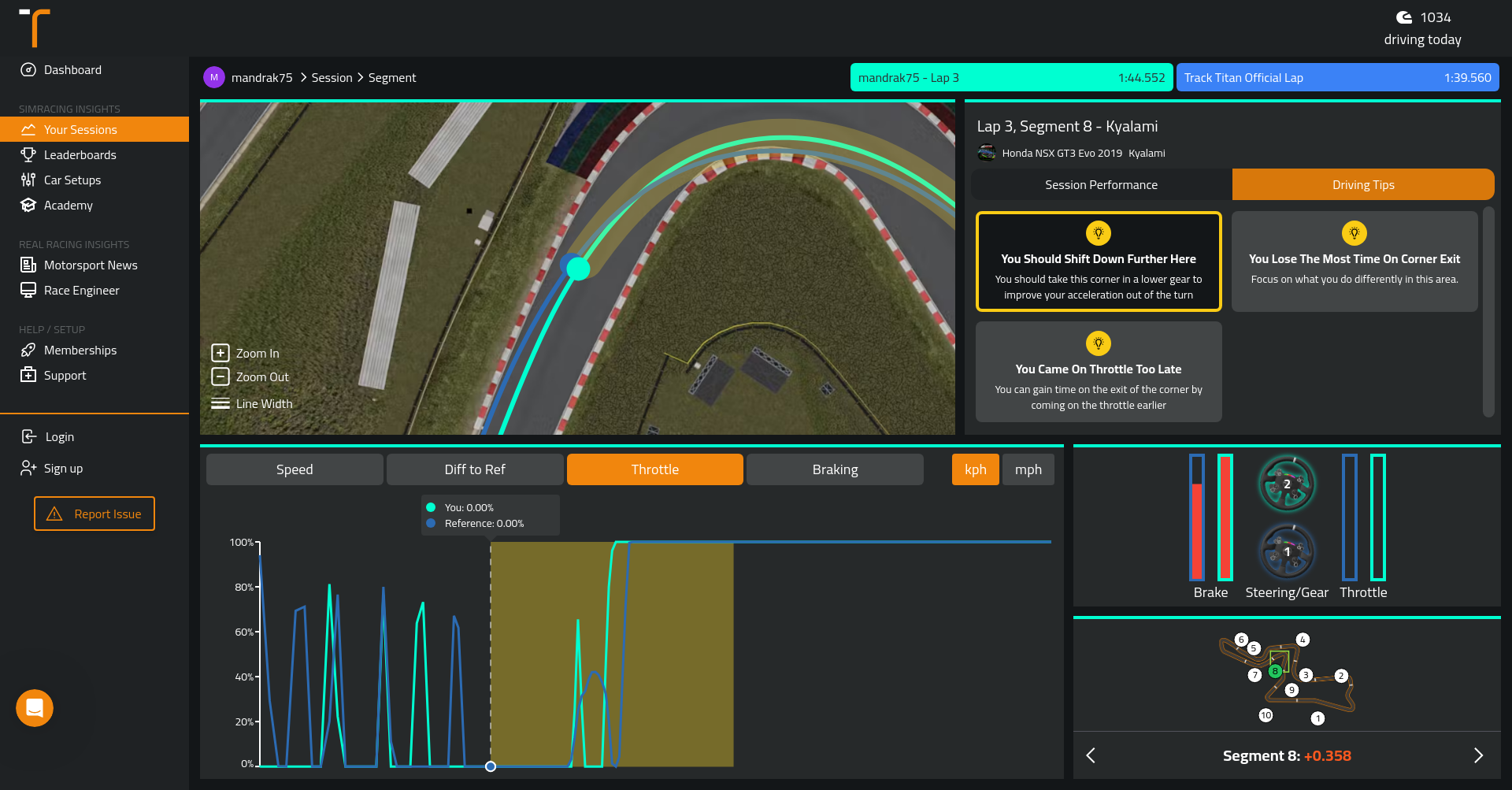
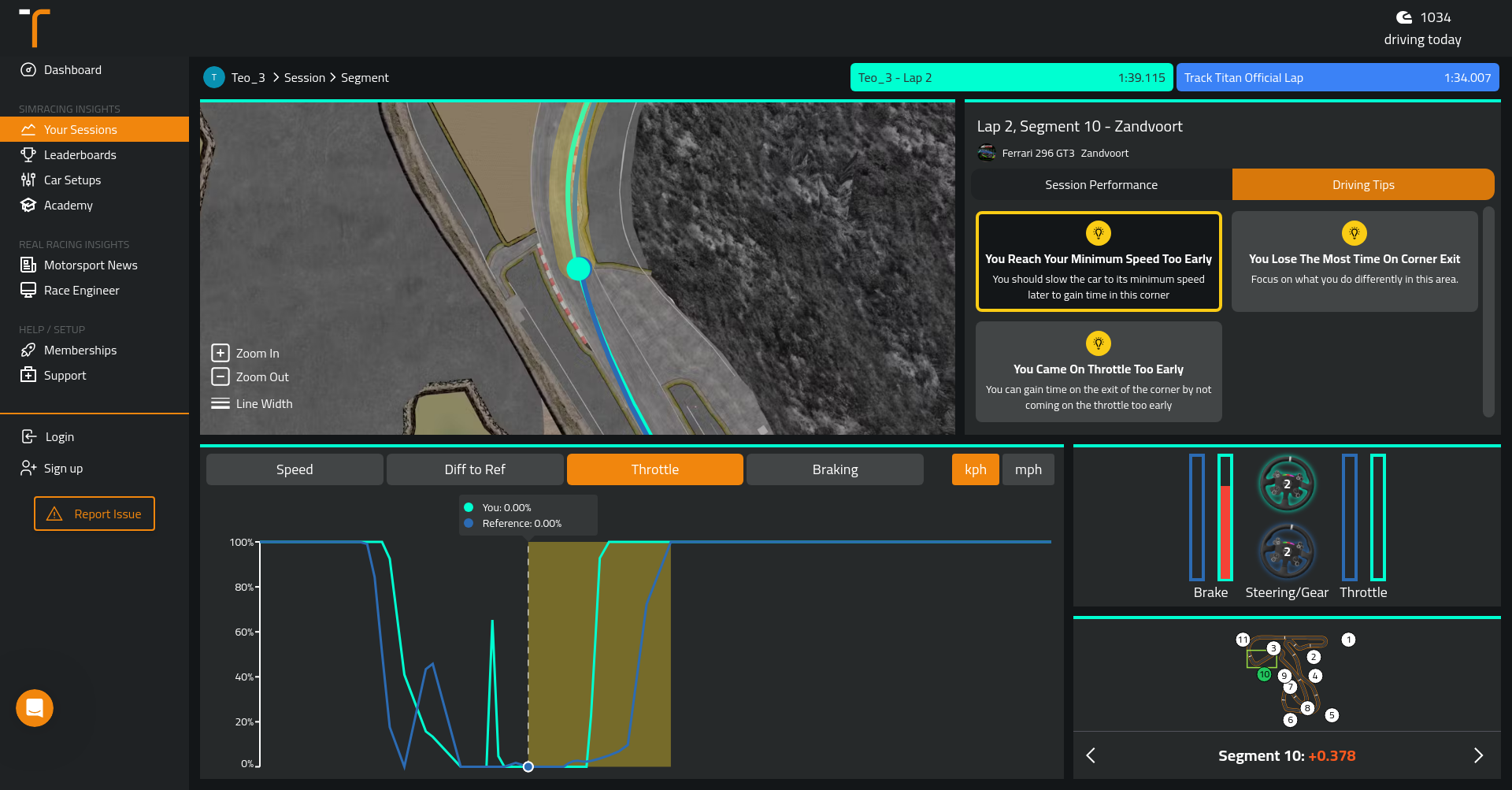
The speed chart analysis reveals that driverB is at a disadvantage entering the corner with a lower speed due to less momentum from the previous corner. This results in a slower entry and mid-corner phase, with driverB's minimum speed being significantly lower and occurring later than driverA's. Consequently, driverB also accelerates out of the corner less effectively. To enhance performance, driverB should carry more speed from the preceding corner and delay throttle application until an optimal point for stronger acceleration. In terms of throttle control, driverA applies the throttle earlier but in a less smooth manner, leading to potential wheelspin management issues. DriverB's later but smoother throttle application suggests better traction control, aiding in a faster exit from the corner. DriverA's inconsistent throttle intensity indicates instability and potentially slower exit speeds, while driverB exhibits a steady increase in throttle application, which is key for maintaining traction and achieving higher speeds on exit. For improvement, driverA should aim to delay and moderate their throttle inputs to achieve a smoother curve similar to that of driverB for better performance through this track section.
Analyzing the speed chart, it's evident that driverB is entering the corner with a lower speed compared to driverA. This suggests that driverB exited the previous corner with less momentum, which is immediately putting them at a disadvantage as they approach the current corner. The impact of this is a slower entry speed into the corner, which cascades into a reduced pace throughout. Furthermore, during the mid-corner phase, driverB's minimum speed is significantly lower than that of driverA and occurs later. This indicates that driverB is not only slower at the slowest point of the corner but also gets on the throttle later than driverA, leading to a compounded time loss on corner exit. The subsequent acceleration phase for driverB is less steep compared to driverA's, highlighting that not only did they exit slower but also accelerated out of the corner less effectively. To improve, driverB should focus on carrying more speed from the previous corner and delaying throttle application until an optimal point to ensure stronger acceleration out of this turn.

Analyzing the throttle control chart, it's evident that driverA initiates throttle application significantly earlier than driverB. This premature application results in a less smooth increase in throttle, as indicated by the jagged line, suggesting difficulty in managing wheelspin. DriverB, on the other hand, applies the throttle later but with a smoother and more progressive input. This indicates better traction management and likely contributes to a more controlled and faster exit from the corner. The intensity of driverA's throttle application is also less consistent compared to driverB's. The fluctuations in driverA's graph show a lack of steady acceleration which can lead to instability and slower corner exit speeds. In contrast, driverB maintains a steady increase in throttle application, which is crucial for maintaining traction and achieving higher speeds on corner exit. DriverA should focus on delaying and moderating their throttle inputs to mirror the smoother curve demonstrated by driverB for improved performance through this section of the track.