114,324
114K
Laps driven today

iRacing

Le Mans Ultimate

Assetto Corsa Competizione

Assetto Corsa

F1 25

Assetto Corsa EVO

Automobilista 2

Forza Motorsport

F1 24

F1 2021

F1 23

F1 2020


Lap 2
Segment 7
2:04.702
6th Feb 2024
Assetto Corsa Competizione
Bathurst (Mount Panorama) - McLaren 720S GT3 Evo 2023

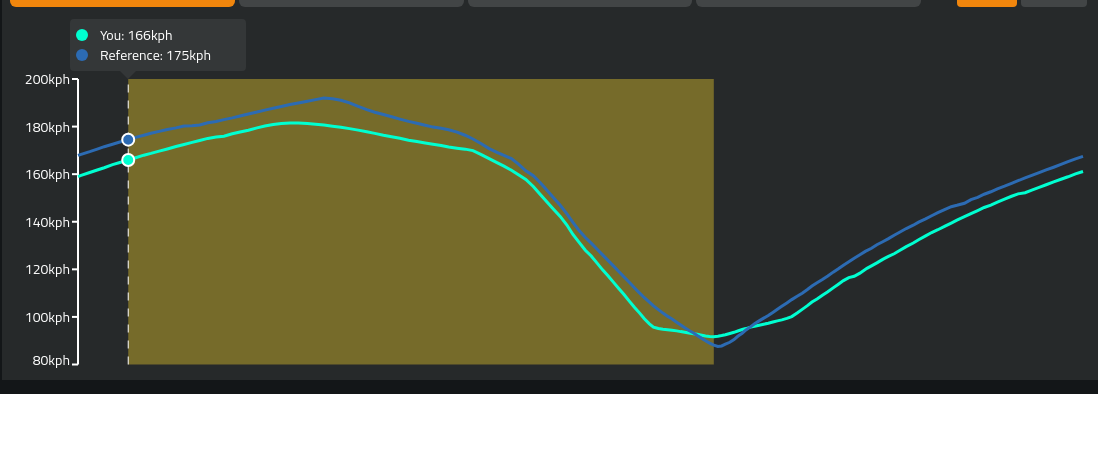
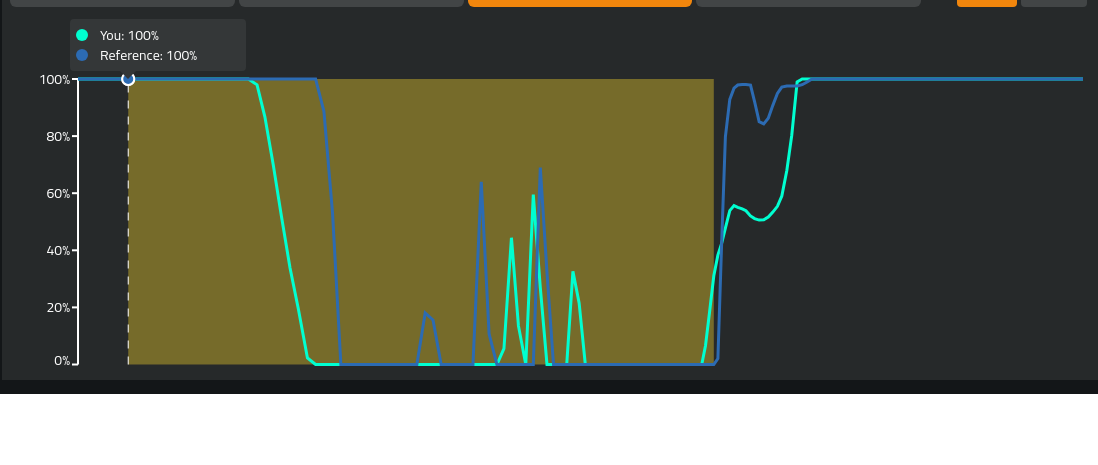
The analysis of the speed chart reveals that driverB is losing time at corner entry due to a slower exit from the previous corner, resulting in a less optimal approach. DriverB begins braking earlier and has a lower minimum corner speed, which leads to a later throttle application and slower acceleration out of the turn. To improve lap times, driverB should focus on carrying more speed through the previous corner exit to enhance entry speed into subsequent corners and work on earlier throttle application to maximize acceleration out of the turn. On the other hand, driverA is applying throttle later than driverB, showing hesitation in transitioning from braking to acceleration. DriverB applies throttle sooner and more aggressively, indicating better traction control and an ability to quickly return to full power. This assertiveness helps in carrying speed onto the straights. DriverA should aim for earlier and more decisive throttle inputs post-braking to improve corner exit speed and overall lap time. In summary, both drivers have areas for improvement: driverB needs to work on maintaining higher speeds through corners and transitioning quicker onto the throttle, while driverA should focus on becoming more aggressive with throttle application after braking to enhance their lap times.
Analyzing the speed chart, it's evident that driverB is losing significant time on corner entry compared to driverA. At the very start of the chart, driverB's speed is already lower than that of driverA, indicating a slower exit from the previous corner and consequently a less optimal approach into the current one. This initial speed deficit continues as both drivers approach the braking zone, with driverB's deceleration phase starting earlier and resulting in a lower minimum corner speed. Furthermore, the minimum speed for driverB occurs noticeably later than for driverA, which implies that driverB is getting on the throttle later. This delay in throttle application hinders acceleration out of the corner, as seen by a less steep increase in speed compared to driverA. To improve lap times, driverB should focus on carrying more speed through the previous corner exit to enhance entry speed into subsequent corners and work on earlier throttle application to maximize acceleration out of the turn.

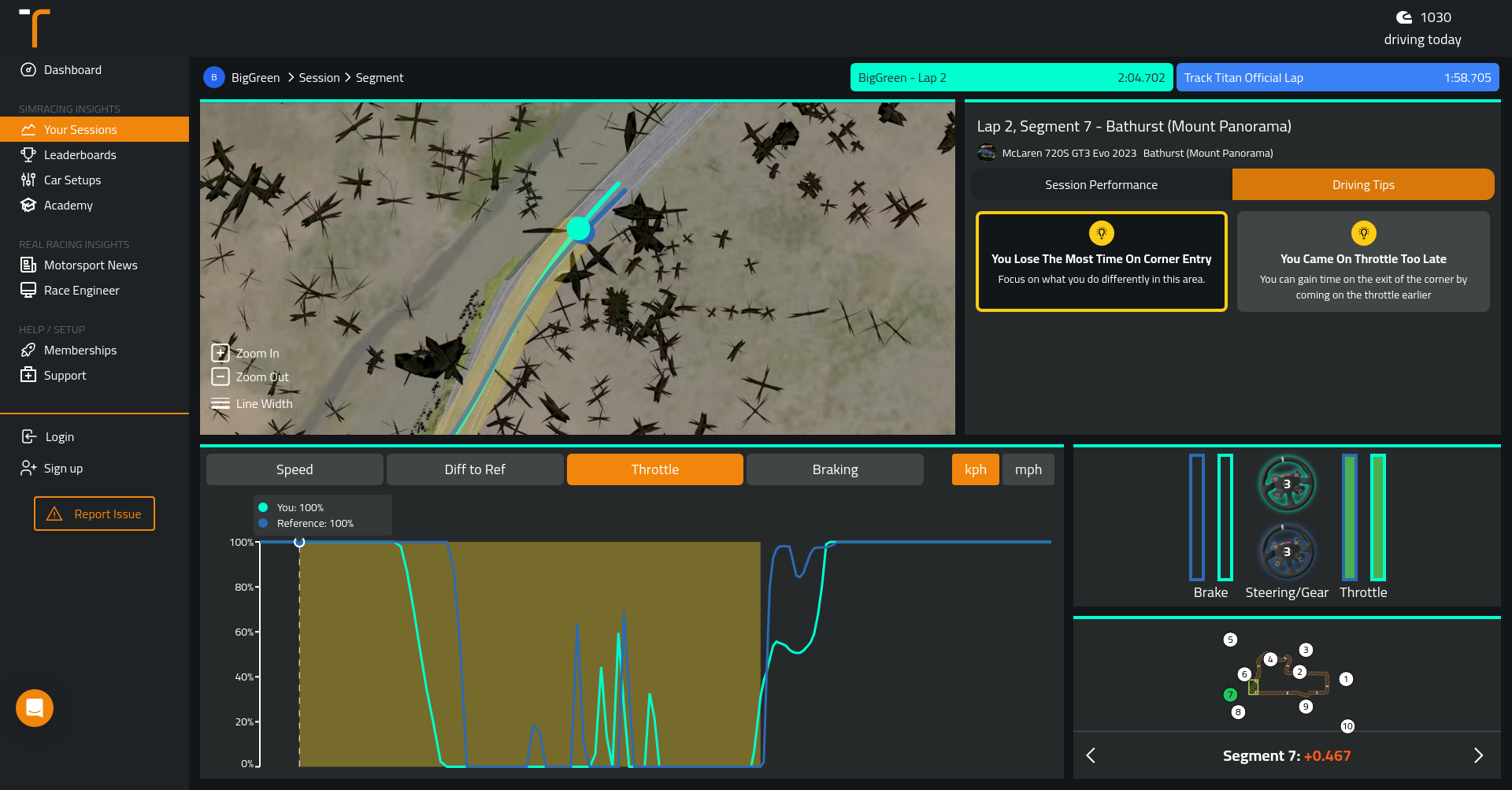
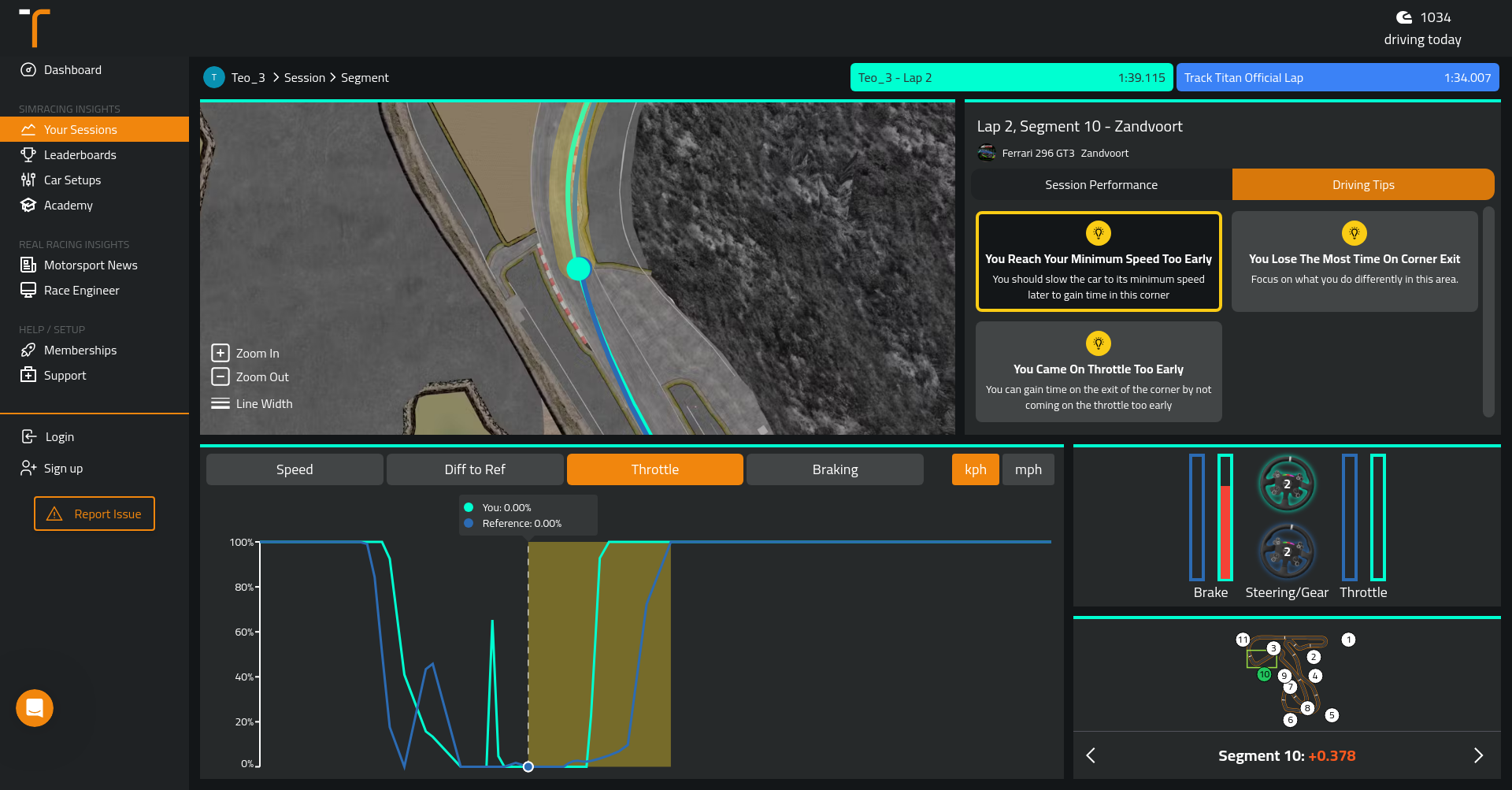
Analyzing the throttle control chart, it's evident that driverA is applying throttle significantly later than driverB. This delay in throttle application by driverA occurs right after the peak of brake application, indicating a hesitation to transition from braking to acceleration. DriverB, on the other hand, initiates throttle application sooner and with a sharper increase, suggesting a more confident and aggressive exit from the corner. Furthermore, driverA's gradual increase in throttle application lacks the assertiveness seen in driverB's profile. The smoother and more immediate rise in throttle percentage for driverB demonstrates better traction control and an ability to get back to full power quickly, which is crucial for carrying speed onto the straights. DriverA should focus on earlier and more decisive throttle inputs post-braking to improve corner exit speed and overall lap time.