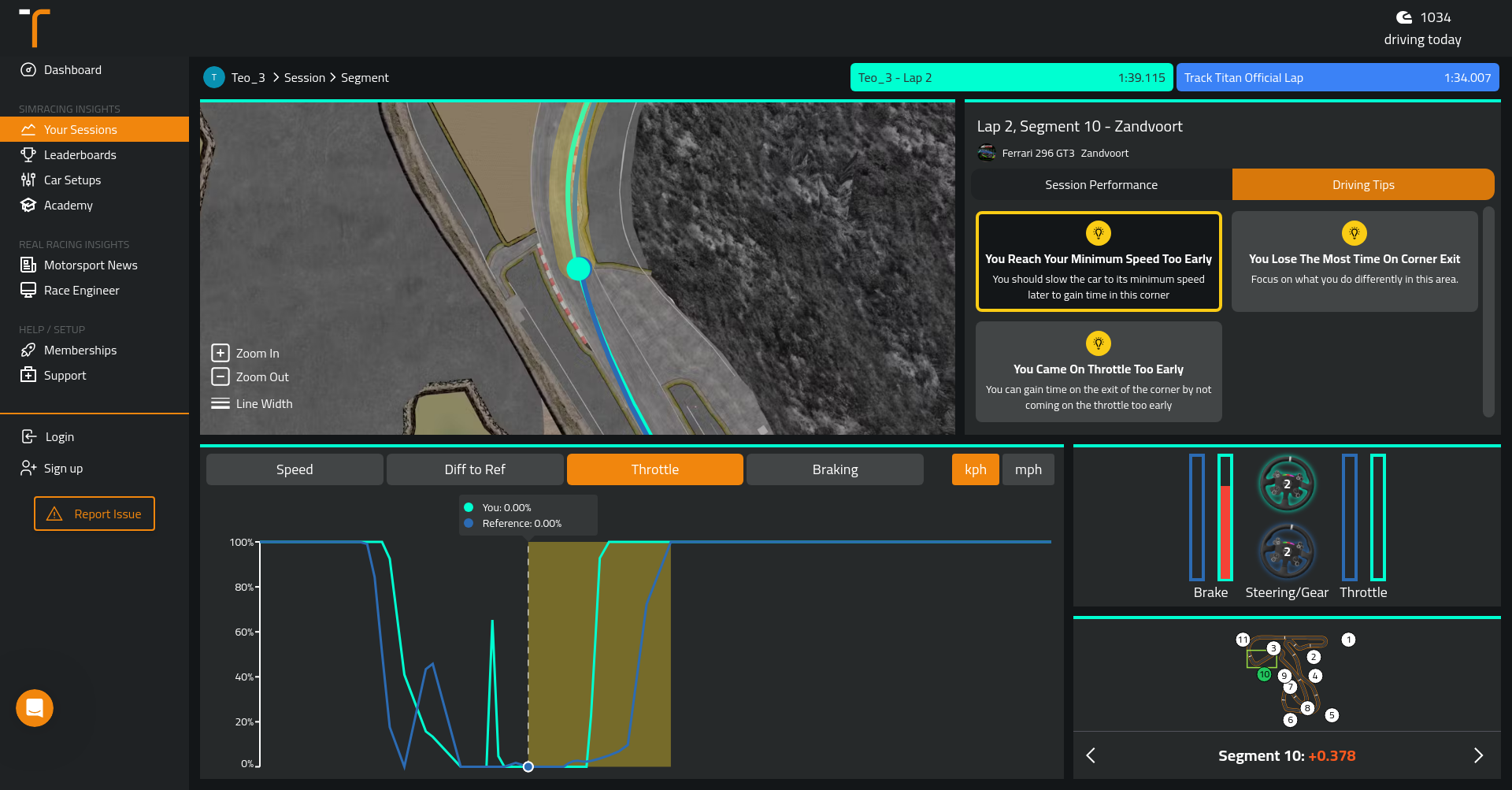
The analysis of the speed chart reveals that driverB enters the corner at a lower speed than driverA, suggesting that driverB had less momentum from the previous corner. DriverB also brakes too early and accelerates later, resulting in a slower mid-corner speed and a less efficient corner exit. To improve, driverB should carry more speed from the previous corner and adjust braking and throttle timing to match driverA's performance.
In throttle control, driverA applies throttle too early, causing a plateau in acceleration due to traction limits. DriverB's gradual throttle application leads to smoother acceleration and better traction management. DriverA should delay throttle input to improve grip and exit speed.
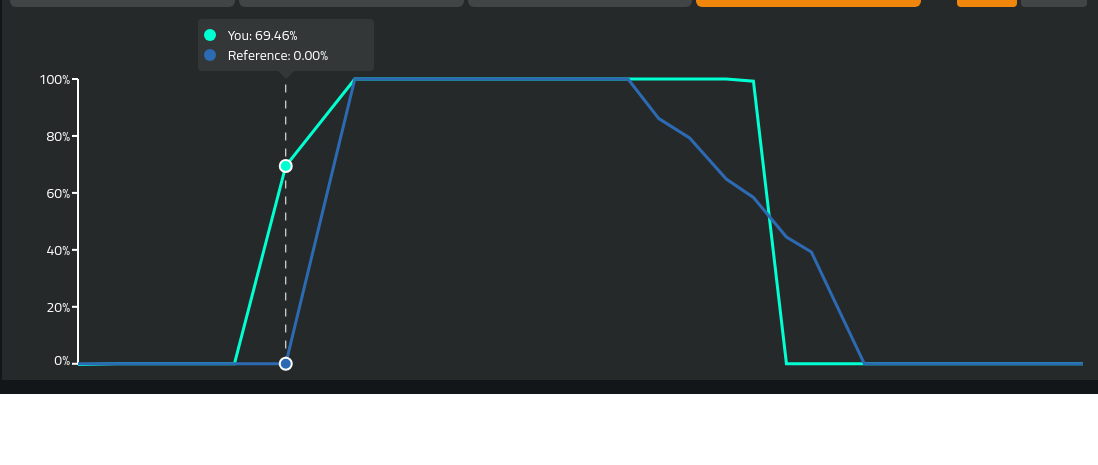
The braking analysis shows that driverA brakes hard and fast but releases early, while driverB maintains brake pressure longer, possibly using trail braking to maintain speed into the corner. DriverA could benefit from modulating brake release and delaying initial brake application to carry more speed into the corner like driverB, potentially improving lap times.
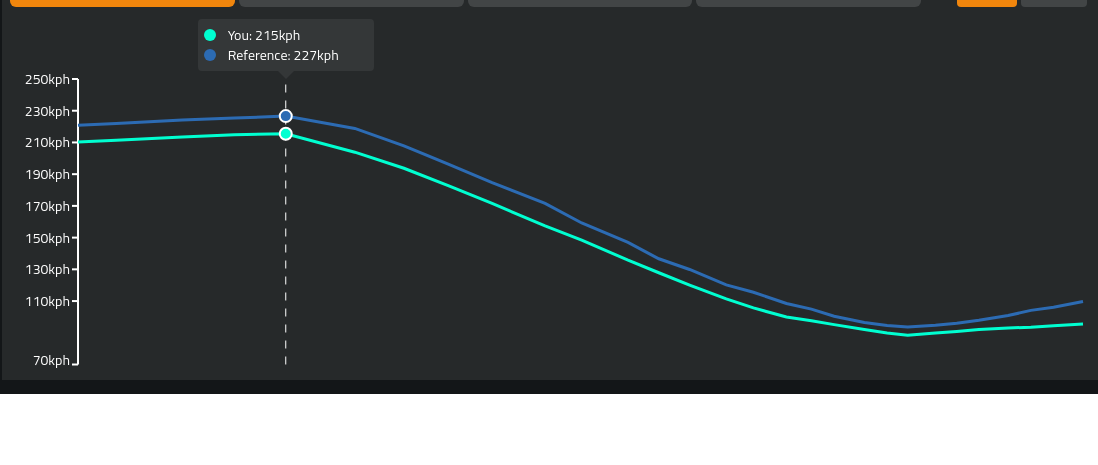
Analyzing the speed chart, it's evident that driverB is entering the corner at a lower speed compared to driverA. This can be seen at the very start of the chart where driverB's speed graph begins at a notably lower point than that of driverA. This indicates that driverB exited the previous corner with less momentum, which has a cascading effect on their approach and entry into the current corner, ultimately costing them time.
Furthermore, as we progress through the corner, driverB's minimum speed occurs later than that of driverA and is also lower. This suggests that not only did driverB brake too early, but they also got on the throttle later than driverA. The impact of this is twofold: firstly, it results in lost time during mid-corner where speed is crucial; secondly, it affects corner exit as evidenced by a less steep acceleration gradient for driverB compared to driverA. To optimize performance, focusing on carrying more speed from the previous corner and modulating braking and throttle application to match or exceed the reference points of driverA will be key for improvement.
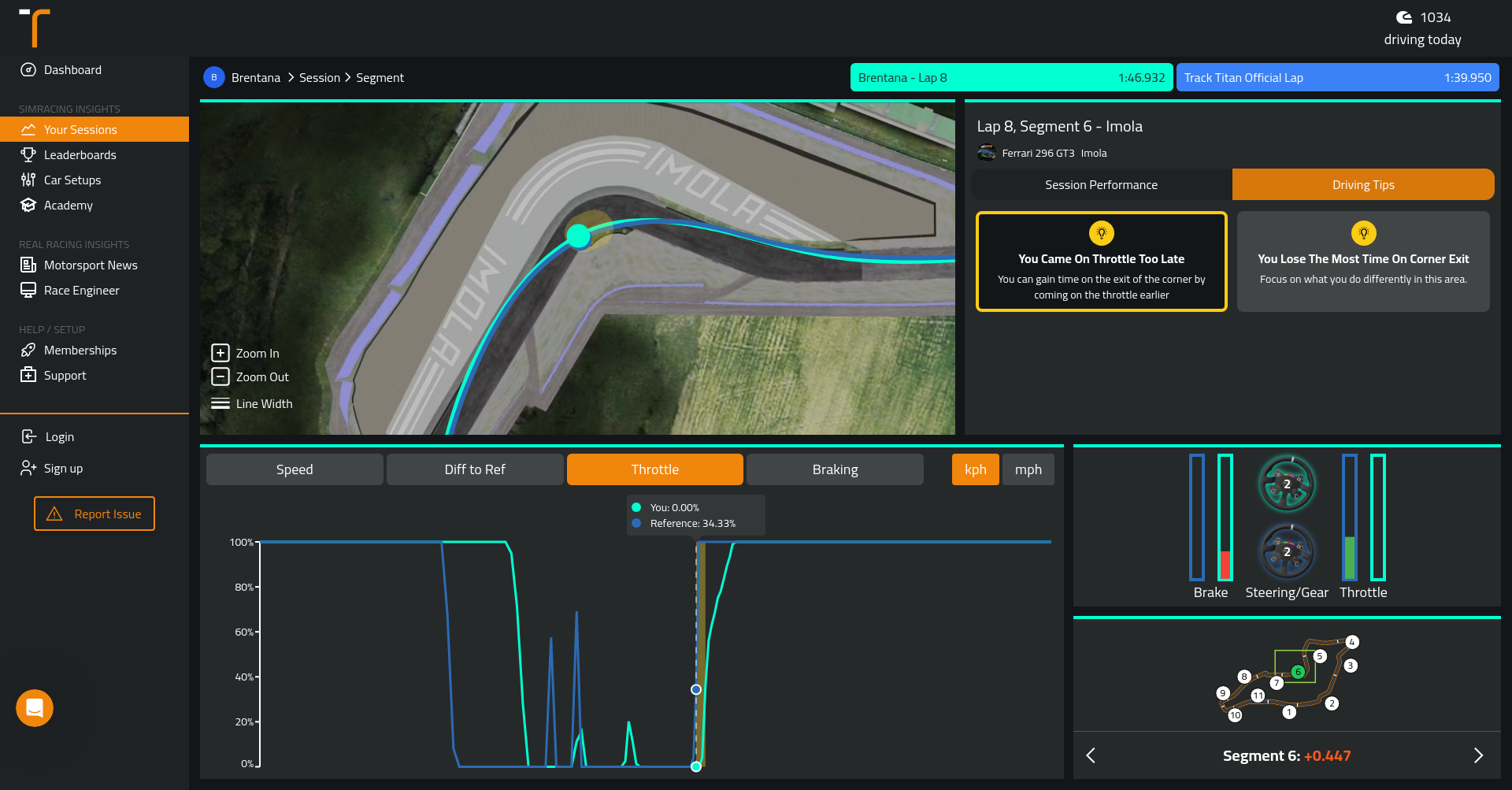
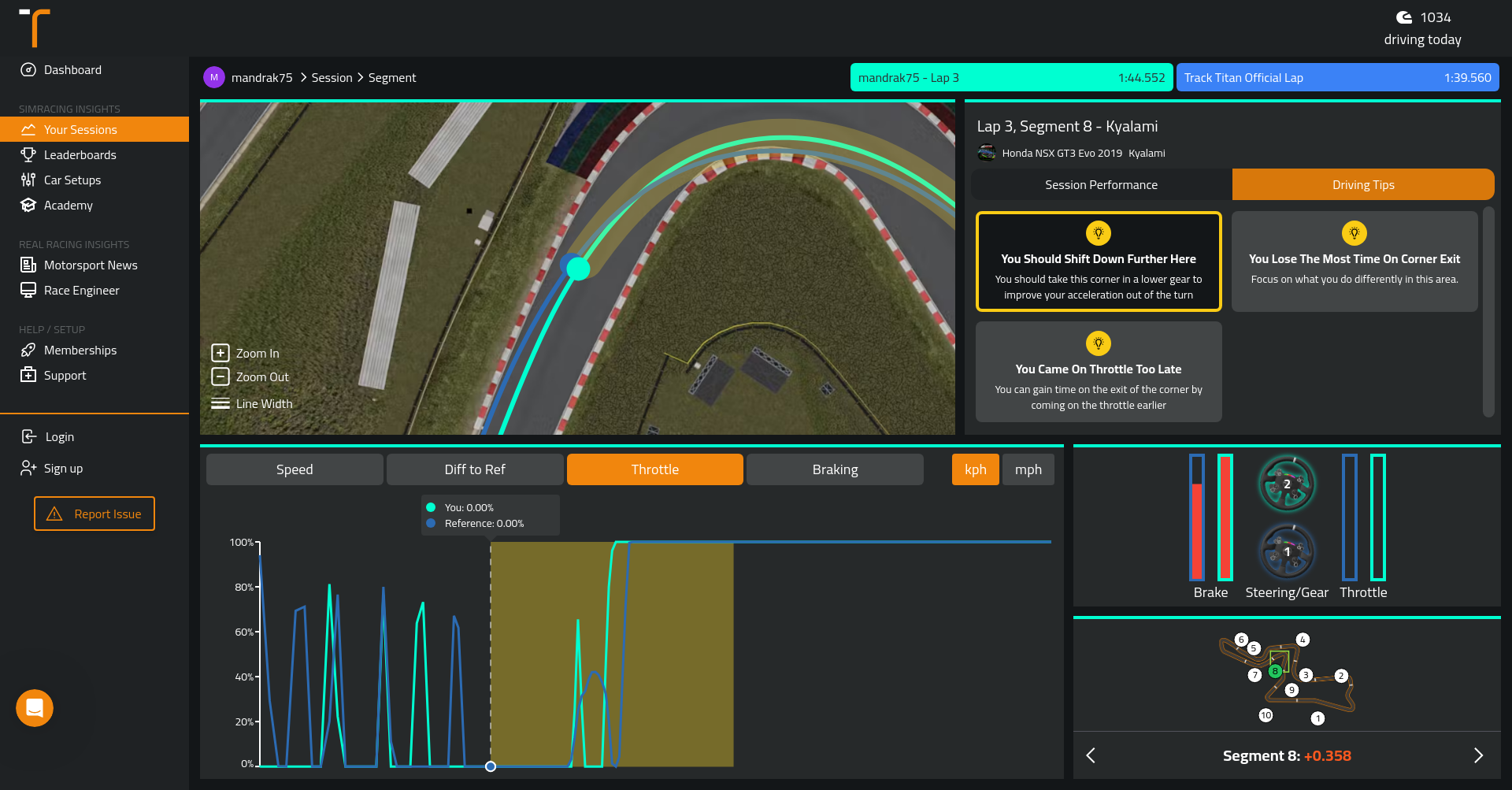
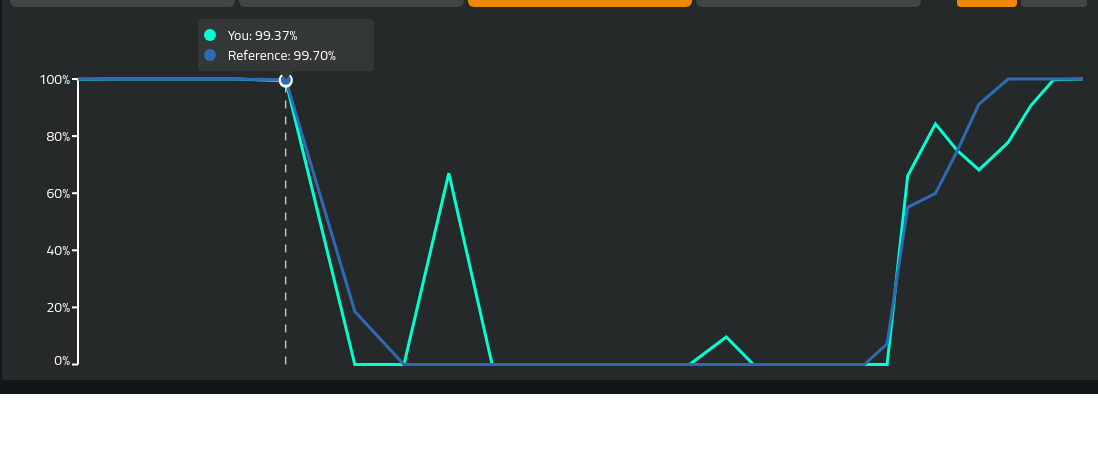
In the provided throttle control analysis, there is a distinct difference in the timing and intensity of throttle application between driverA and driverB. DriverA initiates throttle application significantly earlier than driverB, as indicated by the steep curve in the chart. This premature application leads to a plateau in acceleration, suggesting a potential loss of time due to traction limitations. Conversely, driverB's graph shows a more gradual and later increase in throttle application, which allows for a smoother transition to full acceleration without overloading the tires.
Furthermore, driverA's early throttle input results in a less efficient exit from the corner. The graph demonstrates that driverB reaches full throttle later but maintains a consistent increase in speed, indicating better traction management and ultimately faster exit speed. To improve performance, driverA should delay their initial throttle input to match the timing of driverB, ensuring that they can apply power more effectively without compromising grip and losing time on corner exit.
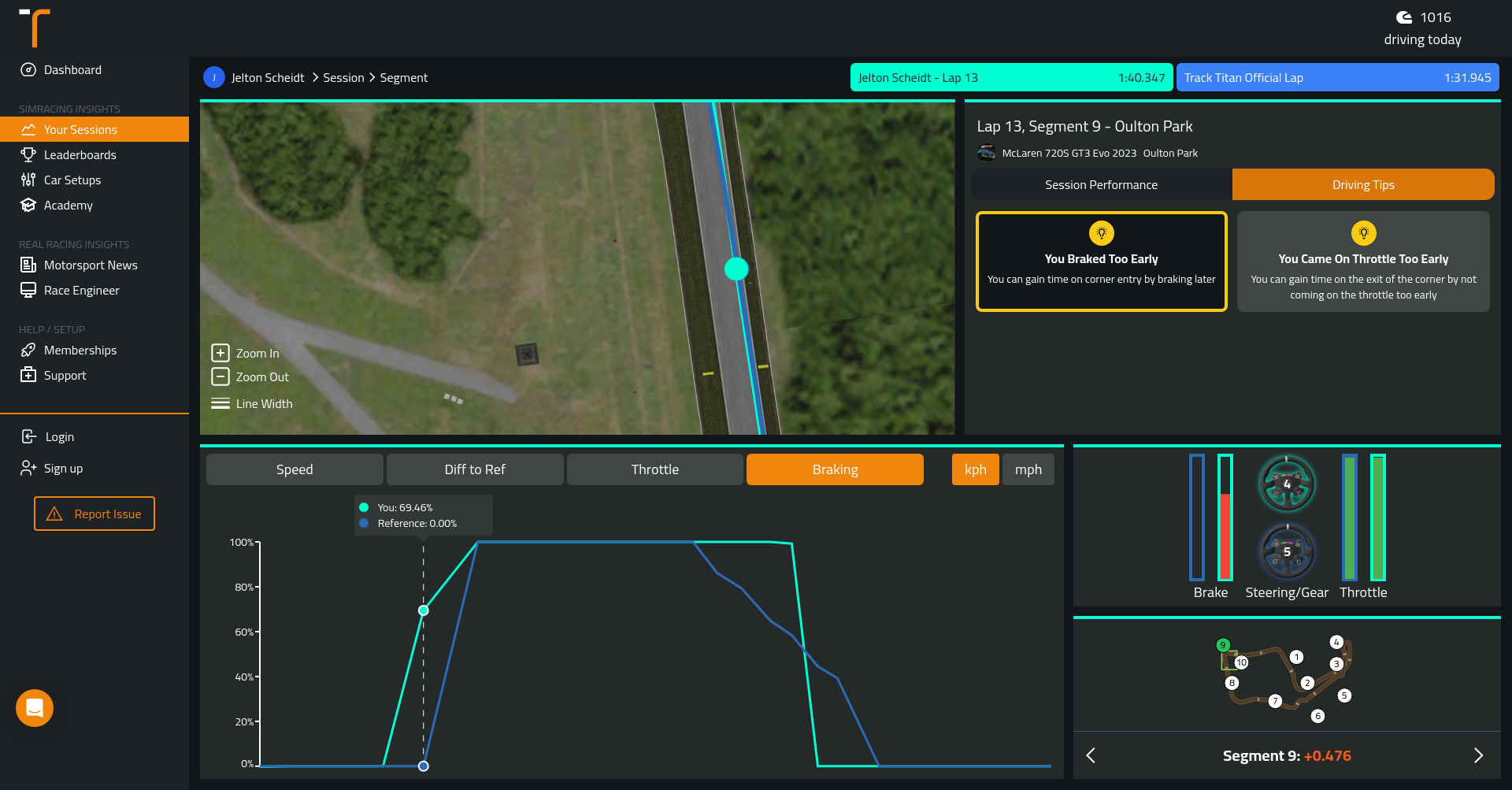
In the provided braking analysis chart, there is a clear distinction between the brake application of driverA and driverB. DriverA initiates braking with a sharp increase in brake pressure, reaching maximum application swiftly. This indicates a decisive and heavy braking action. However, driverA begins to release the brake much earlier than driverB, suggesting an earlier transition from braking to cornering.
On the other hand, driverB applies the brakes with less initial intensity but maintains higher brake pressure for a longer duration before corner entry. This sustained brake application could be indicative of trail braking, which helps in maintaining speed while entering the corner. The data shows that driverB's later release of the brakes allows for carrying more speed into the corner, potentially leading to a faster corner exit.
To improve performance based on this data, driverA should consider modulating their brake release to extend into the corner more effectively, emulating driverB's trail braking technique. Additionally, delaying the initial brake application could help in maintaining higher speeds upon corner entry and improve overall lap times.