122,247
122K
Laps driven today

iRacing

Le Mans Ultimate

Assetto Corsa Competizione

Assetto Corsa

F1 25

Assetto Corsa EVO

Automobilista 2

Forza Motorsport

F1 24

F1 2021

F1 23

F1 2020


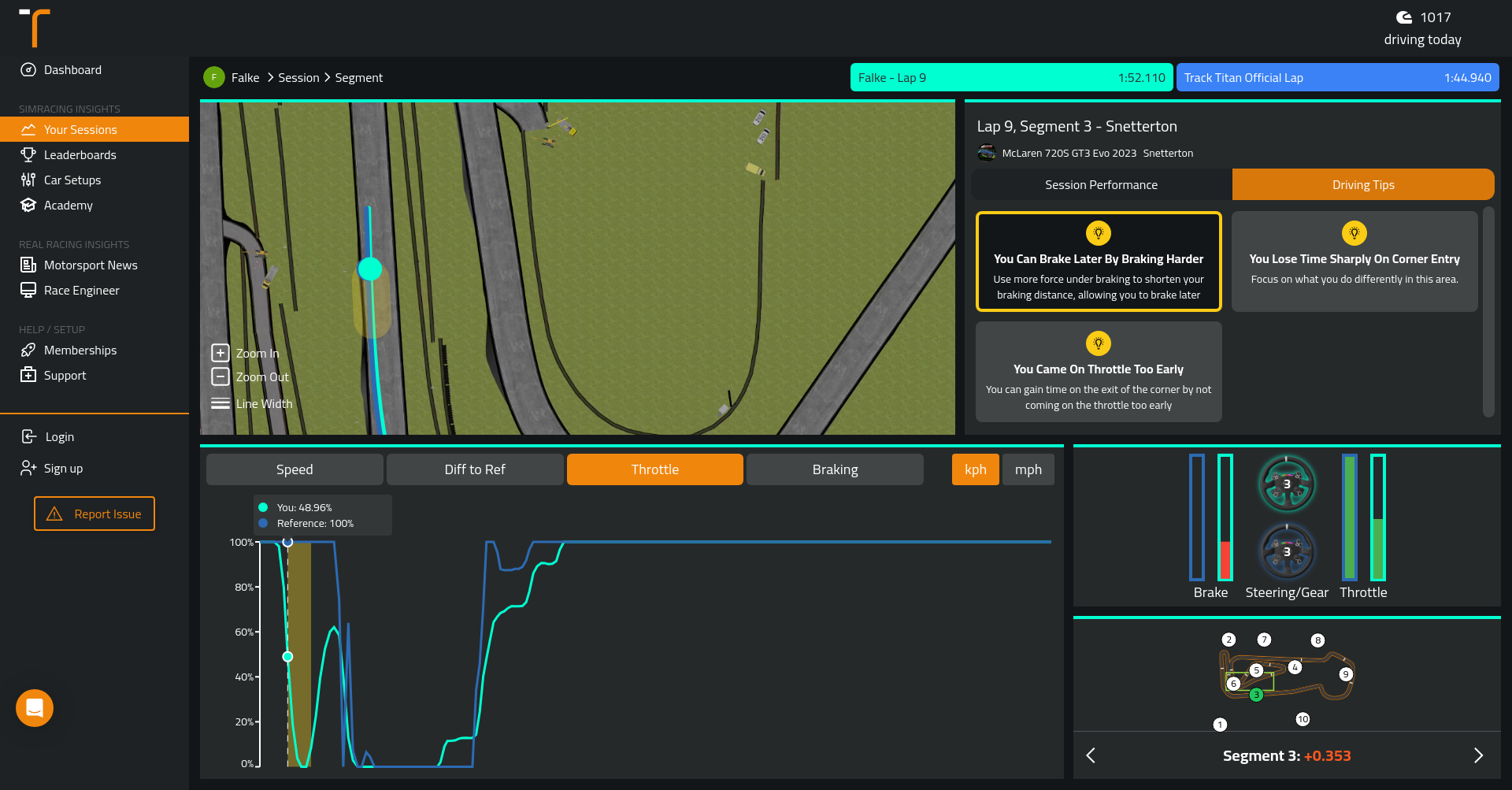
Lap 9
Segment 3
1:52.110
6th Feb 2024
Assetto Corsa Competizione
Snetterton - McLaren 720S GT3 Evo 2023

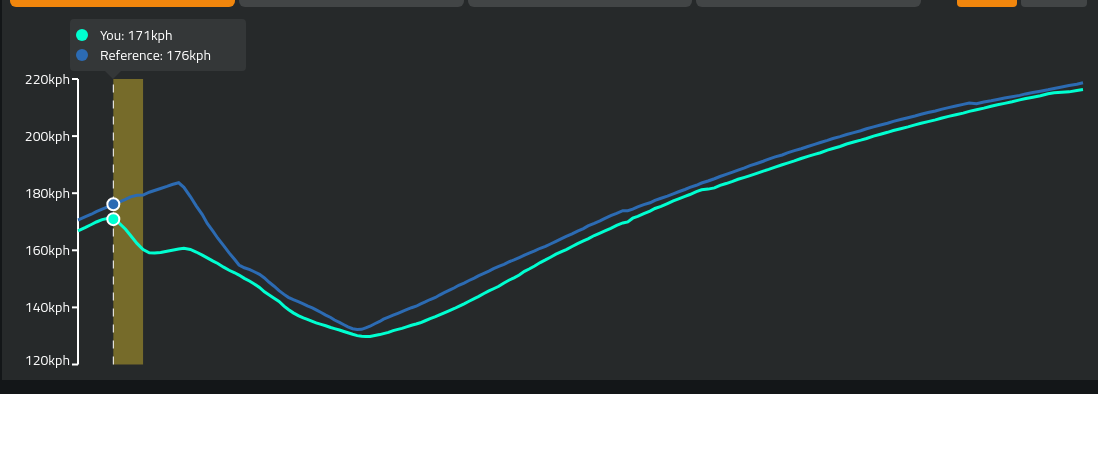
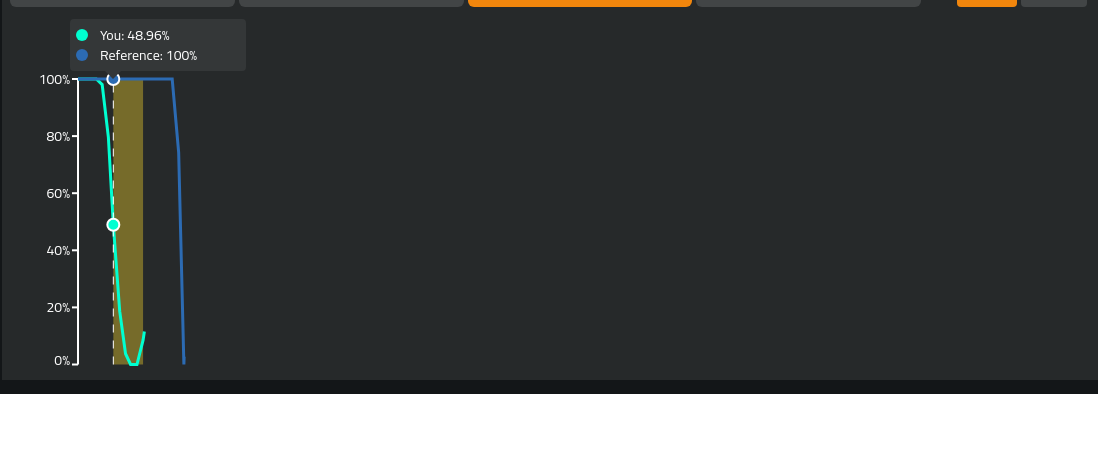
The speed chart analysis reveals that driverB is entering corners at a lower speed than driverA, due to earlier or more aggressive braking and possibly less optimal corner entry technique. This results in a slower cornering performance and lap time for driverB. To improve, driverB should aim to brake later and harder to carry more momentum into the corner, and delay throttle application to accelerate out of the corner more effectively for better exit speed. On the other hand, the throttle control chart shows that driverA applies the throttle more gradually than driverB, who has a quicker and more decisive input. DriverA also begins applying throttle earlier than driverB, which could lead to less grip and increased wheelspin, affecting exit speed negatively. For enhanced performance, driverA should consider delaying throttle application slightly for better traction and smoother input to improve corner exit speed and overall lap times. It's essential for driverA to learn from driverB's effective throttle application strategy for improved track results.
Analyzing the speed chart, it's evident that driverB loses significant speed on corner entry compared to driverA. This is indicated by the sharper decline in speed for driverB at the beginning of the chart. This suggests that driverB is not carrying as much momentum into the corner as driverA, which could be due to a combination of earlier or more aggressive braking and less optimal corner entry technique. The impact here is that driverB enters the corner at a lower speed, which compromises their overall cornering performance and lap time. Additionally, there's a noticeable difference in minimum speeds within the corner itself. DriverB reaches their minimum speed later than driverA, implying a delayed throttle application. This results in driverB accelerating out of the corner later than driverA, which can be seen from the gentler slope of their speed increase post-corner. To improve, driverB should focus on braking later and harder to maintain higher entry speed and delay throttle application slightly to ensure they can accelerate more effectively out of the corner for better exit speed.

Analyzing the throttle control chart, it's evident that driverA and driverB have distinct differences in their throttle application. DriverA applies the throttle more gradually compared to driverB, who shows a quicker and more decisive throttle input. This indicates that driverB is accelerating harder out of the corner, which can translate to a faster exit speed and potentially better lap times. Furthermore, driverA comes on the throttle significantly earlier than driverB. This early application could lead to less grip and a higher chance of wheelspin, which in turn can compromise exit speed. By delaying the throttle application slightly and focusing on smoother input, driverA could improve traction and corner exit speed, ultimately leading to improved lap times. It's crucial for driverA to adapt their technique to mimic the more effective throttle application of driverB for better performance on track.