114,324
114K
Laps driven today

iRacing

Le Mans Ultimate

Assetto Corsa Competizione

Assetto Corsa

F1 25

Assetto Corsa EVO

Automobilista 2

Forza Motorsport

F1 24

F1 2021

F1 23

F1 2020


Lap 2
Segment 8
1:32.085
6th Feb 2024
Assetto Corsa Competizione
Red Bull Ring - Mercedes-AMG GT2

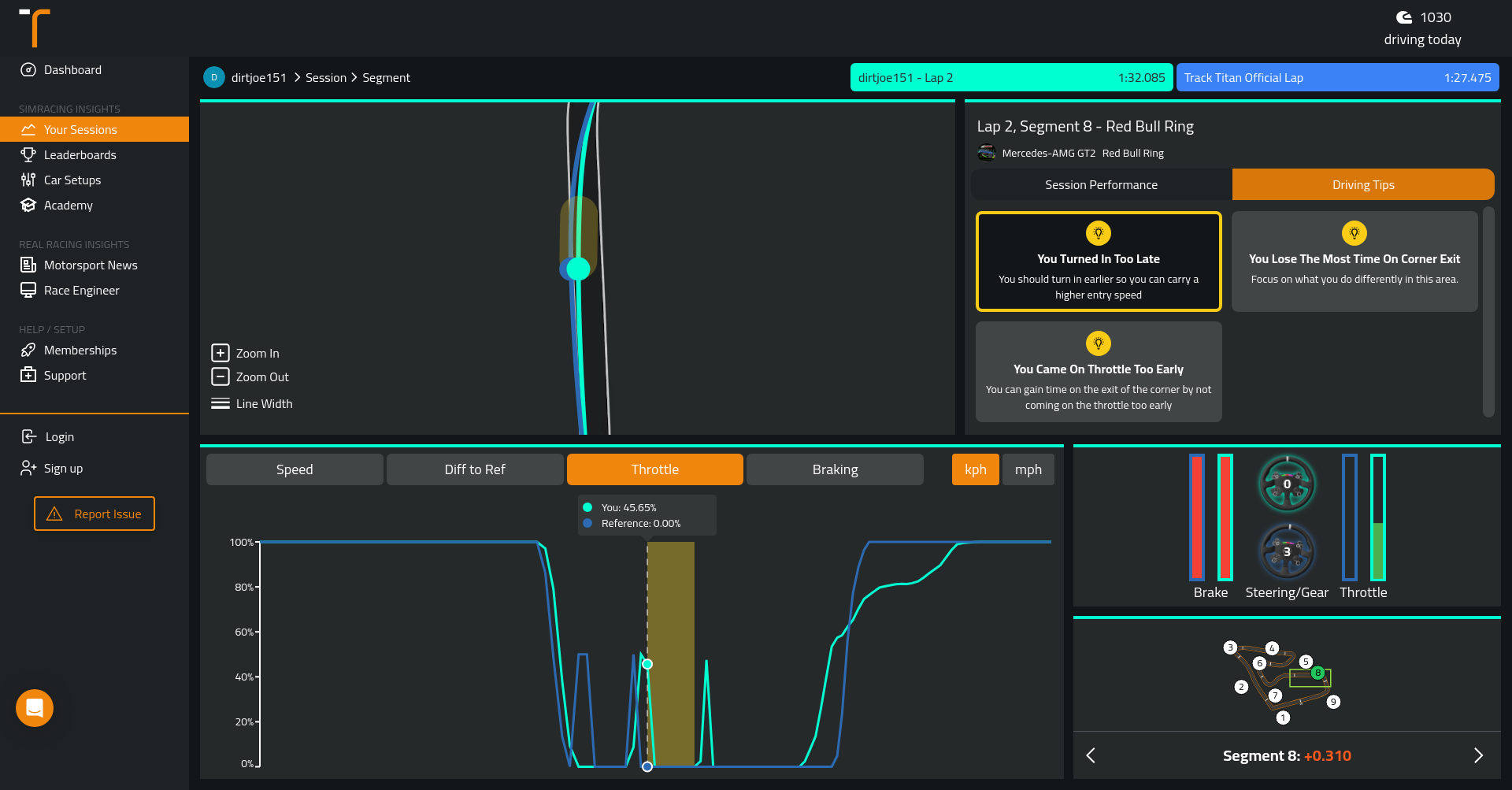
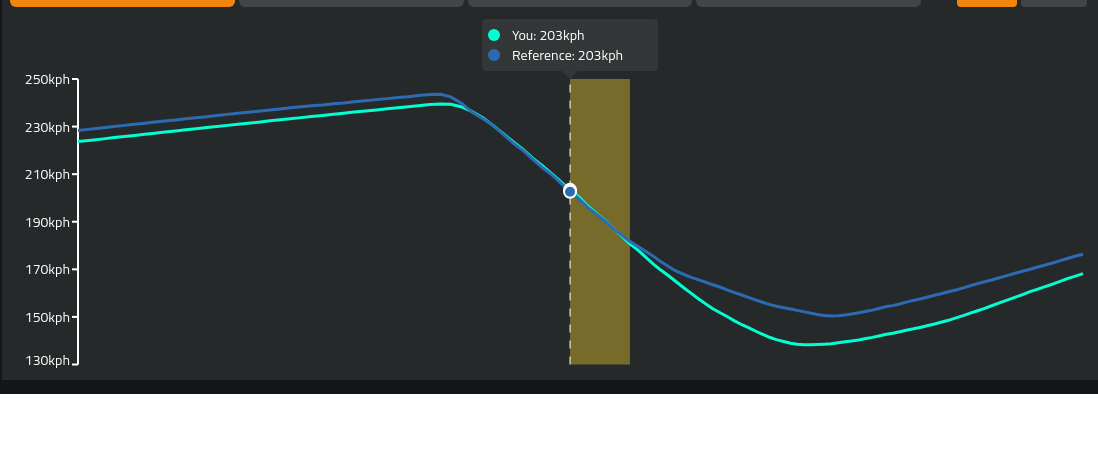
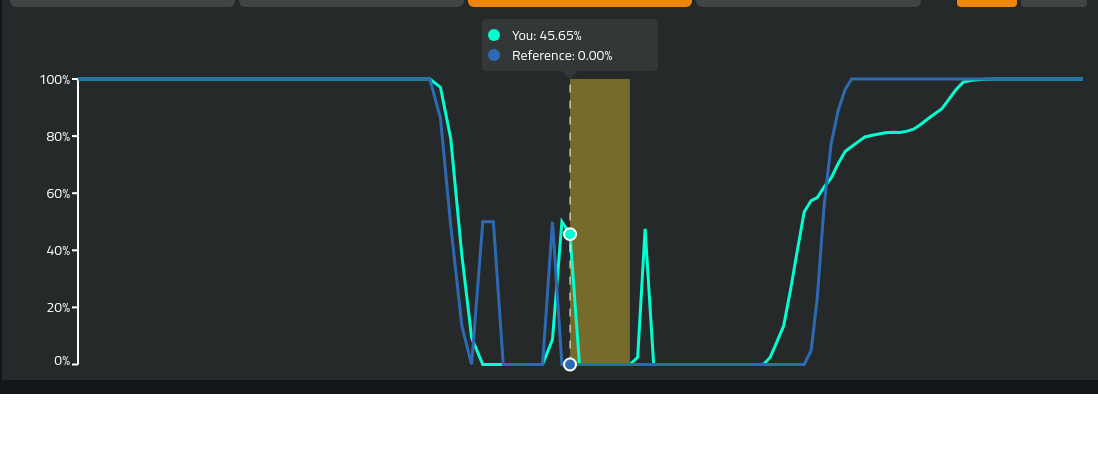
The speed chart analysis reveals that driverB enters the corner at a lower speed than driverA, indicating a loss of momentum from the previous corner. This slower entry speed results in driverB reaching their minimum speed later and accelerating out of the corner more gradually than driverA. To enhance performance, driverB should aim to carry more entry speed by turning in earlier and managing throttle application to avoid early acceleration, which will improve corner exit speeds and lap times. In terms of throttle control, driverA applies the throttle prematurely and aggressively before reaching the apex, which can lead to understeer or wheelspin, negatively affecting exit speed and lap time. The throttle graph for driverA also shows inconsistency post-apex, hinting at traction maintenance issues. On the contrary, driverB demonstrates a smoother acceleration out of the corner with a steady increase in throttle application post-apex, aiding in better traction and a stronger exit. For improved performance, it is recommended that driverA delays and moderates their throttle input until the car is properly aligned and stable at corner exit. This approach will ensure better acceleration onto the straightaway and could result in faster overall lap times. By focusing on these aspects of speed entry and throttle control, both drivers can make adjustments to their driving techniques to achieve better performance on track.
Analyzing the speed chart, it's evident that driverB is entering the corner with a lower speed compared to driverA. This is indicated by the initial left portion of the chart where driverB's speed line starts below that of driverA. This suggests that driverB exited the previous corner with less momentum, which has a cascading effect on their entry speed into the current corner. As we progress through the corner, we observe that driverB's minimum speed occurs later than that of driverA, indicating a later throttle application. This delay in acceleration contributes to a loss of time on corner exit for driverB. Furthermore, the gradient of driverB's speed increase post-minimum speed is less steep compared to driverA's, implying not only a later but also a slower pick-up of speed. To optimize performance, focusing on carrying more entry speed by turning in earlier and moderating throttle application to prevent premature acceleration will be crucial for improving corner exit speeds and overall lap time for driverB.

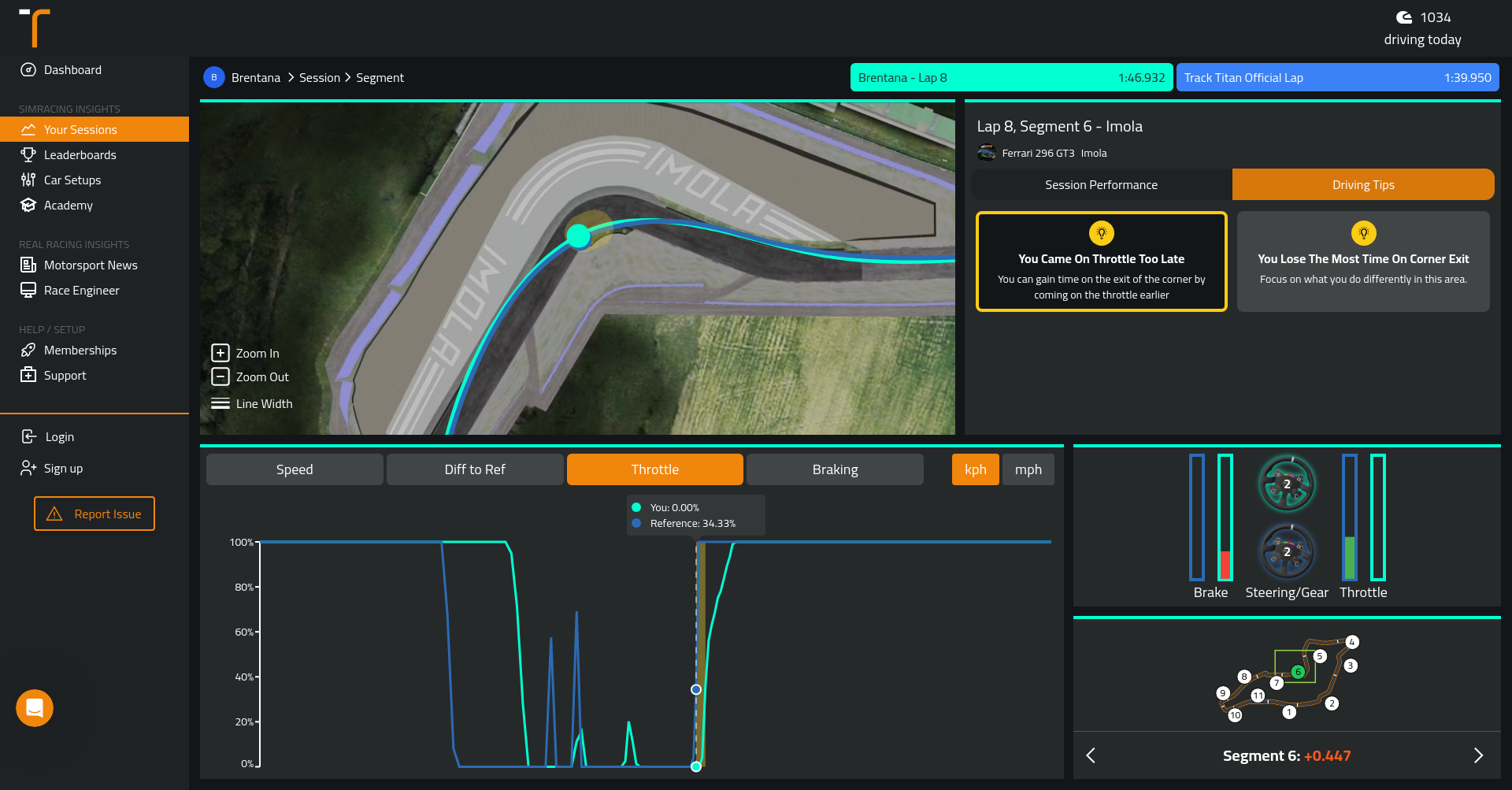
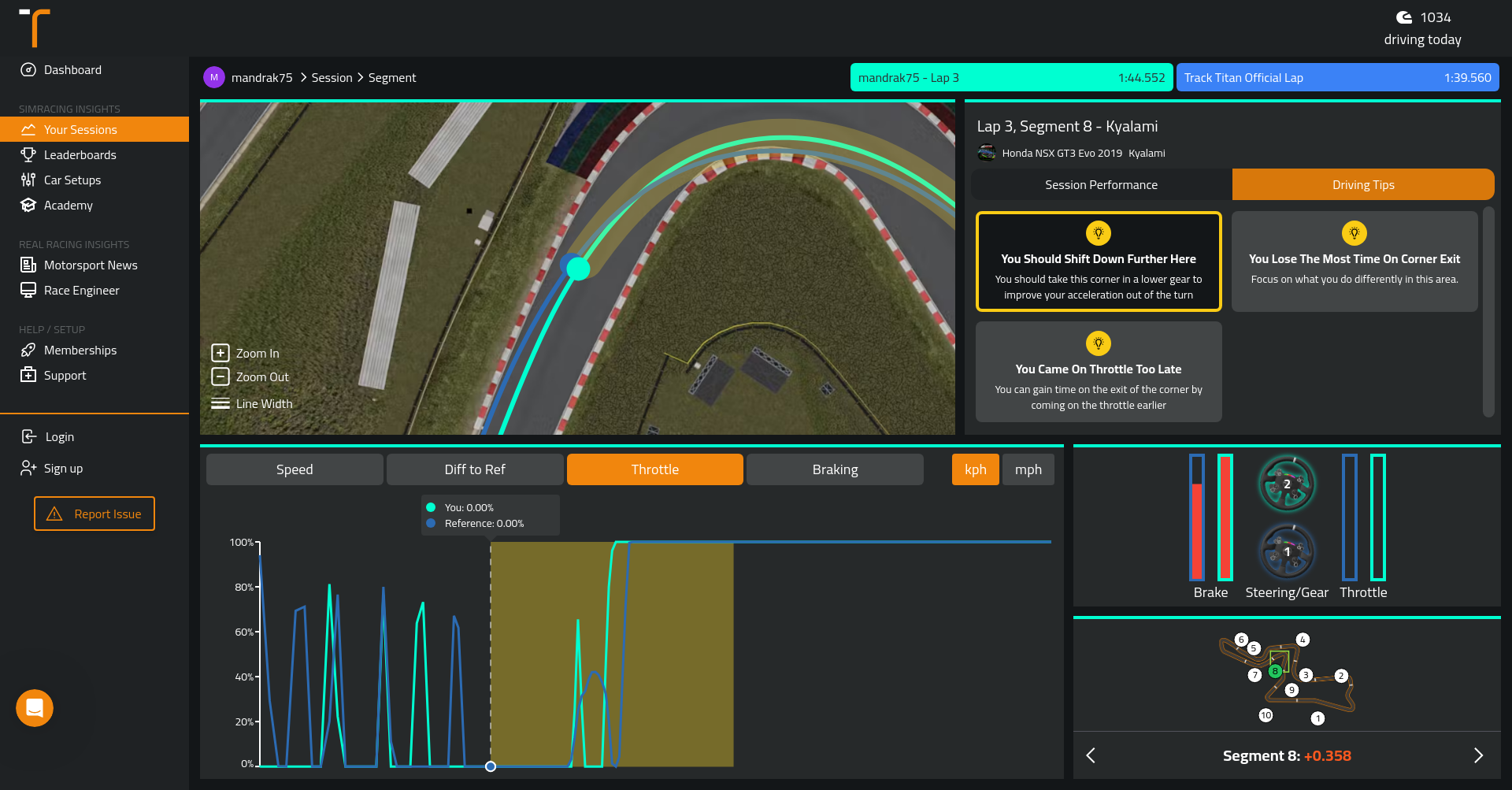
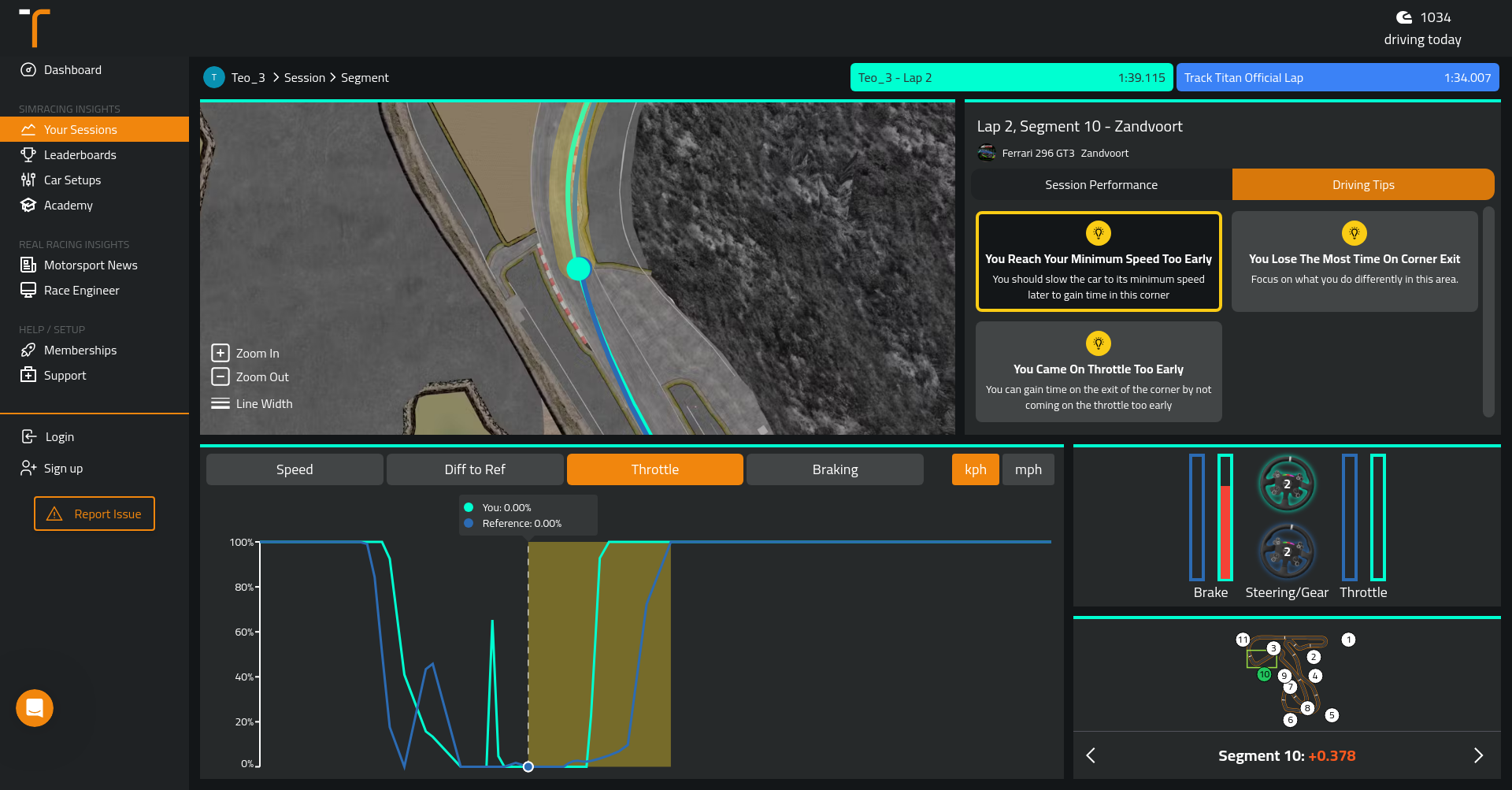
In the provided throttle control chart, driverA exhibits a premature and aggressive application of throttle compared to driverB. This is evident from the sharp increase in throttle percentage before reaching the apex of the corner. DriverB, on the other hand, shows a more gradual application, indicating a controlled and smoother acceleration out of the corner. The early throttle application by driverA likely leads to understeer or wheelspin, which can compromise exit speed and overall lap time. Additionally, driverA's throttle graph shows inconsistency with jagged lines post-apex, suggesting difficulty in maintaining traction. In contrast, driverB maintains a steady increase in throttle application post-apex, which allows for better traction and a stronger exit. To improve performance, driverA should focus on delaying and moderating throttle input until the car is well-positioned and stable at corner exit. This would result in improved acceleration onto the straight and potentially faster lap times.