120,898
120K
Laps driven today

iRacing

Le Mans Ultimate

Assetto Corsa Competizione

Assetto Corsa

F1 25

Assetto Corsa EVO

Automobilista 2

Forza Motorsport

F1 24

F1 2021

F1 23

F1 2020


Lap 4
Segment 6
1:31.075
6th Feb 2024
Assetto Corsa Competizione
Donington Park - Mercedes AMG GT3 Evo 2020

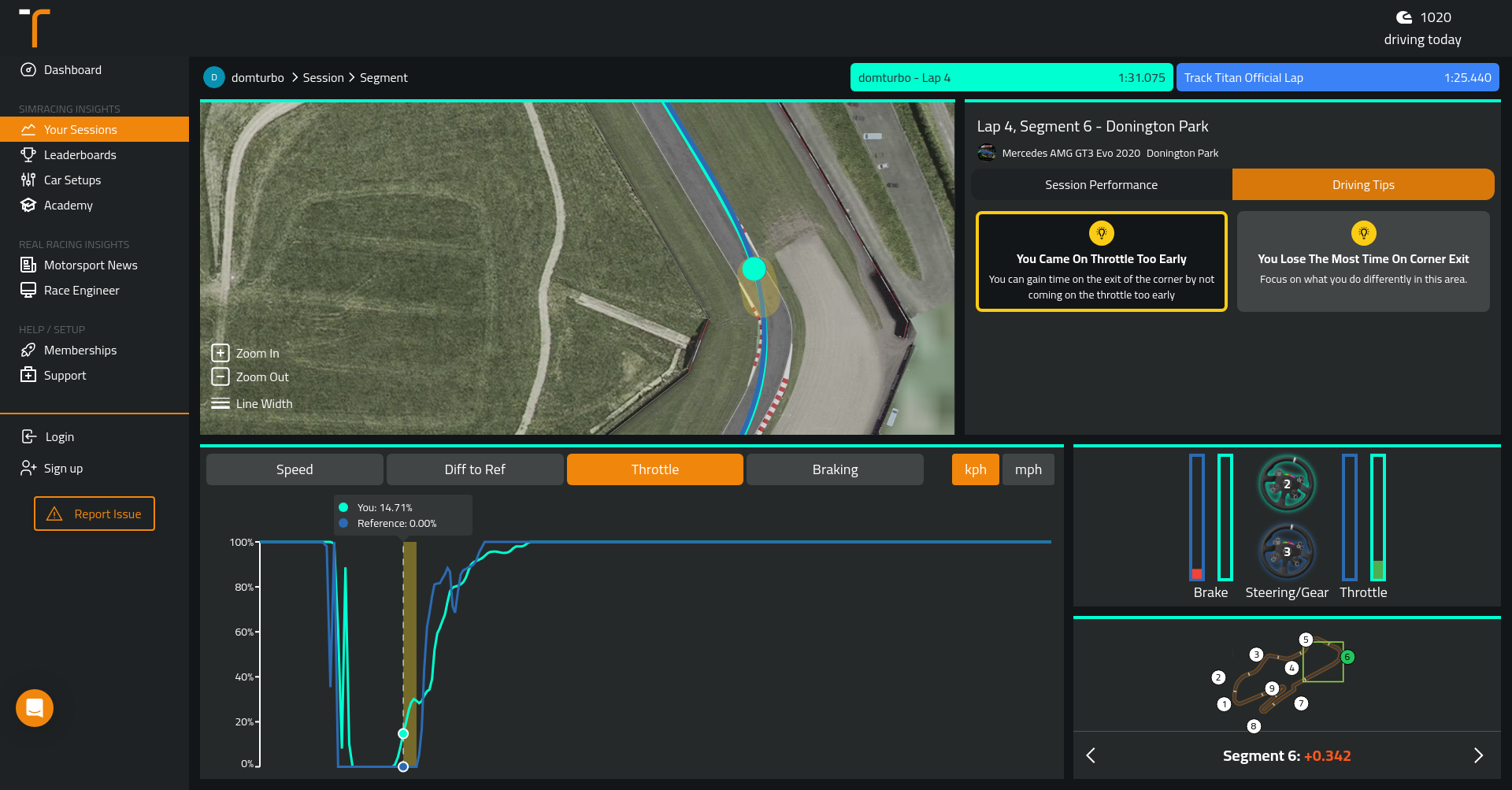
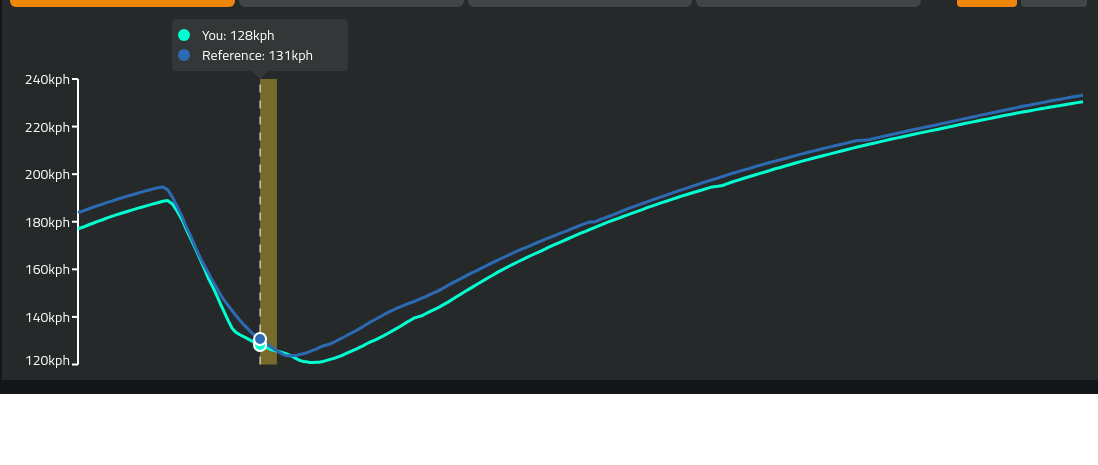
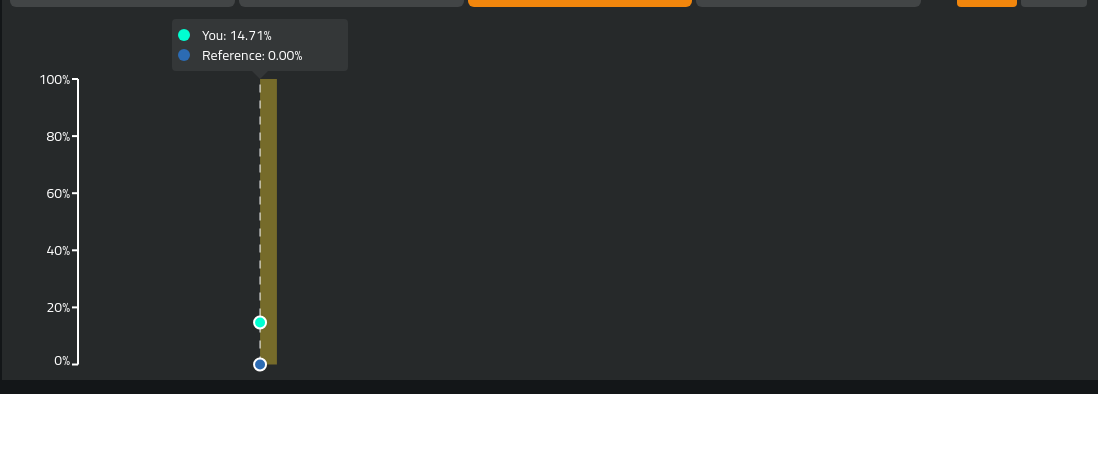
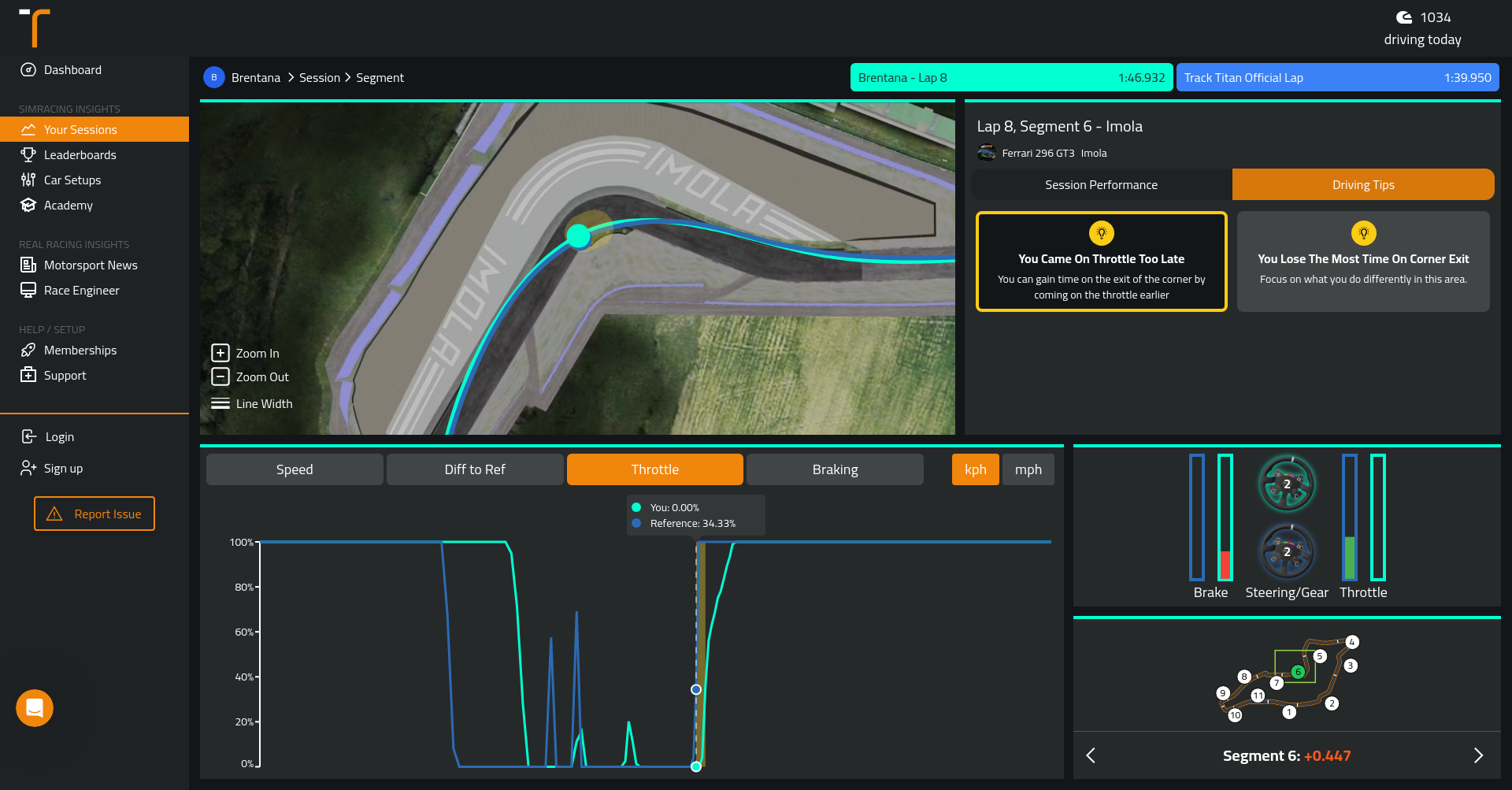
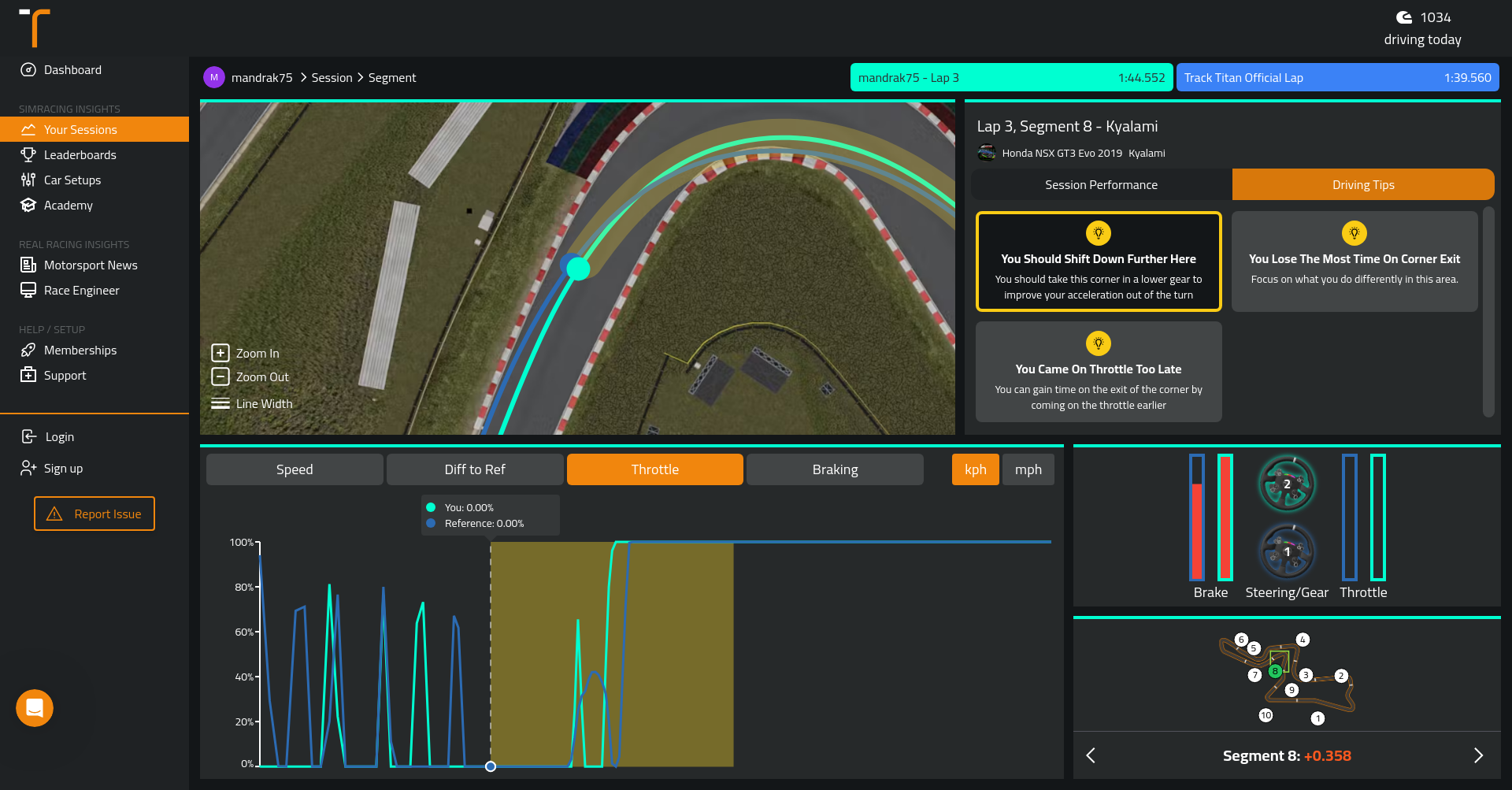
The speed chart analysis reveals that driverB enters the corner with less speed than driverA, indicating a slower momentum from the previous corner. This slower entry sets a disadvantageous pace for driverB throughout the turn. At the corner exit, driverB's minimum speed occurs later than driverA's, suggesting a delayed throttle application and resulting in a slower acceleration phase. To improve, driverB should aim to match their minimum corner speed with that of driverA and time their throttle application to accelerate sooner and more effectively. In terms of throttle control, driverA applies the throttle earlier than driverB during corner exit, reaching full throttle before them. This early application could lead to traction loss and potentially slower exit speeds due to trying to accelerate out of the corner too soon. Conversely, driverB's more gradual and delayed throttle input indicates a patient approach that allows for better traction and potentially higher exit speeds. DriverA should consider modulating their throttle input more carefully, adopting a progressive approach like that of driverB to enhance their corner exit speed and overall lap performance.
Analyzing the speed chart, it's evident that driverB enters the corner with a lower speed compared to driverA. This is indicated by the initial gap in speed at the very start of the chart on the left, suggesting that driverB carried less momentum from the previous corner into this one. This early deficit in speed sets a disadvantageous pace for driverB throughout the corner. Focusing on the corner exit, driverB's minimum speed occurs later than that of driverA, which implies a delayed throttle application. Consequently, this leads to a slower acceleration phase for driverB, as shown by the gentler slope of their speed curve compared to driverA's steeper incline post-minimum speed point. To optimize performance, driverB should aim to match their minimum corner speed with that of driverA and focus on timing their throttle application to accelerate sooner and more effectively out of the corner.

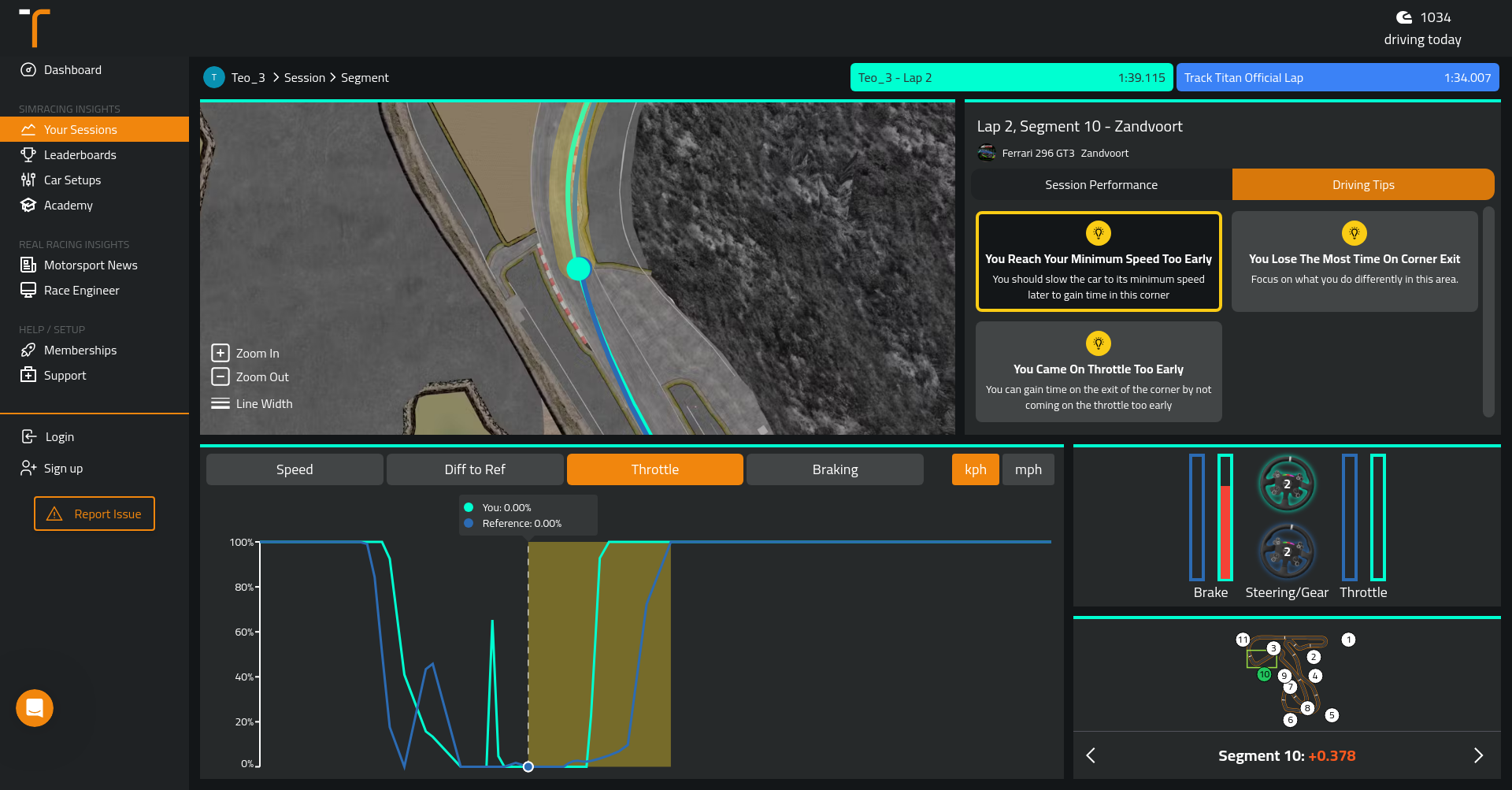
In the provided throttle control analysis, there is a distinct difference between driverA and driverB's inputs during corner exit. DriverA applies throttle significantly earlier than driverB, as indicated by the steep rise in their throttle application curve. This premature application results in driverA reaching full throttle before driverB, which suggests that driverA may be trying to accelerate out of the corner too soon. This early application can lead to a loss of traction and potentially slower exit speeds. On the other hand, driverB's throttle application is more gradual and delayed, reaching full throttle after a longer period. This indicates a more patient approach to corner exit, allowing for better traction and potentially higher exit speeds. DriverA should consider modulating their throttle input more carefully, mirroring the progressive nature of driverB's curve to improve their corner exit speed and overall lap time.