117,319
117K
Laps driven today

iRacing

Le Mans Ultimate

Assetto Corsa Competizione

Assetto Corsa

F1 25

Assetto Corsa EVO

Automobilista 2

Forza Motorsport

F1 24

F1 2021

F1 23

F1 2020


Lap 11
Segment 2
1:25.732
6th Feb 2024
Assetto Corsa Competizione
Laguna Seca - Mercedes AMG GT3 Evo 2020

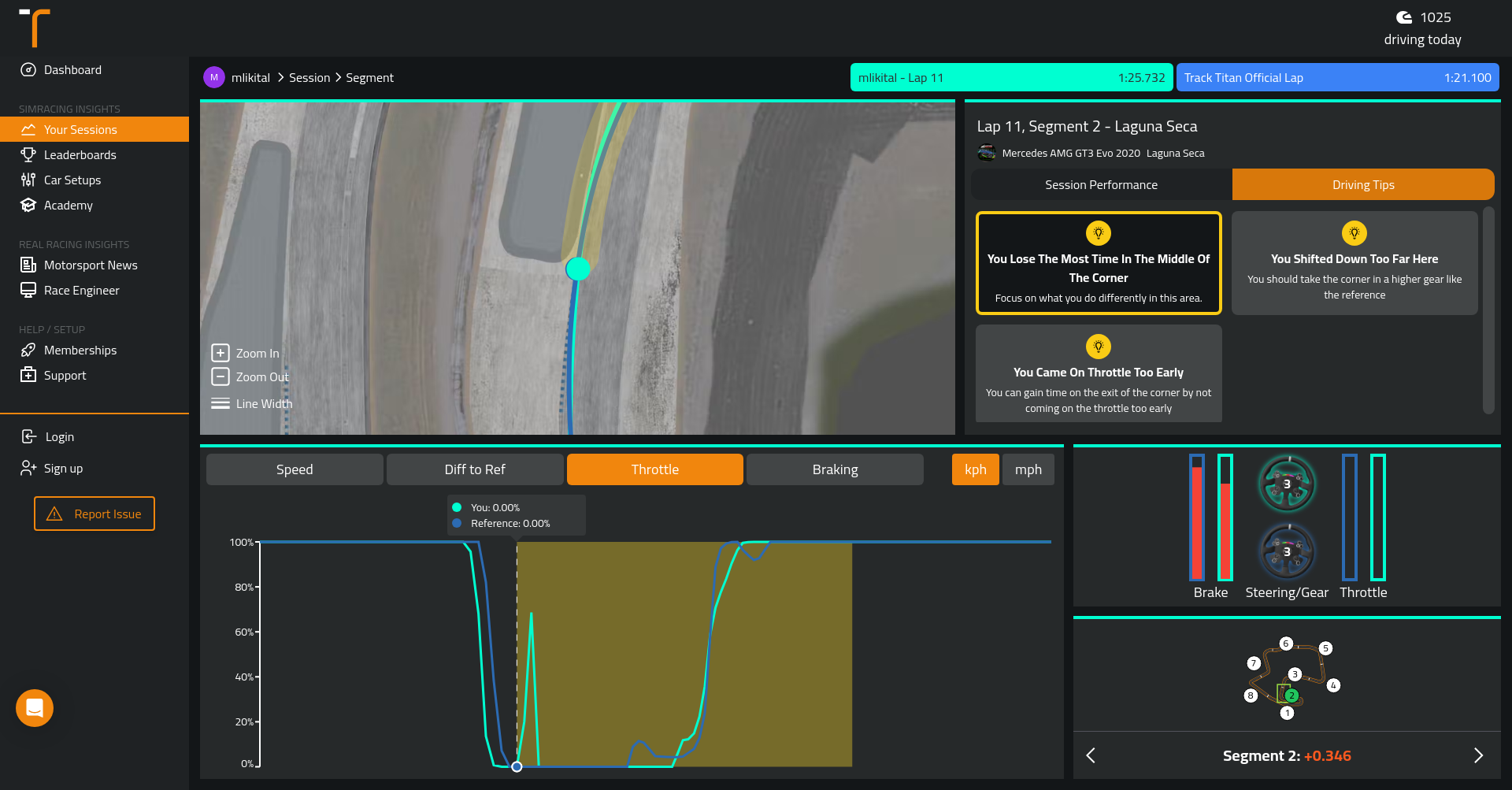
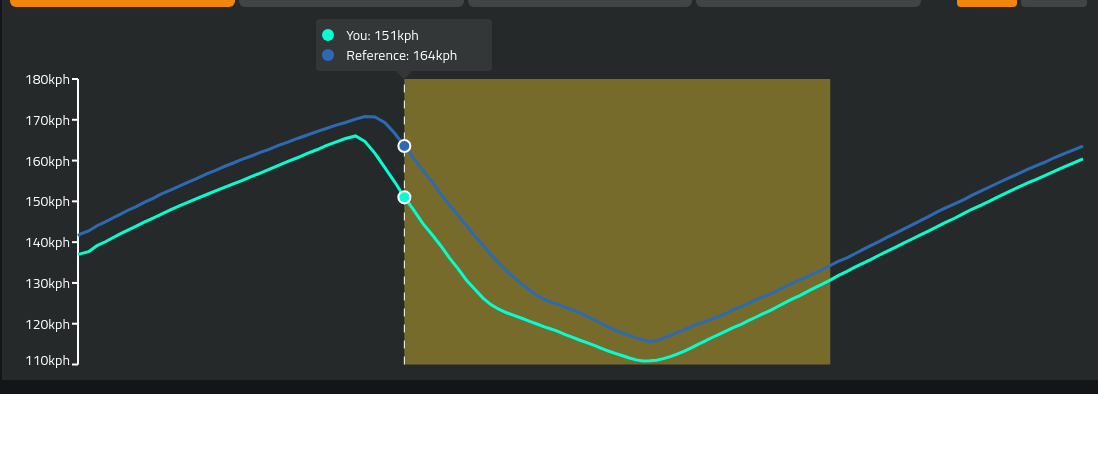
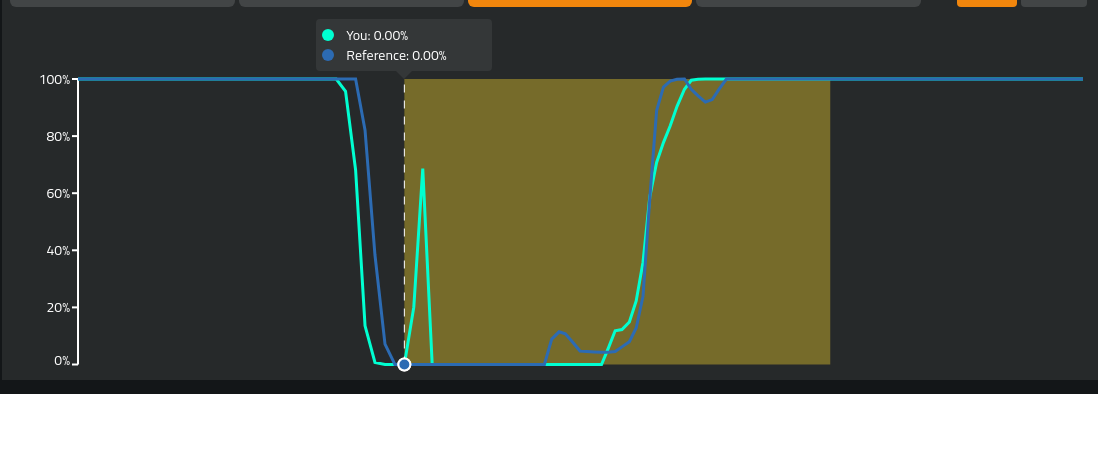
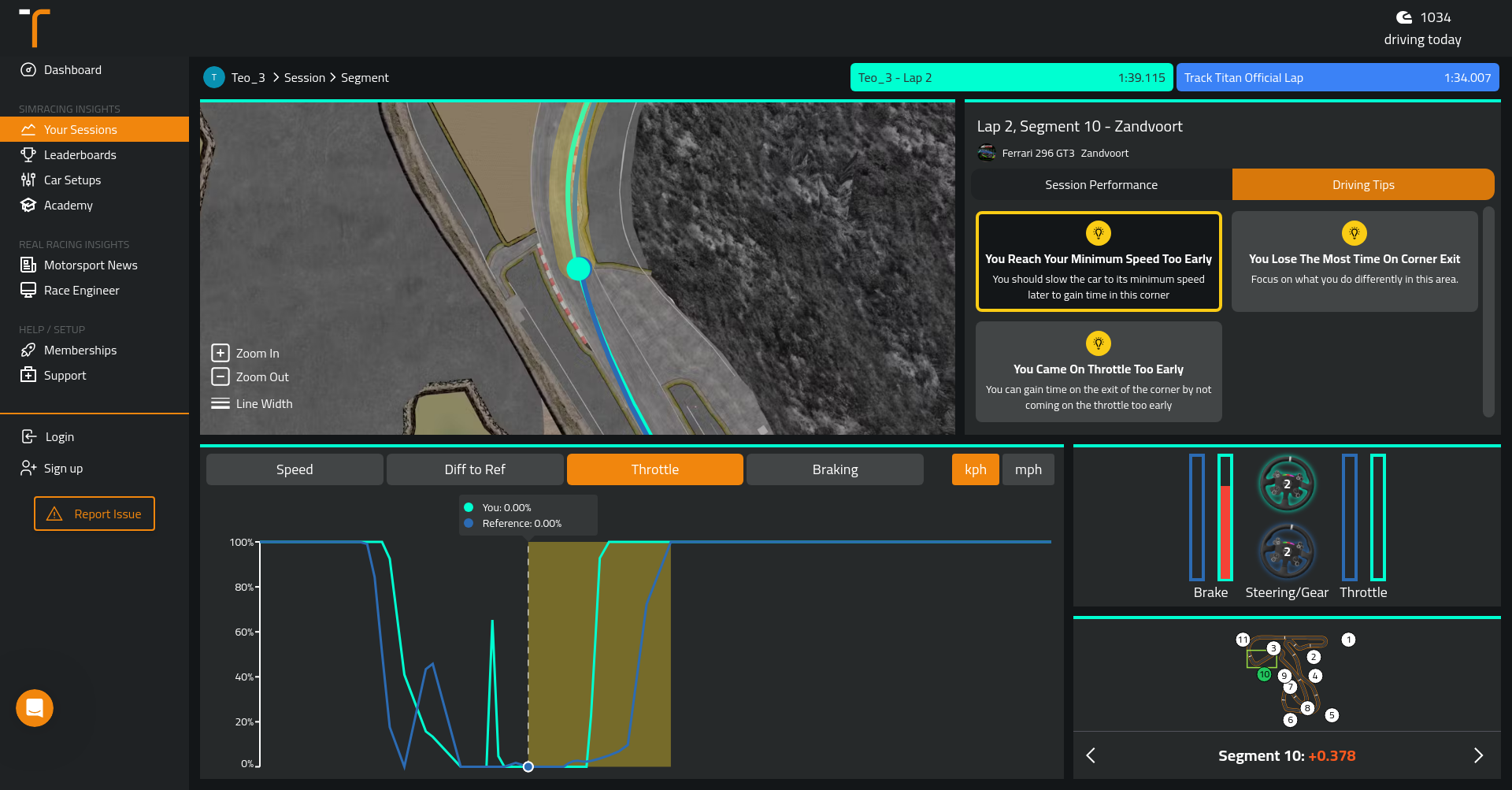
The speed chart analysis reveals that driverB enters the corner with less speed than driverA, indicating a loss of momentum from the previous corner and suggesting a need for improvement in confidence or line choice. DriverB's minimum speed occurs later in the corner and is lower than driverA's, pointing to an early throttle application that affects their exit speed. To enhance performance, driverB should aim to carry more entry speed from the preceding corner and delay throttle application for a stronger exit. DriverA applies throttle earlier than driverB, leading to a less smooth acceleration curve and potential traction issues, as seen by a sharp peak followed by a dip in their graph. This suggests wheelspin or loss of rear grip due to premature throttle use. DriverB's smoother curve indicates better traction management and patience on the throttle, resulting in a more efficient corner exit. For improvement, driverA should delay their throttle input to achieve better timing and progression similar to driverB's approach.
Analyzing the speed chart, it's evident that driverB is entering the corner with a lower speed compared to driverA. This indicates that driverB did not carry as much momentum out of the previous corner, which is a critical area for improvement. The earlier reduction in speed suggests a possible lack of confidence or incorrect line taken through the preceding turn, leading to this deficit at the entry of the current corner. During the mid-corner phase, driverB's minimum speed is notably lower than that of driverA and occurs later in the corner. This delayed minimum speed points to a premature throttle application by driverB, which compromises their exit speed. The consequence is a slower acceleration out of the corner compared to driverA, as seen by the shallower gradient of driverB's speed curve post-apex. To optimize performance, driverB should focus on carrying more entry speed from the previous corner and delaying throttle application until they can apply it with commitment for a stronger exit.

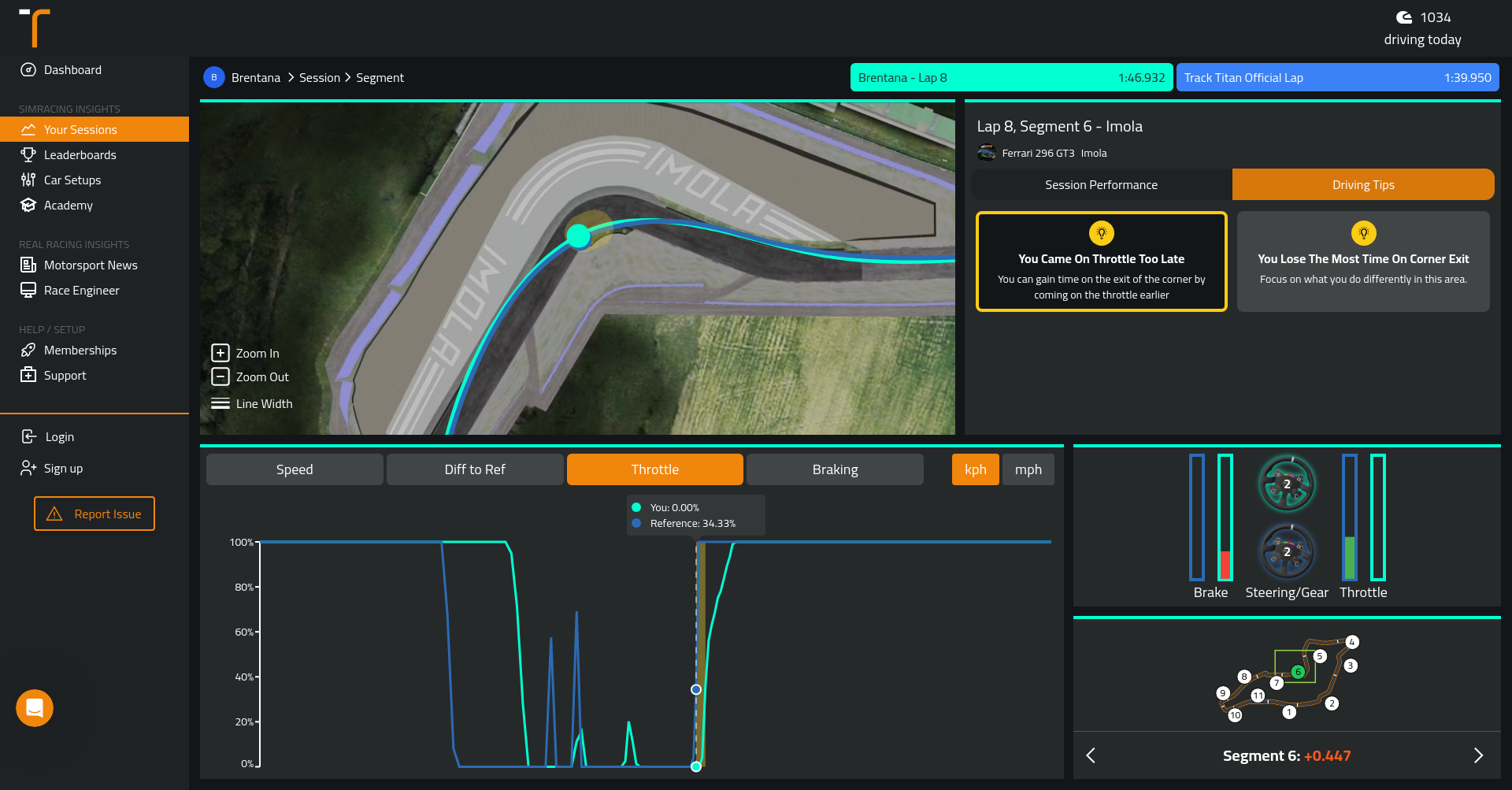
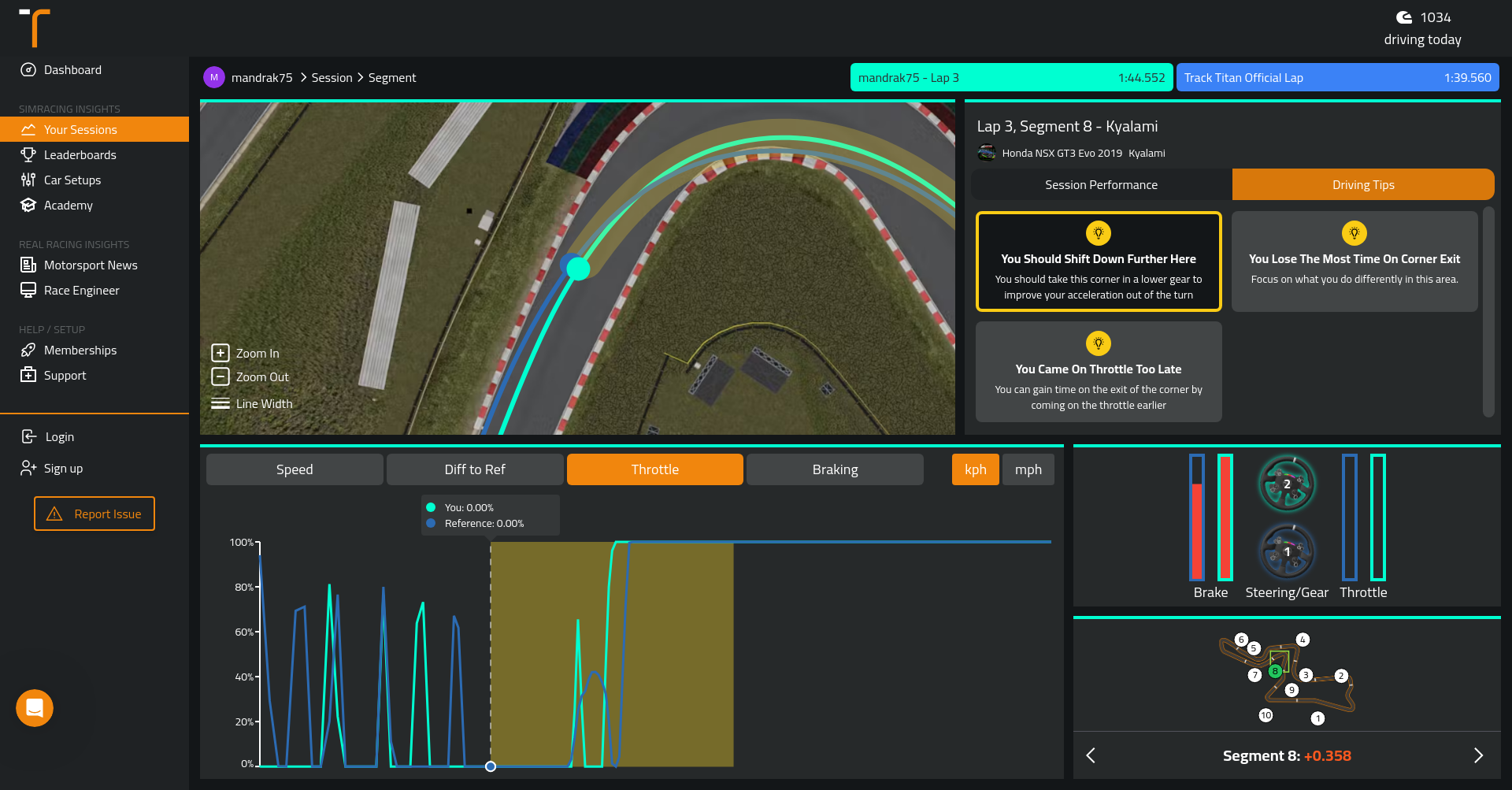
In the provided throttle control analysis, driverA initiates throttle application significantly earlier than driverB, as indicated by the steeper initial incline in their graph. This premature application results in a less smooth acceleration curve compared to driverB, who maintains a more gradual and controlled increase in throttle. The early throttle input from driverA likely leads to suboptimal traction and could explain why they lose time in the middle of the corner where precise throttle control is crucial for maintaining speed. Furthermore, driverA's graph shows a sharp peak followed by a dip before stabilizing, which suggests an overcorrection due to wheelspin or loss of rear grip from coming on the throttle too early. In contrast, driverB's smoother curve reflects better traction management and patience on the throttle, allowing for a more efficient exit out of the corner. To improve performance, driverA should focus on delaying their throttle input to match the timing and progression of driverB's application.