114,324
114K
Laps driven today

iRacing

Le Mans Ultimate

Assetto Corsa Competizione

Assetto Corsa

F1 25

Assetto Corsa EVO

Automobilista 2

Forza Motorsport

F1 24

F1 2021

F1 23

F1 2020


Lap 5
Segment 6
1:39.992
6th Feb 2024
Assetto Corsa Competizione
Misano - Porsche 992 GT3 Cup 2021

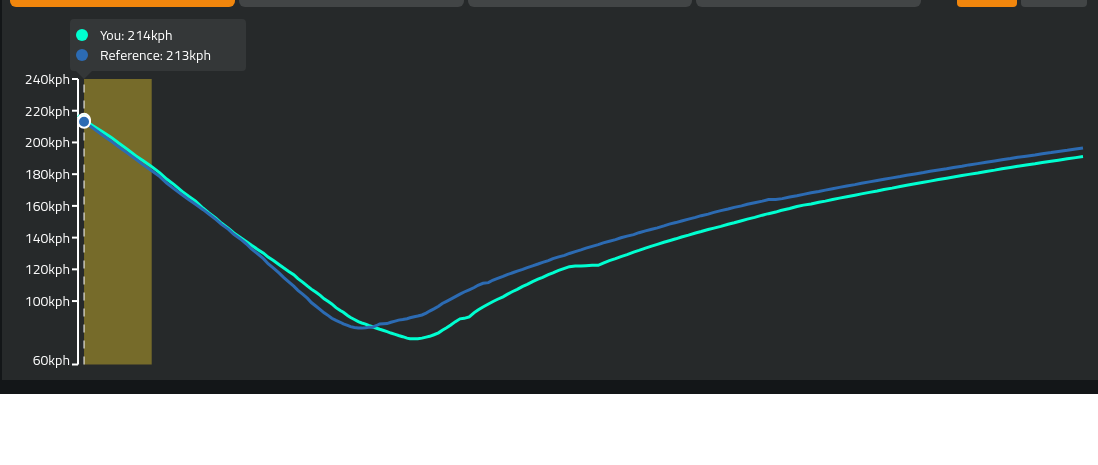
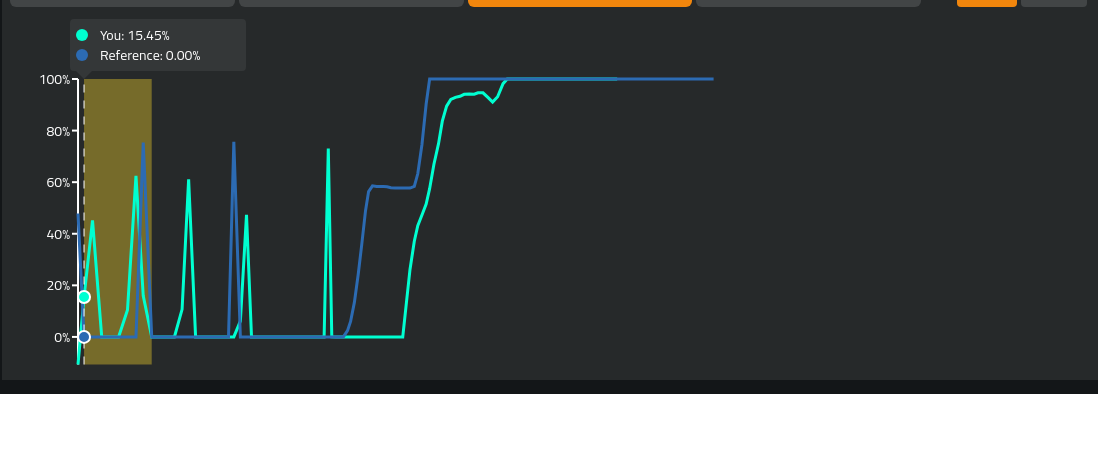
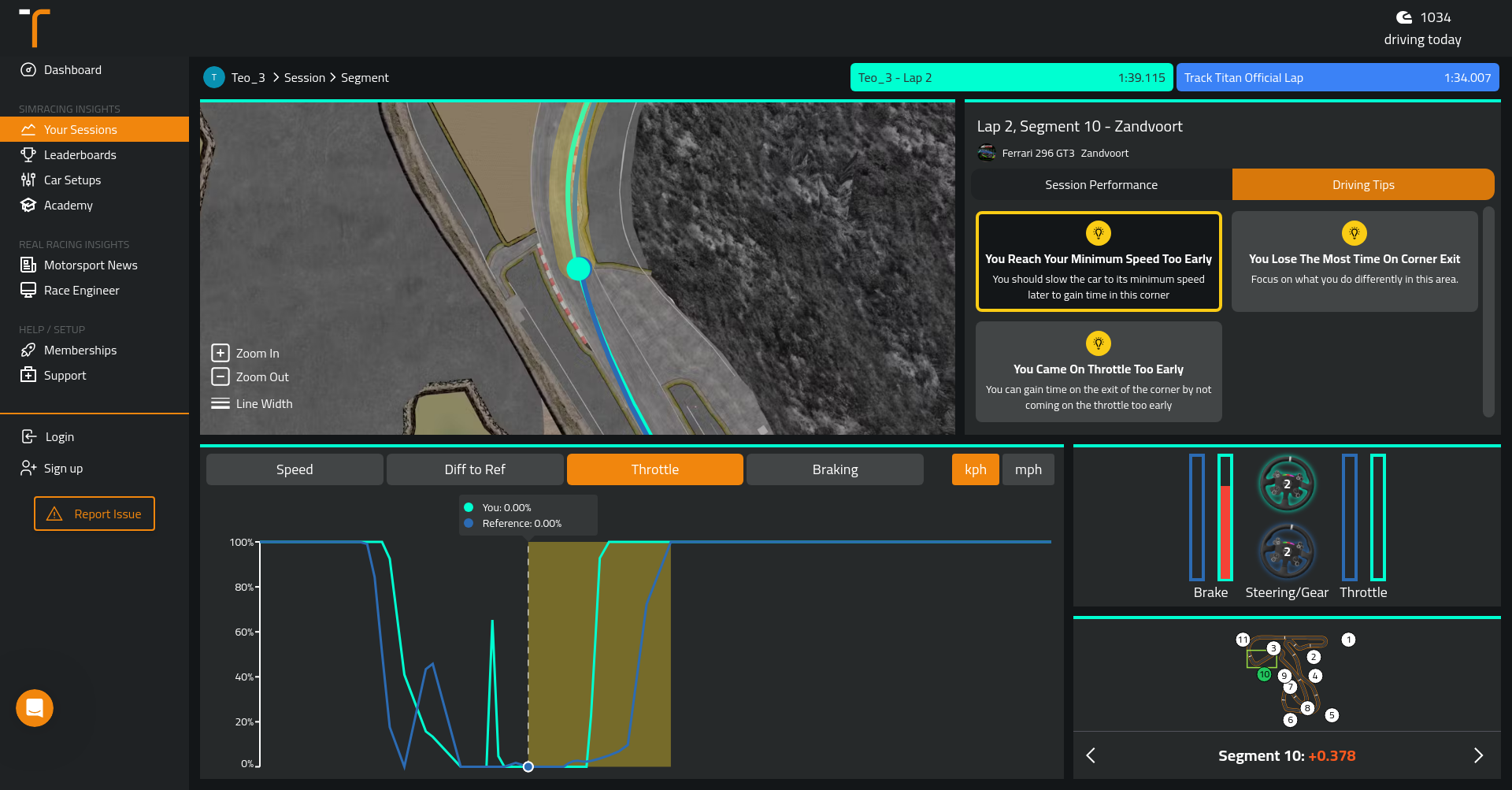
The speed chart analysis reveals that driverB enters the corner with a lower speed than driverA, likely due to less momentum from the previous corner. This affects their entire cornering approach, resulting in a later minimum speed point and a slower exit. To improve, driverB should aim to carry more entry speed by turning in earlier and maintaining a higher gear, allowing for an earlier throttle application and faster exit. In contrast, the throttle control chart shows that driverA applies the throttle later than driverB, suggesting a more cautious approach possibly due to grip concerns or wheelspin management. DriverB's early and sharp throttle increase indicates confidence and effective traction control. For better performance, driverA should apply the throttle earlier and more decisively to reduce time lost during corner exit, which is where they lag behind driverB the most. Overall, both drivers have areas to work on: driverB needs to focus on maintaining momentum through better entry speed and gear management for a quicker corner approach and exit. Meanwhile, driverA should concentrate on improving their throttle application timing and confidence to enhance their exit speed and overall corner performance. By addressing these specific aspects of their driving technique, both drivers can potentially shave off valuable seconds on the track.
Analyzing the speed chart, it's evident that driverB enters the corner at a significantly lower speed compared to driverA. This is immediately apparent at the start of the chart where driverB's speed is already trailing. This suggests that driverB exited the previous corner with less momentum, which has a cascading effect on their approach and through the corner in question. As we progress through the corner, we notice that driverB's minimum speed occurs later than driverA's, indicating a delayed throttle application. This results in a slower exit speed for driverB, as shown by the gentler slope of their speed curve compared to driverA's steeper ascent post-corner. To optimize performance, driverB should focus on carrying more entry speed by turning in earlier and maintaining a higher gear through the corner. This will allow for an earlier application of throttle and a more robust exit speed, crucial for shaving off those valuable seconds on track.

Analyzing the throttle control chart, it's evident that driverA and driverB exhibit distinct differences in their throttle application throughout the corner. DriverA's throttle application is significantly delayed compared to driverB, who applies the throttle much earlier. This early application by driverB suggests a more confident and aggressive exit strategy, likely contributing to a higher exit speed and better overall corner performance. Furthermore, driverA's gradual increase in throttle indicates a cautious approach, possibly due to uncertainty with grip or an attempt to manage wheelspin. In contrast, driverB's sharp increase in throttle application demonstrates a decisive action and better traction management. To improve, driverA should focus on applying the throttle earlier and with more conviction to minimize time lost on corner exit, which is where the most significant time discrepancy occurs between the two drivers.