117,319
117K
Laps driven today

iRacing

Le Mans Ultimate

Assetto Corsa Competizione

Assetto Corsa

F1 25

Assetto Corsa EVO

Automobilista 2

Forza Motorsport

F1 24

F1 2021

F1 23

F1 2020


Lap 5
Segment 5
1:30.292
6th Feb 2024
Assetto Corsa Competizione
Donington Park - Porsche 911 (992) GT3 R

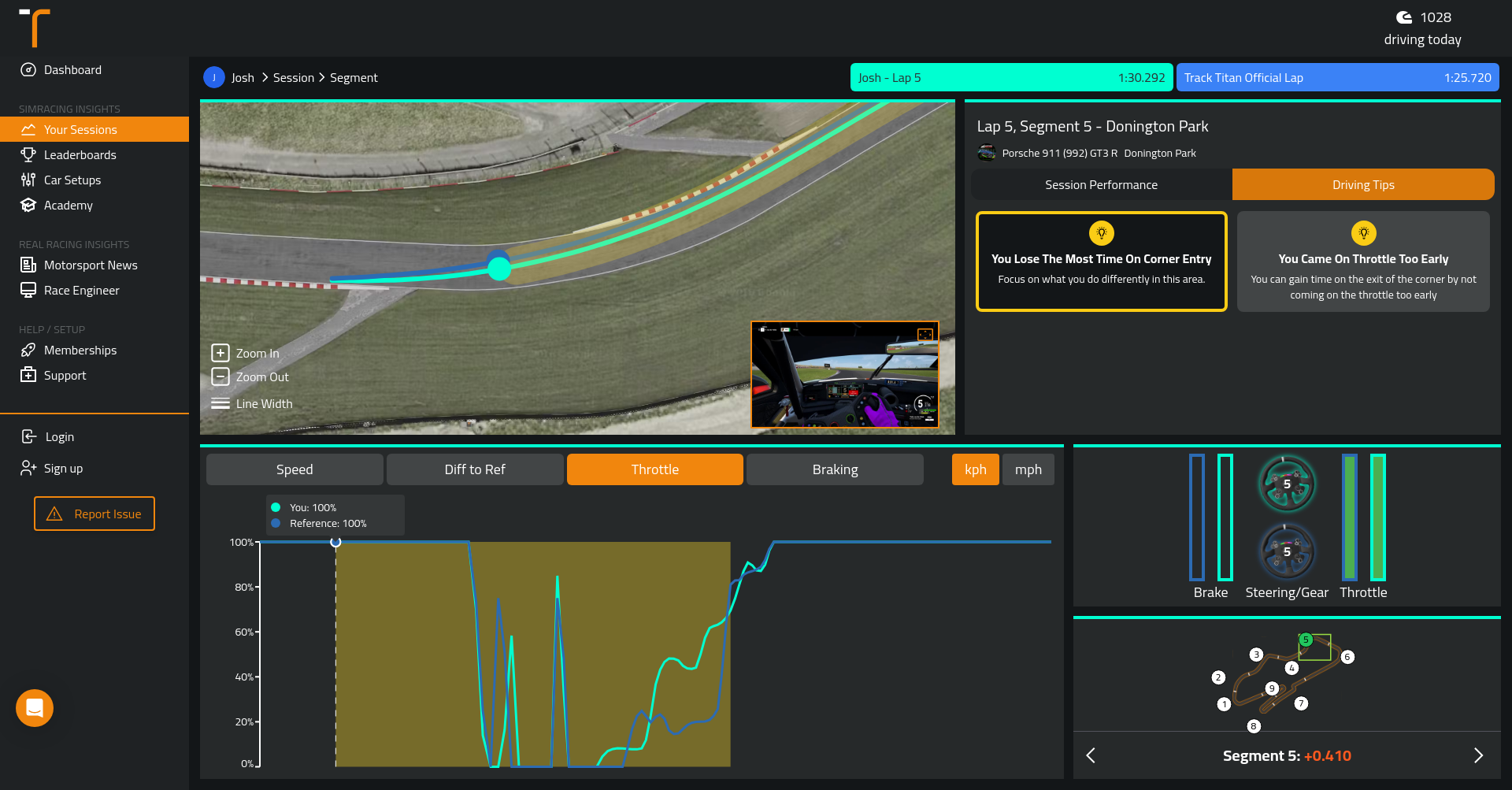
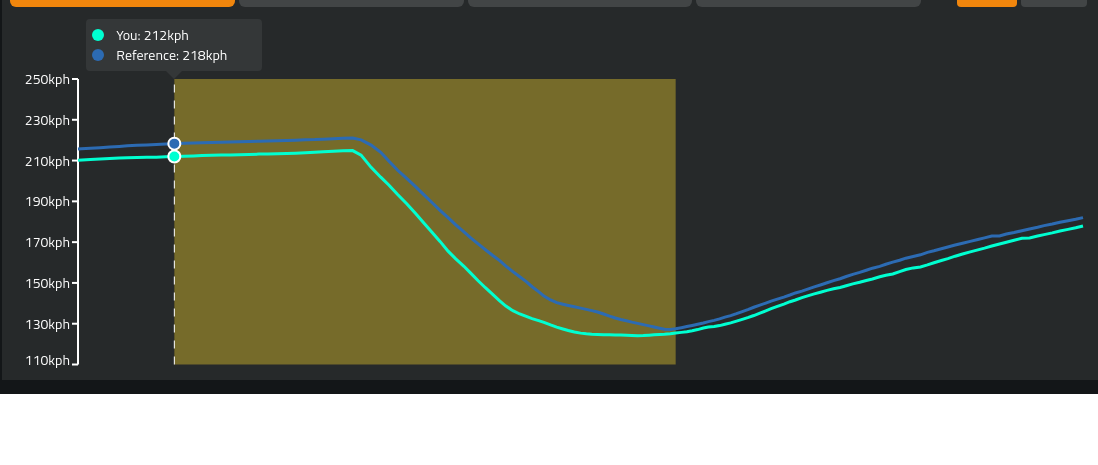
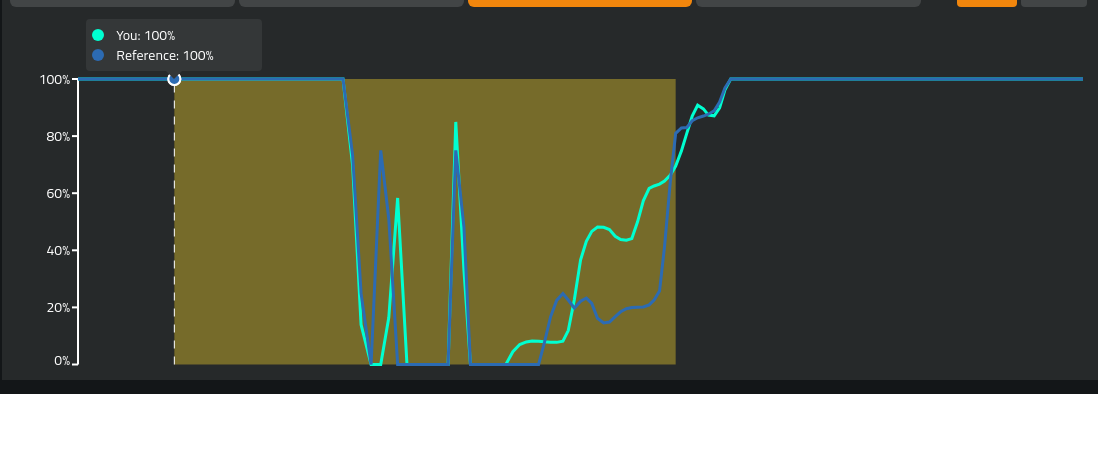
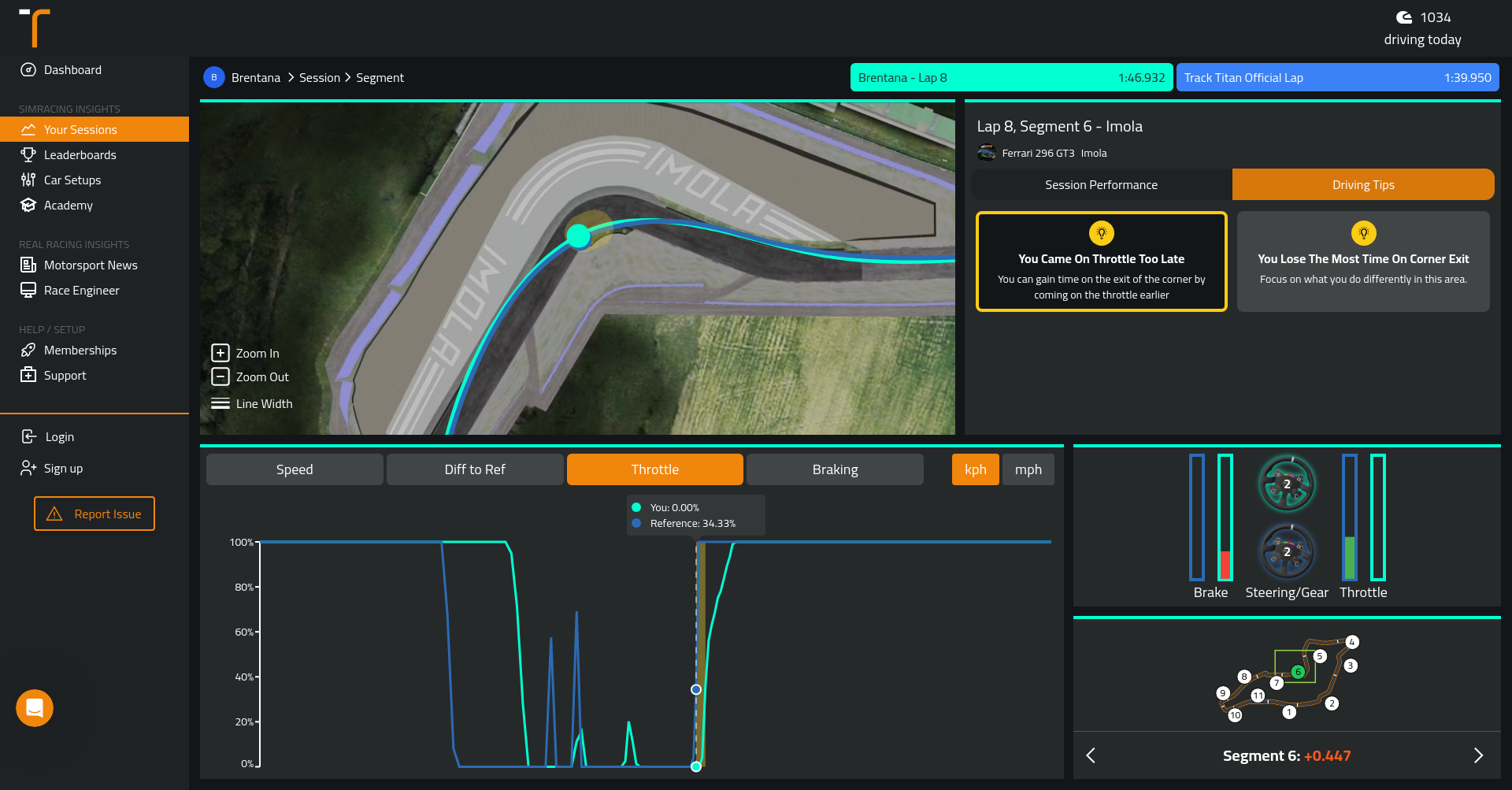
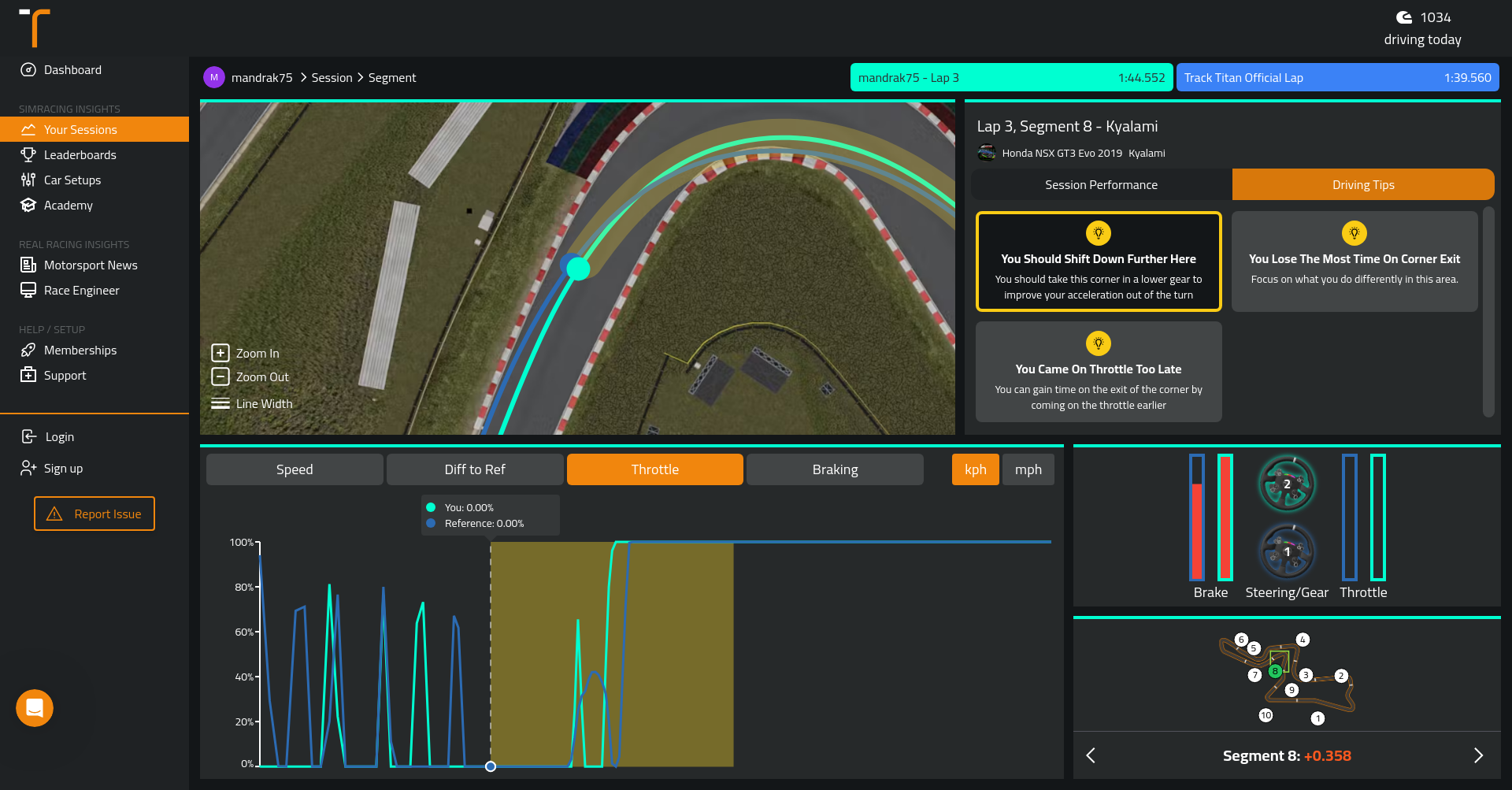
The speed chart analysis reveals that driverB enters the corner with a lower speed than driverA, indicating a loss of momentum from the previous corner. This affects their entire approach and execution through the corner. DriverB's minimum speed occurs later than driverA's, leading to a delayed throttle application and a slower exit speed. To improve, driverB should aim to carry more speed through the corner entry and delay throttle application to enhance exit speed. On the other hand, driverA applies throttle prematurely before reaching the apex, which could lead to understeer or wheelspin, as suggested by the jagged throttle line post-apex. In contrast, driverB's gradual and delayed throttle input results in a smoother curve post-apex, indicating better traction and control for a faster exit. For better lap times, driverA should adopt a later and more progressive throttle input similar to driverB's for improved grip and higher exit speeds.
Analyzing the speed chart, it's evident that driverB is entering the corner at a significantly lower speed compared to driverA. This discrepancy starts right at the beginning of the chart, indicating that driverB has lost momentum even before reaching the corner entry. This initial speed deficit suggests that driverB exited the previous corner with less speed, which has a cascading effect on their approach and through the subsequent corner. Furthermore, driverB's minimum speed in the corner occurs later than driverA's, implying that driverB is slower at the apex and consequently gets on the throttle later. This delay in acceleration results in a lower exit speed for driverB, as shown by a less steep gradient on the speed chart when compared to driverA. To improve lap times, driverB should focus on carrying more speed through corner entry and delaying throttle application slightly to avoid early acceleration that can compromise their exit speed.

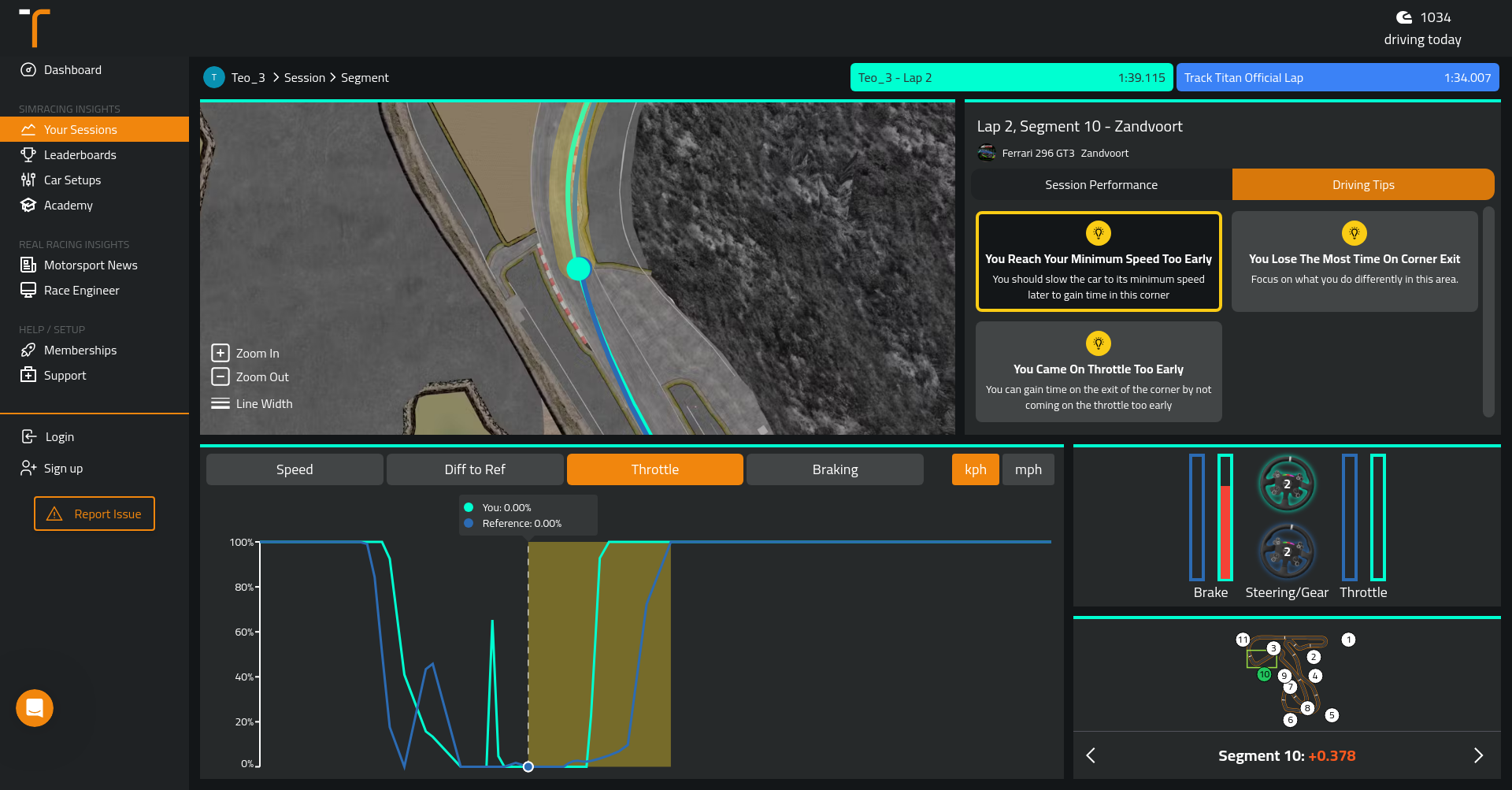
In the provided throttle control analysis, driverA exhibits a premature application of throttle compared to driverB. This is evident from the sharp increase in throttle percentage before reaching the apex of the corner. DriverB, on the other hand, maintains a more gradual and delayed throttle application, which suggests better traction and control, leading to a potentially faster exit speed. Furthermore, driverA's early throttle application could be causing understeer or wheelspin, as indicated by the jagged nature of their throttle line post-apex. This contrasts with driverB's smoother curve post-apex, implying more stable acceleration out of the corner. To improve lap times, driverA should focus on mimicking driverB's later and more progressive throttle input to maintain better grip and achieve higher exit speeds.