122,444
122K
Laps driven today

iRacing

Le Mans Ultimate

Assetto Corsa Competizione

Assetto Corsa

F1 25

Assetto Corsa EVO

Automobilista 2

Forza Motorsport

F1 24

F1 2021

F1 23

F1 2020


Lap 9
Segment 5
1:34.792
6th Feb 2024
Assetto Corsa Competizione
Valencia - Porsche 911 (992) GT3 R

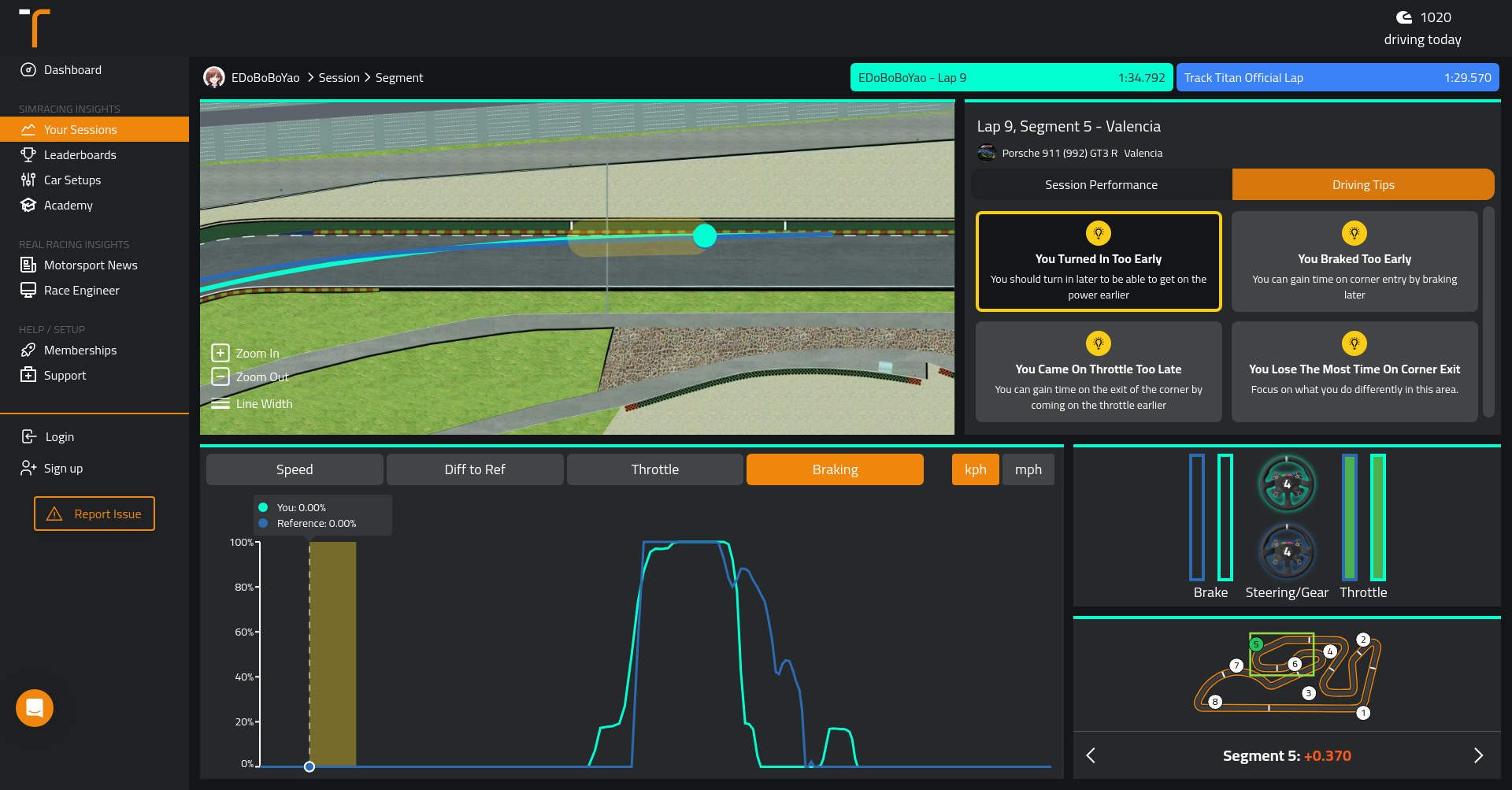
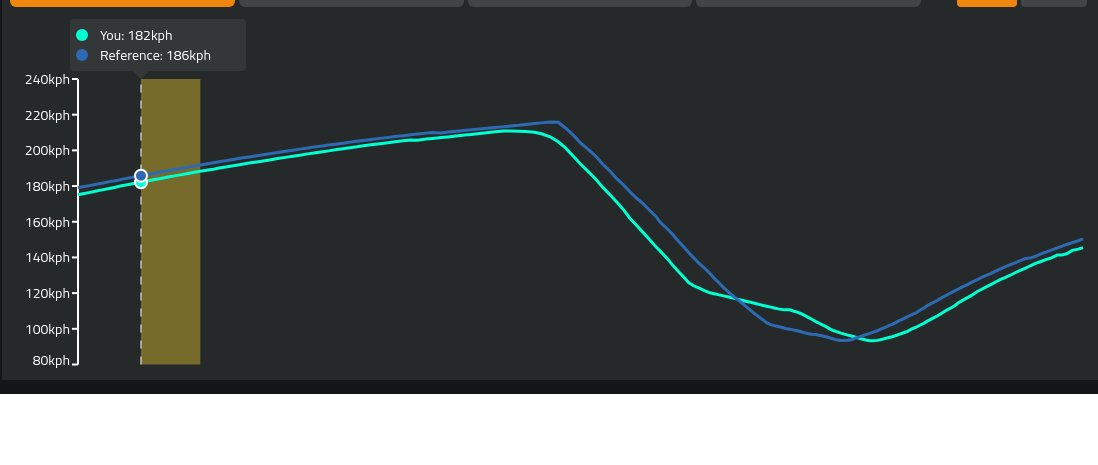
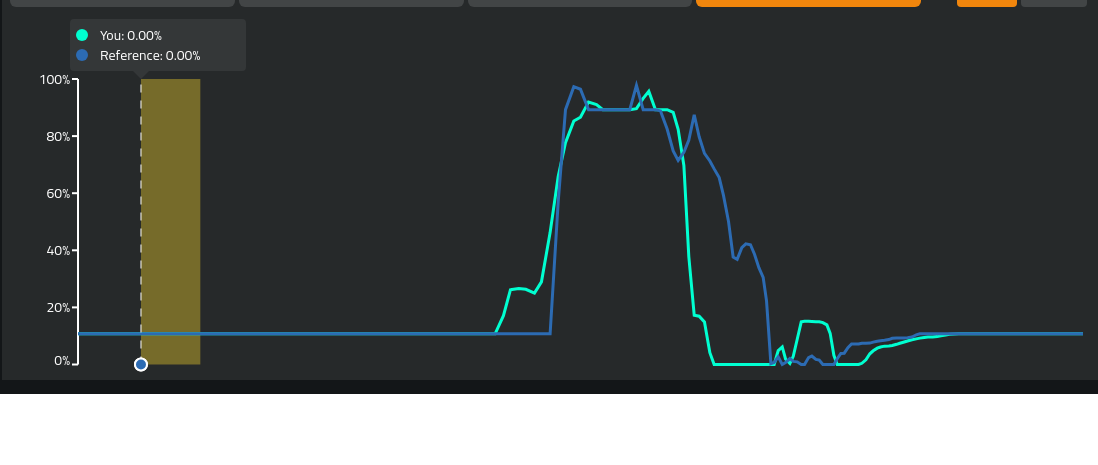
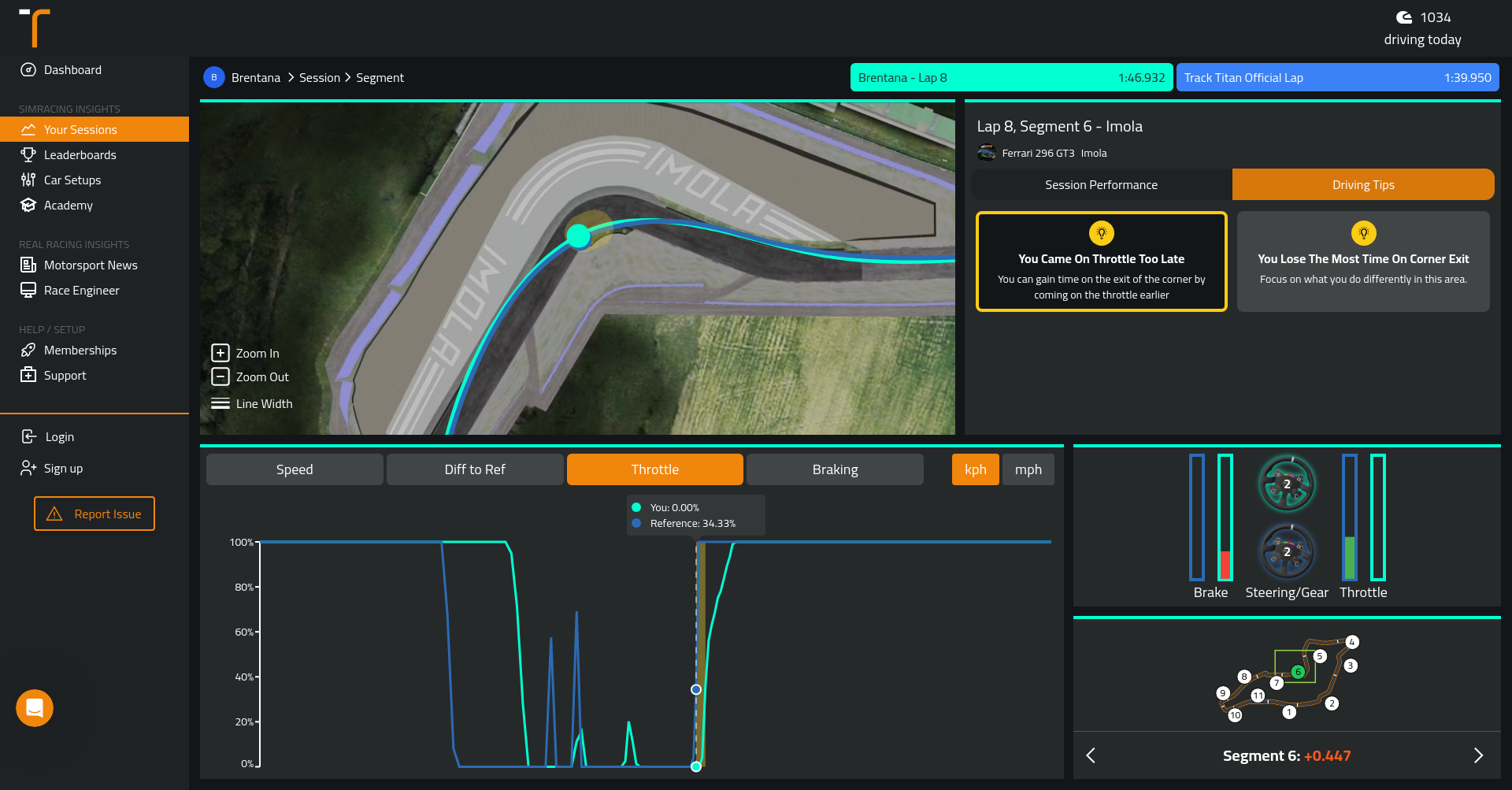
The speed chart analysis reveals that driverB (You) is slower than driverA (Reference) throughout the corner, starting with a lower speed at the beginning, indicating a slower exit from the previous corner. DriverB also reaches their minimum speed later and begins accelerating later and more gradually than driverA, resulting in significant time loss on corner exit. To improve lap times, driverB should focus on a later turn-in for an optimal line and earlier throttle application. In terms of throttle control, driverA applies throttle less aggressively and reaches full throttle later than driverB, leading to lost time on corner exit. DriverA should apply throttle earlier and with more conviction to maximize acceleration out of the corner. Brake control analysis shows that driverA brakes earlier and less intensely than driverB, who uses a later but harder braking technique allowing for higher speeds into the braking zone and quicker corner entry. DriverA's extended period of trail braking may contribute to their delayed throttle application. To enhance performance, driverA should adopt driverB's later and more forceful braking pattern while transitioning from brake to throttle more swiftly for optimized exit speed.
Analyzing the speed chart, it's evident that driverB (You) is consistently trailing behind driverA (Reference) in terms of speed throughout the corner. At the very start of the chart, driverB's speed is already lower than that of driverA, indicating a slower exit from the previous corner. This initial speed deficit sets a disadvantage right from the beginning of the track section. As we progress through the corner, driverB reaches their minimum speed later than driverA, suggesting a delayed throttle application. This is further evidenced by the fact that driverB's acceleration phase starts later and is less steep compared to driverA's, which implies not only a later but also a more gradual application of throttle. The impact here is significant; because driverB comes on throttle too late and with less aggression, they lose crucial time on corner exit where most of their time loss occurs. To improve lap times, focusing on a later turn-in to optimize the line and earlier throttle application will be key for driverB.

Analyzing the throttle control chart, it's evident that driverA and driverB have distinct differences in their throttle application. DriverA's throttle input is more gradual and less aggressive compared to driverB. Specifically, at the point where driverB applies full throttle, driverA is still progressively increasing their throttle input. This indicates that driverA is coming on the throttle too late, which correlates with a loss of time on corner exit as they are not maximizing the potential acceleration out of the corner. Furthermore, the intensity of driverB's throttle application is more pronounced and reaches 100% quicker than that of driverA. This suggests that driverB is able to get on the power earlier, which would contribute to a better exit speed and potentially a faster lap time. DriverA should focus on applying the throttle earlier and with more conviction to minimize time lost during corner exit phases.

Analyzing the brake control chart, it's evident that driverA initiates braking significantly earlier than driverB. This early braking is indicative of a conservative approach to the corner entry, potentially sacrificing speed that could be carried through the turn. DriverA's brake application also shows a less aggressive increase compared to driverB, who applies brakes with more intensity. This suggests that driverB is utilizing a later but harder braking technique, which can help in maintaining higher speeds up until the braking zone and achieving a quicker corner entry. On corner exit, driverA's gradual release of the brakes indicates an extended period of trail braking which could be contributing to their delayed throttle application. In contrast, driverB transitions from braking to throttle more decisively, which aligns with the ability to get on the power earlier and thus gain time on corner exit. To improve performance, driverA should focus on mimicking driverB's later and more forceful braking pattern while working on a swifter transition from brake to throttle to optimize exit speed.